No products in the cart.
Is Stepper Motor Holding Torque Sufficient for Machine Selection?

Contents
- The Role of Holding Torque in Stepper Motor Selection: Is It a Sufficient Criterion?
- Stepper Motor Torque Characteristics and Definition of Holding Torque
- What is Holding Torque?
- Dynamic Torque (Pull-out Torque) and Speed Relationship
- Stall and Lost Step Risk
- Why is Holding Torque Alone Insufficient? Dynamic Requirements
- Dynamic Nature of Application Load
- Speed and Acceleration Requirements
- Effect of Mechanical Transmission Systems
- Other Parameters Required for Correct Stepper Motor Selection
- Inertia Matching
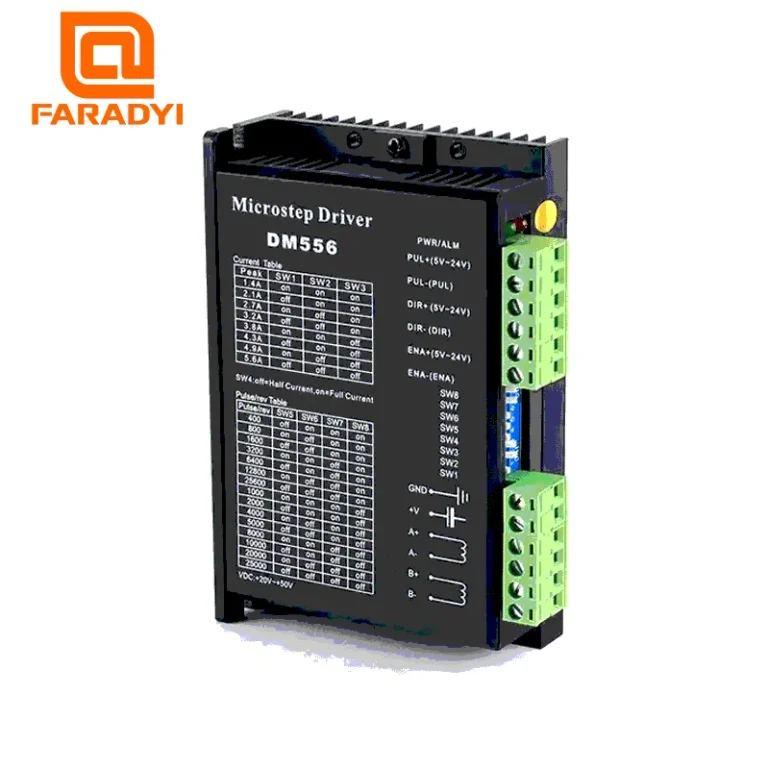
- Supply Voltage and Driver Compatibility
- Resolution and Accuracy Requirements
- Environmental Conditions and Protection Class
- Examples and Analyses from Field Applications
- Example Scenario 1: CNC Router Z-Axis Motion System
- Example Scenario 2: Labeling Machine Conveyor System
- Stepper Motor Selection Criteria and Comparison Table
- Selection Criteria Matrix
- Potential Consequences and Costs of Incorrect Stepper Motor Selection
- Performance Losses and Production Stoppages
- Mechanical Wear and Failure Risks
- Energy Consumption and Efficiency Impact
- Practical Approaches and Calculations for Optimal Selection
- Load Analysis and Torque Curves
- Application of Safety Factor
- Simulation and Prototyping
- Conclusion: A Roadmap for Comprehensive Evaluation
- FAQ
The Role of Holding Torque in Stepper Motor Selection: Is It a Sufficient Criterion?
Motion control in industrial automation systems forms the foundation of machine performance and efficiency. Stepper motors, frequently preferred in these systems, have a wide range of applications thanks to their precise positioning capabilities and simple control mechanisms. However, the correct selection of a stepper motor for a machine application is often a more complex engineering problem than simply relying on the “holding torque” value.
Holding torque refers to the motor’s capacity to maintain its position against an external force when energized. While this value provides an idea of the motor’s static load-bearing capacity, it overlooks many other parameters that are decisive for the motor’s performance under dynamic operating conditions, such as speed, acceleration, load inertia, and driver characteristics. This article will detail whether holding torque alone is sufficient data for stepper motor selection, in which situations it is critical, and what other factors should be considered for correct selection.
Stepper Motor Torque Characteristics and Definition of Holding Torque
The operating principle of stepper motors is based on the rotor moving step-by-step at specific angles by sequential pulses applied to the stator windings. These motors can provide high-precision positioning with open-loop control. However, their performance varies significantly with speed and load conditions. This dynamic behavior is key to understanding why holding torque alone is insufficient for motor selection.
Stepper motors exhibit different torque characteristics, and these characteristics play a vital role in determining the motor’s suitability for a particular application. Focusing solely on holding torque means overlooking the motor’s actual performance under dynamic conditions, which can lead to serious problems in the field. A comprehensive analysis of all torque curves and related parameters is required for correct selection.
What is Holding Torque?
Holding torque refers to a stepper motor’s ability to hold its energized and stationary rotor in a specific position against an external force. This value is generally defined as the maximum static torque that prevents the rotor from making an unwanted movement when nominal current is applied to the motor’s stator windings. Holding torque may seem like a primary criterion, especially in applications where an axis needs to be statically fixed or in systems expected to maintain position during a power outage.
However, this value only indicates the motor’s performance in a stationary state and provides no information about the motor’s torque generation capacity during movement. For example, holding torque is important when a vertical axis needs to hold a load against gravity, but dynamic torque becomes much more critical when the same axis needs to move, accelerate, and decelerate. Therefore, holding torque is only a starting point for evaluating static load conditions; it is not sufficient for moving systems.
Dynamic Torque (Pull-out Torque) and Speed Relationship
A much more critical parameter than holding torque in stepper motor selection is dynamic torque or pull-out torque. Dynamic torque refers to the maximum torque a motor can continuously produce at a specific speed. One of the most distinctive features of stepper motors is that the torque they can produce decreases significantly as speed increases. This situation is directly related to the motor’s inductance and the driver’s supply voltage.
At high speeds, the inductance of the motor windings prevents the current from rising and falling quickly, which causes the average current flowing through the windings and thus the generated torque to drop. This torque drop is clearly visible in stepper motor characteristic curves and is one of the most important factors machine designers must consider. Even if a motor has high holding torque at rest, it may not be able to produce sufficient dynamic torque at the desired operating speed, which can lead to step losses.

Stall and Lost Step Risk
One of the most critical consequences of insufficient dynamic torque is the motor stalling or entering a lost step condition. Stall is when the motor cannot move the applied load and the rotor loses synchronization, failing to remain in the desired position. This usually occurs when the motor’s instantaneous torque requirement exceeds its dynamic torque capacity at that speed. Lost steps cause the motor to fail to reach the target position, thereby losing the machine’s positioning accuracy.
Lost steps may go unnoticed, especially in open-loop stepper motor systems, and can lead to product defects, machine damage, or production stoppages. For example, in a CNC router machine, lost steps can cause errors in the dimensions or shape of the machined part. To minimize these risks, it is essential that the motor has sufficient torque reserve throughout its entire operating speed range and even under the highest load conditions. This leads us to a much more comprehensive torque analysis than just holding torque.
Why is Holding Torque Alone Insufficient? Dynamic Requirements
The holding torque of a stepper motor is a reference point indicating how powerful the motor is under static conditions. However, the vast majority of industrial automation applications are dynamic, not static. Machines accelerate, decelerate, carry loads, and interact with external forces. The performance the motor will exhibit under these dynamic conditions is determined not only by holding torque but by a series of other critical factors.
This section emphasizes why holding torque alone is not a sufficient selection criterion and the true importance of dynamic operating conditions in motor selection. Focusing solely on the motor’s power at rest can lead to incorrect decisions that jeopardize the operational efficiency, accuracy, and reliability of the machine. Therefore, a comprehensive analysis of dynamic requirements is indispensable for correct stepper motor selection.

Dynamic Nature of Application Load
Every machine application has a unique load profile, and this profile is usually far from static. The load is not just the weight of the machine part or friction force; it also includes inertia forces that arise during acceleration, processing forces that occur during operations such as cutting or drilling, and external impacts. These dynamic loads create instantaneous and variable torque demands on the motor.
For example, a conveyor belt requires high acceleration torque at the moment of initial start-up or when a heavy product stops on it. A cutting machine experiences instantaneous torque peaks due to the resistance it applies to the material during cutting. These instantaneous torque requirements must remain below the dynamic torque curve that the motor can continuously produce. Holding torque, on the other hand, provides no information about the ability to meet these dynamic peaks.

Speed and Acceleration Requirements
In modern automation systems, speed and acceleration are often directly related to productivity and efficiency goals. How quickly a machine completes a specific task depends on how fast the motor can accelerate and decelerate. For stepper motors, speed and acceleration are the most important parameters directly affecting the torque curve.
High acceleration applies a large inertia torque to the motor’s rotor and the connected load. This torque challenges the motor’s dynamic torque capacity. When examining the motor’s torque-speed curve, it is clearly seen that torque decreases as speed increases. If the selected motor cannot provide sufficient dynamic torque at the desired operating speed or acceleration ramp, step losses or motor stalling are inevitable. Therefore, the machine’s maximum speed and acceleration requirements should be evaluated much more preferentially than holding torque in motor selection.
Effect of Mechanical Transmission Systems
Stepper motors are usually not directly connected to the load; instead, they transmit motion through mechanical transmission elements such as ball screws, belt-pulley systems, gearboxes, or planetary reducers. Each of these transmission systems significantly affects the motor’s torque requirement and performance.
Gearboxes increase the motor’s torque while reducing its speed and decreasing load inertia relative to the motor shaft. However, each transmission element has its own efficiency loss (friction, backlash) and additional inertia. For example, a ball screw system, while offering high efficiency, creates a certain slip and friction resistance when converting rotary motion into linear motion. Belt-pulley systems are also subject to tension and friction losses. These losses add to the total torque the motor must provide. Therefore, the type, efficiency, and inertia of the mechanical transmission system are parameters that must be calculated in detail during motor selection, and holding torque alone cannot represent these complex interactions.
Other Parameters Required for Correct Stepper Motor Selection
After understanding that holding torque alone is an insufficient criterion, the question arises as to what additional parameters should be considered for correct stepper motor selection. Industrial automation consists of complex systems that must be considered as a whole, and the selection of one component must also take into account its interaction with all other components.
This section will detail other technical specifications critical not only for the motor’s torque capacity but also for the system’s overall performance, controllability, and longevity. Each of these parameters plays a vital role in determining whether the motor meets the application requirements and is part of a holistic evaluation process. Engineers can design not only powerful but also efficient and reliable systems by considering this wide range of factors.
Inertia Matching
Another factor much more important than holding torque in stepper motor selection is the compatibility between the motor’s and the load’s inertia. Inertia refers to a body’s resistance to rotational motion. Large torques are required to accelerate or decelerate a high-inertia load. The ratio between the motor’s rotor inertia and the load’s reflected inertia directly affects the system’s stability and performance.
As a general rule, the ratio of load inertia to motor rotor inertia should not exceed 10:1; in some precision applications, this ratio is kept at 5:1 or lower. If the load inertia is too high, the risk of the motor entering resonance problems, losing steps, or failing to provide the desired acceleration increases. Ensuring this compatibility guarantees the motor’s stable operation and its ability to maintain precise positioning. Holding torque provides no information about inertia matching.
Supply Voltage and Driver Compatibility
One of the most critical components that unleash a stepper motor’s true potential is the correct driver and sufficient supply voltage. The torques specified in the motor’s catalog values are usually obtained under ideal driver and supply conditions. A low supply voltage or a driver with insufficient current capacity can severely pull down the motor’s dynamic torque curve.
Especially at high speeds, the inductive reactance of the motor windings increases, preventing the current from rising and falling quickly. A higher supply voltage allows the current to rise faster, enabling the motor to produce more torque at higher speeds. The driver’s micro-stepping capability, current control algorithm, and protection features are also vital for the system’s overall performance and reliability. Therefore, selecting a motor and driver that are compatible ensures that holding torque has meaning; otherwise, the motor’s potential can never be fully utilized.
Resolution and Accuracy Requirements
Stepper motors provide positioning by moving step-by-step, and the size of these steps determines the motor’s resolution or accuracy. A standard stepper motor typically has a step angle of 1.8 or 0.9 degrees. However, modern drivers can divide this step angle into much smaller parts (e.g., 1/16, 1/32, 1/256 step) thanks to micro-stepping technology.
Micro-stepping provides smoother and vibration-free motion while increasing positioning accuracy and reducing the risk of resonance. However, micro-stepping can reduce the effective torque produced by the motor at each micro-step. Therefore, the positioning accuracy and motion smoothness required by the application are critical factors in determining how the motor and driver will work together. For applications requiring high accuracy, not only torque but also step angle and micro-stepping capabilities should be carefully evaluated.
Environmental Conditions and Protection Class
Industrial automation systems often operate under harsh environmental conditions. Factors such as dust, humidity, vibration, high or low temperatures can directly affect a stepper motor’s lifespan and performance. Therefore, when selecting a motor, environmental conditions and the motor’s protection class (IP rating) should also be considered.
For example, for food processing plants or outdoor applications, motors with a high IP rating (e.g., IP65, IP67) and made of corrosion-resistant materials may be required. For motors operating in high-temperature environments, models that provide better heat dissipation or have higher temperature tolerance should be preferred. For vibrating environments, motors specially designed or with additional damping features may be needed. Holding torque provides no information about these environmental factors, and neglecting these factors can lead to premature motor failure or reduced machine performance.
Examples and Analyses from Field Applications
Theoretical knowledge becomes most valuable when combined with real-world applications. To better understand the inadequacy of holding torque in stepper motor selection and the importance of other parameters, let’s examine two different industrial application scenarios. These examples demonstrate the typical challenges faced by machine engineers and why correct motor selection requires comprehensive analysis.
These field examples will concretize how focusing solely on holding torque can lead to incorrect decisions and how critical factors such as dynamic load analysis, inertia matching, and driver selection actually are. In both scenarios, it will be seen that selection requires much more than a simple torque comparison and directly affects the system’s overall performance.
Example Scenario 1: CNC Router Z-Axis Motion System
The Z-axis of a CNC router machine controls the vertical movement of the cutting tool. This axis is usually driven by a ball screw and nut mechanism. The application requirements are:
- Load: Weight of the cutting tool, spindle motor, and Z-axis carriage mechanism (total 15-20 kg).
- Motion: High-precision positioning (0.01 mm), fast acceleration and deceleration (0.5 m/s²), maximum speed 200 mm/s.
- Operation: Control of the load in both upward and downward movements, especially maintaining position during descent and stops.
In this scenario, although a motor with only enough holding torque (e.g., 2 Nm) to hold the spindle and tool weight against gravity might seem sufficient, the real challenge lies in dynamic conditions. The motor must reach 200 mm/s and resist sudden load changes that may occur during cutting at this speed. Considering the ball screw’s pitch (e.g., 5 mm/revolution) and efficiency (85%), the torque required at the motor shaft comes not only from the static load but also from acceleration torque and cutting forces. The ratio of load inertia to motor inertia is also a critical factor.
If a motor with high holding torque is selected, but its torque drops rapidly at high speeds, the Z-axis may experience lost steps during acceleration or at high speeds. This can lead to errors in the machined part, tool breakage, or machine stoppage. Therefore, the motor’s torque-speed curve, its compatibility with load inertia, and the driver’s ability to optimally power this motor become much more important than holding torque. Generally, a NEMA23 or NEMA34 size motor with high dynamic torque and a suitable driver is preferred.
Example Scenario 2: Labeling Machine Conveyor System
The conveyor belt carrying products in an automatic labeling machine is driven by a stepper motor. The requirements for this system are:
- Load: Total weight of the conveyor belt and products on it (maximum 10 kg), friction force.
- Motion: Constant and smooth speed movement (500 mm/s), fast starts and stops (0.2 m/s²).
- Operation: Continuous operation, precise control of the distance between products.
In this application, the motor’s primary task is to move the conveyor belt and products at a certain speed and accuracy. While holding torque has some importance for holding the belt stationary when the motor stops, the system’s main function occurs in motion. The inertia of the conveyor belt and products determines the torque the motor must meet during acceleration. If a belt-pulley system (e.g., 1:2 reduction ratio) is used, the torque and speed values at the motor shaft must be calculated accordingly.
If the motor’s dynamic torque at high speeds is insufficient, the conveyor belt may not reach the desired speed, or deviations in the distance between products may occur. This reduces labeling accuracy, leading to product losses. Furthermore, in continuous operation conditions, the motor’s heating characteristics and efficiency are also important. A motor with high holding torque but becoming inefficient at high speeds can lead to overheating and energy waste. Therefore, the motor’s torque-speed curve, thermal characteristics, and compatibility with the driver require a more comprehensive evaluation than holding torque. Generally, NEMA17 or NEMA23 size motors with moderate dynamic torque and good thermal management are preferred in such applications.
Stepper Motor Selection Criteria and Comparison Table
Stepper motor selection is a multi-dimensional problem that cannot be reduced to a single parameter. Evaluating all the factors mentioned above together enables engineers to select the most suitable motor. This section presents a matrix and comparison table summarizing critical selection criteria. This table will help clarify the importance of different parameters and their relationships with each other.
This matrix and table systematically present the key points to consider when making a stepper motor selection. It should be remembered that each criterion may have different weights according to the specific requirements of the application. For example, for a very low-speed application requiring static load bearing, holding torque may be more prioritized, while for a high-speed and dynamic load-bearing application, dynamic torque and inertia matching will be much more decisive.
Selection Criteria Matrix
| Criterion | Technical Explanation | Importance | Risk of Incorrect Selection |
|---|---|---|---|
| Holding Torque | Motor’s capacity to hold its energized and stationary rotor against an external force. | Starting point for static loads and position retention. | Neglect of dynamic performance, step loss. |
| Dynamic Torque (Pull-out Torque) | Maximum torque the motor can continuously produce at a specific speed. | Critical for acceleration, deceleration, and continuous load bearing in moving systems. | Step loss, motor stall, low performance. |
| Inertia Matching | Ratio of load inertia to motor rotor inertia. | Key for system stability, resonance prevention, and precise motion. | Vibration, resonance, step loss, control difficulty. |
| Maximum Speed Requirement | Highest operational speed the application needs to reach. | Determines the upper limit of the motor’s torque-speed curve. | Failure to reach desired speed, insufficient torque. |
| Acceleration/Deceleration Time | Time for the load to transition from one speed to another. | Motor’s dynamic capacity to meet instantaneous torque peaks. | Slow response time, step loss. |
| Supply Voltage and Driver Type | Voltage supplying the motor and the driver’s current control capability. | Directly affects the motor’s dynamic torque potential. | Low performance, overheating, step loss. |
| Resolution and Accuracy | Motor’s step angle and micro-stepping capability. | Positioning accuracy and motion smoothness. | Insufficient accuracy, vibration, position errors. |
| Environmental Conditions (IP Class, Temperature) | Physical conditions of the environment where the motor will operate. | Motor’s lifespan, reliability, and risk of failure. | Premature failure, performance degradation, safety risks. |
| Cost and Energy Efficiency | Motor’s purchase cost and operational energy consumption. | Total cost of ownership and operating expenses. | High operating cost, rapid depreciation. |
Potential Consequences and Costs of Incorrect Stepper Motor Selection
Focusing solely on holding torque or neglecting other critical parameters in stepper motor selection may seem like a cost advantage in the short term, but it can lead to serious operational and financial problems in the long run. In industrial automation systems, the incorrect selection of a component can create a domino effect, negatively impacting the performance of the entire system. This section will detail the potential consequences of incorrect motor selection and the costs these consequences will incur for businesses.
Incorrect motor selection is more than just a technical error; it can lead to tangible consequences for businesses such as productivity losses, increased maintenance costs, and even loss of brand reputation. Therefore, the time and resources spent on initial detailed engineering analysis are a critical investment to prevent much larger costs that may arise in the future. Especially companies with field experience like Mermak CNC are well aware of the problems caused by such incorrect selections and their solutions.
Performance Losses and Production Stoppages
A stepper motor with insufficient dynamic torque reduces production capacity by preventing the machine from reaching desired speeds and accelerations. The motor’s rapid loss of torque causes operational cycle times to lengthen and, consequently, the quantity of products produced to decrease. More importantly, the motor’s inability to handle the load, leading to lost steps or complete stalling, causes unplanned stoppages on the production line. These stoppages mean not only time loss but also increased operational costs and delays in delivery times.
In our field experiences at Mermak CNC, we have frequently observed that lost steps caused by incorrectly selected stepper motors, especially in CNC router machines, lead to dimensional errors and surface quality problems in machined parts. This situation results in either the part being scrapped or requiring extra processing, which directly increases material and labor costs. Such performance losses weaken the business’s competitiveness in the long run and negatively affect customer satisfaction.
Mechanical Wear and Failure Risks
When a stepper motor is continuously forced to operate beyond or at its capacity limits, excessive stress is created on the motor itself and the connected mechanical transmission elements. The motor’s continuous attempt to lose steps or its vibrating operation due to insufficient torque can lead to premature wear in the motor’s bearings, shaft, and connection points. Similarly, mechanical transmission systems such as ball screws, belt-pulleys, or gearboxes also wear out faster due to increased load and vibration.
This situation leads to an increase in unplanned failures and the need for spare parts. The time and cost spent on rectifying failures increase the total cost of ownership (TCO) of the motor, which initially seemed more affordable. Furthermore, excessive heating of the motor also damages winding insulation, shortening the motor’s lifespan. Incorrect inertia matching can lead to the motor locking at resonance frequencies or unexpected vibrations, causing damage to the entire mechanical structure.
Energy Consumption and Efficiency Impact
An incorrectly selected stepper motor generally consumes more energy than it should. A motor with insufficient torque may be forced to draw more current or operate for longer periods to perform the same task, leading to increased energy bills. Additionally, an oversized motor can also operate with unnecessarily high power consumption and low efficiency, as the motor’s optimal efficiency point is usually achieved at nominal load.
Stepper motors draw current to provide holding torque even when energized at rest. If an application does not frequently require static holding torque or if an alternative braking mechanism can be used, this can lead to energy waste. Correct motor selection optimizes not only torque capacity but also energy efficiency, helping to reduce operating costs and environmental impact. Therefore, motor selection is a critical engineering decision in terms of long-term energy costs and overall operational efficiency.
Practical Approaches and Calculations for Optimal Selection
The complexity of stepper motor selection requires engineers to adopt systematic and practical approaches. Instead of just looking at catalog values, in-depth analysis of the application and the use of correct calculation methods play a critical role in determining the most suitable motor. This section provides practical information on a step-by-step selection process and tools that can be used to verify motor performance.
It should be remembered that every application is unique, and while general rules are a starting point, final decisions must be based on detailed engineering analyses. These approaches aim to go beyond holding torque, objectively evaluating whether the motor meets dynamic performance and overall system requirements. In this way, solutions that are both cost-effective and performance-optimized can be achieved.
Load Analysis and Torque Curves
The first and most critical step in optimal stepper motor selection is to perform a complete load analysis of the application. This analysis should include not only static loads (weight, friction) but also dynamic loads (acceleration torque, processing torque). Load inertia, torque requirements, and speed profiles should be calculated in detail. The characteristics of mechanical transmission elements such as ball screw pitch, pulley diameters, and gear ratios should also be included in these calculations to find the effective torque and inertia values at the motor shaft.
As a result of these calculations, a curve showing the demanded torque profile throughout the motor’s entire operating range (from start to maximum speed and deceleration) is obtained. Then, the torque-speed curves (pull-out torque curves) provided by the manufacturer for the motor being considered are compared with this demand curve. The motor’s torque curve should be above the demand curve at every point with a safety factor of 20-50%. This safety factor allows for unexpected load changes, increased friction, or small deviations in driver performance.
Application of Safety Factor
In engineering applications, theoretical calculations may not always fully reflect real-world conditions. Factors such as manufacturing tolerances, material fatigue, environmental changes, and unforeseen load increases can affect system performance. Therefore, adding a safety factor to the calculated torque requirements in stepper motor selection is vital.
Generally, a safety margin of 20% to 50% of the calculated maximum torque requirement is added. For example, if the maximum torque requirement is 1 Nm, the selected motor is expected to produce at least 1.2 Nm to 1.5 Nm of dynamic torque at that speed. This safety factor prevents motor overload, reduces the risk of step loss, and ensures the motor operates longer and more reliably. The choice of safety factor may vary depending on the criticality of the application, the variability of the load, and the desired level of reliability.
Simulation and Prototyping
In complex applications or high-cost systems, using simulation and prototyping methods instead of relying solely on calculations can increase the accuracy of motor selection. Many motor manufacturers and third-party software developers offer software that can simulate the system’s dynamic behavior by considering the motor’s torque-speed curve, load inertia, and driver characteristics.
These simulations allow for analyzing the motor’s torque response during acceleration and deceleration ramps, potential resonance points, and step loss risks in a virtual environment. Along with the data obtained from simulations, creating a small-scale prototype and testing it under real load conditions practically confirms the accuracy of theoretical calculations and simulations. This approach guarantees the most reliable motor selection, especially for new and critical applications, and ensures that potential problems are identified at an early stage.
Conclusion: A Roadmap for Comprehensive Evaluation
The answer to the question of whether holding torque alone is sufficient data for stepper motor selection is “no” when considering the dynamic and complex nature of industrial automation. While holding torque provides initial information about the motor’s static load-bearing capacity, it overlooks numerous other critical factors that determine the machine’s performance, reliability, and efficiency in moving operations. Among these factors, dynamic torque, load and motor inertia matching, speed and acceleration requirements, driver compatibility, and environmental conditions are paramount.
Correct motor selection requires a comprehensive analysis process based on engineering principles. This process begins with a detailed calculation of all dynamic load profiles, speed, and acceleration requirements of the application. Subsequently, the motor’s torque-speed curve must be carefully compared with this demand curve, and an adequate safety factor must be applied. Efficiency losses and inertias of mechanical transmission systems should also be included in these calculations, and the motor’s compatibility with the driver should be meticulously evaluated.
In conclusion, relying solely on holding torque in stepper motor selection carries serious risks such as step loss, performance degradation, premature failure, and high operating costs. Engineers and machine designers must adopt a holistic approach, evaluating all technical specifications of the motor, application requirements, and environmental factors together to create a correct and reliable system. This comprehensive analysis will ensure the most accurate decisions are made in terms of both cost-effectiveness and operational efficiency in the long run, guaranteeing the smooth operation of the machine.
FAQ
What is holding torque in a stepper motor?
Holding torque is the motor's ability to maintain its position against an external force when energized and stationary. It indicates static load-bearing capacity but does not reflect dynamic performance during movement.
Is holding torque the only factor to consider when selecting a stepper motor?
No, holding torque alone is not sufficient. Dynamic torque (pull-out torque), load inertia matching, speed and acceleration requirements, driver compatibility, and environmental conditions are equally, if not more, critical for industrial applications.
Why is dynamic torque more important than holding torque for moving systems?
Dynamic torque, or pull-out torque, is the maximum torque a motor can continuously produce at a specific speed. It is crucial because stepper motor torque decreases significantly as speed increases, directly impacting performance during motion.
What are the risks of choosing a stepper motor based only on holding torque?
Incorrect selection can lead to lost steps, reduced production capacity, machine stoppages, premature mechanical wear, increased maintenance costs, and higher energy consumption, ultimately impacting overall operational efficiency and profitability.
What is the recommended approach for optimal stepper motor selection?
A comprehensive approach involves detailed load analysis (static and dynamic), calculating inertia matching, evaluating torque-speed curves, considering mechanical transmission efficiency, ensuring driver compatibility, and applying a safety factor to torque requirements.