No products in the cart.
How to Eliminate Ball Screw Backlash in Industrial CNC Machines

Contents
- Introduction and Technical Analysis At the heart of industrial automation systems, ball screws play a critical role in terms of precision, repeatability, and high efficiency among motion control components. In many applications such as CNC machines, robotic systems, precision measuring devices, and semiconductor manufacturing equipment, ball screws form the basis of machining and positioning operations by converting loads into linear motion. However, there is a significant technical issue that directly affects the performance of these precise systems and is often overlooked: ball screw backlash. Backlash is defined as the tangential clearance between the screw and the nut, causing a delay or positioning error in the mechanical system when the direction of motion changes. This clearance can result from manufacturing tolerances, wear, or incorrect assembly, leading to adverse effects ranging from final product quality to machine lifespan. For experts working in the industrial automation sector, accurately diagnosing, understanding, and eliminating ball screw backlash is an indispensable skill for optimizing system performance and maintaining production efficiency. This comprehensive field guide and technical article aims to provide a practical roadmap for maintenance and engineering teams by detailing the causes of ball screw backlash, operating principles, various elimination methods, and critical points to consider in the field. Operating Principle and Technical Data
- Field Considerations
- Common Problems and Solutions
- Expert Advice
- FAQ
Introduction and Technical Analysis
At the heart of industrial automation systems, ball screws play a critical role in terms of precision, repeatability, and high efficiency among motion control components. In many applications such as CNC machines, robotic systems, precision measuring devices, and semiconductor manufacturing equipment, ball screws form the basis of machining and positioning operations by converting loads into linear motion. However, there is a significant technical issue that directly affects the performance of these precise systems and is often overlooked: ball screw backlash. Backlash is defined as the tangential clearance between the screw and the nut, causing a delay or positioning error in the mechanical system when the direction of motion changes. This clearance can result from manufacturing tolerances, wear, or incorrect assembly, leading to adverse effects ranging from final product quality to machine lifespan. For experts working in the industrial automation sector, accurately diagnosing, understanding, and eliminating ball screw backlash is an indispensable skill for optimizing system performance and maintaining production efficiency. This comprehensive field guide and technical article aims to provide a practical roadmap for maintenance and engineering teams by detailing the causes of ball screw backlash, operating principles, various elimination methods, and critical points to consider in the field.
Operating Principle and Technical Data
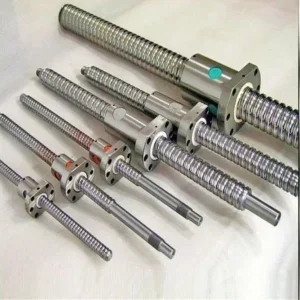
Ball screw systems are mechanical transmission components that convert rotary motion into linear motion with high efficiency. These systems consist of a screw (shaft) and a nut (ball nut) that moves along it. The balls located inside the nut, which are in contact with the helical grooves of the screw, minimize friction and provide smooth movement while ensuring high load-carrying capacity. However, in these systems, backlash appears as a small “dead zone” felt at the contact points of the balls between the screw and the nut when the direction of motion changes. This backlash primarily results from the less-than-ideal fit between the balls, screw grooves, and nut grooves, or from wear that occurs over time. The presence of backlash severely negatively impacts positioning accuracy, repeatability, and surface quality, especially in applications requiring high precision. For example, in a CNC machine, backlash during the forward and backward movements of the cutting tool can lead to inconsistencies in chip removal depth, undulations in the workpiece, and ultimately out-of-tolerance products.
The fundamental principle of eliminating ball screw backlash is to apply preload to the balls or nuts between the screw and the nut. Preload creates a continuous axial force in the system, ensuring that the balls remain in constant contact with the screw and nut grooves. This eliminates the time it takes for the balls to fill the gap between the grooves when the direction of motion changes, increasing the system’s response time and minimizing positioning error. Preload also increases the axial rigidity (stiffness) of the system, reducing vibrations and providing a more stable operating environment.
Various techniques are widely used in the industry to eliminate ball screw backlash:
- Double Nut Systems: This method is one of the most common and effective backlash elimination techniques. It is based on the principle of using two separate ball nuts on the same screw. By applying a preload force between the nuts, the balls are kept in constant contact with the screw grooves. Double nut systems have different variations:
- Fixed Spacer Double Nut: In this system, a precisely machined spacer is placed between the two nuts. The thickness of the spacer determines the desired amount of preload. When the nuts are tightened during assembly, the spacer pushes the nuts towards each other, and the balls are pressed between the screw grooves, eliminating backlash. This method is simple and economical, but the preload amount is not adjustable, and backlash may reappear due to wear over time.
- Adjustable Spacer Double Nut: Similar to fixed spacer systems, but the spacer is in the form of shims or an adjustable threaded ring, allowing for manual adjustment of the preload amount. This offers a more flexible solution in field conditions and allows for compensation of wear that occurs over time.
- Spring-Loaded Double Nut: In this system, disc springs (Belleville washers) or helical springs are placed between the two nuts. The springs continuously push the nuts towards each other, applying a constant axial preload force. Spring-loaded systems provide constant preload throughout their lifespan because they have the ability to automatically compensate for wear. They also act as shock absorbers during sudden load changes, contributing to more stable system operation. However, performance degradation can occur if the springs fatigue or break, and the preload amount is limited by the spring characteristics.
- Oversized Ball Systems: In this method, a ball nut is assembled using balls with a slightly larger diameter than standard balls. The balls are forced into place between the screw and nut grooves, creating an interference fit (preload). This method is typically applied during the manufacturing stage and is difficult to adjust in the field. It can provide high precision and rigidity, but excessive preload can increase friction and heat.
- Single Nut Preload: In a specially designed single ball nut, an internal preload can be achieved by optimizing the geometry of the ball channels or the arrangement of the balls. This is generally applicable to precision ground ball screws and requires a more complex manufacturing process.
Correct determination of the preload amount is vital. Insufficient preload leads to incomplete elimination of backlash, while excessive preload increases friction, heat generation, and energy consumption, which shortens the ball screw’s lifespan and reduces efficiency. The ideal preload amount is typically chosen between 5% and 15% of the ball screw’s dynamic load capacity and adjusted according to the application’s precision, speed, and load requirements. Preload increases the axial rigidity of the system, reducing resonance vibrations and allowing for higher feed rates.
Technically, the preload required for a ball screw to operate backlash-free depends on many factors such as the screw’s diameter, pitch, ball diameter, number of ball turns, and expected dynamic loads. Manufacturers typically provide recommended preload values and application guidelines for specific ball screw series. Field engineers and technicians should determine the most suitable preload setting by adhering to these values or by performing engineering calculations in special cases.
| Parameter | Value/Description |
|---|---|
| Ball Screw Backlash Type | Axial Backlash |
| Preload Methods | Double Nut (Fixed/Adjustable Spacer, Spring-Loaded), Oversized Ball |
| Typical Backlash Value (Without Preload) | 0.02 mm – 0.2 mm (Varies by screw diameter and manufacturing tolerance) |
| Recommended Preload Ratio | 5% – 15% of Dynamic Load Capacity (Adjusted according to application) |
| Effects of Preload | Increased Rigidity, Reduced Positioning Error, Reduced Vibration, Increased Friction and Heat (if excessive) |
| Application Areas | CNC Machines, Robotic Systems, Measuring Devices, Medical Equipment, Automation Lines |
| Impact on Lifespan | Correct preload extends lifespan, incorrect preload shortens lifespan. |
| Temperature Effect | Thermal expansion can change preload; must be checked against manufacturer datasheet values. |

Field Considerations
- Accurate Diagnosis and Isolation: Loss of precision or positioning error in a machine may not always be due to ball screw backlash. It is crucial to accurately determine whether the backlash originates from the ball screw itself, or from motor couplings, support bearings, linear guide rails, or control system settings. To measure backlash, a dial indicator with a magnetic base should be used to directly observe axial movement between the screw and the nut.
- Adherence to Manufacturer Instructions: Each ball screw and ball nut may have different designs and tolerances. Before starting preload adjustment or backlash elimination procedures, it is essential to consult the technical documentation, assembly guides, and preload tables provided by the manufacturer for the specific ball screw and ball nut. These guides contain critical information regarding recommended torque values, shim thicknesses, or spring sets.
- Cleanliness and Environment Control: During the disassembly and reassembly of ball nuts, it is vital that the working environment is free from dust, dirt, and foreign particles. Even the smallest particle entering between the balls and grooves can accelerate wear, increase friction, and negatively impact preload performance. A clean cloth, isopropyl alcohol, or specialized cleaners should be used.
- Use of Precision Measuring Instruments: High-precision measuring instruments must be used for backlash measurement and preload adjustment. The dial indicator should have a precision of 0.001 mm and be securely fixed. For adjustable spacer nuts, a micrometer is needed to measure shim thicknesses, and for spring-loaded systems, special testing devices may be required to check spring force. A torque wrench is indispensable for ensuring that the nuts are tightened to the correct torque value.
- Proper Lubrication: After the ball screw backlash is eliminated or the ball nut is reassembled, the manufacturer’s recommended type and amount of lubricant (grease or oil) should be applied. Adequate and correct lubrication reduces friction, keeps heat generation under control, and extends the ball screw’s lifespan. Lack of lubrication or incorrect lubricant selection can lead to excessive friction and premature wear.
- Step-by-Step Assembly and Adjustment: Especially in double nut systems, assembly and adjustment procedures must be applied step-by-step and carefully. Tightening the nuts evenly and gradually prevents the screw from binding or deforming. Preload adjustment may often require some trial-and-error and repeated measurements. After each adjustment, it is recommended to run the system through its full range of motion several times and re-measure backlash or friction torque.
- Thermal Expansion Effects: Ball screws can heat up significantly, especially when operating over long distances and at high speeds. Thermal expansion of materials can change the preload amount. Therefore, in critical applications, it is important to check backlash or preload after the machine reaches its operating temperature, or to use designs that compensate for thermal expansion.

Common Problems and Solutions
Some common problems encountered during and after ball screw backlash elimination processes, along with their solutions, are detailed below:
- Problem: Remaining Backlash or Insufficient Preload After Adjustment.
- Possible Causes: Incorrect preload adjustment (insufficient tightening, wrong shim thickness, weak springs), excessive wear on the ball screw or ball nut (balls, grooves), confusing other mechanical backlash (bearings, couplings) with ball screw backlash.
- Solutions:
- Carefully repeat the preload adjustment procedure according to manufacturer instructions.
- Check shim thicknesses or spring forces; if necessary, use thicker shims or stronger springs (springs may need replacement in spring-loaded systems).
- Perform a visual inspection of the ball screw and ball nut. If there is visible wear, pitting, or deformation in the grooves or balls, components may need to be replaced.
- Independently check and eliminate backlash in other mechanical components (motor coupling, support bearings).
- Problem: Increased Friction, High Operating Temperature, and Excessive Noise.
- Possible Causes: Excessive preload, insufficient or incorrect lubrication, incorrect assembly of the ball nut (screw binding), contamination or foreign objects entering the ball pathways.
- Solutions:
- Reduce the preload amount. In adjustable systems, reduce shim thickness or loosen spring tension. Refer to the manufacturer’s guide for optimal preload values.
- Clean the ball screw and ball nut and apply the correct type and amount of lubricant recommended by the manufacturer. High-temperature greases or oils may perform better under thermal load.
- Ensure the ball nut is correctly mounted on the screw and axially aligned. Ensure there is no binding or bending of the screw anywhere.
- Completely disassemble the system and perform a detailed inspection of the balls and grooves. Clean any contamination.
- Problem: Short Lifespan or Premature Failure.
- Possible Causes: Excessive preload (high contact pressure and friction), insufficient or incorrect lubrication, continuous vibration or excessive load in the system, contamination, incorrect ball screw or ball nut type selection.
- Solutions:
- Adjust the preload amount according to manufacturer recommendations. Excessive preload significantly shortens bearing life.
- Implement a correct and regular lubrication schedule. Periodically check the quality and quantity of lubricant.
- Review the system’s operating loads and speeds. Check if the ball screw exceeds its specified dynamic and static load capacities.
- Ensure the cleanliness of the operating environment and that protective bellows or sealing elements are intact.
- Ensure the correct ball screw and ball nut type is selected for the application (e.g., larger diameter or different ball arrangement models for high loads).
- Problem: Inconsistencies in Positioning Repeatability.
- Possible Causes: Uneliminated backlash, thermal expansion effects, errors in control system settings (gain settings, servo tuning), lack of mechanical rigidity (machine frame, connections).
- Solutions:
- Recheck ball screw backlash and ensure it is completely eliminated according to manufacturer specifications.
- Perform positioning tests after the machine reaches its operating temperature and evaluate the effects of thermal expansion. Use thermal compensation algorithms if necessary.
- Check and optimize servo motor and drive settings (PID gains, filters).
- Ensure the machine structure and ball screw mounting (bearing blocks, nut flanges) have sufficient rigidity. Tighten loose connections.
Expert Advice
Proper management and elimination of ball screw backlash are fundamental requirements for the precision, performance, and long lifespan of industrial automation systems. As we have covered in this comprehensive guide, understanding the causes of backlash, knowing different preload methods, and demonstrating careful application in the field are the keys to a successful backlash elimination operation. As an expert field engineer or technician, adopting a systematic methodology when approaching such complex mechanical issues is critically important. Always start by accurately diagnosing the problem, ensuring that ball screw backlash is distinguished from other mechanical or electrical issues. Then, perform preload adjustments by meticulously adhering to manufacturer specifications and using appropriate measuring instruments. Cleanliness, proper lubrication, and gradual adjustment processes are indispensable for a successful intervention. It should be remembered that excessive preload can be as detrimental as backlash; therefore, finding the “golden ratio” is essential for optimizing performance while extending the ball screw’s lifespan. Incorporating ball screw backlash checks into periodic maintenance routines helps detect potential problems early, minimizing unplanned downtime and increasing production efficiency. In the competitive environment brought by Industry 4.0, the levels of precision and reliability expected from machines are increasing day by day. In this context, mastery of fundamental mechanical principles such as ball screw backlash and the ability to effectively apply them in the field stand out as indispensable competencies for maintenance and engineering teams. Continuous training, sharing of experience, and tracking new technologies are of great importance for deepening expertise in this area.
FAQ
What is ball screw backlash?
Ball screw backlash is the axial clearance or play between the ball screw shaft and the ball nut. It results in a small "dead zone" or delay in linear motion when the direction of movement changes, leading to positioning errors and reduced precision in industrial CNC machines and automation systems.
What causes ball screw backlash?
Backlash is primarily caused by manufacturing tolerances, wear over time on the balls and screw/nut grooves, or improper assembly. These factors prevent the balls from maintaining constant contact with the grooves, creating a gap that manifests as backlash.
How can ball screw backlash be eliminated?
The most effective way to eliminate ball screw backlash is to apply a preload. This involves creating a continuous axial force that ensures the balls remain in constant contact with the screw and nut grooves. Common methods include using double nut systems (fixed spacer, adjustable spacer, or spring-loaded) or oversized balls.
What are the benefits of eliminating backlash with preload?
Applying preload increases the axial rigidity of the system, reduces positioning errors, minimizes vibrations, and improves the overall response time and stability of the ball screw mechanism. However, excessive preload can lead to increased friction, heat generation, and reduced lifespan.
What critical factors should be considered when eliminating ball screw backlash in the field?
When addressing backlash, it's crucial to accurately diagnose the source (ensuring it's not from other components like couplings or bearings), adhere strictly to manufacturer instructions, maintain a clean working environment, use high-precision measuring tools, ensure proper lubrication, and perform adjustments step-by-step. Also, consider thermal expansion effects.