No products in the cart.
Aluminum Body vs. Cast Iron Body Spindle Motors: Heat Dissipation Differences

Contents
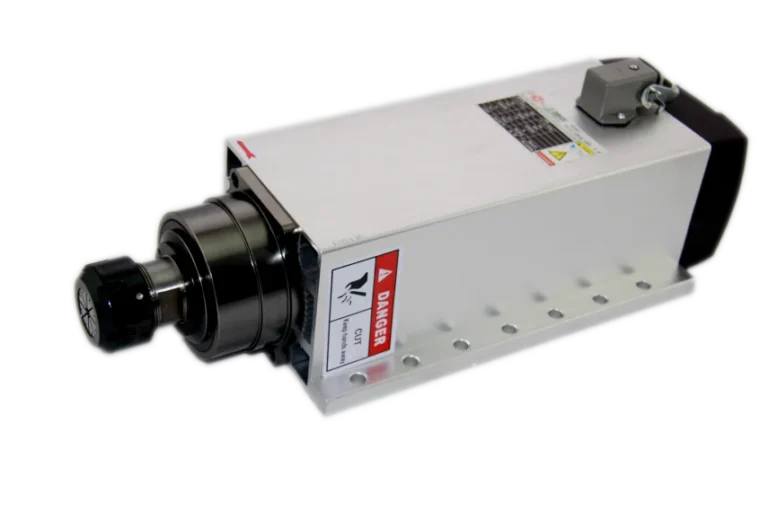
- Aluminum Body vs. Cast Iron Body Spindle Motors: Introduction and Technical Analysis At the heart of industrial automation, spindle motors are key to precision, speed, and efficiency in CNC machines, milling centers, lathes, and other machining centers. These motors rotate at high RPMs to shape materials during processing. However, one of the most critical challenges encountered while operating under high speeds and heavy loads is heat management. The choice of spindle motor body material, whether aluminum body or cast iron body, has a direct and profound impact on the motor’s thermal performance, lifespan, precision, and overall system efficiency. This field guide and technical article aims to provide a detailed analysis of the heat dissipation characteristics, engineering principles, and practical implications of these two primary material types for experts and practitioners in the industrial automation sector. The correct body material selection is a strategic decision that affects not only the initial investment cost but also operational efficiency, maintenance costs, and ultimately, the quality of production. Due to the operating principle of spindle motors, heat is continuously generated from various sources such as electrical resistance in coils, friction in bearings, and aerodynamic friction of the rotor. If this heat is not controlled, it can degrade the motor’s magnetic properties, shorten bearing life, damage winding insulation, and most importantly, negatively affect machine precision through thermal expansion. Especially in modern machining operations requiring micron-level precision, thermal stability is a critical performance parameter. Properties of the body material such as thermal conductivity, density, rigidity, and coefficient of thermal expansion determine how effectively this heat is transferred from inside the motor to the outside. This article will address the fundamental differences between aluminum’s lightness and high thermal conductivity and the robustness and vibration damping capabilities of cast materials (typically cast iron or steel) from an engineering perspective, highlighting the advantages and disadvantages of both options. Our goal is to provide comprehensive knowledge to help engineers and technicians in the field select the most suitable spindle motor body material for their specific application requirements. Aluminum Body vs. Cast Iron Body Spindle Motors: Heat Dissipation Differences, Operating Principle, and Technical Data
- Aluminum Body Spindle Motors: Advantages and Disadvantages
- Cast Iron Body Spindle Motors: Advantages and Disadvantages
- Application Areas and Engineering Selection
- Aluminum Body vs. Cast Iron Body Spindle Motors: Field Considerations
- Aluminum Body vs. Cast Iron Body Spindle Motors: Common Problems and Solutions
- Aluminum Body vs. Cast Iron Body Spindle Motors: Conclusion and Expert Advice
- FAQ
Aluminum Body vs. Cast Iron Body Spindle Motors: Introduction and Technical Analysis
At the heart of industrial automation, spindle motors are key to precision, speed, and efficiency in CNC machines, milling centers, lathes, and other machining centers. These motors rotate at high RPMs to shape materials during processing. However, one of the most critical challenges encountered while operating under high speeds and heavy loads is heat management. The choice of spindle motor body material, whether aluminum body or cast iron body, has a direct and profound impact on the motor’s thermal performance, lifespan, precision, and overall system efficiency. This field guide and technical article aims to provide a detailed analysis of the heat dissipation characteristics, engineering principles, and practical implications of these two primary material types for experts and practitioners in the industrial automation sector. The correct body material selection is a strategic decision that affects not only the initial investment cost but also operational efficiency, maintenance costs, and ultimately, the quality of production.
Due to the operating principle of spindle motors, heat is continuously generated from various sources such as electrical resistance in coils, friction in bearings, and aerodynamic friction of the rotor. If this heat is not controlled, it can degrade the motor’s magnetic properties, shorten bearing life, damage winding insulation, and most importantly, negatively affect machine precision through thermal expansion. Especially in modern machining operations requiring micron-level precision, thermal stability is a critical performance parameter. Properties of the body material such as thermal conductivity, density, rigidity, and coefficient of thermal expansion determine how effectively this heat is transferred from inside the motor to the outside. This article will address the fundamental differences between aluminum’s lightness and high thermal conductivity and the robustness and vibration damping capabilities of cast materials (typically cast iron or steel) from an engineering perspective, highlighting the advantages and disadvantages of both options. Our goal is to provide comprehensive knowledge to help engineers and technicians in the field select the most suitable spindle motor body material for their specific application requirements.
Aluminum Body vs. Cast Iron Body Spindle Motors: Heat Dissipation Differences, Operating Principle, and Technical Data
Considering the vital role of heat management in the performance and lifespan of spindle motors, the choice of body material directly determines the motor’s design and operating characteristics. Heat is transferred from inside the motor through three primary mechanisms: conduction, convection, and radiation. The spindle motor body is the primary path for transferring internal heat to the outer surface, especially through conduction. From the outer surface, heat is usually dissipated by convection through air or liquid. In this section, we will examine the effects of aluminum and cast iron body spindle motors on these heat transfer mechanisms and the technical consequences of material properties.

Aluminum Body Spindle Motors: Advantages and Disadvantages
Aluminum alloys (typically 6061, 7075 series) are known for their high thermal conductivity. Typically, the thermal conductivity of aluminum ranges from 150-200 W/mK, while for cast iron, this value is around 40-55 W/mK. This means that aluminum can transfer hot spots (windings, bearings) inside the motor to the outer surface more quickly. As a result, aluminum body motors generally have more effective natural cooling capacity and can exhibit lower internal temperatures at the same power level. This ensures that the motor operates cooler and thus has a longer lifespan, especially in applications with high speeds and frequent dynamic load changes.
Another significant advantage is its lightweight nature. The density of aluminum is approximately one-third that of cast iron (2.7 g/cm³ vs 7.2 g/cm³). This is critically important for robotic applications, high-speed machining centers, or spindle motors on moving axes. A lighter spindle allows axes to accelerate and decelerate faster, increasing the machine’s overall dynamic performance and reducing energy consumption. Furthermore, aluminum is easier to machine than cast iron, which facilitates the design and production of complex cooling channels or fin structures. Corrosion resistance is also generally better than cast iron, especially when anodized.
However, aluminum also has some disadvantages. Most notably, its lower rigidity. Cast iron has a much higher Young’s modulus (modulus of elasticity) than aluminum, making it more resistant to vibrations and deformation. In high-precision machining applications, the rigidity of the motor body is vital for maintaining the alignment of bearings and the shaft. Although aluminum bodies attempt to compensate for this rigidity deficit through design, they may struggle to offer the inherent robustness of cast iron. Additionally, aluminum’s coefficient of thermal expansion is higher than that of cast iron (approximately twice). This means more expansion when the motor heats up and more contraction when it cools down. These thermal cycles can affect bearing preload, rotor-stator clearance, and overall shaft alignment, leading to long-term precision loss or shortened bearing life. Therefore, more sophisticated thermal management strategies and expansion-compensating designs are often used in high-precision aluminum body spindles.

Cast Iron Body Spindle Motors: Advantages and Disadvantages
Cast iron body spindle motors are typically manufactured using cast iron (gray cast iron) or sometimes cast steel. The most prominent feature of these materials is their high rigidity and excellent vibration damping capabilities. Cast iron is superior in absorbing vibration energy due to the graphite lamellae in its internal structure. This property is critically important, especially in heavy cuts, intermittent chip removal, or applications requiring high torque. Effective damping of vibrations improves machining quality, extends tool life, and reduces wear on machine components.
The low coefficient of thermal expansion of cast iron is also a significant advantage. This means that the motor better maintains its dimensional stability during changes in operating temperature. In high-precision and long-duration machining operations, this stability is indispensable for consistently achieving accurate tolerances. Bearing preloads and shaft alignment are less affected by thermal cycles, ensuring more consistent machining performance and longer bearing life.
However, the main disadvantage of cast iron bodies is their lower thermal conductivity. Compared to aluminum, they transfer heat from inside the motor to the outside more slowly. This situation can increase the risk of overheating, especially in high-power density motors or those operating at continuously high speeds. To mitigate this risk, cast iron body spindles typically use more complex and powerful external cooling systems (e.g., integrated liquid cooling channels or large surface area fins). These cooling systems can increase the overall size and complexity of the motor. Additionally, cast materials are much heavier than aluminum, which can negatively impact the dynamics of machine axes and require more powerful drive systems. Their machinability is also more difficult than aluminum, which can increase production costs and make it challenging to achieve complex geometries. In terms of corrosion resistance, cast iron is also more susceptible to rust if proper surface treatments are not applied.

Application Areas and Engineering Selection
The choice depends entirely on the application’s requirements. For high-speed, light cuts, frequent acceleration/deceleration, and robotic applications, aluminum body spindle motors are generally preferred. Here, lightness, dynamic performance, and rapid heat transfer are paramount. On the other hand, for heavy cuts, high-torque operations, and long-duration, high-precision machining operations, cast iron body spindle motors may be more suitable. In such applications, rigidity, vibration damping, and dimensional stability are critically important. The engineering decision should be evaluated from a broad perspective, encompassing not only thermal conductivity but also material cost, machining costs, cooling system integration, weight constraints, and the expected lifespan of the motor.
| Parameter | Value/Description |
|---|---|
| Material Type | Aluminum Alloy (e.g., 6061-T6) vs. Cast Iron (Gray Cast Iron) |
| Thermal Conductivity | 150-200 W/mK (Aluminum) vs. 40-55 W/mK (Cast Iron). Aluminum transfers heat faster. |
| Density | 2.7 g/cm³ (Aluminum) vs. 7.2 g/cm³ (Cast Iron). Aluminum is much lighter. |
| Rigidity and Vibration Damping | Lower rigidity, moderate vibration damping (Aluminum) vs. High rigidity, excellent vibration damping (Cast Iron). |
| Coefficient of Thermal Expansion | 23.1 µm/m°C (Aluminum) vs. 11.5 µm/m°C (Cast Iron). Aluminum expands more. |
| Weight Impact | Better performance in dynamic systems, lower energy consumption (Aluminum) vs. Higher inertia, requirement for more powerful axis motors (Cast Iron). |
| Cost Impact | Material cost variable, machining ease advantage (Aluminum) vs. Material cost generally lower, machining difficulty increases cost (Cast Iron). |
| Typical Application Areas | High-speed machining, robotics, light cuts (Aluminum) vs. Heavy cuts, high torque, long-duration precision machining (Cast Iron). |

Aluminum Body vs. Cast Iron Body Spindle Motors: Field Considerations
- Detailed Analysis of Application Requirements: When selecting a spindle motor, it is crucial to analyze all application requirements in detail (maximum RPM, torque, cutting forces, machining precision, machining duration, environmental conditions). An aluminum body offers more efficient heat dissipation in high-speed and light cutting applications, while a cast iron body excels in thermal stability and vibration damping for heavy cuts. This analysis should cover not only immediate performance expectations but also long-term operational reliability and maintenance costs.
- Cooling System Integration and Efficiency: The thermal conductivity of the body material directly influences the type and size of the cooling system to be selected. Aluminum body spindle motors, thanks to their high thermal conductivity, can often achieve adequate performance with simpler air-cooled or low-capacity liquid-cooled systems. Cast iron bodies, which transfer heat more slowly, typically require more powerful and complex liquid cooling systems (with internal channels, chiller-supported). Correct sizing and integration of the cooling system with the motor are vital to prevent overheating and extend motor life. The quality and flow rate of the coolant should also be continuously monitored.
- Thermal Expansion and Dimensional Stability Management: Aluminum’s higher coefficient of thermal expansion means that the motor undergoes greater dimensional changes during heating and cooling cycles. This can lead to deviations in tool positioning, especially in operations requiring micron-level precision. To minimize this effect, thermal compensation algorithms can be used in machine control systems (CNC), or stability can be achieved by keeping the motor’s operating temperature range narrow. Cast iron bodies are more advantageous in this regard due to their lower expansion coefficients and offer more predictable performance in long-duration precision machining. The impact of these thermal changes on bearing preload and rotor-stator clearance should be thoroughly investigated during the design phase.
- Vibration Management and Machining Quality: The superior vibration damping properties of cast iron provide a significant advantage, especially in demanding cutting conditions or operations requiring high surface quality. Vibrations can degrade machining quality, shorten tool life, and cause wear on machine components. For aluminum body spindle motors, this can be compensated by using additional vibration damping elements or more rigid mounting interfaces if necessary. The dynamic balance of the motor is critical for both body types and should be checked regularly.
- Weight and Dynamic Effects: The lightness of aluminum bodies positively affects machine dynamics and energy efficiency, especially in machines with fast axis movements (e.g., 5-axis machines, robotic arms). Less inertia means faster acceleration and deceleration, which can shorten cycle times. The weight of cast iron bodies may require the machine bed and axis drive systems to be more robust, but this weight also contributes to the overall rigidity of the machine. This balance should be carefully considered in system design.
- Environmental Conditions and Maintenance: The ambient temperature, humidity, and dust/particle density of the operating environment also affect the thermal performance of the spindle motor. High ambient temperatures increase the load on the cooling system. Cast iron is more sensitive to moisture and carries a risk of rust if not properly surface treated, while aluminum generally offers better corrosion resistance. Regular maintenance, cooling system checks, bearing lubrication, and general cleaning are essential for the long-lasting and efficient operation of both types of spindle motors.

Aluminum Body vs. Cast Iron Body Spindle Motors: Common Problems and Solutions
In an industrial automation environment, spindle motors operate under continuous high-performance expectations, and various problems can arise depending on the body material. Understanding these problems and implementing correct solutions is critical for production continuity and quality.
Common Problems and Solutions for Aluminum Body Spindle Motors:
- Problem 1: Loss of Precision or Shortened Bearing Life Due to Excessive Thermal Expansion. Due to aluminum’s high coefficient of thermal expansion, its dimensions change more significantly than cast iron when the motor heats up. This can lead to micro-changes in the axial or radial position of the shaft, reducing machining precision or excessively increasing bearing preload, thereby shortening its lifespan. Especially rapid speed changes and large temperature differences exacerbate this effect.
Solution:- Thermal Compensation Algorithms: Thermal compensation algorithms that automatically adjust tool position based on motor temperature should be used in CNC control systems.
- Stable Operating Temperature: An effective cooling system (preferably liquid cooling with precise temperature control) should be used to keep the motor’s operating temperature within a narrow range.
- Bearing Selection and Mounting: Bearings more resistant to high-temperature variations (e.g., C4 clearance or special ceramic bearings) should be selected, and preload adjustments that account for thermal expansion should be made during mounting.
- Pre-heating Cycles: Especially before starting precise operations, a short pre-heating cycle can be applied to allow the motor to reach a specific operating temperature.
- Problem 2: Vibrations and Surface Quality Defects Due to Lower Rigidity. Aluminum’s lower rigidity compared to cast iron can cause vibrations in the motor body, especially during heavy or intermittent cuts. These vibrations can result in ripples on the workpiece, tool marks, and a general reduction in surface quality.
Solution:- Optimized Mounting: The rigidity of the spindle’s mounting interface to the machine bed should be increased, preferably using a wider and more robust connection surface.
- Dynamic Balancing: The rotor and shaft assembly of the motor should be dynamically balanced very well and checked periodically.
- Optimization of Cutting Parameters: Combinations of cutting depth, feed rate, and RPM that do not trigger vibrations should be found.
- Structural Reinforcements: In some cases, reinforcing elements that provide additional rigidity to the outside of the motor body may be considered.
Common Problems and Solutions for Cast Iron Body Spindle Motors:
- Problem 1: Overheating and Efficiency Loss Due to Insufficient Heat Dissipation. The low thermal conductivity of cast iron makes it difficult for heat generated inside the motor to dissipate outwards. This can lead to motor overheating, degradation of winding insulation, shortened bearing life, and efficiency loss due to changes in magnetic properties, especially during long-duration high-power or high-speed operations.
Solution:- Powerful Liquid Cooling Systems: Cast iron bodies with integrated liquid cooling channels should be preferred, and high-flow, temperature-controlled coolant (with a chiller) should be circulated through these channels.
- Large Surface Area Design: Finned or ribbed designs should be used on the outer surface of the motor body to increase heat dissipation.
- Thermal Sensors and Protection: Temperatures should be continuously monitored with thermal sensors placed in motor windings and bearing areas, and the motor should automatically shut down when critical limits are exceeded.
- Ambient Cooling: The temperature of the environment where the machine and motor are located should be controlled, and ambient cooling should be provided if necessary.
- Problem 2: Dynamic Performance Limitations Due to High Weight and Inertia. The high density of cast iron increases the total weight of the motor. This can extend the acceleration/deceleration times of machine axes and limit overall dynamic performance, especially in applications requiring fast axis movements.
Solution:- Powerful Axis Drive Systems: More powerful servo motors and drive systems should be selected for machine axes.
- Optimal Machine Design: The machine bed and axis structure should be designed to be rigid and robust enough to handle the weight and inertia of the cast iron spindle.
- Optimization of Machining Strategy: Machining programs should be optimized to minimize movements requiring sudden acceleration and deceleration.
- Alternative Material Options: If the application truly requires high dynamic performance and a cast iron body is unavoidable, lighter cast alloys such as cast steel or hybrid body designs can be evaluated.
- Problem 3: Corrosion Risk (for Cast Iron). Cast iron is prone to rust in humid environments if proper surface treatments are not applied. This can lead to blockages in cooling channels or aesthetic and functional degradation on the outer surface.
Solution:- Surface Protection Coatings: Cast iron bodies should be protected with surface treatments such as painting, coating, or chemical passivation to increase corrosion resistance.
- Coolant Quality: Anti-corrosion additives should be added to the coolant, and the pH value of the fluid should be regularly checked.
- Environmental Control: Humidity and temperature around the machine should be kept under control.
A common problem for both body types is bearing failures. Excessive temperature, insufficient lubrication, or excessive vibration can cause premature bearing failure. Therefore, regular inspection of bearings, correct lubrication, and continuous monitoring of thermal management are of great importance.
Aluminum Body vs. Cast Iron Body Spindle Motors: Conclusion and Expert Advice
The selection of spindle motor body material, at the core of industrial automation, is more than just an engineering preference; it is a strategic decision with profound implications for operational efficiency, production quality, maintenance costs, and overall system lifespan. As discussed in this detailed field guide, aluminum body and cast iron body spindle motors differ significantly in terms of heat dissipation and other mechanical properties. Aluminum offers advantages in rapid heat transfer and dynamic performance due to its high thermal conductivity and lightness, but it also comes with disadvantages such as high thermal expansion and lower rigidity. On the other hand, cast materials (typically cast iron) excel in heavy and precise machining applications with their superior rigidity, vibration damping capabilities, and thermal stability, but they require different thermal management and dynamic limitations due to their lower thermal conductivity and high weight.
From an expert perspective, there is no such thing as the “best” spindle motor body; there is only the “most suitable” spindle motor body for the application. The decision-making process should proceed with a multi-faceted analysis, not just based on material costs or catalog values. Beyond initial investment costs, factors such as energy consumption, maintenance frequency and costs, potential production interruptions, and ultimately the quality of manufactured parts over the motor’s operational life play a critical role in the Total Cost of Ownership (TCO) calculation. For example, for a high-speed, light-cut application requiring frequent acceleration/deceleration, an aluminum body spindle, with its lower inertia and faster cooling capacity, might be more advantageous. Conversely, for heavy-duty, high-precision machining of robust materials, the inherent rigidity and thermal stability of a cast iron body spindle, despite its weight, would likely lead to superior long-term performance and part quality. It is essential to consider the entire system, including the CNC router machine, servo drives, linear guide rails, and vacuum table, to make an informed decision. For tailored advice on selecting the ideal spindle motor for your industrial CNC router, we invite you to request a quote on WhatsApp.
FAQ
When should I choose an aluminum body spindle motor?
Aluminum body spindle motors are generally preferred for high-speed machining, robotic applications, and light cutting operations due to their high thermal conductivity and lightweight properties. They allow for faster acceleration and deceleration of machine axes.
When is a cast iron body spindle motor the better choice?
Cast iron body spindle motors are ideal for heavy cutting, high-torque operations, and long-duration, high-precision machining. Their superior rigidity, excellent vibration damping, and lower thermal expansion coefficient ensure greater dimensional stability and better surface finish.
What are the main differences in heat dissipation between aluminum and cast iron spindle motors?
Aluminum has a higher thermal conductivity (150-200 W/mK) compared to cast iron (40-55 W/mK), meaning it dissipates heat more quickly. However, aluminum also has a higher coefficient of thermal expansion, which can affect precision during temperature fluctuations. Cast iron, while slower at heat dissipation, offers superior thermal stability and rigidity.
What are the common problems associated with each spindle motor body type and how are they addressed?
For aluminum bodies, common issues include precision loss due to thermal expansion and vibrations from lower rigidity. Solutions involve thermal compensation algorithms, stable cooling, optimized bearing selection, and dynamic balancing. For cast iron bodies, overheating due to lower thermal conductivity and dynamic limitations from high weight are common. Solutions include powerful liquid cooling systems, robust machine design, and optimized machining strategies.
How does the spindle motor body material affect overall CNC machine performance?
The choice impacts the machine's dynamic performance (lighter aluminum for faster movements, heavier cast iron for stability), energy consumption, machining precision, tool life, and overall maintenance requirements. It's a critical factor in the Total Cost of Ownership (TCO) and the quality of the final product.