













































































Ball Screw Critical Speed Calculation and Buckling Analysis
📑 Table of contents (Click to open)
- Ball Screw Critical Speed Calculation and Buckling Analysis: Introduction and Technical Analysis
- Ball Screw Critical Speed Calculation and Buckling Analysis: Operating Principle and Technical Data
- Ball Screw Critical Speed Calculation
- Ball Screw Buckling Analysis
- Engineering Data and Application Areas
- Ball Screw Critical Speed Calculation and Buckling Analysis: Field Considerations
- Ball Screw Critical Speed Calculation and Buckling Analysis: Common Problems and Solutions
- Ball Screw Critical Speed Calculation and Buckling Analysis: Conclusion and Expert Advice
- FAQ
Ball Screw Critical Speed Calculation and Buckling Analysis: Introduction and Technical Analysis
At the heart of industrial automation systems, ball screws undoubtedly stand as one of the fundamental components providing precise and reliable motion. These screws efficiently convert rotary motion into linear motion with high efficiency, playing critical roles across a wide range of applications, from CNC machines and robotic systems to semiconductor manufacturing equipment and medical devices. However, for these high-performance systems to operate safely, flawlessly, and with a long lifespan, two vital engineering parameters must not be overlooked during the design phase: Ball Screw Critical Speed and Buckling Analysis. This technical article and field guide aim to provide engineers, designers, and maintenance specialists in the industrial automation sector with a deep understanding of these topics, teach correct calculation methods, and help develop proactive solutions against potential problems encountered in the field. These analyses not only ensure the system’s optimal performance but also play a key role in preventing unexpected breakdowns, safety risks, and costly downtime. Correct design and application are indispensable elements that directly impact the efficiency, reliability, and competitiveness of automation systems.
Ball Screw Critical Speed Calculation and Buckling Analysis: Operating Principle and Technical Data
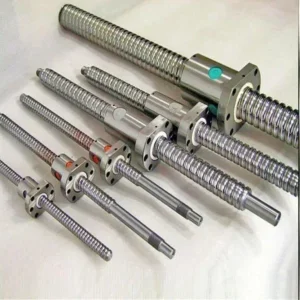
Ball screw systems are mechanisms that transmit motion with high efficiency and low friction by converting sliding friction into rolling friction through balls between a screw (shaft) and a nut (ball nut). The performance of these systems is directly affected by the rotational speed of the screw and the axial load it carries. This is where the concepts of critical speed and buckling come into play.

Ball Screw Critical Speed Calculation
Critical speed refers to the rotational speed at which a ball screw begins to exhibit excessive vibration (whirling) due to resonance when it approaches its natural frequency. This resonance can lead to shaft oscillation, excessive loading on bearings, nut vibration, and ultimately result in damage, wear, and even complete failure of the system. Critical speed depends on factors such as the screw’s geometry, material properties, and support conditions. Generally, the critical speed of a ball screw can be calculated using an equation derived from Euler’s formula:
$$N_c = frac{C cdot d^2}{L^2} sqrt{frac{E}{rho}}$$
Where:
- $$N_c$$: Critical speed (revolutions/minute)
- $$C$$: A constant dependent on support conditions (support factor)
- $$d$$: Root diameter of the screw (mm)
- $$L$$: Length of the screw between support points (mm)
- $$E$$: Young’s Modulus of the screw material (N/mm²)
- $$rho$$: Density of the screw material (kg/mm³)
Typical $$C$$ values for support conditions:
- One end fixed, other end free (fixed-free): 0.5
- Both ends simply supported (simple-simple): 1.0
- One end fixed, other end simply supported (fixed-simple): 1.5
- Both ends fixed (fixed-fixed): 2.0
In practice, an operating speed that does not exceed 80% of the screw’s critical speed is preferred. This is an application of a safety factor and ensures that the system is kept away from the resonance region.

Ball Screw Buckling Analysis
Buckling is the sudden lateral deformation or bending of a ball screw when the axial compressive load applied to it exceeds a certain critical value. This condition is particularly important for long and slender screws, in vertical applications, or in horizontal applications where high axial compressive loads are present. Buckling can lead to permanent deformation of the screw, loss of positioning accuracy in the system, and even complete fracture of the screw. The buckling load is calculated using Euler’s buckling formula:
$$P_{cr} = frac{K cdot pi^2 cdot E cdot I}{L^2}$$
Where:
- $$P_{cr}$$: Critical buckling load (N)
- $$K$$: A constant dependent on support conditions (support factor)
- $$pi$$: Pi constant (approximately 3.14159)
- $$E$$: Young’s Modulus of the screw material (N/mm²)
- $$I$$: Moment of inertia of the screw ($$I = frac{pi d^4}{64}$$) (mm&sup4;)
- $$L$$: Length of the screw between support points (mm)
Typical $$K$$ values for support conditions:
- One end fixed, other end free (fixed-free): 0.25
- Both ends simply supported (simple-simple): 1.0
- One end fixed, other end simply supported (fixed-simple): 2.0
- Both ends fixed (fixed-fixed): 4.0
In buckling analysis, the calculated critical buckling load is also divided by a specific safety factor (typically between 3 and 5) to determine the maximum allowable operating load. This ensures that the screw operates safely and that the risk of buckling is minimized.
Engineering Data and Application Areas
These calculations are vital, especially in high-speed CNC machining centers, linear axes in robotic manipulators, semiconductor wafer processing machines, and positioning systems in precision measuring devices. Parameters such as the screw’s material (typically alloy steel, stainless steel), diameter, and length directly affect the critical speed and buckling load. Designers must optimize these parameters according to application requirements. For example, the risk of buckling increases for longer screws, while the critical speed limit becomes more pronounced for applications requiring higher speeds. Therefore, the specific conditions of each application must be carefully evaluated, and relevant engineering calculations must be meticulously performed. These analyses are an indispensable step to extend the life of the ball screw, increase system reliability, and prevent unexpected failures.
| Parameter | Value/Description |
|---|---|
| Screw Material | Special Alloy Steel (e.g., SCM440, C55) |
| Young’s Modulus (E) | 200-210 GPa (200,000-210,000 N/mm²) |
| Material Density (ρ) | 7.85 x 10⁻⁶ kg/mm³ (7850 kg/m³) |
| Screw Root Diameter (d) | 15 mm – 60 mm (Varies by Application) |
| Length Between Supports (L) | 500 mm – 4000 mm (Varies by Application) |
| Critical Speed Safety Factor | 0.7 – 0.8 (70-80% of Calculated N_c) |
| Buckling Load Safety Factor | 3 – 5 (1/3 – 1/5 of Calculated P_cr) |
| Support Condition (Critical Speed C) | 1.0 (Simple-Simple) – 2.0 (Fixed-Fixed) |
| Support Condition (Buckling K) | 1.0 (Simple-Simple) – 4.0 (Fixed-Fixed) |
Ball Screw Critical Speed Calculation and Buckling Analysis: Field Considerations
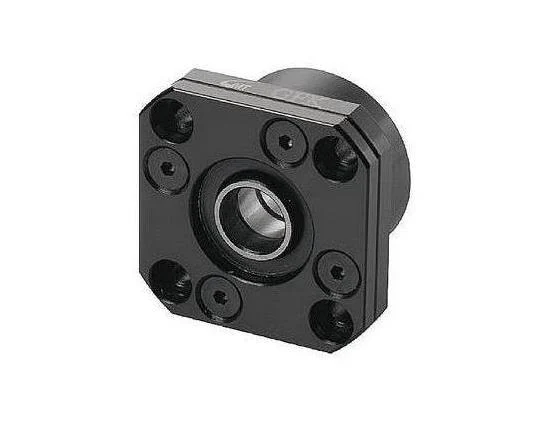
- Support Conditions and Bearing Selection: The end support configuration of the ball screw has a decisive effect on both critical speed and buckling load. For example, fixed-fixed support at both ends allows the screw to operate at higher speeds and withstand greater axial loads. Conversely, fixed-free support significantly reduces both critical speed and buckling resistance. Therefore, selecting the appropriate bearing type (angular contact ball bearings, cylindrical roller bearings) and mounting method according to the speed and load capacity required by the application is critically important. Correct tightening, backlash-free mounting, and alignment of bearings are essential to ensure that the calculated support conditions are met in the field.
- Screw Material and Machining Quality: The Young’s Modulus (E) and density (ρ) of the material from which the screw is manufactured are directly involved in critical speed and buckling calculations. High-strength steels offer better performance. However, not only the material but also the machining quality of the screw is important. Surface roughness, precision grinding, and heat treatment processes affect the screw’s fatigue life and vibration resistance. The straightness and geometric accuracy of the screw play a major role in reducing the risk of resonance and buckling. Any curvature or out-of-tolerance condition can negatively affect the dynamic behavior of the screw.
- Lubrication and Maintenance Routines: Regular and correct lubrication is indispensable for the long-term and efficient operation of ball screw systems. Insufficient lubrication increases friction, leading to heating, wear, and consequently shortening the screw’s lifespan. Excessive heating can cause dimensional changes in the screw, affecting preload and altering critical speed behavior. Furthermore, lack of lubrication or incorrect lubrication can increase vibrations in the system and pave the way for reaching critical speed earlier. Periodic checks, monitoring of oil level and quality, and the integrity of seals are critical for the overall health of the system.
- Vibration Analysis and Balancing: Especially in high-speed applications, the dynamic balance of the screw is vital. Even small imbalances resulting from manufacturing tolerances can lead to significant vibrations at high speeds. These vibrations can trigger critical speed and shorten the system’s lifespan. In advanced automation systems, dynamic balancing of the ball screw and post-assembly vibration analysis help detect potential problems in advance. Continuous monitoring with vibration sensors provides valuable data for early detection of approaching critical speed zones or other anomalies.
- Temperature Management and Thermal Expansion: Heat generated during ball screw operation and changes in ambient temperature affect the dimensional stability of the screw. Thermal expansion can cause the screw to lengthen or shorten, changing the preload and affecting the system’s positioning accuracy. Excessive temperature rise can also reduce the screw’s buckling resistance. Therefore, especially for long screws, appropriate cooling mechanisms (e.g., hollow screw and liquid cooling) or design approaches that compensate for thermal expansion (e.g., tension mounting) should be adopted.
- Application of Safety Factors: The calculated critical speed and buckling load values are theoretical limits and can always show some deviation due to uncertainties in real-world conditions, manufacturing tolerances, material variations, and unexpected loads. Therefore, sufficient safety factors must always be applied in design. For critical speed, an operating speed that generally does not exceed 70-80% is determined, while for buckling load, a safety factor between 3 and 5 times is a common practice. These factors increase the reliability and lifespan of the system, preventing unexpected failures.
- Mounting Precision and Alignment: Correct alignment of the ball screw with the bearings and the motor/coupling system directly affects system performance. Misalignment causes additional stresses on the screw, premature wear in bearings, and vibrations. This can lead to reaching critical speed earlier and disrupting the dynamic stability of the screw. Laser alignment tools and precise mounting techniques should be used to minimize these risks.
Ball Screw Critical Speed Calculation and Buckling Analysis: Common Problems and Solutions
When working with ball screw systems in industrial automation, it is possible to encounter various problems arising from a lack of critical speed and buckling analysis or incorrect applications. Recognizing these problems and implementing correct solutions directly affects the system’s efficiency and lifespan.
- Excessive Vibration and Noise:
- Problem: The ball screw produces abnormally high vibration and noise during operation, especially worsening in certain speed ranges. This indicates that the screw may be very close to or has reached its critical speed. Additionally, screw imbalance or bearing wear can also lead to this situation.
- Solution: First, reduce the operating speed of the screw to a level consistent with the critical speed safety factor. Review the support conditions; if necessary, switch to a more rigid (e.g., fixed-fixed) support system. Check the dynamic balance of the screw and apply professional balancing if required. Check the condition of the bearings and replace worn or damaged bearings. Check the alignment of the screw and nut and correct any assembly errors.
- Screw Bending or Permanent Deformation:
- Problem: Visible bending or permanent deformation occurs in the screw, especially in vertical or high axial load applications. This indicates that the applied axial compressive load has exceeded the screw’s critical buckling load.
- Solution: Increase the screw’s diameter to raise the moment of inertia (I), thereby increasing buckling resistance. Shorten the length between support points (L) as much as possible or make the support conditions more rigid (e.g., transition from simple-simple to fixed-fixed). Ensure that the load required for the application does not exceed the screw’s maximum allowable buckling load, in accordance with the determined safety factor. If necessary, review the system’s mechanical design and implement solutions to reduce or distribute the axial load (e.g., additional linear guide rails).
- Premature Wear and Failure:
- Problem: Wear, backlash formation, or bearing failures occur in the ball screw or nut system much earlier than expected. This can be caused by many factors such as insufficient lubrication, contamination, overloading, misalignment, or continuous operation in the critical speed zone.
- Solution: Review lubrication routines and ensure that the appropriate type and amount of lubricant are used. Check the sealing elements around the nut and screw to prevent contamination ingress and improve them if necessary. Recalculate whether the applied axial and radial loads are within the capacity of the screw and bearings. Precisely check and correct the alignment of the screw and motor. Ensure that the screw operates away from critical speed and that resonance is not entered.
- Loss of Positioning Accuracy:
- Problem: Repeated positioning errors or increased backlash are observed in the axis driven by the ball screw. This can be due to loss of ball screw preload, wear in the nut or screw, bearing clearance, or thermal expansion.
- Solution: First, check the nut’s preload and adjust or replace the nut if necessary. Check for play in the bearings and replace bearings or adjust their preload if necessary. Stabilize the operating environment temperature to minimize thermal expansion or use screw mounting methods that compensate for thermal expansion (e.g., tension mounting). Check the parallelism and straightness of the screw and linear guide rails.
- Motor Overload or Excessive Current Draw:
- Problem: The servo motor driving the ball screw draws more current than expected, heats up, or gives an overload error. This can be caused by high friction, misalignment, overloading, screw bending, or resonance vibrations occurring in the critical speed zone, causing the motor to expend extra power.
- Solution: Check lubrication status and reduce friction. Check the alignment of the screw and motor and the coupling connection, correct misalignment. Ensure that the applied load is within the motor’s capacity; if necessary, replace the motor with a more powerful model or make mechanical adjustments to reduce the load. Ensure that the screw operates away from critical speed and prevent resonance vibrations.
Ball Screw Critical Speed Calculation and Buckling Analysis: Conclusion and Expert Advice
Ball screw systems are indispensable building blocks of modern industrial automation and are key to high-precision, repeatable linear motion. However, for these systems to fully realize their potential and operate reliably and flawlessly for a long time, fundamental engineering principles such as critical speed calculation and buckling analysis must never be overlooked. Our field experience shows that if these analyses are not performed in sufficient depth during the design phase or if appropriate safety factors are not determined for the application conditions, serious failures, costly downtime, and even safety risks are inevitable.
As an expert, my advice is to meticulously evaluate the unique dynamics and static load conditions of each ball screw application. This is a holistic approach that covers not only the physical dimensions and material properties of the screw but also the end support conditions, operating temperatures, lubrication regimes, and expected lifespan. Beyond calculations, modeling the dynamic behavior of the system using modern engineering software and simulation tools (such as FEA) allows for a more detailed examination of potential resonance points and buckling modes. This way, possible weaknesses can be identified at earlier stages of design, and costly prototyping and revision processes can be avoided.
During the assembly and commissioning phase, using precise alignment techniques, correctly preloading bearings, and ensuring adequate lubrication are critically important for theoretical calculations to remain valid in the field. Furthermore, periodic maintenance, vibration monitoring, and thermal management throughout the system’s operational life are essential to maintain the ball screw’s performance and reliability. It should be remembered that a ball screw is not just a component; it is part of a whole and interacts with the surrounding motor, coupling, bearings, and chassis. Correctly understanding and managing these interactions will ensure that your automation systems operate at maximum efficiency. Following innovations in the sector, integrating developments in material science into applications, and keeping your knowledge up-to-date through continuous training will always keep you one step ahead in these critical matters.
FAQ
What is ball screw critical speed and why is it important for industrial CNC machines?
Critical speed is the rotational speed at which a ball screw enters resonance, causing excessive vibration. This can lead to premature wear, damage to bearings, and system failure. It's crucial to operate below this speed, typically at 70-80% of the calculated critical speed, to ensure system stability and longevity.
What is buckling analysis for ball screws and when is it most critical?
Buckling analysis determines the maximum axial compressive load a ball screw can withstand before it deforms laterally. If the applied load exceeds this critical buckling load, the screw can permanently bend, leading to loss of positioning accuracy and potential catastrophic failure. It's especially important for long, slender screws and vertical applications.
What key factors influence a ball screw's critical speed and buckling load?
Factors include the screw's root diameter, length between support points, material's Young's Modulus and density, and the end support conditions (e.g., fixed-free, simple-simple, fixed-fixed). More rigid support conditions generally increase both critical speed and buckling resistance.
How can I prevent common problems like excessive vibration, premature wear, or bending in ball screw systems?
To prevent these issues, ensure proper lubrication, precise alignment during installation, and regular maintenance. Operate the screw below its critical speed with an adequate safety factor (typically 70-80% for critical speed, 3-5x for buckling load). Consider using higher-strength materials or larger diameter screws for demanding applications, and implement thermal management if temperature fluctuations are a concern.
Is it necessary to perform both critical speed and buckling analysis for every ball screw application?
Yes, for optimal performance and longevity, it is highly recommended to perform both critical speed and buckling analysis. These calculations help engineers select the right ball screw for the application, determine safe operating parameters, and design robust support structures, preventing costly downtime and ensuring precision in industrial automation systems.