No products in the cart.
What is Sigma Profile? Advantages of Industrial Aluminum Profiles
Contents
- What is Sigma Profile? Introduction and Technical Analysis of Industrial Aluminum Profiles
- Operating Principle and Technical Data of Sigma Profile: Advantages of Industrial Aluminum Profiles
- Field Considerations for Sigma Profile and Industrial Aluminum Profiles
- Common Issues and Solutions for Sigma Profile and Industrial Aluminum Profiles
- Conclusion and Expert Advice on Sigma Profile and Industrial Aluminum Profiles
- FAQ
What is Sigma Profile? Introduction and Technical Analysis of Industrial Aluminum Profiles
The world of industrial automation and machine manufacturing is constantly seeking lighter, stronger, more flexible, and more cost-effective solutions. At the heart of this quest are industrial aluminum profiles, undoubtedly known as Sigma Profiles. These profiles, thanks to their standardized and modular structures, form the fundamental framework for modern production facilities, assembly lines, test stations, and even robotic cells. Their numerous advantages over traditional steel constructions have made them an indispensable choice for industrial automation engineers. This comprehensive field guide and technical article will delve into the technical depths, operating principles, unique advantages offered by industrial aluminum profiles, and their critical roles in the automation sector. Our aim is to help engineers and technical personnel in the field understand, design, and implement these systems more effectively.
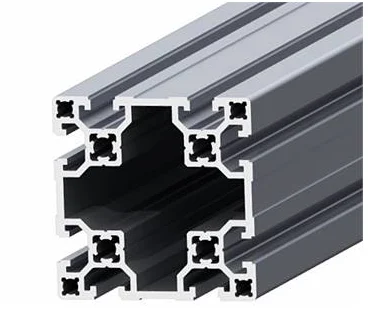
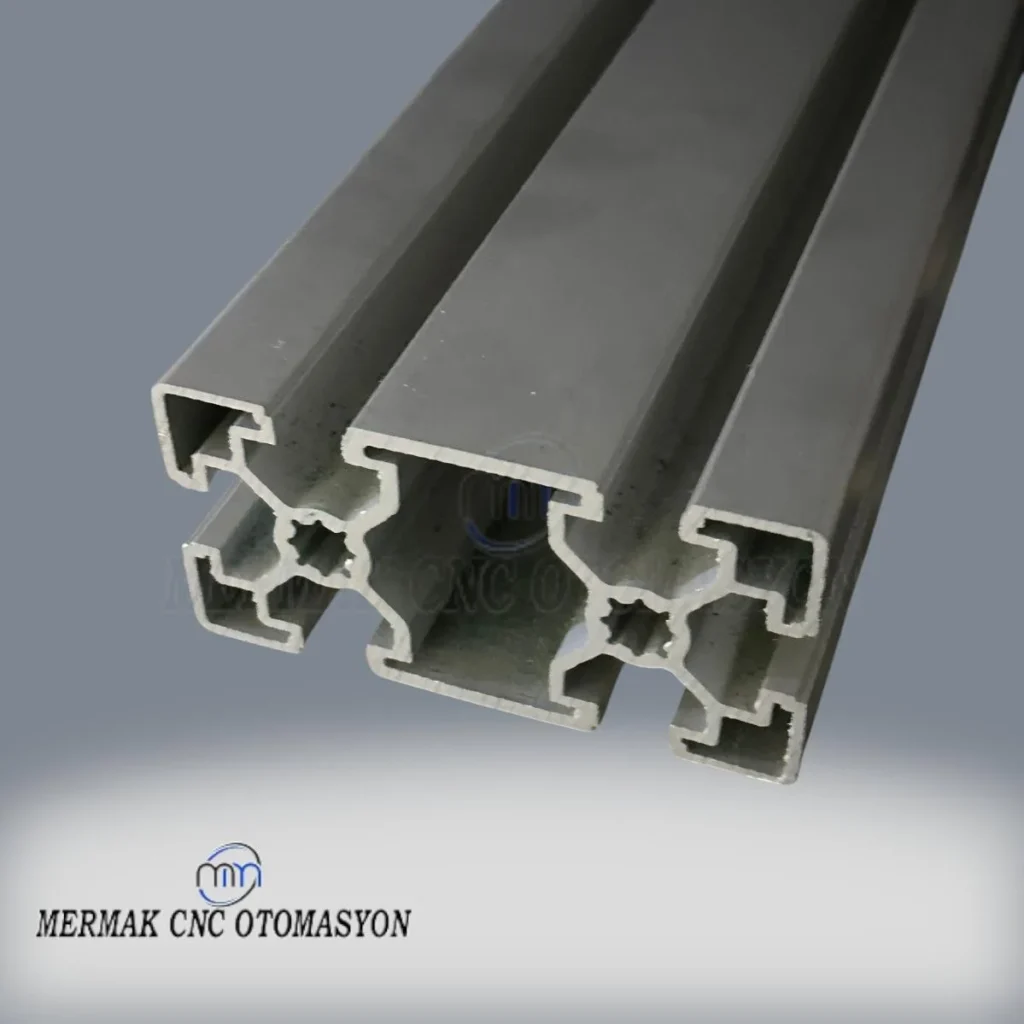
Industrial aluminum profiles are structural elements typically produced by the extrusion method from 6000 series aluminum alloys (e.g., 6063-T5 or 6061-T6), featuring specific geometric cross-sections. These cross-sections often have a T-slot or V-slot structure. These slots allow for quick and easy connection of profiles to each other and to various accessories using bolts, nuts, and special fasteners. This modular design offers unlimited flexibility to designers and engineers. When designing a machine frame, setting up a conveyor system, or optimizing a workstation, the adaptability of aluminum profiles enables projects to be completed much faster and more economically. Furthermore, aluminum’s natural lightness, high strength-to-weight ratio, and excellent corrosion resistance make these profiles ideal for dynamic and demanding industrial environments. Throughout this article, we will examine each of these advantages with technical details and provide practical information for field applications.
Operating Principle and Technical Data of Sigma Profile: Advantages of Industrial Aluminum Profiles
Sigma profiles and industrial aluminum profiles in general are produced through an extrusion process. In this process, heated aluminum is forced through a die under high pressure, taking on the desired cross-sectional form. This allows for the production of profiles with extremely precise dimensions and complex internal geometries. The T-slots or V-slots on the profile surface enable the fastening of other profiles or various mounting accessories (hinges, covers, wheels, motor mounting plates, etc.) using special nuts (T-nuts, slide nuts, etc.) and bolts. This connection system offers both high strength and an easily detachable structure, allowing the system to be reconfigured or expanded.
The fundamental operating principle of industrial aluminum profiles is based on modularity and flexibility. Each profile can be thought of as a Lego piece; profiles of different lengths and cross-sections can be assembled into any desired geometry using standard fasteners. This accelerates prototyping processes, facilitates design changes, and increases the adaptability of the final product. For example, when building a machine frame, profiles can be cut, joined, and easily adjusted or reinforced later if necessary. This flexibility is a critical advantage, especially in the automation sector, for frequently changing production lines and new product development processes.
Technical Advantages and Engineering Data:
- Lightweight and Strength: Aluminum being approximately one-third the weight of steel is a significant advantage, especially for large structures or moving systems. Lighter structures mean lower energy consumption, lower inertia, and easier transport/assembly. Despite this lightness, high strength and rigidity can be achieved through appropriate alloy selection and profile design. For example, 6063-T5 alloy offers good machinability and corrosion resistance, while 6061-T6 alloy may be preferred for applications requiring higher strength.
- Corrosion Resistance: Aluminum has excellent resistance to corrosion due to the naturally forming protective oxide layer on its surface. This property is vital for industrial environments with humidity, chemical vapors, or outdoor conditions. Additionally, surface treatments such as anodization can further enhance this resistance and provide an aesthetic appearance. Anodized profiles are also more resistant to scratches and abrasion.
- Ease and Speed of Assembly: The bolt and nut-based modular connection system offers much faster and easier assembly compared to traditional welded steel constructions. No special equipment or expert welders are required. This reduces labor costs and shortens project completion times. Furthermore, errors made during assembly can be easily corrected.
- Aesthetics and Cleanliness: Anodized aluminum profiles offer a modern and professional appearance. Their smooth surfaces do not trap dust and dirt, making them ideal for environments where hygiene is important, such as cleanroom applications or food processing facilities.
- Sustainability: Aluminum is a highly recyclable material, and recycled aluminum production saves up to 95% energy compared to primary aluminum production. This is an important factor for companies with environmental sustainability goals.
- Thermal and Electrical Conductivity: Aluminum is a good thermal and electrical conductor. These properties can provide advantages in some special applications (e.g., electronic enclosures requiring heat dissipation).
Areas of Use:
- Machine Frames and Chassis: Main load-bearing frames for industrial machines, robotic systems, and automation equipment.
- Conveyor Systems: Support structures for light to medium-duty conveyor belts and transport systems.
- Workstations and Workbenches: Ergonomic, adjustable, and modular workstations and assembly tables.
- Safety Barriers and Enclosures: Machine guards, safety fences, cleanroom partitions.
- Linear Motion Systems: Basic structures for precise linear guide rail systems, camera and sensor mounts.
- Test and Experiment Systems: Laboratory equipment, test stands, and prototyping platforms.
| Parameter | Value/Description |
|---|---|
| Material Alloy | EN AW-6063 T5 (standard), EN AW-6061 T6 (high strength) |
| Production Method | Extrusion (under ISO 9001 standards) |
| Surface Treatment | Anodization (10-20 microns, natural aluminum color or different color options), powder coating |
| Cross-section Type | T-Slot, V-Slot – 20×20, 30×30, 40×40, 45×45, 80×40 etc. |
| Connection System | T-nuts, slide nuts, corner brackets, angular connectors, bolt-nut |
| Density | ~2.7 g/cm³ (Approx. 1/3 of Steel) |
| Tensile Strength (Rm) | 180-260 N/mm² (Depending on alloy and heat treatment) |
| Corrosion Resistance | Excellent (Thanks to natural oxide layer and anodization) |
Field Considerations for Sigma Profile and Industrial Aluminum Profiles
- Correct Profile and Fastener Selection: The appropriate profile cross-section (e.g., 40×40, 45×45, 80×40) and wall thickness should be selected based on the project’s required load-bearing capacity, rigidity, and environmental conditions. For heavy loads or long spans, larger cross-sections or reinforced profiles should be preferred. Fasteners must also be compatible with the profile and secured with sufficient tightening torque for long-lasting and safe system operation. Incorrectly chosen or low-quality fasteners can lead to loosening and structural weakness over time.
- Assembly Precision and Alignment: While modular systems offer the advantage of rapid assembly, precision should not be compromised. Especially in linear motion systems, conveyors, or applications requiring optical alignment, it is essential that profiles are mounted perpendicularly and accurately. Misalignment can lead to unnecessary stresses, wear, vibration, and performance degradation in the system. Assembly accuracy should be ensured using laser alignment tools or precise squares. It is also important that each connection point is secured with equal tightening torque.
- Load Calculations and Deflection Control: Although aluminum profiles have high strength, they are more flexible than steel. Therefore, deflection calculations must be performed, especially for long spans or systems exposed to high dynamic loads. If necessary, profile spans should be shortened, additional supports added, or more rigid profiles used. In vibrating environments, connection points may need to be reinforced with special anti-vibration nuts or spring washers. Overloading can lead to permanent deformation of the profile.
- Environmental Factors and Maintenance: Environmental conditions to which the profile will be exposed (chemicals, extreme temperatures, high humidity, dust, etc.) must be considered. While standard anodized profiles are suitable for most environments, special coatings or stainless steel fasteners may be required for aggressive chemical environments or salty mist conditions. The tightness of fasteners should be checked periodically, and any loose ones should be re-tightened. Surface cleaning should be performed regularly, especially in hygienic environments or where aesthetic appearance is important.
Common Issues and Solutions for Sigma Profile and Industrial Aluminum Profiles
While the use of industrial aluminum profiles offers many advantages, some issues can be encountered in field applications. Knowing these issues beforehand and understanding their solutions will increase the reliability and lifespan of the system.
- Issue 1: Excessive Deflection or Vibration Under Load
Description: Especially in long profiles, noticeable deflection or vibration can occur under heavy loads or dynamic forces. This can negatively affect performance in sensitive applications and lead to structural fatigue in the long term.
Solution:- Add additional support points by shortening profile spans.
- Use profiles with larger cross-sections or reinforced (thicker wall thickness) profiles.
- Increase structural rigidity by adding cross-bracing (angle brackets or diagonal profiles).
- Use vibration damping elements (e.g., rubber mounts or special fasteners).
- Optimize load distribution to reduce stress at a single point.
- Issue 2: Loosening of Connection Points
Description: Over time, especially in systems exposed to continuous vibration or thermal expansion/contraction cycles, fasteners (bolts, nuts) can loosen. This can lead to structural integrity issues and safety risks.
Solution:- Tighten all fasteners to the correct torque values and check after assembly.
- In vibrating environments, use additional security measures such as spring washers, lock nuts, or chemical threadlockers (Loctite).
- Add checking and re-tightening of connection points to the periodic maintenance plan.
- Prefer high-quality, stainless steel or galvanized fasteners.
- Issue 3: Corrosion or Surface Damage
Description: While standard anodized coating provides sufficient protection in most environments, corrosion or discoloration may occur on the surface in very aggressive chemical environments or special conditions such as saltwater mist. Mechanical impacts or incorrect cleaning methods can also lead to scratches on the surface.
Solution:- For aggressive environments, use a thicker anodized layer (e.g., 20 microns) or special chemical-resistant coatings (e.g., powder coating).
- Reduce the risk of galvanic corrosion by using stainless steel fasteners.
- Clean the surface using non-abrasive, neutral cleaners and soft cloths.
- Use protective covers or bumpers in areas prone to impact.
- Issue 4: Loss of Precision / Misalignment During Assembly
Description: Especially when assembling large and complex structures, profiles not being perfectly perpendicular or straight can degrade the performance of the final system. For example, if a robotic arm’s mounting platform is tilted, the robot’s precision will be affected.
Solution:- Before assembly, check the dimensions and quality of all profiles and fasteners.
- During assembly, use precise squares, spirit levels, and laser alignment devices.
- Create an assembly guide or template for large structures.
- Initially hand-tighten connections, then perform final tightening with a torque wrench after the entire structure is correctly aligned.
- Compensate for floor irregularities using adjustable feet or shims.
Conclusion and Expert Advice on Sigma Profile and Industrial Aluminum Profiles
In the industrial automation sector, Sigma profiles and industrial aluminum profiles in general have become indispensable building blocks of modern manufacturing and assembly environments. As we have discussed throughout this detailed field guide and technical article, the advantages offered by aluminum profiles, such as lightweight, high strength-to-weight ratio, excellent corrosion resistance, modular design, and quick and easy assembly, directly impact the efficiency, flexibility, and cost-effectiveness of engineering projects. Their adaptability, compared to traditional steel constructions, accelerates prototyping processes and allows for design changes. This provides a critical competitive advantage in the world of automation, which constantly demands innovation and optimization.
Based on my field experience, I would like to emphasize that careful planning from the design stage is essential to fully utilize the potential of these systems. Selecting the correct profile cross-section and alloy, using appropriate fasteners for expected loads and environmental conditions, paying attention to assembly precision, and not neglecting periodic maintenance will ensure the system’s long-lasting and trouble-free operation. Especially in applications with dynamic loads or high vibration, meticulous engineering calculations and considering additional reinforcements if necessary are of vital importance. Furthermore, the integration of correct accessories and complementary products (covers, wheels, hinges, cable ducts, etc.) will enhance the system’s functionality and ergonomics.
In the future, the role of industrial aluminum profiles in the automation sector is expected to increase even further. With the widespread adoption of smart manufacturing systems, Industry 4.0, and robotic applications, the demand for quickly deployable, reconfigurable, and sustainable structural elements will grow. The ability of aluminum profiles to meet these requirements will continue to make them the fundamental framework of future factories. As expert advice, when evaluating aluminum profile systems for your projects, focus not only on the initial cost but also on the total cost of ownership, including assembly time, ease of maintenance, flexibility, reusability, and long-term operating costs, to make the most accurate and sustainable decision. Investing in this technology is a strategic step to overcome the challenges brought by modern automation and gain a competitive advantage.
FAQ
What exactly is a Sigma Profile?
Sigma profiles are industrial aluminum profiles, typically made from 6000 series aluminum alloys (like 6063-T5 or 6061-T6), produced through extrusion. They feature T-slots or V-slots that allow for modular assembly using specialized fasteners, making them ideal for machine frames, workstations, and automation systems.
What are the main advantages of using industrial aluminum profiles?
Key advantages include their lightweight nature, high strength-to-weight ratio, excellent corrosion resistance, modular design for easy assembly and reconfiguration, aesthetic appeal, and high recyclability, contributing to sustainability goals.
Where are industrial aluminum profiles commonly used?
Sigma profiles are widely used for machine frames, conveyor systems, ergonomic workstations, safety barriers, linear motion systems, and test stands in various industrial automation and manufacturing applications.
How can common issues like excessive deflection or loosening connections be addressed in Sigma profile structures?
To prevent deflection, ensure proper profile and fastener selection, shorten spans with additional supports, add cross-bracing, and perform thorough load calculations. For loosening connections, use correct torque, lock nuts, or threadlockers, and schedule periodic checks.
What factors should be considered when selecting Sigma profiles and fasteners for an industrial application?
When selecting profiles, consider the required load capacity, rigidity, and environmental conditions. Choose the appropriate alloy (e.g., 6061-T6 for higher strength) and cross-section. For fasteners, ensure compatibility and use sufficient tightening torque to maintain structural integrity.