
No products in the cart.
%48 Discount
UCT 210 Pillow Block Bearing
Original price was: 17.93$.9.26$Current price is: 9.26$.
High-performance industrial automation component designed for shaft support and tensioning in power transmission systems.
In stock
🔥 Special for Today Only %48 Discount Opportunity!📦 Category: 50 mm Cast Housings
Mermak assuranceFrom factory to end user · importer / main dealer · strong stock
ImporterMain dealer / distributorStrong stockGood priceCorporate invoice
In stock / available to order · 14-day return for standard unused products; conditions may vary for custom size/cut products.
UCT 210 Pillow Block Bearing
INDUSTRIAL AUTOMATION PARTS | SUPERIOR PERFORMANCE SERIES
Detailed Product Review
The UCT 210 Pillow Block Bearing is a high-strength component designed to provide shaft support and tensioning functions in industrial power transmission mechanisms and automation systems. This product is optimized for applications with a nominal shaft diameter of 50 mm. Its extended inner bearing race design provides a wider contact area on the shaft, optimizing load distribution and enhancing rotational stability. The bearing’s spherical outer ring geometry allows it to self-compensate for axial misalignment and angular errors of up to ±2.5 degrees that may occur during installation or under operational loads. This self-aligning capability reduces system stress, extends bearing life, and offers flexibility in installation precision requirements. The cast iron bearing housing is specifically designed for industrial environments with vibration, impact, and heavy loads, offering high rigidity and damping capacity to enhance the overall operational reliability of the system.
This pillow block bearing belongs to the Take-Up Cast Iron Pillow Block Bearing class. Mounted on slide rails and slotted housings, it allows for precise tension adjustment in belt, chain, and belt-driven systems by enabling forward-backward movement. This feature is critical for the optimal efficiency of drive systems. The grease nipple integrated into the bearing housing allows for periodic lubrication of the bearing elements with grease. This regular maintenance procedure minimizes the coefficient of friction between the rolling elements and the races, reducing heat generation, delaying wear, and maximizing the bearing’s operational life. The selection of high-quality cast iron material enhances the bearing’s resistance to harsh environmental conditions, chemical effects, and mechanical stresses. Effective sealing elements prevent dust, moisture, chips, and other particles from penetrating the bearing, protecting internal components and extending maintenance intervals. The UCT 210 offers a reliable and long-lasting solution across a wide range of applications, from conveyor systems and heavy-duty machinery to general machine manufacturing and the wood and metal processing industries. We proudly supply industries in the United Kingdom, United States, Canada, Australia, Ireland, New Zealand, South Africa, and similar countries/international markets.
UCT 210 Pillow Block Bearing Advantages
Optimized Shaft Grip and Stability: The UCT 210, with its extended inner race specifically designed for a 50 mm nominal shaft diameter, creates maximum contact surface area between the shaft and the bearing. This large contact area distributes radial and axial loads over a wider area during rotation, reducing stress per unit surface. Consequently, a more secure grip on the shaft is achieved, enhancing rotational stability, minimizing shaft runout, and maintaining precise positioning capabilities even at high speeds. This design prevents shaft slippage within the bearing or excessive vibration, especially under variable loads, thereby extending the system’s overall performance and lifespan.
High Impact and Vibration Damping Capacity: The housing of the UCT 210 pillow block bearing is manufactured from high-quality cast iron. The inherent microstructure of cast iron, due to its high carbon content and graphite lamellae, possesses the ability to effectively absorb and dampen external shock loads and continuous vibrations. This material property minimizes stresses on the bearing and the connected shaft, particularly in environments with intense shock and vibration, such as mining, construction, and heavy industry. The rigid housing structure maintains the correct geometric position of the bearing elements, preventing excessive deformation and significantly extending the bearing’s operational life while preventing premature failures.
Advanced Self-Aligning Capability: The outer ring of the UCT 210 has a spherical geometry, allowing the inner bearing race a degree of angular freedom within the bearing housing. This “self-aligning” feature automatically compensates for minor axial runout or angular misalignment errors (typically up to ±2.5 degrees) between the shaft and the bearing housing that may occur during installation or under operational loads. This automatic alignment mechanism significantly reduces shaft bending stresses and edge loading on the bearing elements. Reduced edge loading ensures uniform load distribution on the bearing elements, minimizing wear, reducing friction, and extending the bearing’s fatigue life. This feature allows for wider installation tolerances, reducing setup time and cost while enhancing overall system reliability.
Technical Specifications and Capacity
Feature
Value/Description
Shaft Diameter
50 mm (Nominal)
Bearing Type
UCT 210 (Take-Up Cast Iron Pillow Block Bearing)
Housing Material
High-Quality Cast Iron (GG-20/GG-25 equivalent, high damping)
Outer Ring Shape
Spherical (Self-aligning – ±2.5° angular misalignment tolerance)
Dynamic Load Rating (Cr)
Approx. 38.5 kN (According to ISO 281, for 500 hours life)
Static Load Rating (Cor)
Approx. 23.2 kN (According to ISO 281, limit for permanent deformation)
Recommended Operating Temperature
-20°C to +120°C (Depending on grease type and sealing elements used)
Technical Frequently Asked Questions (FAQ)
What are the critical tolerances to consider during the installation of the UCT 210 pillow block bearing, and how does the self-aligning feature affect these tolerances?
For the installation of UCT 210 pillow block bearings, a H7 or h8 tolerance for the shaft diameter is generally considered suitable, while the parallelism and flatness of the slide channels where the bearing housing is fixed to the chassis are important. Although the self-aligning feature can tolerate angular misalignments between the shaft and the bearing housing up to ±2.5 degrees, this does not cover situations where the shaft itself is excessively bent or the bearing points are severely out of alignment. In ideal installations, there should be minimal angular deviation and parallelism error between the bearing points of the shaft. Self-alignment enhances system flexibility in industrial environments where perfect installation conditions are difficult to achieve, reducing stress on bearing elements and extending their life, but it should not lead to the complete disregard of basic geometric precision. Excessive tolerances can cause uneven load distribution within the bearing’s internal structure, leading to premature fatigue.
What is the fundamental difference between the dynamic (Cr) and static (Cor) load ratings of the UCT 210, and how should these values be interpreted when selecting an application?
The dynamic load rating (Cr) refers to the maximum radial load that a bearing can endure for a specified life (typically 1 million revolutions or 500 hours) at a certain speed without failure. This value is directly related to the fatigue life of the bearing’s rolling elements and races and is a critical parameter, especially for applications with continuous rotation. The static load rating (Cor) is the maximum radial load that the bearing can withstand without permanent deformation (plastic deformation) of the rolling elements when the bearing is not rotating or rotating at very low speeds. This value is particularly important for applications where the bearing is subjected to static loads for extended periods, or in vibratory but non-rotating or very slow-rotating applications. When selecting an application, the operating conditions (continuous rotation, intermittent operation, static loading, shock loads) should be considered, and the Cr and Cor values should be evaluated along with appropriate safety factors. The Cor value may be more decisive in systems subjected to high shock loads, while the Cr value is more critical for systems operating continuously at high speeds.
How does the sealing structure of the UCT 210 pillow block bearing provide protection against various industrial environmental conditions, and can additional measures be taken to enhance the effectiveness of this protection?
The UCT 210 pillow block bearing is equipped with standard industrial sealing elements. This sealing structure typically consists of double-lip or labyrinth seals designed to prevent the ingress of dust, chips, moisture, water splashes, and other solid particles into the bearing. While this basic protection is sufficient for most general industrial environments, additional protective measures may be necessary, especially in extremely dirty environments with high concentrations of abrasive particles (e.g., cement plants, mining) or in applications requiring high-pressure washing (food processing). In such cases, additional protective covers, specially designed labyrinth seals, or external shields can be integrated outside the bearing. Furthermore, periodic lubrication via the grease nipple fills the bearing cavity with fresh grease, which, by pushing out old grease, creates a “grease barrier” that further hinders the entry of contaminants. The correct selection of grease also directly affects the lifespan and effectiveness of the sealing elements.
Technically, how does the tension adjustment mechanism of the UCT 210 as a Take-Up pillow block bearing work in belt and chain drive systems, and what is its significance?
The UCT 210 belongs to the class of take-up pillow block bearings and is typically mounted on a chassis with slide rails or slots. This mounting structure allows for adjustable positioning of the bearing housing on the chassis. Tension adjustment is achieved by loosening the mounting bolts of the bearing housing on the chassis and then moving the bearing forward or backward using a tensioning screw or a similar mechanism. This movement alters the distance in the belt or chain drive system, precisely adjusting the tension of the drive element. Optimal tension maximizes power transmission efficiency, prevents slippage of the belt or chain, reduces vibration and noise, and extends the life of the drive elements (belts, chains, pulleys, sprockets). Excessive tension can lead to unnecessary stress on the bearing and shaft, causing premature failure, while insufficient tension results in power loss and inefficient system operation. The adjustable nature of the UCT 210 allows for precise and dynamic tension control according to the system’s operational parameters.
| Dimensions |
|---|
You must be logged in to post a review.
Taksit Tablosu
Related Products
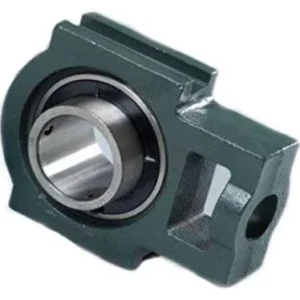 %54 DiscountUCT 208 Take-Up Cast Iron Housing UnitOriginal price was: 15.16$.6.92$Current price is: 6.92$.View
 Sce 50 Wuu Linear Bearing Long Type43.26$View
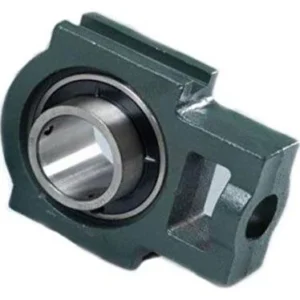 %51 DiscountUCT 209 Take-Up Cast Iron Housing UnitOriginal price was: 14.47$.7.06$Current price is: 7.06$.View
Reviews
There are no reviews yet.