
No products in the cart.
%48 Discount
UCP 210 Pillow Block Bearing Unit
Original price was: 16.56$.8.56$Current price is: 8.56$.
Self-aligning pillow block bearing unit with cast iron housing for industrial automation.
In stock
🔥 Special for Today Only %48 Discount Opportunity!📦 Category: 50 mm Cast Housings
Mermak assuranceFrom factory to end user · importer / main dealer · strong stock
ImporterMain dealer / distributorStrong stockGood priceCorporate invoice
In stock / available to order · 14-day return for standard unused products; conditions may vary for custom size/cut products.
UCP 210 Pillow Block Bearing Unit
INDUSTRIAL AUTOMATION PARTS | SUPERIOR PERFORMANCE SERIES
Detailed Product Review
The UCP 210 Pillow Block Bearing Unit is a self-aligning bearing assembly designed to accommodate radial and limited axial loads in industrial rotating shaft systems. This product integrates a P210 series cast iron bearing housing with a UC210 series ball bearing insert. Due to the spherical geometry of the outer ring of the bearing insert, it possesses a degree of angular freedom within its housing. This feature effectively compensates for static and dynamic angular misalignment errors, typically within ±2 to ±3 degrees, that may occur during installation or under operational conditions. By minimizing edge loading on the bearing elements, this compensation significantly extends the bearing’s service life. Optimized for a nominal shaft diameter of 50 mm, the UCP 210 provides high stability and low friction for medium to heavy-duty applications, contributing to energy efficiency. The inner ring is secured to the shaft via two grub screws, ensuring high torque transmission and a secure shaft-bearing connection.
The structural integrity of the UCP 210 is ensured by its rigid housing, manufactured from high-quality grey cast iron. This material offers high compressive strength, excellent vibration damping capabilities, and impact resistance, protecting the bearing insert from external mechanical stresses and guaranteeing stable system operation. The bearing insert itself is produced using high-carbon chromium steel (equivalent to AISI 52100), exhibiting optimized hardness and wear resistance through heat treatment. The precisely machined raceways and optimized ball element geometry within ensure stable performance even at high speeds with low friction. Integration of the product is easily achieved through standard mounting holes, requiring minimal engineering effort for adaptation into existing systems. The double-lip sealing elements (typically made of NBR material) protect the bearing’s internal components from dust, debris, moisture, and other industrial contaminants, while also preventing lubricant leakage. These technical specifications make the UCP 210 a suitable solution for a wide range of demanding industrial applications, including conveyor systems, agricultural machinery, industrial fans, textile machinery, packaging lines, and general machine manufacturing. Mermak serves clients in the United Kingdom, United States, Canada, Australia, Ireland, New Zealand, South Africa, and similar international markets.
Advantages of the UCP 210 Pillow Block Bearing Unit
Optimal Shaft Alignment and Angular Misalignment Tolerance: The UCP 210 features a self-aligning capability thanks to the spherical outer ring geometry of its bearing insert, which allows for angular movement within the housing. This self-aligning feature automatically compensates for static or dynamic shaft misalignments between the shaft and the housing, typically within a range of ±2 to ±3 degrees. This ensures a balanced load distribution across the bearing elements, preventing localized edge loading that can arise from shaft bending or installation errors. Consequently, excessive stress on the bearing’s internal components is minimized, friction losses are reduced, and the bearing’s fatigue life is significantly extended, thereby enhancing machine precision and operational reliability.
High Dynamic and Static Load Capacity with Impact and Vibration Resistance: The P210 series bearing housing, made from high-quality cast iron, exhibits superior mechanical strength and rigidity. This housing structure effectively protects the bearing insert from external impacts and continuous vibrations while safely distributing dynamic and static loads from the system. The inherent vibration-damping properties of cast iron reduce machine noise and structural resonance, preserving the integrity of the bearing and surrounding components, especially in heavy industrial applications and systems operating under intermittent loads. This characteristic ensures that the bearing delivers consistent and stable performance even under demanding operating conditions, minimizing the risk of failure.
Optimized Maintenance Protocol and Long Operational Life: The UCP 210 is equipped with an integrated grease nipple, facilitating periodic relubrication. Regular and proper lubrication prevents metal-to-metal contact between the rolling elements and raceways, minimizing friction, heat generation, and wear. Furthermore, the standard double-lip sealing elements incorporated in the bearing insert prevent lubricant leakage while effectively blocking the ingress of dust, moisture, chips, and other particulate contaminants. This effective sealing and easy lubrication mechanism enhance the bearing’s resistance to corrosion and abrasive wear, extending maintenance intervals and maximizing the overall operational life. This leads to reduced operating costs and increased equipment uptime.
Technical Specifications and Capacity
Feature
Value/Description
Bearing Model
UCP 210 (P210 Housing + UC210 Bearing Insert)
Nominal Shaft Diameter (d)
50 mm
Housing Type
Pillow Block (Cast Iron Bearing Housing with Center Flange)
Housing Material
High-Quality Grey Cast Iron (Optimized for mechanical strength and vibration damping)
Bearing Internal Structure
Ball Bearing with Spherical Outer Ring (Self-Aligning, Angular Tolerance ±2-3°)
Lubrication Mechanism
Periodic Grease Lubrication via Integrated Grease Nipple
Sealing
Standard Double-Lip Seal (High protection against dust, chips, and moisture ingress)
Technical Frequently Asked Questions (FAQ)
How does the self-aligning feature of the UCP 210 compensate for shaft misalignments, and what are the operational benefits of this feature?
The self-aligning feature of the UCP 210 pillow block bearing unit operates on the principle that the outer ring of the bearing insert has a spherical geometry, which precisely fits into a corresponding concave seat within the bearing housing. This design allows the bearing insert to pivot within the housing, providing a degree of angular freedom. Angular misalignments, whether static (from installation) or dynamic (due to shaft deflection or thermal expansion during operation), are compensated for as the bearing insert adjusts itself on this spherical surface. With a typical angular misalignment tolerance of ±2 to ±3 degrees, this mechanism ensures that the load is evenly distributed across the bearing elements, preventing localized edge loading. The operational benefits include extended bearing life by preventing overstressing of the bearing components, improved energy efficiency by reducing friction losses, and simplified installation due to wider mounting tolerances. Consequently, the overall system reliability and maintenance intervals are optimized.
What is the recommended lubrication protocol for the UCP 210, and what are the effects of improper lubrication on bearing performance?
The recommended lubrication protocol for the UCP 210 pillow block bearing unit involves regular application of the appropriate type of grease through the integrated grease nipple. For general industrial applications, lithium complex-based greases with EP (Extreme Pressure) additives are recommended for their superior performance under high load and temperature conditions. Lubrication intervals should be determined based on factors such as the bearing’s operating speed, load, temperature, and environmental conditions, typically performed after a specific number of operating hours or during periodic inspections. Improper lubrication practices can have severe negative effects on bearing performance. Under-lubrication increases metal-to-metal contact, accelerating friction, heat generation, and wear, leading to fatigue cracks and premature failure of the bearing elements. Over-lubrication, conversely, can cause excessive pressure and temperature buildup within the bearing, potentially damaging the sealing elements and leading to lubricant leakage, which in turn allows contaminants to enter. Both scenarios shorten the bearing’s lifespan, increase energy losses, and can result in unexpected downtime. Therefore, strict adherence to lubrication protocols, as per manufacturer guidelines and application-specific conditions, is critical.
What are the critical technical considerations for mounting the UCP 210 onto a shaft, and what are the potential consequences of incorrect mounting?
Several critical technical considerations are involved in mounting the UCP 210 onto a shaft. Firstly, the shaft must have a nominal diameter of 50 mm and be machined to the appropriate tolerance class (typically h7 or h8) to ensure a proper fit with the bearing’s inner ring. After sliding the bearing insert onto the shaft, it is secured using the two grub screws located on the inner ring. These screws should be tightened sequentially in a cross pattern to the manufacturer-specified torque values to create a secure, non-slipping connection between the shaft and the bearing. Overtightening can deform the inner ring or damage the shaft surface, while undertightening can lead to slippage and excessive wear within the bearing. Secondly, the flatness and parallelism of the bearing housing’s mounting surface are crucial. Irregularities on the mounting surface can induce stress in the housing and restrict the bearing insert’s self-aligning capability. Potential consequences of incorrect mounting include significantly reduced bearing life, excessive vibration and noise, increased energy consumption, shaft damage, and premature system failure. Therefore, mounting procedures must be performed with precision, using appropriate torque wrenches, to guarantee the bearing’s optimal performance and longevity.
How do the standard double-lip sealing elements in the UCP 210 protect the bearing’s internal components from contaminants in industrial environments?
The standard double-lip sealing elements in the UCP 210 provide two primary barriers to protect the bearing’s internal components from contaminants commonly found in industrial environments. Typically manufactured from flexible and wear-resistant materials like Nitrile Butadiene Rubber (NBR), these seals are integrated into both sides of the bearing insert. The inner lip maintains contact with the bearing’s inner ring, preventing the internal grease from escaping and ensuring continuous lubrication. The outer lip acts as the primary barrier, preventing the ingress of dust, chips, water droplets, and other particulate contaminants from the external environment into the bearing. This dual-layer protection mechanism safeguards the sensitive rolling elements and raceways within the bearing from abrasive particles and corrosive moisture. Contaminant ingress can mix with the grease, forming an abrasive paste that leads to micro-pitting and wear on the bearing surfaces, significantly shortening its lifespan. The double-lip seals effectively minimize these risks, ensuring the bearing operates reliably over an extended period.
| Dimensions | 50 |
|---|
You must be logged in to post a review.
Taksit Tablosu
Related Products
 %48 DiscountUCP 205 Pillow Block Bearing UnitOriginal price was: 4.82$.2.50$Current price is: 2.50$.View
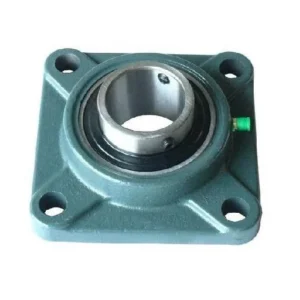 %48 DiscountUCF 210 Flanged Unit BearingOriginal price was: 16.31$.8.42$Current price is: 8.42$.View
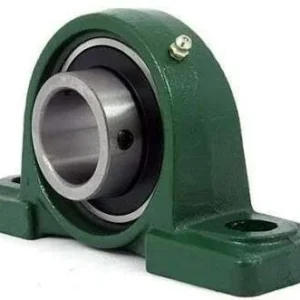 %57 DiscountUCP 204 Pillow Block BearingOriginal price was: 4.72$.2.05$Current price is: 2.05$.View

Reviews
There are no reviews yet.