
No products in the cart.
%48 Discount
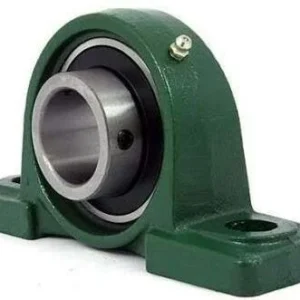
UCP 206 Pillow Block Bearing
Original price was: 7.09$.3.66$Current price is: 3.66$.
Integrated bearing unit with a cast iron housing for 30 mm shafts, offering self-alignment capabilities.
In stock
🔥 Special for Today Only %48 Discount Opportunity!📦 Category: 30 mm Cast Housings
Mermak assuranceFrom factory to end user · importer / main dealer · strong stock
ImporterMain dealer / distributorStrong stockGood priceCorporate invoice
In stock / available to order · 14-day return for standard unused products; conditions may vary for custom size/cut products.
UCP 206 Pillow Block Bearing
INDUSTRIAL AUTOMATION PARTS | SUPERIOR PERFORMANCE SERIES
Detailed Product Review
The UCP 206 pillow block bearing is a standard, medium-duty, cast iron housing bearing unit designed for industrial drive and motion systems with a nominal shaft diameter of 30 mm. This integrated bearing unit consists of an inner bearing element combined with a rigid cast iron housing. The inner bearing is typically a deep groove ball bearing with a spherical outer ring. This spherical outer ring allows the bearing, when mounted in the housing, to effectively tolerate minor axial and angular misalignment errors between the shaft and the housing, typically within ±2 to ±3 degrees. This feature absorbs micro-deviations and stresses from structural deformation during installation, preventing localized overloading on the bearing elements, thereby extending the bearing’s service life and enhancing the overall reliability of the system. The bearing is optimized to carry both radial and a certain degree of axial loads, making it a versatile solution for various industrial applications.
The cast iron housing of the product is manufactured from high-strength cast iron, a material that exhibits superior resistance to the vibrational and shock operating conditions encountered in heavy industrial environments. The high damping capacity of cast iron minimizes dynamic loads and resonance effects originating from the system, allowing the bearing elements to operate in a more stable environment. This rigid structure ensures precise rotational movement by maintaining the correct geometric position of the inner bearing components. The integrated grease nipple allows for periodic and easy lubrication of the bearing’s inner ring, rolling elements, and cage. Regular lubrication reduces friction, controls heat generation, and minimizes wear, significantly extending the bearing’s operational life. Furthermore, the bearing’s sealing elements provide an effective barrier against dust, chips, and dirty environmental conditions, preventing contamination of the inner components and supporting continuous performance. The UCP 206 offers a reliable bearing solution in a wide range of applications, including conveyor systems, agricultural machinery, industrial fans, and auxiliary shafts in CNC machines.
UCP 206 Pillow Block Bearing Advantages
High Mechanical Strength and Load Carrying Capacity: Designed for a 30 mm nominal shaft diameter, the UCP 206 features a bearing with a wide inner ring and a high-strength cast iron housing, offering substantial radial and a degree of axial load capacity. The rigid structure of the cast housing ensures stable operation of the bearing elements even in harsh industrial environments with heavy vibrations and shocks. This structural integrity maintains system stability under dynamic loads, preventing bearing deformation and premature fatigue, thus delivering reliable performance in critical industrial applications.
Extended Operational Life and Optimized Maintenance Protocols: The integrated grease nipple allows for periodic and easy lubrication of the bearing elements (rolling elements, inner/outer rings, and cage), minimizing friction, wear, and heat generation. The product’s sealing design prevents the ingress of dust, chips, moisture, and other contaminants, reducing the risk of corrosion and wear on internal components. This combination significantly extends the bearing’s service life, allows for optimized planned maintenance intervals, and lowers operating costs.
Enhanced Mounting Flexibility and System Tolerance Correction: The spherical outer ring of the UCP 206’s inner bearing automatically compensates for minor axial and angular misalignment between the shaft and the housing. This simplifies installation by absorbing minor deviations during mounting, reducing the need for precise alignment. It minimizes stresses within the system, preventing uneven load distribution on bearing elements and extending bearing life. Standard mounting dimensions and the medium-duty design allow for quick and effective integration into existing systems or new projects, optimizing commissioning time and costs.
Technical Specifications and Capacity
Feature
Value/Description
Shaft Diameter (Nominal)
30 mm (Metric Standard)
Bearing Type
Pillow Block Bearing, UCP Series
Housing Structure
Medium-duty Cast Iron Housing (P-Type), high rigidity and vibration damping
Inner Bearing Feature
Spherical outer ring, ±2 to ±3 degrees angular misalignment tolerance
Housing Material
High-strength cast iron (Gray Cast Iron), impact and vibration absorption
Lubrication Feature
Periodic manual or automatic lubrication via integrated grease nipple
Sealing
Standard contact seals resistant to dust, chips, and dirty environments
Technical Frequently Asked Questions (FAQ)
What is the technical contribution of the spherical outer ring design of the UCP 206 pillow block bearing to system performance?
The spherical outer ring design of the UCP 206’s inner bearing offers the ability to compensate for mounting and operational misalignment errors between the housing and the shaft. This feature is critical in systems where the distance between bearing points is long or where chassis flexibility is high. The spherical surface allows the bearing a degree of angular freedom within the housing, absorbing axial runout or angular deviations of the shaft (typically up to ±2 to ±3 degrees). This minimizes edge loading and localized stresses on the bearing elements (balls and raceways). Consequently, bearing overheating, premature fatigue, and vibration levels are reduced, extending the bearing’s operational life and enhancing overall system reliability. It also simplifies installation by allowing wider tolerances and reducing commissioning time.
Can you provide technical information on the periodic lubrication requirements of the UCP 206 bearing and its importance?
The UCP 206 pillow block bearing is designed for periodic lubrication via its integrated grease nipple. Lubrication is vital for minimizing friction, wear, and heat generation by preventing metal-to-metal contact between bearing elements. Regular lubrication with the correct type and amount of grease protects internal components from corrosion and enhances the effectiveness of the sealing elements. Lubrication intervals depend on various parameters such as operating temperature, speed, load conditions, environmental factors (dust, moisture), and grease type. High speeds and temperatures generally require more frequent lubrication, while lower speeds and clean environments allow for longer intervals. Adhering to manufacturer-specified lubrication instructions and grease specifications is critical for achieving the bearing’s maximum service life and preventing unexpected failures. Over- or under-lubrication can negatively impact bearing performance.
How does the cast iron housing material of the UCP 206 provide an advantage in heavy industrial conditions?
The housing of the UCP 206 pillow block bearing is made from high-strength gray cast iron. This material offers superior mechanical resistance and damping capacity against the vibrational and shock operating conditions typical of heavy industrial environments. The graphite lamellae within the cast iron’s microstructure act as natural vibration absorbers, minimizing the transmission of dynamic loads and resonance effects from the system to the bearing elements. Its high rigidity ensures that the housing maintains the correct geometric position of the inner bearing components, guaranteeing precise rotational movement of the shaft and preventing deformation under load. Cast iron also exhibits high toughness against impact loads and a degree of resistance to corrosive environments. These properties make the UCP 206 a durable and reliable bearing solution for demanding applications such as conveyors, agricultural machinery, and heavy industrial equipment.
According to what principles does the UCP 206 pillow block bearing carry radial and axial loads, and how is this load capacity determined?
The UCP 206 pillow block bearing is primarily designed to carry radial loads, but its inner bearing with a spherical outer ring can also tolerate a certain amount of axial load. Radial loads are forces acting perpendicular to the shaft’s axis, distributed through the contact points between the rolling elements and the raceways. Axial loads are forces acting along the shaft’s axis, carried in this bearing type generally through the contact angle and area between the balls and the raceway grooves. The load-carrying capacity of the UCP 206 is fundamentally determined by the dynamic and static load ratings (C and C0) of the inner bearing. The dynamic load rating (C) represents the equivalent radial load the bearing can sustain for a specific life (e.g., 1 million revolutions), while the static load rating (C0) indicates the maximum static load the bearing can withstand without permanent deformation. These values are determined by engineering calculations and standard tests, based on factors such as the strength of the bearing steel, the number and diameter of the balls, the contact angle, and the ring geometry. Selecting a bearing with an appropriate load capacity for the application conditions is essential for the long-term and reliable operation of the system.
| Dimensions |
|---|
You must be logged in to post a review.
Taksit Tablosu
Related Products
 %62 DiscountØ30 mm Hard Chrome Plated Ground Shaft (No Hardening)Original price was: 55.07$.20.74$Current price is: 20.74$.View
 %57 DiscountUCP 201 Pillow Block Bearing UnitOriginal price was: 5.51$.2.40$Current price is: 2.40$.View
 %48 DiscountUCP 209 Pillow Block BearingOriginal price was: 14.54$.7.51$Current price is: 7.51$.View

Reviews
There are no reviews yet.