
No products in the cart.
%48 Discount

UCFC 206 Pillow Block Bearing Unit
Original price was: 7.42$.3.83$Current price is: 3.83$.
High-quality cast iron housing with a self-aligning spherical outer ring bearing insert for 30mm shafts.
In stock
🔥 Special for Today Only %48 Discount Opportunity!📦 Category: 30 mm Cast Housings
Mermak assuranceFrom factory to end user · importer / main dealer · strong stock
ImporterMain dealer / distributorStrong stockGood priceCorporate invoice
In stock / available to order · 14-day return for standard unused products; conditions may vary for custom size/cut products.
UCFC 206 Pillow Block Bearing Unit
INDUSTRIAL AUTOMATION PARTS | SUPERIOR PERFORMANCE SERIES
Detailed Product Review
The UCFC 206 pillow block bearing unit is designed as a critical support component for rotating shafts in industrial automation systems. This unit consists of the integration of a UC 206 series spherical outer ring bearing insert with a FC 206 series four-bolt, square cast iron housing. The bearing insert is optimized for applications with a nominal shaft diameter of 30 mm, operating on the principle of a tight fit or set screw fixation of the inner ring to the shaft. The spherical outer ring design effectively compensates for angular misalignment errors of ±2 to ±3 degrees that may occur during assembly or system operation, minimizing edge loading on the bearing rolling elements and reducing stress between the shaft and the housing. This feature significantly increases the system’s overall mechanical efficiency while considerably extending the bearing’s fatigue life. The integrated grease nipple allows for periodic lubrication, controlling friction and heat generation within the bearing’s internal structure, thereby ensuring optimal operating conditions are maintained.
High-quality grey cast iron is chosen as the housing material; this material guarantees stability even in demanding industrial environments by providing high rigidity, vibration damping capacity, and impact resistance. The bearing insert is precisely machined from high-carbon chromium steel, offering high hardness and wear resistance. The product’s sealing mechanism is reinforced with integrated double-lip rubber seals; these seals prevent dust, chips, moisture, and other particles from penetrating the bearing’s internal structure, protecting the internal components from corrosion and wear. Consequently, it exhibits reliable performance, particularly in machining environments like CNC routers and woodworking machines, dusty and humid areas such as conveyor and transport systems, applications with fast and repetitive movements like packaging and filling machines, and high-speed environments such as industrial fan systems. The standard mounting dimensions and the four-bolt square flange structure allow for easy and rigid integration into existing machine chassis, optimizing installation time and costs.
Advantages of the UCFC 206 Pillow Block Bearing Unit
High Rigidity Cast Iron Housing Structure: The high-quality cast iron housing of the UCFC 206 offers superior structural integrity and deformation resistance, especially against high dynamic loads, shock, and vibration. This material choice protects the bearing insert from external factors while ensuring precise shaft positioning and enhancing the overall stability of the system. The high damping capacity of cast iron absorbs operational noise and vibration, extending machine life and improving environmental operating conditions. This rigid structure maintains the geometric accuracy of the bearing seat even under high torque and radial loads, providing a critical advantage in applications requiring precise movement.
Self-Alignment with Spherical Outer Ring Design: The spherical outer ring structure of the inner bearing in the UCFC 206 has the ability to automatically compensate for angular misalignment errors of ±2 to ±3 degrees that may occur during assembly or due to shaft deflection. This feature eliminates stress concentrations and edge loading on the bearing rolling elements, extending bearing life and minimizing the risk of premature failure. The reduction in stress between the shaft and the housing also increases the system’s energy efficiency and prevents overheating. The self-alignment capability simplifies the assembly process and reduces installation costs by allowing for less stringent mounting tolerances.
Optimized Maintenance and Long Life with Integrated Grease Nipple: The UCFC 206 pillow block bearing unit is equipped with an integrated grease nipple, allowing for periodic and controlled replenishment of the lubricant inside the bearing. Proper and regular lubrication creates a hydrodynamic oil film between the bearing rolling elements and the rings, preventing metal-to-metal contact and significantly reducing friction, heat generation, and wear. This maximizes the bearing’s fatigue life and prevents unexpected failures. Optimized maintenance reduces operating costs while increasing machine uptime and ensuring sustainable production efficiency. The grease nipple is a critical technical feature that allows the bearing to maintain its performance for a long time, even under demanding operating conditions.
Technical Specifications and Capacity
Feature/Description
Shaft Diameter (Nominal)30 mm
Bearing TypeUC 206 (Spherical Bearing with Wide Inner Ring)
Housing MaterialHigh-Quality Grey Cast Iron
Dynamic Load Rating (Cr)25.7 kN (according to ISO 281)
Static Load Rating (Cor)15.3 kN (according to ISO 281)
Maximum Speed4300 rpm (Grease Lubricated)
Technical Frequently Asked Questions (FAQ)
How much can the spherical outer ring feature of the UCFC 206 compensate for misalignment, and how does this affect bearing life?
The spherical outer ring design of the UCFC 206 pillow block bearing unit allows the bearing insert a certain degree of angular freedom within the housing. This feature can effectively tolerate static or dynamic angular misalignment errors typically in the range of ±2 to ±3 degrees. This tolerance minimizes stress concentrations and edge loading on the bearing rolling elements when the shaft slightly deflects during assembly or under operational loads. Edge loading is a primary factor that significantly shortens bearing fatigue life. Thanks to the spherical outer ring, the load is distributed more uniformly across the rolling elements, allowing the bearing to reach its nominal fatigue life and preventing premature failures, thereby enhancing system reliability and sustainability. Furthermore, this feature reduces mounting precision requirements, offering ease of installation and cost advantages.
What is the recommended lubrication procedure and frequency for the UCFC 206 pillow block bearing unit?
The UCFC 206 pillow block bearing unit can be periodically re-lubricated through its integrated grease nipple. The lubrication frequency varies depending on operating conditions (speed, load, temperature, environmental contamination) and the type of grease used. As a general starting point, re-lubrication every 3 to 6 months is recommended for bearings operating under moderate speed and load conditions. This interval may be shorter in high-speed, heavy-load, or dirty/humid environments, and longer in light-load and clean environments. During lubrication, old grease should be allowed to purge from around the bearing housing to ensure the new grease fully penetrates the bearing cavity. The grease used should be an industrial bearing grease, preferably lithium-soap based with EP (Extreme Pressure) additives, suitable for the bearing’s operating temperature range and application requirements. Care should be taken to adhere to the manufacturer’s recommended grease quantities, as over-lubrication can cause excessive heat buildup within the bearing and damage the seals. Regular and correct lubrication maximizes bearing fatigue life by keeping the friction coefficient low, thereby increasing energy efficiency.
How does this bearing unit perform in dusty and humid industrial environments regarding sealing?
The UCFC 206 pillow block bearing unit is equipped with integrated double-lip rubber seals to provide high sealing performance in demanding industrial environments. These seals close the gap between the bearing’s inner and outer rings, preventing external contaminants such as dust, chips, metal particles, moisture, and water from penetrating the bearing’s internal structure. The double-lip design creates a more effective barrier against particle ingress and also prevents the bearing’s internal grease from leaking out, extending lubrication life. The rubber material of the seals has a certain elasticity, allowing it to adapt to slight axial movements of the shaft and maintain its sealing capability even with temperature fluctuations. This advanced sealing mechanism guarantees protection of the bearing’s internal components from corrosion and wear, especially in applications exposed to dirty and humid operating conditions like CNC routers, conveyor systems, and agricultural machinery, significantly increasing the bearing’s operational life and reliability.
How should the dynamic and static load ratings of the UCFC 206 be evaluated in system design?
The dynamic load rating (Cr = 25.7 kN) and static load rating (Cor = 15.3 kN) of the UCFC 206 pillow block bearing unit are critical design parameters defined according to the ISO 281 standard. The dynamic load rating (Cr) represents the maximum radial load that the bearing can withstand for a specified fatigue life (typically 1 million revolutions) at a certain rotational speed. In system design, bearing life (L10) calculations are performed by comparing the equivalent dynamic load (Pe) the bearing will experience with this Cr value. If the bearing is in continuous rotation, the Cr value is primarily considered. The static load rating (Cor) indicates the maximum radial load the bearing can withstand without permanent deformation when it is stationary or rotating at very low speeds. This value is particularly important for shock loads and excessive static loads acting on the bearing during assembly or when the machine is stopped. Both values should be evaluated in bearing selection, considering the system’s operational conditions (load type, speed, operating time, shock loads) along with safety factors. Accurate analysis of Cr and Cor values prevents bearing overload, avoids premature failures, and ensures the long-term reliability of the system.
| Dimensions |
|---|
You must be logged in to post a review.
Taksit Tablosu
Related Products
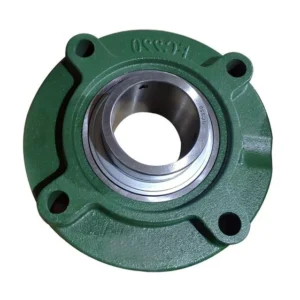 %48 DiscountUCFC 210 Pillow Block BearingOriginal price was: 18.94$.9.78$Current price is: 9.78$.View
 %43 DiscountHGH 30 CA Narrow Linear CarriageOriginal price was: 33.53$.18.97$Current price is: 18.97$.View
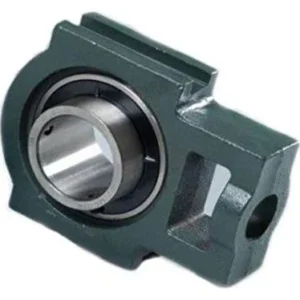 %48 DiscountUCT 206 Pillow Block Bearing UnitOriginal price was: 7.88$.4.08$Current price is: 4.08$.View
Reviews
There are no reviews yet.