
No products in the cart.
%49 Discount


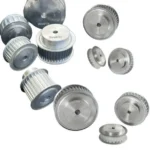
T10 25-20 F-AL Timing Belt Pulley
Original price was: 16.25$.8.26$Current price is: 8.26$.
High-performance industrial automation component for precise power transmission.
In stock
🔥 Special for Today Only %49 Discount Opportunity!📦 Category: 25 mm Timing Belt Pulleys🏷️ Number of Teeth: Z20🏷️ Timing Belt Profile: T10🏷️ Belt Width: 25 mm🏷️ Flange Type: Flanged
Mermak assuranceFrom factory to end user · importer / main dealer · strong stock
ImporterMain dealer / distributorStrong stockGood priceCorporate invoice
In stock / available to order · 14-day return for standard unused products; conditions may vary for custom size/cut products.
T10 25-20 F-AL Timing Belt Pulley
INDUSTRIAL AUTOMATION PARTS | SUPERIOR PERFORMANCE SERIES
Detailed Product Review
The T10 25-20 F-AL Timing Belt Pulley is engineered as a critical component for power transmission in industrial automation systems, designed for applications requiring precise positioning, high torque transfer, and synchronized motion. This pulley features a T10 trapezoidal tooth profile compliant with ISO 5296 standards, ensuring positive engagement with the timing belt for zero-slip operation. Its 20-tooth configuration offers optimized kinematic properties for specific speed and torque ratios, ensuring the belt teeth mesh perfectly and the load is distributed uniformly. These structural features are vital for ensuring the highest accuracy of motion and maximizing operational efficiency in systems demanding high repeatability and low backlash, such as CNC machining centers, robotic manipulators, automated assembly lines, and precision measuring instruments.
The designation F-AL (Flanged Aluminum) indicates that the pulley has integrated flanges on both sides and is manufactured from a high-quality aluminum alloy. These flanges prevent the timing belt from dislodging from the pulley groove during operation, thus preventing misalignment and ensuring stable system performance. Compatibility with a 25 mm belt width allows for a larger contact surface, enabling high power transmission capacity and distributing tension across the belt, thereby extending the life of both the pulley and the belt. The choice of aluminum material minimizes the pulley’s overall inertia while offering excellent corrosion resistance and a high strength-to-weight ratio. These characteristics ensure consistent and reliable performance even under demanding industrial conditions with dynamic loads and environmental factors, directly contributing to the system’s long-term operational success.
T10 25-20 F-AL Timing Belt Pulley Advantages
Precise Synchronization and Positioning Accuracy: The T10 tooth profile, with its trapezoidal geometry conforming to ISO 5296 standards, ensures a precise and backlash-free meshing of the timing belt teeth within the pulley grooves. This positive engagement mechanism creates perfect synchronization between the shaft and the belt, guaranteeing the highest accuracy in motion transmission. The 20-tooth design optimizes the amount of linear motion achieved at a given rotation, minimizing positioning errors and significantly enhancing the system’s repeatability. This feature is critical in applications requiring micron-level precision, such as CNC machines and robotic systems.
High Torque Transfer and Load Capacity: Designed for a 25 mm belt width, this pulley distributes the transferred torque over a larger area due to its wide contact surface, reducing tension on both the belt and the pulley. The robust body, manufactured from high-quality aluminum alloy, offers the capacity to transmit high torque values safely and efficiently. This structural integrity allows the pulley to maintain stable performance under conditions of sudden load changes, high acceleration, and dynamic operation without deforming or causing belt slippage, thereby enhancing the overall power transmission efficiency of the system.
Long Lifespan and Reduced Maintenance Requirements: The flanged aluminum (F-AL) construction ensures the timing belt remains correctly aligned on the pulley, preventing wear on the belt edges and friction against the pulley flanges. This significantly extends the operational life of both the belt and the pulley. The inherent corrosion resistance of the high-quality aluminum material, often enhanced by anodization, provides an additional protective layer against environmental factors, increasing the pulley’s durability. Consequently, this component reduces the total cost of ownership through less wear, lower maintenance costs, and extended operational uptime.
Technical Specifications and Capacity
Feature
Value/Description
Tooth Profile
T10 (Trapezoidal tooth geometry compliant with ISO 5296 standard)
Number of Teeth
20 (Optimized for precise motion and torque transmission)
Belt Width Compatibility
25 mm (High load distribution and transmission capacity with wide contact surface)
Material
High-Quality Aluminum Alloy (Low inertia, high strength, corrosion resistance)
Flange Type
F-AL (Flanged Aluminum – Ensures belt retention and centering on the groove)
Outer Diameter (D_o)
Approx. 63.66 mm (Within precise engineering tolerances)
Pitch
10 mm (Standard tooth spacing for T10 tooth profile)
Nominal Torque Capacity
15-25 Nm (Varies depending on application and belt selection)
Technical Frequently Asked Questions (FAQ)
What are the main advantages of the T10 tooth profile compared to other timing belt profiles, and in which applications should it be preferred?
The T10 tooth profile features a trapezoidal geometry compliant with the ISO 5296 standard. Compared to circular profiles like HTD (High Torque Drive), this profile offers a wider contact surface and a more rigid tooth-belt interaction, particularly for high torque transmission and precise positioning applications. The trapezoidal shape allows the belt teeth to mesh more tightly within the pulley grooves, minimizing backlash and ensuring more accurate and repeatable motion. These characteristics make the T10 profile a preferred choice in areas where high precision is critical, such as CNC machining centers, robotic systems, precision indexing mechanisms, and general industrial automation lines. While circular profiles are often optimized for higher speeds and lower noise levels, the T10 profile excels in torque capacity and positioning accuracy.
How is the effect of a 20-tooth pulley on system speed and torque ratios calculated and optimized?
In a timing belt pulley system, speed and torque ratios are directly related to the ratio of the number of teeth between the driving (driver) and driven (driven) pulleys. This T10 25-20 F-AL pulley has 20 teeth. If the driver pulley has 20 teeth and the driven pulley also has 20 teeth, the speed ratio will be 1:1, and the torque transfer will also be approximately 1:1 (neglecting efficiency losses). However, when pulleys with different numbers of teeth are used, the speed and torque ratios change. For example, using a 20-tooth driver pulley with a 40-tooth driven pulley will result in the driven pulley rotating at half the speed of the driver pulley, but its torque will be doubled. This ratio is calculated as (number of driven teeth / number of driver teeth). System optimization requires careful selection of pulley tooth counts, ensuring compatibility of belt pitch and pulley diameters, to achieve the required final speed and torque values for the application. These calculations directly impact power transmission efficiency, system inertia, and dynamic response.
What are the contributions of the flanged aluminum (F-AL) construction to the lifespan of the timing belt and the overall stability of the system?
The flanged aluminum (F-AL) construction signifies that the pulley has integrated flanges, which ensure the timing belt remains on the correct axis. These flanges restrict the lateral movement of the belt, especially in high-speed or dynamic load applications, preventing it from dislodging from the pulley groove. Continuous operation of the belt in the correct alignment significantly reduces edge wear, friction, and consequently, premature belt degradation. By minimizing stress concentrations and heat generation caused by misalignment, the operational life of both the belt and the pulley is extended. Furthermore, the flanges enhance the overall stability of the system, helping to reduce vibration and noise, which positively impacts positioning accuracy and repeatability, particularly in precision machinery. The aluminum material, with its light weight, reduces inertia, while its corrosion resistance ensures long-term reliability even in harsh industrial environments.
What does the nominal torque capacity of 15-25 Nm for this pulley mean in industrial applications, and how should this value be verified?
The nominal torque capacity of 15-25 Nm for the T10 25-20 F-AL Timing Belt Pulley refers to the maximum continuous torque the pulley can safely and efficiently transmit, in conjunction with the belt, under specific operating conditions. This value is determined by factors such as the pulley’s material strength, tooth profile geometry, number of teeth, and belt width. In industrial applications, this torque capacity indicates the pulley’s adequacy in transferring the torque generated by a motor or drive unit to the workload. Verification of this value requires ensuring that the torque capacity of the selected timing belt is compatible with the pulley’s capacity, as the weakest link in the system determines the overall capacity. Additionally, dynamic factors such as the application’s peak torque requirements, duty cycle, acceleration/deceleration rates, and ambient temperature must be considered, along with a safety factor. Verifying real-world performance through engineering calculations and, if necessary, prototype testing is critical for ensuring the system’s long-term, trouble-free operation.
| Number of Teeth | Z20 |
|---|---|
| Timing Belt Profile | T10 |
| Belt Width | 25 mm |
| Flange Type | Flanged |
You must be logged in to post a review.
Taksit Tablosu
Related Products
 %43 DiscountT10 25-36 F-AL Timing PulleyOriginal price was: 47.41$.26.82$Current price is: 26.82$.View
 %49 DiscountT10 25-48 AL Timing PulleyOriginal price was: 67.32$.34.20$Current price is: 34.20$.View
 %49 DiscountT10 25-12 F-AL Timing Belt PulleyOriginal price was: 7.69$.3.91$Current price is: 3.91$.View
Reviews
There are no reviews yet.