
No products in the cart.
%49 Discount


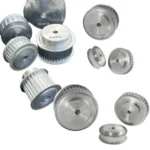
T10 25-12 F-AL Timing Belt Pulley
Original price was: 7.69$.3.91$Current price is: 3.91$.
In stock
🔥 Special for Today Only %49 Discount Opportunity!📦 Category: 25 mm Timing Belt Pulleys🏷️ Number of Teeth: Z12🏷️ Timing Belt Profile: T10🏷️ Belt Width: 25 mm🏷️ Flange Type: Flanged
Mermak assuranceFrom factory to end user · importer / main dealer · strong stock
ImporterMain dealer / distributorStrong stockGood priceCorporate invoice
In stock / available to order · 14-day return for standard unused products; conditions may vary for custom size/cut products.
T10 25-12 F-AL Timing Belt Pulley
INDUSTRIAL AUTOMATION PARTS | SUPERIOR PERFORMANCE SERIES
Detailed Product Review
In industrial automation systems, the transmission of power and motion is a critical engineering discipline for the overall efficiency, repeatability, and operational reliability of the system. The T10 25-12 F-AL Timing Belt Pulley is designed as a fundamental component of synchronized power transmission mechanisms. This pulley offers millimeter-level positioning accuracy and high torque transmission capacity in belt systems with an optimized geometry. The T10 tooth profile features a trapezoidal structure compliant with the ISO 5294 international standard. This profile ensures perfect meshing between the timing belt and the pulley teeth, maintaining the principle of zero slip even under dynamic loads and enabling operation with minimal backlash. This feature directly enhances system performance, especially in applications requiring precision and repeatability such as CNC machining, robotic manipulation, and precise positioning, minimizing unwanted vibrations and positional errors.
This specific pulley model is designed for compatibility with 25 mm wide T10 timing belts and features 12 teeth, optimized through engineering calculations for specific gear ratios and speed requirements. The designation “F-AL” indicates that the pulley is manufactured from high-strength, corrosion-resistant aluminum alloy and features integrated double-sided flanges. These integrated flanges physically prevent the belt from coming off the pulley, enhancing system safety and limiting the belt’s lateral movement. The lightweight yet extremely robust nature of the aluminum alloy minimizes inertial load on the system while maintaining dynamic balance even at high speeds. This allows drive motors to operate more efficiently with lower energy consumption, optimizing overall system energy costs. The anodized surface treatment increases the material’s wear resistance, provides protection against environmental factors, and preserves the product’s aesthetic integrity for a long time.
T10 25-12 F-AL Timing Belt Pulley Advantages
Superior Positioning Accuracy and Synchronization: The precise geometry of the T10 tooth profile ensures perfect meshing between the timing belt and pulley teeth, offering absolute slip resistance during power transmission. This feature maximizes repeatability and accuracy, particularly in applications requiring millimeter or micrometer positioning accuracy, such as axis movements in CNC machines or robotic arm manipulations. The minimal backlash value reduces positional error even during direction changes, enhancing the system’s dynamic performance and directly impacting machining quality.
High Torque Transmission Capacity and Load Resistance: The selection of high-strength aluminum alloy (F-AL) material and optimized tooth geometry enable the pulley to provide continuous and reliable power transmission even under heavy loads. The tooth profile distributes stress concentration over the contact surface, allowing the load to be spread more uniformly, which reduces the risk of tooth breakage and increases torque transmission capacity. This structural integrity is critical, especially in conveyor systems, lifting mechanisms, and heavy industrial automation applications requiring continuous high torque.
Long Operational Life and Minimum Maintenance Requirement: The corrosion-resistant aluminum alloy material ensures the pulley’s structural integrity and performance are maintained for a long time, even in harsh industrial environmental conditions (humidity, chemical vapors, etc.). The integrated double-sided flange design restricts the belt’s lateral movement, preventing it from coming off the pulley and increasing system reliability. These design features reduce wear and tear rates, extending the pulley’s operational life and minimizing periodic maintenance needs, thereby lowering operating costs and supporting production continuity.
Technical Specifications and Capacity
FeatureValue/Description
Tooth ProfileT10 (Special trapezoidal profile, optimized for high torque and precision)
Number of Teeth (Z)12 (Engineering choice for compact design and specific gear ratios)
Belt Width25 mm (High power transmission capacity and stability with a wide belt surface)
Outer Diameter (D_d)38.20 mm (Offers compact size advantage in system integration)
MaterialF-AL High-Strength Aluminum Alloy (Lightweight, corrosion resistance, high mechanical strength)
Flange StructureIntegrated Double-Sided Flange (Enhances operational safety by preventing belt derailment)
Bore DiameterStandard Pilot Bore (Customizable to customer requirements, adaptable to different shaft diameters)
ISO StandardISO 5294 (International standardization for timing belt and pulley systems)
Operating Temperature-30°C to +80°C (Thermal performance suitable for a wide range of industrial environmental conditions)
Technical Frequently Asked Questions (FAQ)
What are the key engineering advantages of the T10 tooth profile compared to other timing belt profiles (e.g., HTD or AT)?
The T10 tooth profile has a trapezoidal geometry and is preferred for applications requiring precise positioning and synchronization. HTD (High Torque Drive) profiles have a more rounded tooth form and perform better in high torque transmission, while the sharp, flat surfaces of T10 are more effective at minimizing backlash between the belt and pulley. This reduces positioning errors, especially during direction changes or high acceleration/deceleration events. AT (Arc Tooth) profiles, similar to HTD, offer high torque capacity, but T10 stands out by providing higher positioning accuracy and less vibration at lower speeds and medium torque applications. These characteristics make T10 a preferred choice in areas where millimeter precision is critical, such as CNC machining centers and robotic systems.
How can the standard pilot bore of the pulley be adapted to different shaft diameters and keyways?
The T10 25-12 F-AL Timing Belt Pulley is typically supplied with a standard pilot bore. This pilot bore allows the pulley to be machined by the end-user to a specific shaft diameter and keyway standard. The machining process involves enlarging the bore to match the shaft diameter and creating a keyway according to ISO or DIN standards to ensure torque transmission. This customization allows the pulley to be seamlessly integrated into existing drive systems. During machining, precise turning and milling techniques must be used to avoid disturbing the pulley’s dynamic balance, and appropriate tolerances and surface quality must be maintained without affecting the material’s tensile strength. Mermak CNC offers technical support for such customization services.
How does the selection of F-AL high-strength aluminum alloy affect the pulley’s thermal and environmental performance?
The use of F-AL (Forged Aluminum) high-strength aluminum alloy provides significant advantages in both the thermal and environmental performance of the pulley. Aluminum, having a lower density compared to steel, reduces the pulley’s moment of inertia and overall system weight, which increases energy efficiency in applications requiring high speed and acceleration. Thermally, aluminum’s high thermal conductivity allows heat generated by friction or external sources to dissipate more rapidly from the pulley surface, preventing overheating of the belt and pulley, thereby extending component life. Environmentally, aluminum alloys are naturally highly resistant to corrosion; anodized surface treatment further enhances this resistance, ensuring long-term and reliable operation of the pulley even in humid, chemically vaporous, or mildly corrosive environments. These properties optimize the pulley’s performance across a wide range of industrial applications.
What are the engineering implications of the integrated double-sided flange design on system safety and ease of installation?
The integrated double-sided flange design offers critical engineering benefits for the operational reliability and ease of installation of the T10 25-12 F-AL Timing Belt Pulley. These flanges physically prevent the belt from laterally derailing from the pulley, enhancing system safety, especially at high speeds or during sudden load changes. By ensuring the belt remains continuously aligned on the pulley, it prevents edge wear and premature failure of the belt. In terms of installation, integrated flanges eliminate the need for mounting and aligning separate flanges, reducing setup time and labor costs. Furthermore, they eliminate potential failure points such as the loosening or misalignment of separate flanges, thereby increasing the overall robustness and reducing maintenance requirements of the system. This design also facilitates maintenance and repair, particularly in enclosed or hard-to-access systems.
As a trusted supplier of industrial automation components, Mermak has been serving clients for 16 years from our Ankara Uzay Sanayi factory and warehouse. Our website features up-to-date stock quantities and prices. Stocked products are dispatched directly from our warehouse, eliminating production waiting times. We ensure careful packaging and meticulous invoice/document follow-up. Through reliable logistics partners, Mermak’s team closely monitors the shipment process. We also offer product videos and factory viewings via WhatsApp or other contact channels upon request. We proudly supply to numerous countries including the United Kingdom, United States, Canada, Australia, Ireland, New Zealand, and South Africa, alongside similar countries and international markets.
| Number of Teeth | Z12 |
|---|---|
| Timing Belt Profile | T10 |
| Belt Width | 25 mm |
| Flange Type | Flanged |
You must be logged in to post a review.
Taksit Tablosu
Related Products
 %43 DiscountT5 25-14 F-AL Timing PulleyOriginal price was: 4.34$.2.46$Current price is: 2.46$.View
 %44 DiscountT5 25-20 F-AL Timing PulleyOriginal price was: 6.82$.3.85$Current price is: 3.85$.View
 %43 DiscountT5 25-40 F-AL Timing PulleyOriginal price was: 16.82$.9.53$Current price is: 9.53$.View
Reviews
There are no reviews yet.