
No products in the cart.
%51 Discount


T-Slot Nut M4 30×30 K8
Original price was: 0.16$.0.07$Current price is: 0.07$.
High-strength carbon steel T-slot nut for 30×30 aluminum profiles with K8 (8mm) slots. Metric M4 thread.
Out of stock
🔥 Special for Today Only %51 Discount Opportunity!📦 Category: M4 Channel Nuts🏷️ Dimensions: 30, 30x30, 4🏷️ Slot Size: 8 Slots🏷️ Nut Type: T-Nut🏷️ Compatible Profile Size: 30x30🏷️ Tooth Size: M4
Mermak assuranceFrom factory to end user · importer / main dealer · strong stock
ImporterMain dealer / distributorStrong stockGood priceCorporate invoice
Contact us for stock information · 14-day return for standard unused products; conditions may vary for custom size/cut products.
T-Slot Nut M4 30×30 K8
INDUSTRIAL AUTOMATION PARTS | SUPERIOR PERFORMANCE SERIES
Detailed Product Review
The T-Slot Nut M4 30×30 K8 is designed as a critical fastening element in industrial aluminum profile constructions, developed to ensure the structural integrity of modular systems. This nut is used by inserting it into the profile’s T-slot from the profile end (end-loading), creating a high-rigidity connection point by seating perfectly within the slot. Its metric M4 thread standard offers compatibility with a wide range of bolts and screws, while the K8 slot width ensures a precise, gap-free mechanical integration with standard 8mm industrial aluminum profiles. The nut’s expanded contact surface allows for uniform distribution of applied torque onto the profile slot walls, minimizing concentrated stresses and thereby preventing the connection from loosening or slipping even under high dynamic loads or vibrations. This structural feature is essential for long-term stability and reliability, especially in critical applications such as machine frames, support systems, and safety barriers.
The product’s material composition is high-strength carbon steel compliant with DIN standards, providing the nut with superior tensile and shear strength. The zinc-plated surface treatment enhances the nut’s resistance to corrosion and rust in harsh industrial environments (humidity, chemical vapors, mild abrasives, etc.), extending its service life and reducing maintenance needs. The T-Slot Nut M4 30×30 K8 offers seamless integration, particularly with 30×30 sigma profiles, providing designers and engineers with reliable and repeatable assembly solutions. Application areas range widely, from the frame structures of robotic arms, conveyor systems, and precision positioning equipment in industrial automation and robotics, to the manufacturing of workbenches, test stands, safety cages, and protective barriers used in machine construction. This nut stands out for its ability to minimize the risk of connection loosening in vibrating machinery and to create robust structures that enhance operator safety.
Advantages of T-Slot Nut M4 30×30 K8
High Strength and Vibration-Resistant Connection: The expanded contact surface uniformly distributes applied axial loads and torque across the profile slot walls, minimizing point loads and thereby increasing the fatigue life of the connection point. This design maximizes system integrity and operational reliability by preventing loosening or slippage, especially in systems subjected to high torque values and continuous vibrations or dynamic loads. Reducing stress concentration at the connection point lowers the risk of structural deformation in the long term.
Precise Fit and System Rigidity: Optimized compatibility with the K8 slot width and the 30×30 sigma profile series ensures minimal clearance between the nut and the profile slot during assembly. This precise fit significantly increases the overall rigidity and accuracy of the system post-assembly. This rigidity is a critical factor for repeatability and positioning accuracy, particularly in robotic systems, optical alignment equipment, or automation applications requiring precise positioning. Minimal clearance prevents micro-level movements at connection points, enhancing overall system performance.
Long-Lasting Corrosion and Wear Resistance: The high-strength carbon steel material and DIN-compliant zinc-plated surface treatment enable the T-Slot Nut M4 30×30 K8 to exhibit superior resistance to harsh industrial environmental conditions. This plating delays rusting and wear even in humid environments, mild chemical vapors, or dusty conditions. This feature reduces product maintenance costs, minimizes operational downtime, and extends the system’s total service life. The uniformity of the plating ensures equal protection across the entire surface, preventing localized corrosion.
Technical Specifications and Capacity
Feature|Value/Description
Thread Type|Metric M4 (Compliant with ISO Standards)
Slot Width Compatibility|K8 (8mm Slot) – Industrial Aluminum Profiles
Profile Series Compatibility|30×30 Sigma Profiles and Similar Sized Profiles
Material|High-Strength Carbon Steel (Compliant with DIN Standards)
Surface Treatment|Zinc Plating (Enhances Corrosion Resistance)
Mounting Type|End-Loading – Nut is slid into the slot from the profile end.
Technical Frequently Asked Questions (FAQ)
Is this T-slot nut compatible with different aluminum profile series or alloys?
The T-Slot Nut M4 30×30 K8 is mechanically compatible, especially with sigma profiles featuring K8 slot width (8mm slot) and 30×30 mm cross-section dimensions. This compatibility stems from the precise tolerances between the internal geometry of the profile slot and the external dimensions of the nut. Different profile series or alloys may not provide a full and gap-free seating of the nut if their slot width and internal geometry do not conform to the K8 standard. For instance, it is not directly compatible with profiles having K6 or K10 slot widths. While the profile alloy (e.g., 6061, 6063) does not directly affect the mechanical compatibility of the nut, the profile’s strength characteristics will determine the overall load-bearing capacity of the connection. For optimal performance, it is recommended to use the nut with the specified K8 slot and 30×30 profile series.
What are the critical technical considerations during the installation of the T-slot nut?
The installation of the T-Slot Nut M4 30×30 K8 is performed using the “end-loading” method, meaning the nut is slid into the slot from the open end of the profile. The most critical aspect during installation is ensuring the nut seats fully and squarely within the slot. If the nut is positioned at an angle or does not seat completely within the slot, the connection may not achieve its intended torque capacity and could lead to loosening under load. When securing the nut with an M4 threaded bolt or screw, it is important to adhere to recommended torque values. Applying excessive torque can damage the nut’s threads or the profile slot, while insufficient torque will result in a weak connection. Ensuring the profile slot is clean and free of debris before installation is necessary for the nut to move smoothly and seat properly.
What are the maximum axial tensile and shear load capacities of this nut, and under what conditions are these values valid?
The maximum axial tensile and shear load capacities of the T-Slot Nut M4 30×30 K8 vary depending on the strength class of the bolt used, the profile’s alloy, and the connection geometry. The nut itself is made of high-strength carbon steel, and its expanded contact surface distributes stress onto the profile slot. Typically, when used with an M4 threaded bolt of strength class 8.8, the axial tensile load capacity of a single nut might be around 2.5 kN (250 kgf), while the shear load capacity is limited by the bolt’s shear strength and could be around 1.5 kN (150 kgf). These values are valid under ideal conditions where the bolt is fully tightened, the nut seats perfectly in the profile slot, and the profile itself has sufficient strength. Dynamic loads, vibrations, or environmental factors like high temperatures can reduce these capacities. For detailed load calculations, it is recommended to analyze the entire system using FEA (Finite Element Analysis).
What types of industrial environments does the zinc-plated surface treatment guarantee corrosion resistance in, and what is the lifespan of the plating?
The zinc plating on the T-Slot Nut M4 30×30 K8 protects the nut against atmospheric corrosion in typical industrial environments. This plating delays rusting, especially in environments with humidity, dust, or mild chemical vapors. The plating performs well in neutral or mildly alkaline environments with a pH between 6 and 10. However, in direct contact with high concentrations of acids, strong bases, or corrosive chemicals, the integrity of the plating can be compromised, and its corrosion resistance may decrease. The lifespan of the plating varies depending on the severity of the environmental conditions, temperature fluctuations, and mechanical abrasion. Generally, in enclosed and controlled industrial environments, zinc plating can provide effective protection for up to a decade or more, whereas in outdoor or aggressive chemical exposure situations, this duration can be significantly shorter. Periodic visual inspections and, if necessary, protective coating renewals can extend the product’s life.
| Dimensions | 30, 30x30, 4 |
|---|---|
| Slot Size | 8 Slots |
| Nut Type | T-Nut |
| Compatible Profile Size | 30x30 |
| Tooth Size | M4 |
You must be logged in to post a review.
Taksit Tablosu
Related Products
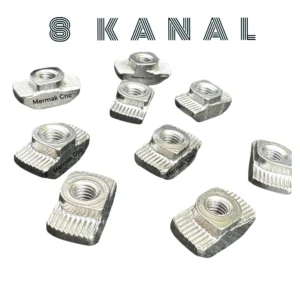 %56 DiscountKnurled Nut 30x30 M4 K8Original price was: 0.11$.0.05$Current price is: 0.05$.View
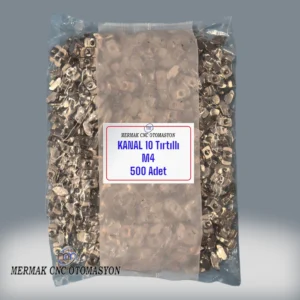 %59 Discount10mm Slot M4 Serrated Nut (500 pcs)Original price was: 93.00$.38.33$Current price is: 38.33$.View
 %41 DiscountChannel 6 M4 Serrated Nut (2000 pcs)Original price was: 96.00$.56.44$Current price is: 56.44$.View
Reviews
There are no reviews yet.