
No products in the cart.
%41 Discount

Channel 6 M4 Serrated Nut (2000 pcs)
Original price was: 96.00$.56.44$Current price is: 56.44$.
High-strength steel alloy with electro-galvanized zinc coating for superior corrosion resistance. “Drop-in” installation for quick and flexible assembly in 6mm channel aluminum profiles.
In stock
🔥 Special for Today Only %41 Discount Opportunity!📦 Category: Channel 6 Knurled Nuts🏷️ Dimensions: 4🏷️ Slot Size: 6 Slots🏷️ Nut Type: Knurled Nut🏷️ Tooth Size: M4
Mermak assuranceFrom factory to end user · importer / main dealer · strong stock
ImporterMain dealer / distributorStrong stockGood priceCorporate invoice
In stock / available to order · 14-day return for standard unused products; conditions may vary for custom size/cut products.
Channel 6 M4 Serrated Nut (2000 pcs)
INDUSTRIAL AUTOMATION PARTS | SUPERIOR PERFORMANCE SERIES
Detailed Product Review
In industrial automation systems, the precise and reliable connection of structural elements is a critical engineering requirement for the system’s overall performance, operational lifespan, and repeatability. The Channel 6 M4 Serrated Nut is a fastening component designed to meet this technical need, creating high-strength and stable connections in industrial aluminum profile systems. The product is optimized for perfect mechanical compatibility with industrial aluminum profile series featuring a channel width of 6 mm (e.g., popular profiles like 20×20, 30×30, 40×40). The M4 metric screw diameter offers a suitable thread standard for light to medium-duty applications, enabling its use in a wide range of scenarios, from sensor mounting to securing protective panels. The specially designed serrated geometry on the surface of the nut that contacts the profile channel creates maximum friction with the inner walls of the profile, effectively preventing the nut from sliding or rotating within the channel when the bolt is tightened. This mechanical feature is vital for maintaining the stability and integrity of the connection point, especially in systems operating under vibration, impact loads, or dynamic stresses.
This fastening component is manufactured from a high-strength steel alloy, offering resistance to the mechanical stresses and fatigue required in industrial applications. The electro-galvanized zinc coating applied to the steel provides superior resistance to corrosion in harsh industrial environments (humidity, chemical vapors, dust, etc.), thereby extending the product’s operational life and minimizing maintenance costs. Developed in accordance with Mermak CNC V2 standards, these serrated nuts feature a “drop-in” installation capability, allowing them to be placed directly into the channel at any desired point without needing to be inserted from the profile end. This feature enables retrofitting existing profile systems, accelerating modification processes, and increasing assembly flexibility. Application areas range from 3D printer frames to carriers for sensitive electronic devices, laboratory setups, and the construction of light automation systems, providing reliable, durable, and modular connection solutions in each case.
Advantages of Channel 6 M4 Serrated Nut (2000 pcs)
High Friction Coefficient and Vibration Resistance: The specially machined serrated structure on the nut’s surface, which contacts the profile channel, interacts with the inner surface of the aluminum profile to create a high friction coefficient. This geometric design prevents both axial sliding and rotation of the nut within the channel when the bolt is tightened. This mechanical locking effect significantly enhances the connection point’s stability and operational safety by minimizing loosening, especially in industrial applications subjected to continuous vibration, dynamic loads, or sudden shocks. Consequently, machine precision and component positioning accuracy are maintained even during prolonged operation.
Modular and Fast Assembly Mechanism: The “drop-in” installation feature allows these nuts to be placed directly into any point of the profile channel without requiring insertion from the profile’s end. This design principle significantly saves time and labor costs during assembly processes. Particularly when making additions, modifications, or revisions to existing profile systems, connection points can be established quickly and flexibly without the need for partial or complete disassembly of the system. This operational flexibility contributes to the uninterrupted operation of production lines, increasing overall efficiency and shortening the implementation time for engineering changes.
Long-Term Mechanical and Chemical Durability: Manufactured from a high-quality steel alloy, these nuts exhibit superior resistance to mechanical stress, fatigue, and deformation in industrial environments. The electro-galvanized zinc coating applied to the product’s surface protects the nut from corrosion caused by environmental factors such as humidity, oxidation, and mild acidic or alkaline chemical vapors. In addition to forming a barrier on the steel surface, this coating provides cathodic protection due to zinc being a more active metal than iron; even if scratched or damaged, it delays the rusting of the underlying steel. This dual-layer protection mechanism ensures that the nuts maintain their original mechanical performance and aesthetic integrity for many years, even in harsh industrial conditions, thereby reducing the total cost of ownership and increasing system reliability.
Technical Specifications and Capacity
FeatureValue/Description
Channel CompatibilityCompatible with Channel 6 (6 mm channel width) – Provides full compatibility with profile series featuring a 6 mm channel width commonly used in industrial aluminum profile systems. This creates a standard connection point in popular profiles like 20×20 and 30×30.
Screw Thread DiameterM4 – Metric 4 standard screw (bolt) diameter. Ideal for light to medium-duty fasteners. Frequently chosen for sensor mounting, cover fixing, or light structural constructions.
MaterialHigh-Strength Steel Alloy – Alloy steel resistant to mechanical stresses and vibrations in industrial environments, with high tensile and yield strength.
Surface CoatingElectro-galvanized Zinc Coating – Compliant with ISO 2081, providing cathodic and barrier protection against corrosion, extending product life in humid and chemically vaporous environments.
Mounting TypeDrop-in (In-Channel Insertion) – Mechanism allowing direct insertion into any point of the profile channel without disassembling the profile, ensuring assembly flexibility and speed.
Serrated Surface StructureGeometry Providing High Friction Coefficient – Specially designed serrations on the nut’s surface contacting the profile channel maximize connection stability under dynamic loads by increasing resistance to sliding and rotation.
Packaging Quantity2000 pcs – Optimized, cost-effective bulk packaging for large-scale projects, mass production, or inventory management.
Technical Frequently Asked Questions (FAQ)
What are the engineering advantages of serrated nuts compared to standard T-nuts in terms of mechanical grip and vibration resistance?
The Channel 6 M4 Serrated Nut exhibits significantly higher mechanical grip and vibration resistance compared to standard T-nuts. Standard T-nuts typically have smooth surfaces and rely on friction within the profile channel for grip when the tightening torque is applied. However, under continuous vibration or dynamic loads, this frictional force can diminish over time, leading to the nut sliding or rotating within the channel and causing the connection to loosen. Serrated nuts, on the other hand, feature specially designed serrations that physically interlock with the inner surface of the profile channel. These serrations create a form-locking mechanism in addition to frictional force when the bolt is tightened, micro-penetrating the soft surface of the aluminum profile. This dual-action grip much more effectively prevents both axial sliding and rotational movement of the nut. Consequently, serrated nuts offer superior performance in applications subjected to high dynamic stresses, requiring precise positioning, or where connection stability is critical for long-term operation, thereby enhancing system reliability and lifespan.
Can you provide technical information on the corrosion resistance mechanism of the electro-galvanized zinc coating on the product’s surface and its effect on industrial lifespan?
The electro-galvanized zinc coating on the Channel 6 M4 Serrated Nut protects the steel substrate against corrosion through two primary mechanisms: barrier protection and cathodic (galvanic) protection. Barrier protection occurs as the zinc layer physically isolates the steel surface from environmental factors (oxygen, moisture, chemical vapors). This layer delays the initiation of corrosion reactions. Cathodic protection is based on the principle that zinc is a more active metal than steel. If the coating is scratched or damaged, exposing the steel substrate, the zinc oxidizes more readily than the steel (acting as a sacrificial anode), preventing the steel from rusting. This mechanism provides protection for a period even if the coating’s integrity is compromised. The industrial lifespan of electro-galvanized coatings depends on the coating thickness, the aggressiveness of the exposed environmental conditions (pH level, humidity, salinity, chemical concentrations), and the level of mechanical wear. Typically, zinc coatings applied according to standards like ISO 2081 ensure that the nuts maintain their performance for many years, even in moderately corrosive industrial environments. This reduces maintenance and replacement costs while increasing the overall reliability of the system.
How does the “drop-in” mounting type affect the structural integrity or load-bearing capacity of aluminum profile systems, and what are the technical advantages of this mounting type?
The “drop-in” mounting type allows the Channel 6 M4 Serrated Nuts to be inserted directly into any point of the profile channel without needing to be slid in from the profile’s end. This mounting method does not negatively affect the structural integrity of the profile systems; on the contrary, it increases assembly flexibility and speed by eliminating the need to disassemble the profile during additions or modifications to existing systems. In terms of load-bearing capacity, the high friction and form-locking provided by the nut’s serrated structure within the profile channel ensure that the connection point remains stable even under static and dynamic loads. When the correct tightening torque is applied, the nut is securely fixed within the profile and effectively distributes the load. Technical advantages include a significant reduction in assembly time, lower labor costs, minimized production line downtime, and greater modularity and adaptability in system design. This is a critical feature that maximizes engineering efficiency, especially in complex automation systems or prototyping processes requiring frequent revisions.
What engineering principles should be considered to optimize the performance of Channel 6 M4 serrated nuts in applications involving high dynamic loads or continuous vibration?
Several engineering principles are critical for optimizing the performance of Channel 6 M4 serrated nuts in applications with high dynamic loads or continuous vibration. Firstly, appropriate bolt selection plays a vital role; the bolt’s material grade (e.g., grade 8.8 or 10.9 steel), thread type, and size must be fully compatible with the nut. Secondly, applying the correct mounting torque to the bolt creates sufficient pre-tensioning at the connection point, preventing the nut from sliding or loosening within the profile. Excessive torque can damage the bolt or nut, while insufficient torque can lead to connection loosening. Thirdly, the use of additional locking mechanisms can be considered; for example, split lock washers or threadlockers can further reduce bolt loosening caused by vibration. Fourthly, periodic inspection of connection points and torque checks, if necessary, are important for maintaining long-term operational reliability. Finally, how the load is transferred to the connection point and the potential for local deformation of the profile should be considered in the connection design, using additional support elements if necessary to improve load distribution. Implementing these principles enhances the overall durability and safety of the system.
| Dimensions | 4 |
|---|---|
| Slot Size | 6 Slots |
| Nut Type | Knurled Nut |
| Tooth Size | M4 |
You must be logged in to post a review.
Taksit Tablosu
Related Products
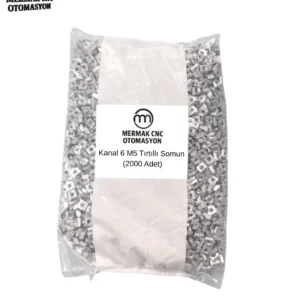 %74 DiscountChannel 6 M5 Serrated Nut (2000 Pcs)Original price was: 216.00$.55.30$Current price is: 55.30$.View
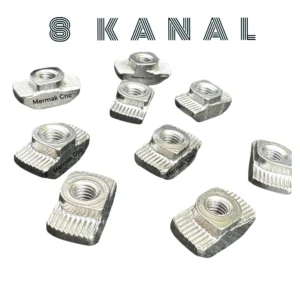 %56 DiscountKnurled Nut 30x30 M4 K8Original price was: 0.11$.0.05$Current price is: 0.05$.View
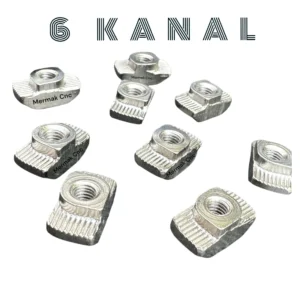 %43 DiscountKnurled Nut 20-25 M5 K6Original price was: 0.04$.0.02$Current price is: 0.02$.View
Reviews
There are no reviews yet.