
No products in the cart.
%32 Discount


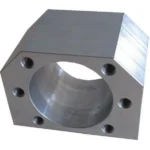
SSG 16 (DSG16) Nut Housing
Original price was: 4.36$.2.95$Current price is: 2.95$.
High-strength alloy steel nut housing for 16mm ball screw systems, designed for precision and durability in industrial automation.
In stock
🔥 Special for Today Only %32 Discount Opportunity!📦 Category: 16 mm Lead Screws and Nuts🏷️ Dimensions: 16🏷️ Shaft Diameter: 16 mm
Mermak assuranceFrom factory to end user · importer / main dealer · strong stock
ImporterMain dealer / distributorStrong stockGood priceCorporate invoice
In stock / available to order · 14-day return for standard unused products; conditions may vary for custom size/cut products.
SSG 16 (DSG16) Nut Housing
INDUSTRIAL AUTOMATION PARTS | SUPERIOR PERFORMANCE SERIES
Detailed Product Review
The SSG 16 (DSG16) Nut Housing is engineered as a critical interface component for ball screw systems, playing a key role in converting rotational motion into high-precision, repeatable linear motion. This housing is used to mechanically connect the ball screw nut to the machine chassis or a moving platform. Its primary function is to ensure the stable positioning of the ball screw nut under axial and radial loads, thereby maximizing the system’s overall rigidity and positioning accuracy. In applications requiring high dynamic performance and sub-micron precision, such as CNC machining centers, robotic manipulators, precision measuring instruments, and automated assembly lines, it directly contributes to maintaining machining quality and operational efficiency by offering minimal deformation and maximum stability even under axial load. The design aims to secure the ball screw nut to the housing with near-zero backlash tolerance, which enhances the system’s vibration damping capacity and maintains stability even under dynamic loads.
The structural integrity of the product is ensured by its manufacturing from high-strength alloy steel. This material choice provides high tensile strength and fatigue resistance, ensuring long-lasting and reliable performance. Precision machining techniques and optimized surface quality guarantee a perfect fit of the ball screw nut into the housing, while the ISO H7 tolerance class emphasizes the critical importance of axial alignment during assembly. This engineering approach minimizes backlash in the system, thereby increasing repeatable positioning accuracy and machining precision. In industrial automation systems, the SSG 16 (DSG16) Nut Housing supports the axial movement of the ball screw, enabling direct improvements in cutting forces in machine tools, handling loads in robotic systems, and layering accuracy in 3D printers. Developed in accordance with Mermak CNC’s engineering standards, this component enhances the overall rigidity of the system even under demanding industrial conditions, offering operational advantages such as longer tool life, reduced maintenance needs, and consistent product quality. Mermak has 16 years of experience, operating from our Ankara Uzay Sanayi factory/warehouse, and we supply to markets including the United Kingdom, United States, Canada, Australia, Ireland, New Zealand, and South Africa, as well as similar countries and international markets.
SSG 16 (DSG16) Nut Housing Advantages
High Axial and Radial Rigidity: The SSG 16 (DSG16) Nut Housing is precisely machined from high-strength alloy steel. This material selection and optimized geometric design provide a high rigidity coefficient in both axial and radial directions. It exhibits minimal deformation under dynamic loads, vibrations, and cutting forces, ensuring the stable and steady positioning of the ball screw nut without axial slippage. Consequently, it has a direct positive impact on machining accuracy, surface quality, and tool life, as elastic deformations in the system are minimized.
Optimum Zero-Backlash Integration and Positioning Accuracy: The high-precision machining processes applied in the product’s manufacturing maintain surface roughness and dimensional tolerances within the ISO H7 class. These critical tolerances ensure that the ball screw nut fits perfectly and without play into the housing. Minimizing micron-level backlash during assembly significantly increases the system’s overall positioning accuracy and repeatability. This feature is vital, especially in closed-loop control systems, for achieving error-free target positioning and the ability to return to the same position repeatedly, thus ensuring consistency and reliability in production.
Long-Term Operational Durability and Wear Resistance: The SSG 16 (DSG16) Nut Housing is manufactured from specially heat-treated steel material. This heat treatment optimizes the material’s surface hardness and core toughness, providing exceptional resistance against wear, fatigue, and impact loads encountered in continuous operation conditions. Combined with a protective surface coating that provides corrosion resistance, these structural features ensure the product offers a long service life even in harsh industrial environments. This directly contributes to extended maintenance intervals, reduced downtime, and consequently, lower operating costs, enhancing the system’s overall equipment lifespan and operational reliability.
Technical Specifications and Capacity
Feature
Value/Description
Material
High-Strength Alloy Steel (e.g., ST52 or similar), providing high tensile strength and fatigue resistance for heavy load capacity and corrosion resistance.
Compatible Ball Screw Diameter
16 mm (Designed for full compatibility with SFU1605, DFU1605 series ball screws, optimizing axial motion precision.)
Housing Length (L)
50 mm (Compact sizing offers flexible integration in tight mounting spaces and minimal system footprint.)
Mounting Type
Flange Type / Block Mount (Easy and secure surface mounting with hole pattern conforming to industrial standards, critical for high rigidity.)
Mounting Bolt Diameter
M4 (Optimized for secure and vibration-resistant fastening, conforming to general industrial machine standards.)
Weight
Approx. 200 grams (Minimal impact on the system’s moving mass, enhancing dynamic performance, acceleration, and deceleration capabilities.)
Surface Treatment
Silver Color, Protective Coating Against Oxidation and Corrosion (Extends product life by providing resistance to environmental factors.)
Tolerance Class
ISO H7 (Critical tolerances for high-precision assembly and axial alignment, forming the basis for backlash-free operation.)
Operating Temperature Range
-20°C to +80°C (Compatibility with wide industrial operating environments, designed considering thermal expansion coefficients.)
Technical Frequently Asked Questions (FAQ)
How does the ISO H7 tolerance class of the SSG 16 (DSG16) Nut Housing affect the overall performance of the ball screw system?
The ISO H7 tolerance class indicates that the internal diameter and mounting surfaces of the nut housing are manufactured within a very narrow deviation range. This precision allows the ball screw nut to be mounted into the housing with minimal axial and radial play, achieving an “zero backlash” tolerance fit. This condition enhances the system’s dynamic rigidity, improves vibration damping capacity, and maximizes positioning accuracy and repeatability, especially during high-speed or high-acceleration movements. The H7 tolerance minimizes alignment errors during assembly, extending the lifespan of the ball screw and reducing wear, as the load distribution between the nut and screw becomes more uniform.
What is the appropriate lubrication selection for a ball screw system using this nut housing?
While the nut housing itself does not require direct lubrication, the correct lubrication of the ball screw nut it contains is critical. Lubrication selection should consider the operating temperature range (-20°C to +80°C), load conditions, operating speed, and environmental factors. Generally, high-viscosity mineral-based or synthetic greases are preferred; these greases form a film between the balls and bearing surfaces, reducing friction and wear. For high-speed applications, lower viscosity oils or special synthetic greases may be suitable, while for low-temperature applications, synthetic greases with a wide temperature range are recommended. Lubrication intervals should be determined based on the system’s operating cycle and manufacturer recommendations, with regular checks and replenishment optimizing system life and performance.
Can the SSG 16 (DSG16) Nut Housing be used in vertical axis applications, and what technical considerations are important in such cases?
Yes, the SSG 16 (DSG16) Nut Housing can be used in vertical axis applications and offers a suitable solution due to its high rigidity. However, in vertical axes, additional axial loads are generated due to gravity. In such cases, it must be ensured that the ball screw nut and housing can bear these additional loads. Furthermore, to prevent the risk of “backdriving” or “free fall” in vertical axes, it is technically recommended to use a braking mechanism or a self-locking system (e.g., using screws with lower lead angles instead of high-lead screws). During assembly, perfect alignment of the nut housing and ball screw is critical to minimize radial loads and ensure overall system stability. The high-strength alloy steel material minimizes deformation even under vertical loads, preserving system safety and precision.
How does the high-strength alloy steel material of the product contribute to the overall fatigue life and reliability of the ball screw system?
High-strength alloy steel imparts superior mechanical properties to the SSG 16 (DSG16) Nut Housing, with high tensile strength, yield strength, and fatigue resistance being its primary advantages. Ball screw systems are continuously subjected to repetitive load cycles, which can lead to fatigue damage in components. Manufacturing the nut housing from high-strength steel provides greater resistance against crack initiation and propagation under these repetitive loads, significantly extending the fatigue life of the component and, consequently, the entire system. Furthermore, the material’s high rigidity effectively distributes the stresses experienced by the ball screw nut, reducing localized stress concentrations and enhancing the overall reliability of the system. This directly contributes to extended maintenance intervals and minimization of unexpected failures.
Mermak CNC has 16 years of experience, operating from our Ankara Uzay Sanayi factory/warehouse. Website stock quantities and prices are up-to-date. Stocked products are prepared from the warehouse without production waiting. We ensure careful packaging, invoice/document follow-up, and work with reliable logistics partners. The shipment process is followed by the Mermak team. Product videos or factory viewings can be arranged via WhatsApp or other contact channels upon request. We supply to the United Kingdom, United States, Canada, Australia, Ireland, New Zealand, South Africa, and similar countries and international markets.
| Dimensions | 16 |
|---|---|
| Shaft Diameter | 16 mm |
You must be logged in to post a review.
Taksit Tablosu
Related Products
 %43 Discount1610 Ball Screw Nut | SFU NutOriginal price was: 39.60$.22.60$Current price is: 22.60$.View
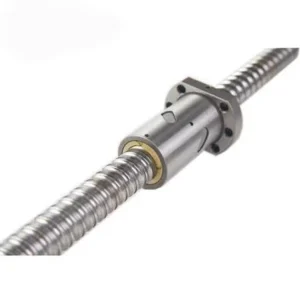 %16 DiscountBall Screw SCR 1605Original price was: 38.40$.32.40$Current price is: 32.40$.View
 %43 DiscountSsg 32 (Dsg32) Nut HousingOriginal price was: 10.33$.5.84$Current price is: 5.84$.View
Reviews
There are no reviews yet.