
No products in the cart.
%33 Discount


Ball Screw SCR 1610
Original price was: 54.00$.36.16$Current price is: 36.16$.
High-precision linear motion component for industrial automation. Features a 10mm pitch and 55 HRC surface hardness.
Out of stock
🔥 Special for Today Only %33 Discount Opportunity!📦 Category: 16 mm Lead Screws and Nuts🏷️ Dimensions: 16🏷️ Shaft Diameter: 16 mm🏷️ Pitch: 10 mm Pitch
Mermak assuranceFrom factory to end user · importer / main dealer · strong stock
ImporterMain dealer / distributorStrong stockGood priceCorporate invoice
Contact us for stock information · 14-day return for standard unused products; conditions may vary for custom size/cut products.
Ball Screw SCR 1610
INDUSTRIAL AUTOMATION PARTS | SUPERIOR PERFORMANCE SERIES
Detailed Product Review
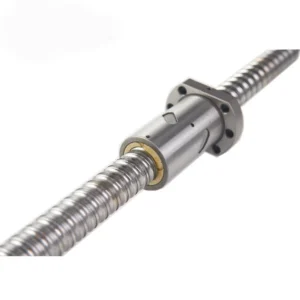
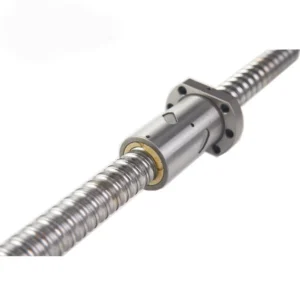
The Ball Screw SCR 1610 is a critical linear motion component designed to convert rotary motion into high-precision linear motion in industrial automation systems. This system consists of a screw (shaft) and a nut (ball nut) that moves along it. The rotational movement of the screw causes the nut to advance linearly along the screw, driven by the principle of balls rolling within the helical grooves of the screw. This rolling motion significantly minimizes friction compared to traditional sliding friction systems, thereby substantially increasing mechanical efficiency and reducing thermal expansion. The 10mm pitch of the SCR 1610 means the nut advances 10 millimeters for every revolution of the motor, offering a suitable balance between high-speed movement capability and precise positioning. When integrated with flanged ball nuts of the SFUR series, the system’s rigidity and load-carrying capacity are optimized, achieving micron-level repeatability and positioning accuracy, which directly impacts the quality and efficiency of production processes.
The SCR 1610 ball screw is manufactured using the rolling process; this method enhances surface hardness and fatigue resistance by compressing the material’s grain structure. This process results in a high surface hardness of 55 HRC, which maximizes the screw’s wear resistance and prevents performance degradation even during prolonged, intensive operations. The ball nut features a four-row ball arrangement, a configuration that distributes axial loads over a larger area, increasing load-carrying capacity and the system’s overall rigidity. Integrated seals on both sides of the nut prevent dust, dirt, and other particles from the working environment from penetrating the ball raceways, protecting the internal mechanism and extending the system’s lifespan. The flanged nut design offers ease of mounting and secure fastening, helping the system maintain its precision even under demanding industrial conditions. The product can be directly integrated with various drive systems such as servo motors, stepper motors, or geared motors; this flexibility allows it to be used in a wide range of industrial applications, including CNC machines, robotic applications, automatic assembly lines, and precision measuring instruments.
Advantages of Ball Screw SCR 1610
High Surface Hardness (55 HRC) and Wear Resistance: The 55 HRC surface hardness achieved through the rolling manufacturing process ensures high wear resistance on the ball contact surfaces of the ball screw. This hardness minimizes fatigue damage such as brinelling (pitting) and spalling (flaking) at the ball raceways, especially under dynamic loads and high speeds. High surface hardness helps the screw maintain its precision throughout its service life, extending maintenance intervals and reducing the total cost of ownership. Furthermore, this hardness increases the screw’s resistance to deformation, ensuring its geometric integrity even under heavy axial loads.
Dynamic Performance Balance with Optimal Pitch (10mm): The 10mm pitch of the SCR 1610 offers a critical balance between speed and positioning accuracy in linear motion systems. This pitch allows the nut to advance 10mm per motor revolution, providing sufficient linear speed capacity for high-speed traverse movements while also offering suitable resolution for applications requiring micron-level positioning accuracy. While higher pitch screws offer faster linear movements, lower pitch screws provide higher resolution and greater axial thrust. The 10mm pitch strikes an optimal balance between these two parameters, making it an ideal choice for CNC machines and robotic applications requiring both fast cycle times and precise machining. This also optimizes motor torque and speed requirements, enabling a more efficient system design.
Four-Row Ball Nut Design and High Axial Load Capacity: The SFUR series nuts compatible with the Ball Screw SCR 1610 feature a four-row ball arrangement. This design ensures that axial loads are distributed over a larger contact area and more uniformly among the balls within the nut. Consequently, a significantly higher dynamic and static axial load-carrying capacity is achieved compared to single or double-row ball nuts. The four rows of balls increase system rigidity, reduce elastic deformation, and ensure stable, vibration-free motion even in applications with heavy workpieces or high cutting forces. This configuration also offers a lower coefficient of friction and a longer service life, enhancing the overall reliability and performance of the system. The flanged nut design provides a robust and rigid connection to the mounting surface, contributing to the overall mechanical integrity of the system.
Technical Specifications and Capacity
FeatureValue/Description
Series NameSCR Series
Nominal Screw Diameter16 mm
Pitch10 mm
Manufacturing MethodRolled Process
Surface Hardness55 HRC
Nut TypeSFUR Series (Flanged, 4-row ball)
Dust ProtectionDouble-sided seals on steel nuts
Compatible Motor TypesServo motor, Stepper motor, Geared motor
Technical Frequently Asked Questions (FAQ)
How does the rolling process manufacturing of the Ball Screw SCR 1610 contribute to its technical performance?
The rolling process involves forming the screw’s thread profiles through cold forming between specialized dies, rather than cutting or grinding. This method achieves high surface hardness and density by compressing and aligning the material’s grain structure. The 55 HRC surface hardness obtained in the SCR 1610 significantly increases the screw’s wear resistance and delays the formation of fatigue cracks at the ball contact points. Furthermore, the compressive stresses generated during the rolling process extend the screw’s fatigue life and provide higher durability under dynamic loads. This manufacturing technique optimizes the screw’s surface roughness, reducing friction and enabling smoother ball movement, thereby enhancing the system’s overall efficiency and precision. Consequently, the SCR 1610, manufactured by the rolling process, offers a long-lasting, high-performance, and reliable linear motion solution.
How does the 10mm pitch of the SCR 1610 affect a system’s speed and positioning accuracy requirements?
The pitch of a ball screw refers to the linear distance the nut travels for one full revolution of the motor. The 10mm pitch of the SCR 1610 is a critical parameter that directly influences a system’s dynamic performance. A screw with a higher pitch allows for faster linear movement with fewer motor revolutions, making it ideal for high-speed traverse applications. However, a higher pitch generally means lower resolution and less axial thrust. The 10mm pitch strikes an optimal balance between these two extremes. This value provides sufficient linear speed for applications requiring fast cycle times, while also offering high resolution for operations demanding micron-level precision and repeatability. In terms of motor selection, a 10mm pitch offers the potential to achieve higher speeds with lower torque requirements, which may allow for the use of smaller and more economical motors. In system design, this pitch value is a fundamental input for determining the linear speed (obtained by multiplying the motor’s RPM by the pitch) and the axial thrust based on the relationship between motor torque and pitch.
What is the technical function of the double-sided seals in the SCR 1610 nut and their effect on system life?
The double-sided seals incorporated in the ball nut of the Ball Screw SCR 1610 are vital technical components for the long-term and reliable operation of the system. These seals are integrated into both ends of the nut and their primary function is to prevent dust, dirt, chips, moisture, and other foreign particles from the working environment from penetrating the ball raceways and the internal mechanism. Foreign matter entering the ball raceways can cause wear, scratches, and brinelling on the rolling surfaces between the balls and the screw and nut, leading to increased friction, noise, and a significant reduction in system precision, rigidity, and lifespan. The double-sided seals also prevent the lubricant inside the nut from leaking out, ensuring that the ball raceways remain adequately lubricated at all times. Sufficient lubrication minimizes friction and heat generation while also preventing wear. Thanks to this protective barrier, the SCR 1610 can maintain its performance and precision for many years, even in harsh industrial environments, reducing maintenance needs and lowering overall operating costs.
What flexibility does the compatibility of the Ball Screw SCR 1610 with different motor types (servo, stepper, geared) offer in system design?
The compatibility of the Ball Screw SCR 1610 with servo, stepper, or geared motors offers significant flexibility and optimization potential in engineering design. Each motor type provides advantages depending on the specific application requirements. Servo motors offer high dynamic response, precise positioning, and a wide speed range, making them ideal for high-performance CNC machines and robotic applications; the low friction coefficient and high precision of the SCR 1610 allow servo motors to reach their full potential. Stepper motors are suitable for applications requiring cost-effective and precise positioning with open-loop control; the 10mm pitch of the SCR 1610 allows for a specific linear advancement with each step of the motor, creating an easily controllable system. Geared motors are preferred in applications where there is a need to increase the motor’s torque to move heavier loads or achieve high thrust forces at lower speeds; the high axial load capacity and rigidity of the SCR 1610, combined with geared motors, provide stability in heavy-duty applications. This compatibility allows engineers to select the most suitable drive system based on the application’s specific speed, torque, precision, and cost constraints, offering the opportunity to optimize the overall performance and efficiency of the system. Mermmak has 16 years of experience in industrial automation, supplying to countries such as the United Kingdom, United States, Canada, Australia, Ireland, New Zealand, and South Africa, along with similar international markets.
| Dimensions | 16 |
|---|---|
| Shaft Diameter | 16 mm |
| Pitch | 10 mm Pitch |
| Ball Screw Series |
You must be logged in to post a review.
Taksit Tablosu
Related Products
 %47 DiscountBall Screw SCR 3205Original price was: 52.84$.27.84$Current price is: 27.84$.View
 %41 DiscountBall Screw SCR 2005Original price was: 22.87$.13.60$Current price is: 13.60$.View
 %7 DiscountBall Screw SCR 2510Original price was: 38.68$.36.16$Current price is: 36.16$.View
Reviews
There are no reviews yet.