
No products in the cart.
%18 Discount


Module 1.5 Helical Rack (20×19)
Original price was: 42.00$.34.26$Current price is: 34.26$.
In stock
🔥 Special for Today Only %18 Discount Opportunity!📦 Category: Helical Rack Gears🏷️ Tooth Type: Helical Gear🏷️ Module: Module 1.5🏷️ Rack Cross-Section: 20x19 mm
Mermak assuranceFrom factory to end user · importer / main dealer · strong stock
ImporterMain dealer / distributorStrong stockGood priceCorporate invoice
In stock / available to order · 14-day return for standard unused products; conditions may vary for custom size/cut products.
Module 1.5 Helical Rack (20×19)
INDUSTRIAL AUTOMATION PARTS | SUPERIOR PERFORMANCE SERIES
Detailed Product Review
The Module 1.5 Helical Rack (20×19) is a transmission component designed according to engineering principles to meet high precision, low noise, and long-life expectations in industrial linear motion systems. Its primary function is to efficiently convert rotational motion into linear motion. The helical tooth geometry of this rack provides a larger contact surface and continuous tooth engagement compared to traditional spur gear racks, allowing the load to be distributed more uniformly between the teeth. This structural advantage reduces the instantaneous stress on the teeth, lowers vibration amplitude, and improves the overall acoustic performance of the system. Consequently, it directly contributes to increased machining quality and minimized mechanical resonance, especially in applications requiring high speed and precise positioning, such as CNC machining centers, robotic manipulators, and automation equipment. The helix angle and tooth profile are precisely designed to ensure optimal power transmission and minimum friction loss, thereby enhancing energy efficiency and optimizing the system’s dynamic response.
The material composition of this rack is made from high-strength alloy steel to ensure durability under demanding industrial conditions. The tooth surfaces have undergone induction hardening, significantly increasing wear resistance, which is a critical factor extending the product’s operational life. Additionally, a special surface coating has been applied to protect against environmental factors and maximize corrosion resistance. The 20×19 mm cross-section dimensions optimize the rack’s structural rigidity and torsional resistance while also considering ease of assembly. The Module 1.5 standard offers a balanced performance between power transmission and precision in gear systems, while the continuous engagement of helical teeth minimizes backlash, thereby increasing positioning accuracy. This feature is critical for applications requiring micron-level precision. The product’s design and manufacturing process are carried out in accordance with DIN 6 – DIN 7 precision class standards, promising seamless integration and reliable performance in industrial automation systems.
Module 1.5 Helical Rack (20×19) Advantages
High Positioning Accuracy and Smooth Motion Dynamics: The helical tooth profile creates a continuous and gradual line of contact between gears, eliminating the sudden load changes and impact effects seen in spur gear systems. This continuous contact ensures minimal backlash, maintaining system stability even under dynamic loads. As a result, vibration and noise levels are significantly reduced, directly contributing to sub-millimeter positioning accuracy and improved surface quality in precision machining, measurement, and assembly applications. The system exhibits smooth and stable linear motion even at high speeds.
Superior Mechanical Strength and Long-Term Wear Resistance: This rack is manufactured from high-strength alloy steel, with critical tooth surfaces induction hardened. This thermal treatment increases surface hardness, providing exceptional resistance to wear even under heavy radial and tangential loads. Furthermore, the applied special anti-corrosion surface coating protects the material’s integrity and prevents oxidation, even in humid, chemical, or corrosive environments. These engineering approaches reduce maintenance needs, minimize downtime, and ensure an uninterrupted, reliable operational life in industrial systems.
Optimized Torque Transmission Capacity and Energy Efficiency: The helical tooth structure distributes the load simultaneously across multiple teeth rather than a single tooth, reducing stress on each tooth and allowing for higher torque transmission. The continuous and gradual contact between teeth minimizes friction losses while increasing power transmission efficiency. This translates to lower energy consumption for the same power output or higher power output for the same energy consumption. Additionally, lower friction reduces heat generation in the system, decreasing thermal stress on components and extending lubricant life. This optimized power transmission ensures the system maintains stability and efficiency even during dynamic load changes.
Technical Specifications and Capacity
FeatureValue/Description
Module1.5 (International standard tooth size, optimized for precise power transmission)
Tooth ProfileHelical (Angled tooth structure, providing silent and smooth linear motion with continuous contact)
Cross-Section Dimensions (Width x Height)20 mm x 19 mm (Offers high rigidity and torsional resistance, enhancing system stability)
MaterialHigh-Strength Alloy Steel (Optimized for heavy industrial loads and long service life)
Precision ClassBetween DIN 6 – DIN 7 (Critical for high positioning accuracy and repeatability)
Helix Angle15 degrees (Designed for optimal load distribution, low friction, and minimum noise)
HardnessInduction hardened teeth (Increases wear resistance, extending service life)
Operating Temperature Range-20°C to +80°C (Provides thermal stability for a wide range of industrial applications)
Technical Frequently Asked Questions (FAQ)
What are the fundamental engineering differences between helical racks and spur racks in terms of dynamic load capacity and vibration damping?
Helical racks differ from spur racks due to the axial angle (helix angle) of their teeth. This angled structure creates a continuous and gradual line of contact between the pinion and rack teeth. While spur racks have instantaneous tooth contact across the entire tooth width, helical racks experience a gradual increase and decrease in load along the line of contact. This significantly increases dynamic load capacity because the load is distributed over a larger surface area across multiple teeth in contact, rather than being suddenly applied to a single tooth. This uniform load distribution reduces stress on the teeth and allows for higher torque transmission. In terms of vibration damping, the continuous and gradual contact minimizes backlash and eliminates impact effects during tooth transitions. This reduces the risk of resonance at the system’s natural frequencies, lowers noise levels, and results in smoother, more stable linear motion, especially in high-speed applications. These features offer critical engineering advantages for improving machining quality and system lifespan.
How do the Module 1.5 standard and the 20×19 mm cross-section technically affect the rigidity and precision of a linear motion system?
The Module 1.5 standard is a fundamental parameter defining tooth size and, consequently, power transmission capacity in gear systems. While smaller module values offer finer teeth and higher precision potential, Module 1.5 strikes an optimal balance between precision and strength, making it an ideal choice for medium-scale industrial applications. This module offers sufficient tooth thickness and strength while maintaining low backlash even at high speeds. The 20×19 mm cross-section dimensions directly impact the rack’s structural rigidity. A wider and taller cross-section increases the rack’s resistance to bending and torsional deformation. This rigidity is vital for maintaining precision, especially in long-stroke and high-load linear motion applications. High rigidity minimizes rack deformation under dynamic loads, reducing positioning errors and vibrations. This combination enhances the system’s overall precision and optimizes repeatability performance, ensuring consistency in the dimensional accuracy and surface quality of machined parts.
What are the recommended mounting tolerances and lubrication protocols for the long-term performance of this helical rack?
Precise mounting tolerances and lubrication protocols are crucial for the long-term optimal performance of the Module 1.5 Helical Rack. During mounting, the center distance between the pinion and the rack, as well as the backlash, must be precisely adjusted. The ideal backlash is typically maintained between Modulus x 0.03 and Modulus x 0.05; in this case, a range of 0.045 mm to 0.075 mm should be targeted for Module 1.5. Overtightening can lead to premature tooth wear and increased friction, while excessively loose mounting increases backlash, reducing positioning accuracy and causing impact loads. The flatness of the rack’s mounting surface should not exceed 0.02 mm/m over its total length. For lubrication, high-viscosity industrial gear oils with EP (Extreme Pressure) additives or lithium-based greases are recommended for helical gears. Lubrication should form a continuous film on the tooth surfaces, minimizing friction, wear, and heat generation. Automatic lubrication systems are recommended, especially for high-speed and continuous operation, to ensure regular and adequate lubrication, reduce maintenance needs, and maximize product life. Lubrication frequency should be determined based on the operating environment’s contamination level, temperature, and load conditions, with checks and refills typically recommended every 500-1000 operating hours.
What critical gear geometry parameters and material properties should be considered when selecting a compatible pinion for the Module 1.5 Helical Rack?
To ensure optimal performance and long-term operation with the Module 1.5 Helical Rack, the selection of a compatible pinion must consider specific critical gear geometry parameters and material properties. Firstly, the pinion’s module must be identical to the rack’s module, i.e., Module 1.5. The tooth profile should also be helical and have the same or a very close helix angle to the rack’s helix angle (15 degrees); otherwise, proper contact between teeth will not be achieved, leading to premature wear. The number of teeth on the pinion should be determined based on the desired speed ratio and torque transmission capacity; pinions with 15 to 30 teeth are generally preferred. Fewer teeth provide higher torque and lower speed, while more teeth offer lower torque and higher speed. In terms of material properties, it is important that the pinion is also made from high-strength alloy steel and has induction-hardened tooth surfaces to ensure similar wear resistance and strength characteristics as the rack. This ensures both components have a comparable service life expectancy and enhances the overall durability of the system. Additionally, the pinion’s mounting tolerances and axial alignment must be precisely adjusted to ensure full contact with the rack and maintain minimal backlash.
| Tooth Type | Helical Gear |
|---|---|
| Module | Module 1.5 |
| Rack Cross-Section | 20x19 mm |
You must be logged in to post a review.
Taksit Tablosu
Related Products
 %28 DiscountModule 2 Helical Rack 24x25 Mounting HolesOriginal price was: 42.00$.30.32$Current price is: 30.32$.View
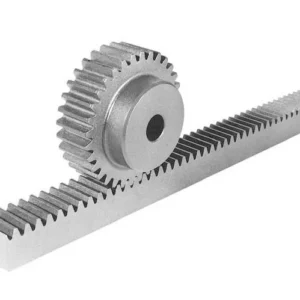 Module 3 Spur Rack (30x30) (Holeless)23.57$View
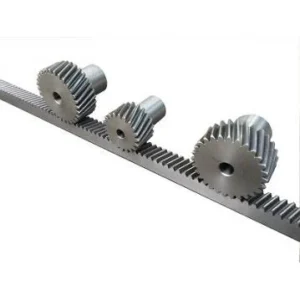 %37 DiscountModule 2 Helical Rack (20x20) (Holeless)Original price was: 19.78$.12.55$Current price is: 12.55$.View

Reviews
There are no reviews yet.