
No products in the cart.
%21 Discount
M2 Z20 D22 Keyed Ground + Hardened Helical Pinion
Original price was: 42.00$.33.37$Current price is: 33.37$.
High-precision helical pinion for industrial automation, featuring module 2, 20 teeth, and a 22mm bore with keyed shaft connection.
Out of stock
🔥 Special for Today Only %21 Discount Opportunity!📦 Category: Helical Pinion Gears🏷️ Number of Teeth: Z20🏷️ Tooth Type: Helical Gear🏷️ Module: Module 2
Mermak assuranceFrom factory to end user · importer / main dealer · strong stock
ImporterMain dealer / distributorStrong stockGood priceCorporate invoice
Contact us for stock information · 14-day return for standard unused products; conditions may vary for custom size/cut products.
M2 Z20 D22 Keyed Ground + Hardened Helical Pinion
INDUSTRIAL AUTOMATION PARTS | SUPERIOR PERFORMANCE SERIES
Detailed Product Review
The M2 Z20 D22 Keyed Ground and Hardened Helical Pinion, offered by Mermak CNC, is a high-precision mechanical component designed to convert rotational motion into linear motion in industrial automation systems. Its Module 2 tooth geometry signifies a 2-millimeter distance between teeth, making it an ideal choice for applications requiring high positioning accuracy and precise motion control, especially in compact systems. The 20-tooth count (Z=20) optimizes a specific speed and torque ratio when paired with a rack gear, while the helical tooth structure, compared to spur gears, ensures more teeth are in contact simultaneously. This improves load distribution, resulting in quieter operation, lower vibration levels, and higher torque transmission capacity. This pinion plays a critical role in maximizing the overall accuracy and operational efficiency of systems such as CNC machine tools, robotic systems, and precision material handling equipment, which demand dynamic and high-performance applications.
The product’s “ground” surface treatment refers to the micron-level precision machining of the tooth profiles. This process minimizes backlash (the gap between meshing teeth), thereby enhancing positioning accuracy, reducing vibration, and improving the system’s dynamic response. The “hardened” feature ensures that the high-alloy steel material undergoes special heat treatments to increase surface hardness (typically HRC 58-62). This provides the pinion with exceptional resistance to wear, fatigue, and impact, even under heavy loads and continuous operation, significantly extending its operational life and reducing maintenance intervals. The 22 mm bore diameter (D=22) ensures compatibility with standard shaft connections, while the keyed connection mechanism guarantees a secure and non-slip mounting of the pinion onto the shaft. This prevents relative movement between the shaft and the pinion during high torque transmission, minimizing power loss and enhancing the system’s mechanical stability. The integration of these technical features makes the M2 Z20 D22 pinion a strategic engineering component that forms the foundation for uninterrupted, high-performance, and long-lasting operation in industrial automation systems.
M2 Z20 D22 Keyed Ground + Hardened Helical Pinion Advantages
Precise Motion and Minimum Backlash: The ground helical tooth structure of this pinion, achieved by smoothing the tooth surfaces to a micron level, significantly minimizes backlash compared to conventionally machined gears. This enhances positioning accuracy, improves repeatability, and reduces deviations in dynamic movements, especially in closed-loop control systems. Minimum backlash shortens the system’s response time, reduces vibration and noise, and provides smoother, more stable linear motion capabilities, offering a critical advantage in precision machining and assembly applications.
High Wear Resistance and Long Operational Life: Manufactured from high-quality alloy steel and subjected to a special hardening process, this pinion exhibits superior resistance to wear. The surface hardness is increased to the HRC 58-62 range. This hardening process enhances the micro-structural durability of the tooth surfaces while maintaining the toughness of the core, thus optimizing the pinion’s resistance to impact and fatigue. This combination significantly extends the pinion’s operational life, even in industrial automation systems operating under continuous high loads, reducing planned and unplanned maintenance costs and optimizing the system’s total cost of ownership (TCO).
Optimized Torque Transmission and Mechanical Stability: The inclined structure of helical teeth allows the load to be distributed progressively across multiple teeth simultaneously, offering higher torque transmission capacity and smoother power transmission compared to spur gears. This maintains the system”s mechanical stability even during sudden load changes or at high speeds. Additionally, the keyed shaft connection mechanism ensures the pinion is positively locked onto the drive shaft. This positive connection prevents slippage or relative rotation between the shaft and pinion under high torque, guaranteeing efficient and reliable transmission of power. This integrated design maximizes operational reliability by preventing mechanical failures while increasing system efficiency.
Technical Specifications and Capacity
Feature/Value
Module (M)2 mm (International standard defining the distance between teeth and tooth size; optimized for compact and precise systems.)
Number of Teeth (Z)20 (Key parameter determining speed and torque ratio with the rack; directly influences system dynamics.)
Bore Diameter (D)22 mm (Precise diameter for shaft connection; ensures ISO-standard mounting and concentricity.)
Tooth TypeHelical (Angled tooth structure; offers greater tooth contact, gradual load application, low noise, and high load capacity.)
Tooth Surface TreatmentGround (Micron-level smoothing of tooth surfaces; minimizes backlash, reduces friction, and enhances precision.)
Hardening TreatmentHardened (Increase in surface hardness via special heat treatments; optimizes wear and fatigue resistance for longevity.)
Precision ClassDIN 6-7 (Typical precision class for ground gears; offers high positioning accuracy and low kinematic error rates.)
Surface HardnessHRC 58-62 (Typical Rockwell hardness value after hardening; provides superior wear resistance and surface durability.)
Technical Frequently Asked Questions (FAQ)
What are the engineering advantages of a helical gear structure over spur gears, and how does this create a performance difference in this pinion?
The helical gear structure offers several significant engineering advantages over spur gears. The most apparent difference is that the teeth are cut at an angle to the axis. This inclined structure allows the load to be applied gradually as the teeth mesh; that is, the point of contact starts at one end of the tooth and progresses to the other. This gradual loading eliminates the sudden impact loads seen in spur gears, resulting in quieter and vibration-free operation. Furthermore, helical gears have more teeth in contact simultaneously (higher contact ratio), which distributes the transmitted load over a larger surface area. Consequently, stress concentrations on the tooth surfaces are reduced, the pinion’s torque transmission capacity increases, and wear resistance is improved. In this pinion, the helical tooth structure significantly enhances the system’s dynamic performance, lifespan, and acoustic comfort, especially in high-speed and high-torque applications.
What specific effects do the combined “ground” and “hardened” treatments have on the pinion’s performance under dynamic load and its lifespan?
The combined application of “ground” and “hardened” treatments creates a synergistic effect that optimizes the pinion’s performance under dynamic load and its operational lifespan. The hardening process transforms the microstructure of the tooth surfaces, made from high-alloy steel, achieving a high hardness level, typically HRC 58-62. This increases the teeth’s resistance to wear, pitting, and surface fatigue. However, the hardening process can cause some deformation in the material. This is where the grinding process comes into play. Grinding, applied after hardening, corrects these microscopic deformations in the tooth profiles, refines the tooth surfaces to micron-level precision, and minimizes roughness. This ultra-precise surface quality reduces friction between meshing teeth, minimizes backlash, and enhances the uniformity of tooth contact. As a result, stresses generated under dynamic loads are distributed more evenly, localized overloading is prevented, and the pinion’s fatigue life is significantly extended. This combination guarantees the pinion’s long-term reliability and performance, especially in applications requiring high speed and precise motion control.
When this pinion is used in rack and pinion systems, which technical parameters are optimized in terms of the system’s overall efficiency and positioning accuracy?
The use of the M2 Z20 D22 Keyed Ground and Hardened Helical Pinion in rack and pinion systems optimizes multiple technical parameters concerning the system’s overall efficiency and positioning accuracy. Firstly, the Module 2 selection offers a finer tooth pitch, allowing for a higher number of teeth and thus a more precise kinematic resolution. The ground tooth surfaces minimize friction between teeth, thereby reducing energy losses and increasing the system’s mechanical efficiency. Simultaneously, the low backlash achieved through grinding minimizes the gap between the rack and pinion, which significantly improves the system’s repeatability and absolute positioning accuracy by eliminating positioning errors (hysteresis) during direction changes. The helical tooth structure allows the load to be distributed across more teeth, reducing stress on the tooth surfaces, which in turn allows for higher torque transmission while improving the system’s dynamic performance with smoother motion and less vibration. Hardened surfaces preserve the geometric integrity of the tooth profiles even during prolonged operation, preventing accuracy losses due to wear over time. These integrated features enable rack and pinion systems to exhibit superior performance in applications requiring precision, speed, and load capacity.
What is the technical significance of the keyed shaft connection in terms of pinion reliability and ease of assembly in applications requiring high torque transmission?
The keyed shaft connection is a critical engineering solution for pinion reliability and ease of assembly in industrial applications requiring high torque transmission. This connection type is based on the principle of a keyway in the pinion’s internal diameter mating with a corresponding key on the drive shaft. This “positive locking” mechanism, unlike friction-based connections, completely prevents relative rotation (slippage) between the shaft and the pinion. Under high torque, especially during sudden acceleration or deceleration, the keyed connection transmits torque losslessly and reliably, preserving the system’s mechanical efficiency and precision. Preventing slippage also prevents surface wear mechanisms like fretting corrosion, extending component life. In terms of ease of assembly, keyed connections offer a relatively simple installation process; aligning the keyways of the shaft and pinion is sufficient. This allows for quick and effective mounting or dismounting in the field, reducing maintenance times. However, for the keyed connection to provide the correct torque transmission capacity, the tolerances between the key and keyway must be tightly controlled, and appropriate material selection must be made.
| Number of Teeth | Z20 |
|---|---|
| Tooth Type | Helical Gear |
| Module | Module 2 |
You must be logged in to post a review.
Taksit Tablosu
Related Products
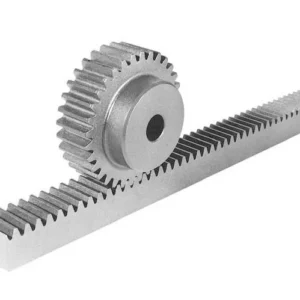 Module 3 Spur Rack (30x30) (Holeless)23.57$View
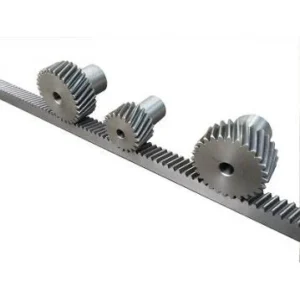 %27 DiscountModule 3 Helical Rack (30x29) (Holeless)Original price was: 72.00$.52.22$Current price is: 52.22$.View
 %18 DiscountModule 1.5 Helical Rack (20x19)Original price was: 42.00$.34.26$Current price is: 34.26$.View
Reviews
There are no reviews yet.