
No products in the cart.
%39 Discount
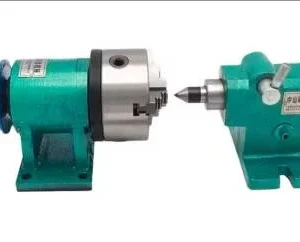
Lathe Center Rest
Original price was: 348.00$.212.28$Current price is: 212.28$.
Mermak CNC’s Lathe Center Rest provides essential axial support for workpieces during turning operations, optimizing surface finish and dimensional accuracy, especially for long and slender parts. Engineered for high performance and durability, it enhances rigidity and extends tool life. Suitable for various materials and adaptable for automated processes.
In stock
🔥 Special for Today Only %39 Discount Opportunity!📦 Category: 4 Axis Kits
Mermak assuranceFrom factory to end user · importer / main dealer · strong stock
ImporterMain dealer / distributorStrong stockGood priceCorporate invoice
In stock / available to order · 14-day return for standard unused products; conditions may vary for custom size/cut products.
Lathe Center Rest
INDUSTRIAL AUTOMATION PARTS | SUPERIOR PERFORMANCE SERIES
Detailed Product Review
Developed by Mermak CNC according to engineering principles, this Lathe Center Rest is a critical industrial component designed to provide axial support to the workpiece during turning operations. Its primary function is to minimize radial and axial runouts, vibrations, and deformations that may occur at the free end of the workpiece during machining, thereby optimizing surface roughness (Ra value) and dimensional accuracy, especially for parts with long and slender geometries. This center rest increases the rigidity of the workpiece, ensuring a more balanced distribution of cutting forces, which in turn extends tool life and improves material removal efficiency. In its fixed center configuration, the pressure applied to the center of the workpiece stabilizes the axis of rotation, directly contributing to tighter machining tolerances and increased repeatability. The product’s geometric design and material selection have been optimized to exhibit optimal performance against thermal expansion and mechanical stresses even at high speeds.
This center rest features a monolithic body made from a high-strength, hardened high-carbon steel alloy; this material choice guarantees its structural integrity even under overload conditions and ensures superior resistance to wear. Beyond being a static support element, the product’s modular design offers the potential to function as a dynamic rotating axis by integrating with an external motor, belt, and pulley mechanism. This integration capability allows the system to be adapted for advanced automation scenarios such as precise indexing of cylindrical parts in laser marking applications, use as a programmable rotary table in light milling operations, or positioning tasks in welding automation. Offering quick and secure mounting with universal machine tool clamping elements, this center rest exhibits superior performance in machining a wide range of materials including wood, aluminum, thermoplastics, and other light metals, providing engineering solutions in various application areas from industrial production lines to prototyping workshops.
Lathe Center Rest Advantages
Axial Support and Machining Quality Optimization: This center rest significantly increases the axial rigidity of the workpiece during turning operations, minimizing vibration amplitude and radial runout, especially in parts with high length-to-diameter ratios. This stabilizes the dynamic interaction between the cutting tool and the workpiece, directly contributing to lower microscopic roughness values (Ra) and improved surface integrity on machined surfaces. Furthermore, by preventing axial deformation of the workpiece, it avoids geometric errors such as tapering and ovality, ensuring that the final product’s dimensional tolerances remain within tighter limits, which is critical for precise assembly and functional performance.
Modular Automation Integration and Functional Expansion: The product’s design offers a structure that can be easily integrated with an external motor, belt, and pulley mechanism, going beyond being just a static support element. This modularity expands the capabilities of existing lathe machines or custom automation platforms, enabling the conversion of the center rest system into a programmable rotary axis. This allows for high precision and repeatability to be achieved in advanced automation tasks such as laser marking, light milling, precise indexing, or angular positioning of cylindrical parts in robotic welding applications. Integration is achieved through standard mechanical connection interfaces, minimizing system adaptation time and engineering costs.
Structural Durability and Wide Material Compatibility: The body of the center rest is manufactured from a high-strength, specially hardened high-carbon steel alloy. This material retains its superior mechanical properties even under high cutting forces, impact loads, and continuous wear conditions, allowing the product to provide reliable and uninterrupted operation in industrial environments for many years. Its structural rigidity prevents deformations during machining, enhancing stability between the tool and the workpiece. Furthermore, this robust structure provides effective support against different stress and vibration modes that may arise depending on material properties when machining a wide range of materials such as wood, aluminum, brass, thermoplastics, and various composites, thereby effectively preventing material deformation and surface defects.
Technical Specifications and Capacity
FeatureValue/Description
Product TypeFixed Type Lathe Center Rest (Centering Pin Included)
Body MaterialHardened High-Carbon Steel Alloy (Minimum HRC 58)
Machining CompatibilityWood, Aluminum, Brass, Thermoplastics, Light Composites
Center Rest FunctionAxial Support, Vibration Damping, Radial Runout Reduction
Rotating Axis Conversion FeatureMechanically Interface Suitable for External Motor, Belt, and Pulley Mechanism Integration
Surface Finish ContributionLow Ra Values on Machined Surfaces (Typically < 1.6 µm), High Smoothness
Mounting TypeFixing to Machine Bed via Universal T-slot or Bolt Fasteners
Recommended MaintenancePeriodic Centering Pin Check, Cleaning of Bearing Surfaces, and Industrial Lubrication
Technical Frequently Asked Questions (FAQ)
How does the hardened steel body of this center rest affect performance under overload and vibration conditions?
The manufacturing of the center rest’s body from a hardened high-carbon steel alloy significantly increases the material’s Vickers hardness (HV) and consequently its wear resistance. This hardness minimizes structural deformation and surface wear of the center rest, especially under high cutting forces and dynamic loads. Under overload conditions, hardened steel exhibits a higher yield strength and ultimate tensile strength compared to ductile materials, preserving the center rest’s integrity and reducing the risk of permanent deformation. Its vibration damping capability arises from the material’s internal friction properties and rigidity; high rigidity shifts resonance frequencies to higher values, reducing the amplitude of undesirable vibration modes that may occur during machining. This ensures more stable tool-workpiece interaction and directly improves machined surface quality.
What engineering criteria should be considered for selecting the motor, belt, and pulley when using the center rest as a dynamic rotating axis?
For a dynamic rotating axis configuration, the selection of the motor, belt, and pulley should be based on the torque, speed, precision, and inertia load required by the application. For motor selection, the necessary torque should be calculated primarily by considering the maximum workpiece weight and machining resistance. Stepper or servo motors are preferred for precise angular positioning and speed control, while the motor’s nominal torque must be compatible with the friction losses of the center rest mechanism and the inertia of the workpiece. The belt and pulley system should transmit motor torque to the center rest while providing the required speed ratio and precision. Timing belts are generally preferred due to their positive power transmission without slippage and high positioning accuracy. Pulley diameters determine the desired speed ratio (reduction or increase), while belt tension affects the system’s rigidity and vibration damping capability. Furthermore, the integration of the motor control unit (drive) and feedback system (encoder) is critical to ensure the system’s dynamic response and stability.
How does this center rest minimize runout and tapering on long and slender workpieces?
Long and slender workpieces tend to bend (deflect) and vibrate (chatter) easily under cutting forces and inertial effects during turning. This center rest provides an axial support point to the free end of the workpiece, effectively shortening the workpiece’s span and thus increasing the Euler critical buckling load. This support increases the workpiece’s rigidity and significantly reduces radial deflection caused by cutting forces. The center rest stabilizes the workpiece’s axis of rotation, damping the amplitude of dynamic oscillations that occur during machining. Tapering refers to the change in diameter along the length of the workpiece and usually results from the workpiece’s flexibility or tool wear. The rigid support provided by the center rest helps the workpiece maintain a uniform diameter along its length, minimizing the formation of tapering errors. This mechanism plays a critical role, especially in the production of parts like long shafts or spindles that require precise tolerances.
What periodic maintenance procedures are recommended to ensure the product’s long-term and consistent performance?
Regular and systematic maintenance procedures are essential to maintain the long-term and consistent performance of this center rest in industrial environments. Firstly, the center pin and contact surfaces of the center rest should be cleaned of chips, dust, and other contaminants before and after each use. Accumulations on these surfaces can disrupt contact between the workpiece and the center rest, leading to runout and surface quality issues. Secondly, the moving parts and bearing surfaces of the center rest spindle should be periodically lubricated with high-quality industrial machine oil or grease to reduce friction and prevent wear. The frequency of lubrication should be determined based on usage intensity and environmental conditions. Thirdly, the torque values of the fasteners (bolts, T-nuts) connecting the center rest to the machine bed should be regularly checked and tightened as necessary, in accordance with manufacturer specifications. Loose connections can reduce system rigidity, leading to vibrations and positioning errors. Finally, the wear condition of the center rest tip should be visually inspected, and if any signs of deformation or excessive wear are detected, replacement or re-sharpening of the tip should be considered to maintain precision.
Mermak CNC, with 16 years of experience, supplies high-quality industrial automation parts to markets including the United Kingdom, United States, Canada, Australia, Ireland, and New Zealand, as well as South Africa and other international markets. Our products are stocked and shipped from our Ankara Uzay Sanayi factory/warehouse. We ensure up-to-date stock quantities and prices on our website. Stocked items are dispatched directly from the warehouse, eliminating production wait times. We provide careful packaging, meticulous invoice and document handling, and work with reliable logistics partners. The Mermak team actively monitors the shipment process. Upon request, we can arrange product videos or factory viewings via WhatsApp or other contact channels.
You must be logged in to post a review.
Taksit Tablosu
Related Products
 %39 DiscountLathe Steady Rest Set with Fixed CenterOriginal price was: 624.00$.380.64$Current price is: 380.64$.View
 %39 Discount4-Axis Rotary Table TailstockOriginal price was: 156.50$.95.47$Current price is: 95.47$.View
 %39 Discount4 Axis Rotary Table (Indexer) SetOriginal price was: 573.32$.349.73$Current price is: 349.73$.View

Reviews
There are no reviews yet.