
No products in the cart.
%46 Discount

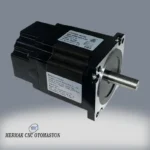
Braked Stepper Motor Nema 34 5 Nm
Original price was: 148.80$.79.87$Current price is: 79.87$.
High-precision, two-phase electromagnetic actuator with integrated electromagnetic brake for reliable load holding.
In stock
🔥 Special for Today Only %46 Discount Opportunity!📦 Category: 86x86 mm Stepper Motors and Drivers🏷️ NEMA Size: Nema 34🏷️ Brake Configuration: With External Brake🏷️ Shaft Diameter: 14 mm🏷️ Dimensions: 14🏷️ Torque: 5 Nm
Mermak assuranceFrom factory to end user · importer / main dealer · strong stock
ImporterMain dealer / distributorStrong stockGood priceCorporate invoice
In stock / available to order · 14-day return for standard unused products; conditions may vary for custom size/cut products.
Braked Stepper Motor Nema 34 5 Nm
INDUSTRIAL AUTOMATION PARTS | SUPERIOR PERFORMANCE SERIES
Detailed Product Review
Braked Stepper Motor Nema 34 5 Nm is a two-phase electromechanical actuator that offers high-precision angular positioning and reliable load-holding capacity in industrial automation systems. The NEMA 34 standard defines the motor’s square flange size of 3.4 x 3.4 inches (approximately 86×86 mm). The holding torque of 5.0 Newton-meters (Nm) in this size class provides critical technical capability, especially for applications requiring precise movement and stable fixation of high-inertia or heavy loads. The motor operates on the principle of the rotor aligning with the magnetic field through sequential switching of current in the stator windings, resulting in discrete steps of rotation. A full step angle of 1.8° means the motor divides a full revolution into 200 equal steps. With a suitable micro-stepping driver, this angular resolution can be reduced to much smaller values, achieving smoother motion and higher positioning accuracy. This feature enables complex automation tasks to be reliably performed, even in open-loop control systems, by providing high repeatability and linear motion precision.
The integrated electromagnetic brake mechanism is a key technical feature distinguishing this motor from standard stepper motors. The brake typically operates on the “Power-off Brake” principle; meaning it automatically engages when the motor is de-energized or stopped, mechanically locking the motor shaft and preventing unwanted load movement. This feature is vital for applications involving vertical axes (Z-axis), elevator mechanisms, robotic arms that need to securely hold loads in specific positions, or to enhance machine and operator safety during power failure scenarios. The motor’s construction consists of high-quality alloy steel and precision-machined components designed to withstand demanding industrial operating conditions. The IP54 protection class indicates that the motor is partially protected against dust and is resistant to water splashes from any direction, allowing it to be safely used in a wide range of industrial environments. Its standard Nema 34 flange size and common driver interfaces allow for easy and quick integration into existing automation systems. Offered with the assurance of Mermak CNC, this series provides a long-lasting, low-maintenance solution, supporting operational continuity. Mermak CNC has 16 years of experience, operating from our Ankara Uzay Sanayi factory/warehouse. Our website stock quantities and prices are up-to-date. Stocked products are prepared from the warehouse without production waiting. We ensure careful packaging, invoice/document follow-up, and work with reliable logistics partners. The shipment process is closely monitored by the Mermak team. Product videos or factory viewings can be arranged via WhatsApp or our contact channels upon request. We supply to markets including the United Kingdom, United States, Canada, Australia, Ireland, New Zealand, and South Africa, as well as similar countries and international markets.
Advantages of the Braked Stepper Motor Nema 34 5 Nm
High-Precision Positioning and Repeatability: With a 1.8° full step angle, this stepper motor completes one full revolution in 200 steps. When used with micro-stepping drivers, this angular resolution can be increased by factors of 1/2, 1/4, 1/8, 1/16, or higher, achieving precision levels below the millimeter. This capability is crucial in applications like CNC machining centers, optical alignment systems, and precision assembly robots, directly impacting processing quality and product tolerances. High repeatability guarantees that the same movement sequence can be performed error-free multiple times, ensuring consistency and efficiency in mass production.
Load Safety with Integrated Electromagnetic Brake Mechanism: The built-in electromagnetic brake operates on the “Power-off Brake” principle. When the motor is de-energized or stopped, the brake automatically engages, mechanically locking the motor shaft. This feature is particularly important for vertical axis (Z-axis) movements, preventing unwanted drops of heavy tool heads or workpieces due to gravity. It securely holds the load’s position during power outages, preventing damage to the machine and enhancing operator safety. This is an indispensable component for safety and operational continuity in automation systems where lifting, lowering, and positioning operations are critical.
High Torque Density and Heavy Load Capacity: The 5.0 Nm holding torque for the Nema 34 size standard indicates the shaft’s resistance to rotation when the motor is energized. This directly reflects the motor’s ability to accelerate, decelerate, and precisely hold heavy, high-inertia loads. This high torque capacity is a critical performance parameter in applications involving large CNC routers and milling machines, automated storage and retrieval systems (AS/RS), or robotic arms that need to move heavy workpieces or tool heads. High torque density allows for more power generation within a more compact physical size, enabling space savings and optimization in system design.
Technical Specifications and Capacity
Feature|Value/Description
Nema Size|Nema 34 (86×86 mm flange, 3.4 inch square mounting surface)
Step Angle|1.8° (Full Step, 360°/200 steps), with micro-stepping for finer control
Holding Torque|5.0 Nm (Newton-meters), shaft resistance to rotation when motor is energized
Current / Phase|4.2 A (Amperes), nominal current per phase
Brake Holding Torque|5.0 Nm (Minimum), shaft holding capacity of the brake
Shaft Diameter|14 mm, motor shaft diameter for power transmission
Protection Class|IP54 (Ingress Protection), partially protected against dust and resistant to water splashes from any direction
Technical Frequently Asked Questions (FAQ)
How does the micro-stepping capability of this braked stepper motor affect system performance and precision compared to full-stepping mode?
Micro-stepping is a technique that increases the motor’s angular resolution by dividing each full step into smaller sub-steps. This motor’s 1.8° full step angle means 200 steps per revolution. With a micro-stepping driver, for example, at 1/16 micro-stepping, each full step is divided into 16 sub-steps, reducing the motor’s effective step angle to 1.8°/16 = 0.1125°. This results in smoother, vibration-free motor operation, reducing resonance effects, especially at low speeds. It also significantly improves positioning accuracy by minimizing the impact of mechanical backlash. However, the torque achieved with micro-stepping may be slightly reduced at certain micro-step positions compared to full-stepping, and it requires higher frequency pulse signals from the driver.
What is the operating principle of the integrated electromagnetic brake mechanism and its importance in critical industrial applications?
The integrated electromagnetic brake in this motor operates on a “Power-off Brake” principle. This means the brake is normally closed (locked), and it opens (releases the shaft) when energy is applied to the brake coil. During motor operation, 24 V DC power is applied to the brake coil to release the shaft. When the motor stops or a power failure occurs, the brake coil is de-energized, and a spring mechanism or similar system presses the brake pads against the motor shaft, mechanically locking it. This feature is crucial for applications with vertical movement, such as the Z-axis, preventing the load from sliding down or falling due to gravity. It securely holds the load’s position in scenarios where robotic arms need to remain stationary or during emergency stops, critically enhancing workpiece integrity and operator/machine safety.
What technical parameters should be considered when selecting a suitable driver for the Nema 34 5 Nm stepper motor?
When selecting a driver for this Nema 34 5 Nm stepper motor, several critical technical parameters must be considered. First, the driver must support the motor’s nominal phase current (4.2 A) and phase count (2-phase). The driver’s output current should be equal to or slightly higher than the motor’s nominal current. Second, the driver’s supply voltage should be compatible with the motor’s inductance (3.5 mH/phase); higher voltages can provide better torque performance at high speeds but also affect motor heating characteristics. Third, micro-stepping capability is important for enhancing motor precision and smoothness; the chosen driver should support the desired micro-stepping ratios. Finally, the driver’s resonance suppression algorithms help prevent motor vibration at certain speeds, ensuring more stable and quieter operation. Additionally, drivers with a separate output for brake control or compatibility with an external brake control module should be preferred.
How do the motor’s operating temperature range (-10°C ~ +50°C) and IP54 protection class affect its durability and lifespan in industrial environments?
The motor’s specified operating temperature range of -10°C to +50°C indicates its ability to perform reliably across a wide spectrum of industrial environments. Temperatures outside this range can negatively affect the motor’s magnetic properties, winding resistance, and bearing lubricant viscosity, leading to performance degradation or failure. High temperatures, in particular, can shorten the lifespan of the winding insulation. The IP54 protection class signifies that the motor is partially protected against solid objects (dust), with limited dust ingress not affecting performance, and is resistant to water splashes from any direction. This protection class allows the motor to operate safely in moderately dusty or humid industrial settings, such as workshops or certain production lines. However, it does not provide protection against direct water jets or submersion. These features enhance the motor’s resistance to harsh conditions, contributing to a long operational lifespan and low maintenance requirements.
| NEMA Size | Nema 34 |
|---|---|
| Brake Configuration | With External Brake |
| Shaft Diameter | 14 mm |
| Dimensions | 14 |
| Torque | 5 Nm |
You must be logged in to post a review.
Taksit Tablosu
Related Products
 %52 DiscountBraked Stepper Motor Nema 34 8.5 NmOriginal price was: 169.20$.80.71$Current price is: 80.71$.View
 %44 DiscountBraked Stepper Motor Nema 34 8.5 NmOriginal price was: 169.20$.94.60$Current price is: 94.60$.View
 %46 DiscountStep Motor Nema 34 8.5 NmOriginal price was: 86.40$.46.75$Current price is: 46.75$.View
Reviews
There are no reviews yet.