
No products in the cart.


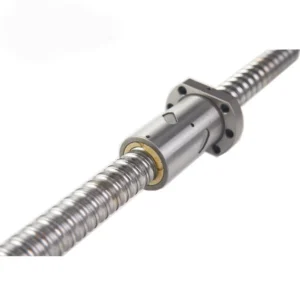
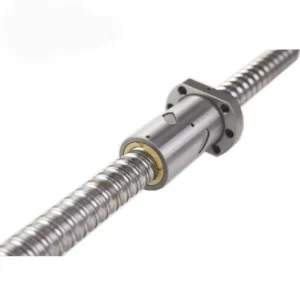
Ball Screw SCR 2505
28.01$
High-precision drive element for converting rotary motion to linear motion in industrial automation systems.
In stock
📦 Category: 25 mm Lead Screws and Nuts🏷️ Shaft Diameter: 25 mm🏷️ Pitch: 5 mm Pitch
Mermak assuranceFrom factory to end user · importer / main dealer · strong stock
ImporterMain dealer / distributorStrong stockGood priceCorporate invoice
In stock / available to order · 14-day return for standard unused products; conditions may vary for custom size/cut products.
Ball Screw SCR 2505
INDUSTRIAL AUTOMATION PARTS | SUPERIOR PERFORMANCE SERIES
Detailed Product Review
The Ball Screw SCR 2505 is a precision drive element designed to efficiently convert rotary motion into linear motion within industrial automation systems. This system comprises a screw shaft and a specialized nut that moves along this shaft, featuring an internal recirculating ball mechanism. The helical grooves of the shaft and the balls within the nut create a low-friction contact, transforming the torque from the drive motor into an axial force, thereby enabling the linear positioning of a load. The SCR series ball screws are optimized for applications demanding sub-millimeter precision, high repeatability, and dynamic load-carrying capacity. The rolling manufacturing method applied during production ensures a uniform hardness distribution and low surface roughness on the shaft, facilitating smooth ball movement and enhancing the overall mechanical efficiency of the system. This design is critical for tasks requiring precise positioning in CNC machines, robotic manipulators, and accurate measurement platforms.
The primary material structure of the SCR 2505 ball screw is high-carbon alloy steel, chosen for its enhanced tensile strength and fatigue resistance. The surface hardness achieved after the rolling process and subsequent heat treatment is 55 HRC (Rockwell Hardness C Scale). This hardness maximizes the shaft’s resistance to wear and abrasion, ensuring its geometric accuracy is maintained even under prolonged and intensive operating conditions. The nut is compatible with SFUR series flanged nuts and features integrated double-lip seals that prevent dust, chips, moisture, and other particles from entering the ball raceways, protecting the nut’s internal mechanism and extending maintenance intervals. The 4-row ball arrangement within the nut provides exceptional axial load capacity and high rigidity, ensuring a stable motion profile with minimal deformation even under heavy workloads. This engineering approach allows the Ball Screw SCR 2505 to integrate seamlessly with various drive units, such as servo motors, stepper motors, and geared motors, delivering reliable performance in a wide range of industrial applications including CNC milling machines, laser cutting machines, automated assembly lines, and precision positioning systems.
Ball Screw SCR 2505 Advantages
High Positioning Accuracy: With a C7 precision class achieved through the rolling manufacturing method, the Ball Screw SCR 2505 offers micron-level positioning accuracy and high repeatability. This production technique ensures a uniform profile and low lead error on the helical surfaces of the shaft, enabling tight control over the geometric tolerances of workpieces, particularly in CNC machine tools and measuring equipment. The C7 class provides a superior level of precision at a cost-effective balance for a wide array of industrial automation applications, directly impacting final product quality and process efficiency.
Maximum Axial Load Capacity: The 4-row ball arrangement within the nut distributes axial loads over a larger surface area, minimizing Hertzian contact stresses. This design ensures that the Ball Screw SCR 2505 exhibits high durability and rigidity even under dynamic and static axial loads. The high load capacity guarantees deformation-free and stable operation of the screw, especially in heavy machining operations, pressing applications, and robotic systems requiring precise positioning of large masses, thereby increasing the overall lifespan and reliability of the system.
Long Service Life and Durability: The 55 HRC surface hardness of the shaft, the selection of high-quality alloy steel, and the integrated double-lip seals in the nut contribute to the exceptional service life of the Ball Screw SCR 2505. High surface hardness enhances resistance to wear caused by abrasive particles and contact fatigue, while the seals protect the nut’s internal mechanism from dust, chips, moisture, and other environmental contaminants. This integrated protection keeps the balls and raceways clean, reducing friction and wear, thus extending maintenance intervals, lowering the total cost of ownership (TCO), and contributing to uninterrupted production continuity.
Technical Specifications and Capacity
Feature
Value/Description
Shaft Diameter (Nominal)
25 mm
Pitch
5 mm
Manufacturing Method
Rolling Process
Surface Hardness
55 HRC (Rockwell Hardness C Scale)
Precision Class
C7 (ISO Standard, Medium Precision)
Nut Type
Flanged, Double-Lip Sealed (Compatible with SFUR Series)
Ball Arrangement
4 Rows (For High Load Capacity and Rigidity)
Operating Temperature Range
-10°C to +80°C (Industrial Standard)
Material
High Carbon Alloy Steel
Technical Frequently Asked Questions (FAQ)
How does the C7 precision class of the Ball Screw SCR 2505 impact its positioning performance in industrial automation applications?
The C7 precision class defines a tolerance level according to ISO standards, specifying critical parameters such as lead error and repeatability for the Ball Screw SCR 2505. This class is optimized for industrial automation applications requiring medium to high precision. A C7 class ball screw can have a maximum lead error tolerance of ±50 microns (0.05 mm) over a given length. This directly influences machining accuracy in CNC machines, positioning accuracy in robotic systems, and overall system repeatability. For instance, using a C7 class ball screw in a machining center ensures that the dimensional tolerances and surface quality of the final product remain within the limits allowed by this precision class. Furthermore, high repeatability ensures that each part is produced with the same quality in mass production, reducing scrap rates and increasing production efficiency. While higher precision classes (e.g., C5 or C3) offer lower lead errors, the C7 class provides an optimal balance between cost-effectiveness and broad application suitability.
What advantages do the 55 HRC surface hardness and the rolling manufacturing method of the Ball Screw SCR 2505 offer in terms of operational life and maintenance requirements?
The 55 HRC surface hardness of the Ball Screw SCR 2505 guarantees high wear resistance at the ball contact points. This hardness level prevents deformation and micro-pitting on the shaft surface caused by Hertzian contact stresses generated by the balls under heavy loads. High hardness protects the shaft’s surface integrity, extending its fatigue life, especially in systems operating under heavy loads and at high speeds. The rolling manufacturing method, instead of cutting, shapes the shaft’s thread profile. This process compresses the material’s grain structure, creating a denser and more homogeneous structure on the surface. This structure enhances the shaft’s core strength while introducing residual compressive stresses on the surface. These compressive stresses increase resistance to crack formation, significantly extending the shaft’s fatigue life. Consequently, high surface hardness and the rolling method maximize the shaft’s resistance to wear and fatigue, extending maintenance intervals, optimizing lubrication needs, and reducing the total cost of ownership (TCO).
How does the 4-row ball arrangement in the SFUR series nut contribute to the axial load capacity and rigidity of the Ball Screw SCR 2505 system?
The 4-row ball arrangement in SFUR series nuts, compatible with the Ball Screw SCR 2505, significantly enhances the system’s axial load capacity and rigidity. Compared to traditional 2 or 3-row designs, 4 rows of balls distribute the axial load over a greater number of balls and contact points. This reduces the contact stress on each ball, extending the fatigue life of the nut and screw, and allowing higher static and dynamic loads to be safely handled. Furthermore, the increased number of balls and contact area enhances the system’s rigidity in the axial direction. Rigidity is a parameter indicating how much a system deforms under applied force; high rigidity means less deflection and more accurate positioning. This feature ensures that the screw and nut exhibit minimal deformation under load, maintaining positioning accuracy, especially in machining operations involving high forces or robotic applications requiring precise positioning. This design improves the overall performance and stability of the system.
What are the key technical considerations for motor selection and mounting when integrating the Ball Screw SCR 2505 into an existing industrial automation system?
Motor selection and mounting are critical for the performance and lifespan of the Ball Screw SCR 2505 when integrating it into an automation system. When selecting a motor, the torque and speed profile required by the ball screw must be considered first. The screw’s pitch (5 mm) and diameter (25 mm), along with the load to be carried, determine the required axial force and thus the torque the motor must provide. Servo motors are preferred for high dynamic response and precise positioning, while stepper motors are suitable for lower-cost and medium-precision applications. Geared motors are ideal for situations requiring high torque at low speeds. From a mounting perspective, the end machining details of the screw (for bearing and coupling connections) directly impact the system’s dynamic performance. The screw’s support (e.g., fixed-fixed, fixed-free) determines its critical speed and buckling load capacity. The choice of coupling between the motor and the ball screw is also important; flexible couplings that can compensate for potential axial, radial, or angular misalignments while transmitting torque are preferred. Additionally, during mounting, ensuring correct axial alignment of the screw and nut prevents unnecessary stress on the ball bearings, minimizes friction, and extends system life. Misalignment can lead to vibration, noise, and premature wear. Mermak, with 16 years of experience, operates from its factory and warehouse in Ankara Uzay Sanayi. Our website displays up-to-date stock quantities and prices. Stocked products are dispatched directly from our warehouse without production delays. We ensure careful packaging, meticulous invoice and document handling, and collaborate with reliable logistics partners. The Mermak team closely monitors the shipment process. Upon request, product videos or factory tours can be arranged via WhatsApp or our contact channels. We proudly supply industries in the United Kingdom, United States, Canada, Australia, Ireland, New Zealand, South Africa, and similar countries and international markets.
| Dimensions | |
|---|---|
| Shaft Diameter | 25 mm |
| Pitch | 5 mm Pitch |
You must be logged in to post a review.
Taksit Tablosu
Related Products
 %33 DiscountBall Screw SCR 1610Original price was: 54.00$.36.16$Current price is: 36.16$.View
 %7 DiscountBall Screw SCR 2510Original price was: 38.68$.36.16$Current price is: 36.16$.View
 %64 DiscountBall Screw SCR 4005Original price was: 77.56$.27.84$Current price is: 27.84$.View

Reviews
There are no reviews yet.