
No products in the cart.
%41 Discount


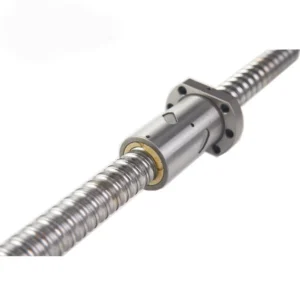
Ball Screw SCR 2005
Original price was: 22.87$.13.60$Current price is: 13.60$.
High-performance industrial automation component for precise linear motion.
In stock
🔥 Special for Today Only %41 Discount Opportunity!📦 Category: 20 mm Lead Screws and Nuts🏷️ Shaft Diameter: 20 mm🏷️ Pitch: 5 mm Pitch
Mermak assuranceFrom factory to end user · importer / main dealer · strong stock
ImporterMain dealer / distributorStrong stockGood priceCorporate invoice
In stock / available to order · 14-day return for standard unused products; conditions may vary for custom size/cut products.
Ball Screw SCR 2005
INDUSTRIAL AUTOMATION PARTS | SUPERIOR PERFORMANCE SERIES
Detailed Product Review
Ball Screw SCR 2005 is a precision mechanical transmission element designed to convert rotational motion into linear motion with high efficiency. This system relies on the principle of frictionless rolling of continuously circulating balls between the helical grooves on the screw and the corresponding grooves within the nut. With a nominal diameter of 20 mm and a pitch of 5 mm, this model provides a linear travel of 5 mm per full rotation, offering an ideal solution for applications requiring micron-level positioning accuracy. The four-row ball arrangement distributes axial loads over a large surface area, increasing system rigidity and ensuring minimum deformation and maximum stability even under high load capacities. This structural feature supports long-term and reliable operation, especially in operational conditions with dynamic loads and vibrations.
The rolling method used in the production of the SCR 2005 ball screw performs a significant compression on the material surface, resulting in a surface layer with a hardness of 55 HRC Rockwell C. This high surface hardness significantly increases the screw’s wear resistance, allowing it to maintain its geometric accuracy even during prolonged operation. The product is fully compatible with SFUR series flanged ball screw nuts, which feature integrated double-lip seals to protect the ball circulation mechanism from dust, dirt, and other environmental particles, thereby extending the life of the lubricant and optimizing maintenance intervals. Its design allows for direct integration with various drive units such as servo motors, stepper motors, and geared motors in industrial automation systems, offering flexibility across a wide range of applications. It functions as a fundamental component of linear motion control in areas requiring high precision and repeatability, such as CNC machining centers, robotic systems, and automatic packaging machines.
Advantages of Ball Screw SCR 2005
High Surface Hardness and Wear Resistance: The surface hardness of the Ball Screw SCR 2005 has been increased to 55 HRC through a special rolling production method and subsequent heat treatment processes. This hardness level provides superior resistance against the Hertzian contact stresses generated by the balls on the screw surface, thereby minimizing brinelling (pitting) and wear effects. High surface hardness also extends the screw’s fatigue life, guaranteeing long-term and stable performance, especially in systems operating under high speeds and loads. This feature reduces maintenance requirements and lowers the total cost of ownership.
Contamination Protection with Integrated Double-Lip Seals: The double-lip seals in the ball nut are designed to prevent dust, chips, coolant, and other particles from the working environment from penetrating the ball circulation channels. This barrier maintains the cleanliness of the internal mechanism, preventing abrasive contact between the balls and the screw surface. Preventing contamination extends the effectiveness and life of the lubricant, keeping the friction coefficient low and ensuring the system maintains its nominal accuracy in the long term. The presence of seals extends maintenance intervals and increases system reliability.
Increased Axial Load Capacity and Rigidity: The SCR 2005 ball screw features a design with four rows of balls within the nut. This configuration allows the axial load to be distributed over a greater number of balls and a larger contact area. Consequently, the contact stress on each ball is reduced, and the overall dynamic and static load-carrying capacity of the system is significantly increased. High load capacity minimizes screw deformation during heavy machining applications or high acceleration/deceleration cycles. Furthermore, the increased number of balls and contact area enhance the system’s axial rigidity, minimizing unwanted deflections and vibrations in applications requiring high-precision positioning and repeatability.
Technical Specifications and Capacity
FeatureValue/Description
Series TypeSCR Series Ball Screw
Screw Diameter (Nominal)20 mm
Pitch5 mm
Production MethodRolled (Ovalama Usulü)
Surface Hardness55 HRC (Rockwell C Scale)
Accuracy ClassP5 Tolerance Class (High Precision)
Ball Arrangement4 Rows of Balls
Technical Frequently Asked Questions (FAQ)
How does the P5 tolerance class of the Ball Screw SCR 2005 affect the overall positioning accuracy and repeatability of the system?
The P5 tolerance class, defined according to ISO 3408 standard, is a high-precision classification indicating that the deviations from the nominal pitch of the ball screw and cumulative pitch errors are kept within specific limits. This class is critical for applications requiring micron-level positioning accuracy and high repeatability, such as CNC machines, measuring instruments, and robotic systems. A P5 class ball screw exhibits minimal pitch variation even over long strokes, allowing for tight control of geometric tolerances of machined parts. In terms of repeatability, it guarantees that positions obtained from repeatedly applying the same command are close to each other, which is a fundamental factor for product quality consistency in mass production. This precision class also ensures that backlash remains within tight tolerances, minimizing positioning errors during bidirectional movements.
What types of lubricants and application methods are recommended for optimal performance of the SCR 2005 ball screw?
Proper lubrication is critical for the long-term and efficient operation of the Ball Screw SCR 2005. Generally, high-performance lithium soap-based greases or synthetic greases should be preferred; these greases should contain high-pressure (EP) additives and remain stable over a wide temperature range. Lubrication reduces friction between the balls and the screw and nut raceways, preventing wear, aiding heat dissipation, and providing corrosion protection. Application can be done manually with a grease gun at specific intervals or continuously via automatic centralized lubrication systems. Lubrication intervals should be determined based on operational conditions such as speed, load, ambient temperature, and contamination level. As a general rule, high-speed and heavy-load applications require more frequent lubrication, while clean and low-speed applications can have extended intervals. The presence of seals helps retain the lubricant within the system, while periodic checks and re-lubrication, if necessary, are essential for maintaining the system’s nominal performance.
What are the effects of the rolled production method on the mechanical properties and performance of the SCR 2005 ball screw?
The rolled method is a cold forming process where the thread profiles of the ball screw are formed through plastic deformation of the material using special dies. This process compresses the material’s grain structure and directs the fiber flow along the contours of the thread profile, leading to an increase in the material’s tensile strength and fatigue resistance. It also creates residual compressive stresses on the surface, increasing resistance to crack initiation and enhancing the screw’s overall durability. Achieving high surface hardness, such as 55 HRC, in conjunction with heat treatment after the rolling process, maximizes wear resistance. Compared to ground ball screws, the rolled method is a more cost-effective production method, yet it can offer satisfactory accuracy even in high precision classes like P5. This method provides significant advantages in terms of cost-performance balance, especially in high-volume production and a wide range of industrial automation applications.
What engineering principles should be followed for motor selection and coupling compatibility when integrating the SCR 2005 ball screw into a drive system?
Motor selection for integrating the SCR 2005 ball screw into a drive system should be carefully made based on the speed, acceleration, load, and precision parameters required by the application. The motor’s torque capacity must be sufficient to meet the ball screw’s friction torque, load torque, and acceleration torque. Furthermore, matching the motor’s inertia with the inertia of the ball screw and connected load is important for optimizing the system’s dynamic response and control stability. The coupling selection should not only ensure torque transmission between the motor and the ball screw but also absorb potential axial, radial, and angular misalignments. For high-precision applications, couplings with high torsional stiffness and zero backlash (e.g., bellows or disk couplings) should be preferred. These types of couplings transmit the motor’s motion to the ball screw accurately and without play, maintaining positioning accuracy and enhancing system dynamic performance. While the coupling’s flexibility reduces stresses from mounting errors, its torsional stiffness minimizes resonances and vibrations in the control loop.
| Dimensions | |
|---|---|
| Shaft Diameter | 20 mm |
| Pitch | 5 mm Pitch |
You must be logged in to post a review.
Taksit Tablosu
Related Products
 %43 DiscountSsg 20(Dsg20) Nut HousingOriginal price was: 5.41$.3.07$Current price is: 3.07$.View
 %31 DiscountBall Screw SCR 3210Original price was: 56.02$.38.88$Current price is: 38.88$.View
 %7 DiscountBall Screw SCR 2510Original price was: 38.68$.36.16$Current price is: 36.16$.View
Reviews
There are no reviews yet.