
No products in the cart.
%47 Discount


90×90 Sigma Profile | 10 Channel | Light Duty | Wholesale
Original price was: 94.40$.50.35$Current price is: 50.35$.
High-performance aluminum profile for industrial automation and structural framing.
Out of stock
🔥 Special for Today Only %47 Discount Opportunity!📦 Category: Sensors and Switches🏷️ Dimensions: 90 mm🏷️ Slot Size: 10 Slots🏷️ Profile Size: 90x90
Mermak assuranceFrom factory to end user · importer / main dealer · strong stock
ImporterMain dealer / distributorStrong stockGood priceCorporate invoice
Contact us for stock information · 14-day return for standard unused products; conditions may vary for custom size/cut products.
90×90 Sigma Profile 10 Channel Light Duty Wholesale
INDUSTRIAL AUTOMATION PARTS | SUPERIOR PERFORMANCE SERIES
Detailed Product Review
The 90×90 Sigma Profile 10 Channel Light Duty is an extruded aluminum profile system used as a structural framing element in industrial automation systems. This profile has a square cross-section with outer dimensions of 90×90 millimeters and features 10-millimeter wide T-slots on all four surfaces. These T-slots allow for the integration of various fasteners and accessories onto the profile, enabling the rapid and flexible creation of modular systems. Its classification as ‘light duty’ indicates that the internal geometry has been optimized to reduce weight compared to standard counterparts, while still maintaining sufficient strength and rigidity under critical static and dynamic loads. This optimization contributes to reducing inertial forces and increasing energy efficiency, especially in applications with moving systems or where overall system weight needs to be minimized. The primary function of this profile is to enable the fast, precise, and reconfigurable construction of complex industrial structures such as machine frames, conveyor systems, robotic workstations, and safety barriers.
This sigma profile is typically extruded from an aluminum alloy such as EN AW-6063 T5 or equivalent. This alloy offers a high strength-to-weight ratio, good corrosion resistance, and excellent workability. The surface of the profile is finished with an anodized (anodized) coating. The anodizing process creates a controlled oxide layer on the aluminum surface, enhancing the profile’s wear resistance, corrosion resistance, and surface hardness, while also providing an aesthetic finish and electrical insulation properties. The 10 mm T-slot standard guarantees full compatibility with a wide range of T-nuts, corner connectors, hinges, casters, and other mounting accessories available on the market. This universal compatibility allows for the seamless integration of components from different manufacturers. The product’s applications range from the structural frameworks of industrial automation and robotic systems to the frames of precision equipment like CNC machines and 3D printers, test benches, and operator safety enclosures. Its modular nature allows systems to be easily adapted to future revision and expansion needs.
Advantages of 90×90 Sigma Profile 10 Channel Light Duty Wholesale
Superior Flexibility in Modular System Design: The 10 mm T-slot geometry of this profile offers unparalleled modularity and adaptability in engineering projects. The T-slots allow fasteners to be easily inserted and secured at any point along the profile, enabling rapid structural modifications without the need for welding or specialized machining. This feature accelerates design iterations in prototyping, allows for immediate reconfiguration of production lines or machine frames according to requirements, and thus significantly reduces project development time and costs. Furthermore, it provides high adaptability for future system expansion or revision needs, maximizing long-term operational flexibility.
Optimized Strength-to-Weight Ratio: The 90×90 Sigma Profile 10 Channel Light Duty minimizes its unit weight while maintaining its outer dimensions, thanks to its specially designed internal cross-section geometry. This optimization keeps the profile’s moments of inertia (Ix, Iy) and section moduli (Wx, Wy) at sufficient levels for light-duty applications, reducing the overall system weight without compromising structural integrity. Particularly in dynamic applications such as robotic arms, moving gantry systems, or human-machine interfaces, lower weight translates to less inertia, faster acceleration/deceleration, and consequently, lower energy consumption. This engineering approach optimizes material usage while also enhancing operational efficiency by facilitating easier handling and assembly.
Broad Accessory and System Integration Compatibility: The universal 10 mm T-slot standard ensures seamless integration of this profile with a wide variety of fasteners, mounting accessories, and other sigma profile systems available on the market. This compatibility allows users to combine components sourced from different suppliers into a single structure, thereby increasing design flexibility and supply chain diversity. Thousands of standard accessories, such as T-nuts (hammer head, spring, drop-in), corner connectors (internal, external), hinges, end caps, panel holders, linear guides, and cable carriers, can be used directly with this profile. This enables the rapid, reliable, and cost-effective construction of complex industrial systems, integration into existing infrastructure, and offers broad potential for future upgrades.
Technical Specifications and Capacity
Feature|Value/Description
Profile Type|90×90 Sigma Profile, Light Duty
Channel Width|10 mm (Industrial T-slot standard)
Material|Extruded Aluminum Alloy (e.g., EN AW-6063 T5 or equivalent, high strength-to-weight ratio)
Surface Treatment|Anodized Coating, high resistance to corrosion, wear, and scratches
Unit Weight (Approximate)|~3.37 kg/m (Optimized cross-section geometry for light duty)
Dimensional Tolerance|Precision conforming to DIN EN 12020-2 standard
Modular System Compatibility|Fully compatible with T-slot fasteners and accessories
Minimum Order Quantity|60 meters (in 10 pieces of 6-meter lengths)
Cutting Service|Cutting service is not available for this product.
Shipping Information|Shipped via freight forwarder on a collect basis.
Product Barcode No|8692024008531
Technical Frequently Asked Questions (FAQ)
What are the differences in mechanical strength and rigidity between the “Light Duty” 90×90 sigma profile and a standard 90×90 profile, and in which applications are these differences critical?
The “Light Duty” 90×90 sigma profile features an optimized internal cross-section geometry compared to a standard 90×90 profile; this typically involves thinner wall thicknesses or fewer internal support ribs. This design reduces the profile’s unit weight while optimizing critical structural parameters such as moments of inertia (Ix, Iy) and section moduli (Wx, Wy) to remain within a specific load capacity range. Consequently, the bending and torsional rigidity, as well as the ultimate strength, of the light duty profile may be lower by a certain margin compared to the standard profile. These differences are critical in applications involving high dynamic loads, excessively long spans, or significant cantilever loads. However, light duty profiles offer an ideal balance for applications where static or moderate dynamic loads are expected, and minimizing overall system weight is desired, such as conveyor frames, robotic cell structures, safety barriers, or light machine enclosures. For instance, in moving gantry systems or robotic arm structures, lower profile weight leads to less inertia, faster acceleration/deceleration, and consequently, reduced energy consumption and wear.
What are the technical implications of the anodized surface treatment on the electrical conductivity and grounding requirements of the 90×90 sigma profile?
The anodized surface treatment creates a dielectric (insulating) layer on the aluminum profile’s surface, which is significantly thicker and denser than the natural aluminum oxide layer, through a controlled electrolytic oxidation process. This oxide layer substantially reduces the electrical conductivity of the profile and prevents direct electrical contact from surface to surface. This is a critical technical consideration for grounding strategies in industrial automation systems. To ensure safe electrical current transfer to the ground across all connection points forming the structural integrity of anodized profiles, special grounding elements or conductive connectors that penetrate the anodized layer are mandatory. Otherwise, system malfunctions or safety risks may arise due to electrostatic charge buildup or leakage currents. Therefore, in systems constructed with anodized profiles, solutions such as dedicated grounding bridges, toothed washers, or conductive connection plates must be integrated to properly ground each profile segment and connected equipment.
What material and surface treatment properties affect the long-term performance of the 90×90 sigma profile under environmental factors (temperature, humidity, chemical exposure)?
The long-term performance of the 90×90 sigma profile primarily depends on the corrosion resistance of the aluminum alloy used (typically EN AW-6063 T5) and the anodized surface treatment against environmental factors. The EN AW-6063 T5 alloy possesses good atmospheric corrosion resistance and maintains its mechanical properties over a wide temperature range (typically -50°C to +150°C), although strength may decrease at very high temperatures (above 200°C). The anodized coating significantly enhances corrosion resistance by thickening and densifying the natural oxide layer of aluminum. This coating extends the profile’s lifespan in humid environments or industrial atmospheres with mild acidic/alkaline vapors. However, the anodized layer can be damaged and lose its protective properties upon direct contact with strong acids (pH < 4). Furthermore, in aggressive chemical exposures such as high-salinity environments or seawater, the integrity of the anodized layer may degrade over time, increasing the risk of pitting corrosion. Therefore, the chemical composition and temperature profile of the environment where the profile will be used must be thoroughly evaluated for the suitability of the material and surface treatment type.
When selecting T-nuts and fasteners for the assembly of the 90×90 sigma profile, what technical criteria should be considered, taking into account the strength characteristics of the light duty profile?
When selecting T-nuts and fasteners for the assembly of the light duty 90×90 sigma profile, certain technical criteria must be considered due to the profile’s optimized strength characteristics. Firstly, the material quality and strength class of the fasteners (T-nuts, corner connectors, bolts) must be sufficient to safely carry the expected loads. High-strength steel bolts (e.g., grade 8.8 or 10.9) and appropriate T-nuts should be preferred, especially under dynamic loads or in vibrating environments. Secondly, the proper fit of the T-nuts into the profile channel and ensuring sufficient contact surface area are critical; this distributes the load over a wider area, reducing localized stress concentrations and the risk of deformation on the profile’s T-slot edges. Thirdly, the tightening torque of the assembly bolts must be set according to manufacturer specifications to prevent deformation of both the fastener and the profile. Overtightening can lead to permanent deformation or cracking of the inner walls of the T-slot, while insufficient tightening can cause the connection to loosen and reduce system rigidity. Finally, it is recommended to use wide-surface washers or specialized connection plates to improve load distribution at the connection points and reduce the risk of profile piercing or crushing.
| Dimensions | 90 mm |
|---|---|
| Slot Size | 10 Slots |
| Profile Size | 90x90 |
You must be logged in to post a review.
Taksit Tablosu
Related Products
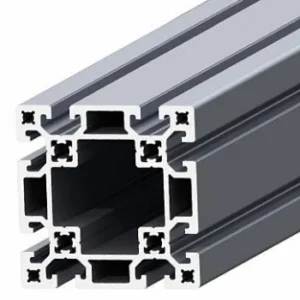 %47 Discount80x80 Sigma Profile 8 Channel Heavy Duty WholesaleOriginal price was: 88.50$.47.20$Current price is: 47.20$.View
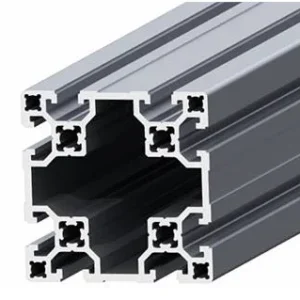 %47 Discount90x90 Sigma Profile 10 Channel Standard Type WholesaleOriginal price was: 104.54$.55.75$Current price is: 55.75$.View
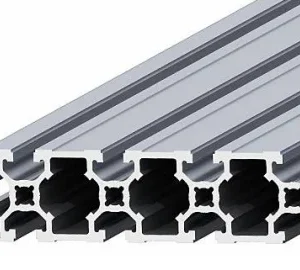 %47 Discount45x180 Sigma Profile 10 Channel BulkOriginal price was: 113.51$.60.54$Current price is: 60.54$.View
Reviews
There are no reviews yet.