
No products in the cart.
%42 Discount


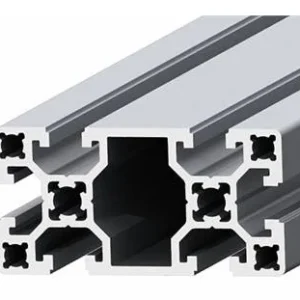
90×180 Sigma Profile 10 Channel
Original price was: 235.74$.136.66$Current price is: 136.66$.
High-strength aluminum extrusion profile for industrial automation, machine building, and structural frameworks requiring high load capacity.
In stock
🔥 Special for Today Only %42 Discount Opportunity!📦 Category: 10 Channel Sigma Profiles🏷️ Dimensions: 90x180🏷️ Slot Size: 10 Slots🏷️ Profile Size: 90x180
Mermak assuranceFrom factory to end user · importer / main dealer · strong stock
ImporterMain dealer / distributorStrong stockGood priceCorporate invoice
In stock / available to order · 14-day return for standard unused products; conditions may vary for custom size/cut products.
90×180 Sigma Profile 10 Channel
INDUSTRIAL AUTOMATION PARTS | SUPERIOR PERFORMANCE SERIES
Detailed Product Review
The 90×180 Sigma Profile 10 Channel is an aluminum extrusion profile designed for creating structural frameworks in industrial automation and machine manufacturing applications that demand high strength and heavy load-bearing capacity. This profile features a rectangular cross-section measuring 90 mm in width and 180 mm in height, incorporating a total of ten standard T-slots across its four surfaces. These T-slots allow for modular assembly using T-nuts and other fasteners compatible with DIN 787 or similar standards, eliminating the need for welding or drilling. The profile’s geometric design provides a high moment of inertia, particularly against bending and torsional forces, ensuring minimal deformation and maximum structural rigidity even under dynamic loads. This characteristic guarantees stability in critical applications such as large-span conveyor systems, robotic gantry systems, and high-precision test stands.
The material composition of the product consists of a high-strength aluminum alloy, typically 6063-T5 or similar. This alloy offers an excellent strength-to-weight ratio and has undergone heat treatment to optimize its structural stability and mechanical properties. The anodized surface treatment enhances the profile’s resistance to corrosion, abrasion, and chemical agents, extending its service life in demanding industrial environments and increasing surface hardness. With an average weight of 10.236 kg/meter, the profile provides sufficient mass-based rigidity for heavy-duty applications while retaining the lightweight advantage of aluminum. Its 10-channel structure offers versatile system integration possibilities, including cable management, pneumatic line integration, sensor mounting, and panel fixation. This profile stands out in large-scale and complex automation projects due to its advantages in rapid prototyping, easy modification, and expandability. Mermak CNC’s precision cutting service allows for custom dimensioning tailored to specific projects, optimizing the assembly process and minimizing material waste.
Advantages of 90×180 Sigma Profile 10 Channel
High Moment of Inertia and Structural Rigidity: The 90×180 mm cross-section dimensions ensure that the profile possesses high moments of inertia along both the X and Y axes. This significantly minimizes bending (deflection) and torsional deformations, especially over long spans or with cantilever loads. The high moment of inertia enhances the profile’s vibration damping capacity under dynamic loads, allowing for stable positioning of heavy machine components or support systems. This structural rigidity offers a critical advantage for robotic applications and high-speed motion systems requiring precise positioning, directly impacting the overall accuracy and repeatability of the system.
Environmental Resistance with Advanced Anodized Coating: The anodized (anodic oxidation) coating applied to the profile’s surface is created through a controlled electrochemical process that thickens and hardens the aluminum’s natural oxide layer. This coating significantly increases the surface’s Vickers hardness, thereby improving its resistance to scratches and abrasion. Furthermore, the aluminum oxide layer enhances the profile’s resistance to corrosive chemicals such as moisture, saltwater, mild acids, and bases, ensuring long-term durability even in harsh industrial environments (e.g., humid production areas, chemical processing plants). The anodized coating also improves the profile’s electrical insulation properties.
Modular and Flexible System Integration: Ten standard T-slot channels are strategically positioned on the profile’s four surfaces. This design enables the rapid, precise, and repositionable integration of a wide variety of fasteners (T-nuts, corner brackets, articulated joints), panels, sensors, actuators, cable conduits, and other automation components into the system. The modular structure offers flexibility during the system design phase and facilitates modifications, expansions, or maintenance operations post-production. Assembly without the need for welding or special tooling speeds up prototyping processes and shortens system commissioning times, thereby increasing engineering efficiency.
Technical Specifications and Capacity
Feature
Value/Description
Profile Dimensions
90 mm (Width) x 180 mm (Height)
Channel Type and Quantity
10 T-Slot Channels (Standard DIN compatible)
Material
High-Strength Aluminum Alloy (e.g., EN AW-6063 T5)
Surface Treatment
Anodized Coating (Anodic Oxidation, Corrosion and Abrasion Resistance)
Heat Treatment
Applied (Optimized Structural Stability and Mechanical Properties)
Weight per Meter (Avg.)
10.236 Kg/Meter (Nominal)
Standard Production Length
6 Meters
Cutting Service
Free (For orders over 1 meter, precise cutting to specified dimensions)
Barcode Number
8692024008494
Technical Frequently Asked Questions (FAQ)
What are the approximate moment of inertia (Ix, Iy) and section modulus (Wx, Wy) values for the 90×180 Sigma Profile, and how should these values be interpreted in structural design?
Considering the cross-sectional geometry of the 90×180 Sigma Profile, the approximate moments of inertia (I) and section moduli (W) for a typical 90×180 mm profile can be around the following values (actual values may differ from a nominal rectangular section due to internal voids and channel geometry):
– Moment of Inertia (Ix, about the strong axis): Approximately 250-300 cm⁴
– Moment of Inertia (Iy, about the weak axis): Approximately 60-75 cm⁴
– Section Modulus (Wx, on the strong axis): Approximately 27-33 cm³
– Section Modulus (Wy, on the weak axis): Approximately 13-17 cm³
These values determine the profile’s bending rigidity and strength. The Ix value indicates the profile’s resistance to bending under loads applied along its 180 mm height, while the Iy value indicates its resistance to loads applied along its 90 mm width. In structural design, the appropriate moment of inertia is selected based on the direction of the applied loads. The section modulus (W = I/y_max) directly provides the profile’s capacity to withstand maximum bending stress (σ = M/W). High moments of inertia and section moduli indicate that the profile can operate under heavy loads with minimal deflection and stress, which is critical for applications with long spans or significant cantilever loads.
What are the mechanical properties of the high-strength aluminum alloy (e.g., EN AW-6063 T5) used for the profile, and how do these properties affect the profile’s performance?
The EN AW-6063 T5 aluminum alloy is a commonly used material for extrusion profiles and typically possesses the following mechanical properties:
– Tensile Strength (Rm): Approximately 180-220 MPa
– Yield Strength (Rp0.2): Approximately 150-180 MPa
– Elongation (%A5): Approximately 8-12%
– Young’s Modulus (E): Approximately 69 GPa
– Hardness (Brinell): Approximately 60 HB
These properties directly influence the profile’s structural performance. High yield strength determines the maximum stress the profile can withstand without permanent deformation, while tensile strength indicates the maximum stress it can endure before fracture. Young’s modulus expresses the material’s stiffness and resistance to elastic deformation; this value is used in deflection calculations for the profile. The percentage elongation indicates the material’s ductility and how much it can deform before breaking. The T5 heat treatment enhances the material’s strength through natural aging, ensuring optimal mechanical properties after extrusion. These characteristics guarantee the profile’s reliability and longevity under heavy and dynamic loads.
What is the thermal expansion coefficient of the 10-channel sigma profile, and how should this be considered in long-distance applications?
The typical thermal expansion coefficient (α) for aluminum alloys is around 23 x 10⁻⁶ mm/(mm·°C). This value is approximately twice as high as that of steel (around 12 x 10⁻⁶ mm/(mm·°C)). In long-distance applications, especially for large machine frames or long conveyor lines, changes in ambient temperature can cause significant expansion or contraction in the profile’s length. For instance, the change in length (ΔL) for a 6-meter profile with a 20°C temperature change (ΔT = 20°C) can be calculated as: ΔL = α * L * ΔT = (23 x 10⁻⁶) * (6000 mm) * (20°C) ≈ 2.76 mm. This necessitates design considerations such as expansion joints, flexible connectors, or appropriate clearance to prevent stress buildup at connection points or to maintain system functionality, especially in systems requiring precise alignment. Thermal expansion is a critical design parameter, particularly for high-precision optical or laser alignment systems.
What is the thickness and hardness of the anodized coating on the 90×180 Sigma Profile, and how do these properties affect the profile’s lifespan?
The anodized coating applied by Mermak CNC typically has a thickness of 10-20 microns (µm), in line with industrial standards. This coating is achieved by electrochemically thickening the naturally formed oxide layer on the aluminum surface. The hardness of the coating, depending on the alloy and anodizing process used, typically reaches values of 200-400 HV (Vickers hardness). This hardness is significantly higher than that of the base aluminum alloy (approx. 60 HB).
These properties directly impact the profile’s lifespan:
1. Abrasion Resistance: High surface hardness increases the profile’s resistance to mechanical wear, scratches, and friction. This ensures the profile maintains its aesthetic and structural integrity, especially in applications with moving parts or frequent contact.
2. Corrosion Resistance: The anodized layer acts as a superior barrier against corrosion by preventing direct contact between the aluminum and oxygen or moisture. This allows the profile to withstand prolonged use in systems exposed to humidity, chemical vapors, or outdoor conditions.
3. Dielectric Properties: The anodized layer is electrically insulating. This helps provide an additional layer of safety when mounting electrical components or in cable management applications.
Consequently, the anodized coating ensures that the profile maintains its performance and appearance for many years, even in harsh industrial conditions, thereby reducing maintenance costs and enhancing the overall reliability of the system.
| Dimensions | 90x180 |
|---|---|
| Slot Size | 10 Slots |
| Profile Size | 90x180 |
You must be logged in to post a review.
Taksit Tablosu
Related Products
 %38 Discount23x129 Surface Coated Sigma ProfileOriginal price was: 32.32$.19.93$Current price is: 19.93$.View
 %48 Discount45x90 Sigma Profile 10 Channel Ultra Lightweight TypeOriginal price was: 68.83$.35.57$Current price is: 35.57$.View
 %35 Discount45x90 Sigma Profile 10 Channel Heavy DutyOriginal price was: 60.70$.39.67$Current price is: 39.67$.View
Reviews
There are no reviews yet.