
No products in the cart.
%33 Discount


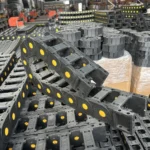
45x75mm Articulated Cable Carrier
Original price was: 39.12$.26.09$Current price is: 26.09$.
Best Quality, Best Price Guarantee
In stock
🔥 Special for Today Only %33 Discount Opportunity!📦 Category: 45mm Cable Carriers🏷️ Cable Duct Internal Width: 45 mm🏷️ Cable Duct Internal Height: 75 mm
Mermak assuranceFrom factory to end user · importer / main dealer · strong stock
ImporterMain dealer / distributorStrong stockGood priceCorporate invoice
In stock / available to order · 14-day return for standard unused products; conditions may vary for custom size/cut products.
45x75mm Articulated Cable Carrier
INDUSTRIAL AUTOMATION PARTS | SUPERIOR PERFORMANCE SERIES
Detailed Product Review
The 45x75mm Articulated Cable Carrier, developed by Mermak CNC, is a critical engineering component designed to ensure the physical integrity and operational continuity of electrical cables, data transmission lines, and hydraulic/pneumatic hoses on dynamic motion axes in industrial automation systems. This system minimizes the mechanical stresses, bending fatigue, abrasion, pinching, and damage from external factors that cables are exposed to during the continuous and repetitive movements of machinery such as CNC machines, robotic arms, and automated transport systems. It ensures uninterrupted and safe energy and signal transmission. The primary function of the cable carrier is to guide cables within a specified bend radius, allowing them to move with minimal stress, thereby preventing premature aging or breakage of cable insulation and conductor structure. This directly impacts the overall reliability and reduces downtime of the system.
This articulated cable carrier, with its 45mm internal height and 75mm internal width, has the capacity to neatly house a variety of cable and hose bundles of different diameters. The high-performance engineering polymer used in its manufacturing, Polyamide (PA6/PA66), offers superior mechanical properties including high tensile strength, impact resistance, abrasion resistance, and chemical stability. This material choice provides high resistance against challenging environmental conditions such as industrial oils, coolants, bases, and UV radiation, guaranteeing the carrier’s long-term and deformation-free operation. Its modular design allows each link to be easily opened and closed, significantly simplifying cable insertion, removal, or maintenance operations and reducing system downtime. Furthermore, integrated slots within the carrier allow for the use of optional horizontal and vertical separators to keep different diameter cables and hoses organized and separated, preventing friction between cables and potential signal interference, thus preserving data integrity.
Advantages of the 45x75mm Articulated Cable Carrier
Optimized Cable and Hose Lifespan: The design of this cable carrier focuses on minimizing the mechanical stress factors cables and hoses are subjected to in dynamic applications. The smooth internal surfaces reduce friction on cable outer jackets, while precisely engineered bend radius (R) options ensure cables bend with minimal stress. This optimization can extend the service life of industrial cables and hydraulic/pneumatic hoses requiring high flexibility by up to 30%, by increasing their fatigue life. This leads to reduced failure frequency and improved operational reliability and the system’s overall MTBF (Mean Time Between Failures).
Superior Mechanical and Environmental Resistance: The 45x75mm Articulated Cable Carrier is manufactured from high-performance engineering polyamide (PA6/PA66). This material offers high mechanical strength against impacts, continuous vibrations, and abrasive particles. It also exhibits excellent chemical resistance to common industrial substances like mineral oils, synthetic coolants, greases, alcohols, and various chemical solvents. Thanks to UV stabilizers, it resists material degradation caused by sunlight even in outdoor applications. These properties allow the carrier to maintain its structural integrity under the most demanding industrial conditions, providing continuous and maximum protection for cables.
Fast and Modular System Integration: The product’s modular design features easily openable and closable links. This makes inserting or removing cables and hoses extremely practical, significantly shortening installation and maintenance times compared to traditional systems. Standard end connectors and optional flange mounting options allow for quick and seamless integration into existing automation systems. Internal separation systems (horizontal and vertical dividers) enable organized separation and management of different types and diameters of cables, preventing cable clutter and providing flexibility for future system modifications or expansions.
Technical Specifications and Capacity
Feature
Value/Description
Internal Height (H)
45 mm
Internal Width (W)
75 mm
Material
High-Performance Engineering Polyamide (PA6/PA66)
Standard Bend Radius (R)
75 mm, 100 mm, 125 mm (selectable based on application requirements)
Maximum Travel Speed
10 m/s (horizontal applications, may vary based on load and length)
Maximum Acceleration
50 m/s² (horizontal applications, may vary based on load and length)
Operating Temperature Range
-25°C to +120°C
Chemical Resistance
High resistance to industrial oils, greases, bases, alcohols, and many solvents
Technical Frequently Asked Questions (FAQ)
How do the maximum travel speed and acceleration values of the cable carrier vary based on engineering factors?
The specified maximum travel speed (10 m/s) and acceleration (50 m/s²) values for the cable carrier are reference figures obtained under ideal laboratory conditions and a specific load. Actual performance in real applications can vary depending on numerous factors such as the total length of the carrier, the total weight of the cable and hose bundle it carries, the application geometry (horizontal, vertical, circular motion), ambient temperature, humidity, and installation precision. Especially over long unsupported spans or in high vertical applications, the dynamic load and inertial forces of the cable bundle will increase, potentially requiring operation below these maximum values. Vibration damping characteristics and the fatigue strength of the connectors are also critical parameters affecting these limits. For optimal performance, dynamic analysis and testing under actual load conditions are recommended.
What is the technical effect of different bend radius (R) options on cable life, and how is the correct R value selected?
The bend radius (R) refers to the minimum curvature radius to which the articulated cable carrier forces the cables to bend. A smaller R value creates higher stress and bending fatigue on the cables, shortening their lifespan. Conversely, a larger R value reduces stress on the cables, extending their life but increasing the space the carrier occupies. The selection of the correct R value depends on the minimum bend radius requirements of the cables and hoses being carried (usually specified by the cable manufacturer) and the physical space constraints of the system. As a general rule, choosing an R value larger than the minimum specified by the cable manufacturer ensures the maximum lifespan and reliability of the cables. For cables requiring high flexibility and continuous movement, opting for the largest possible R value minimizes cable insulation and conductor fatigue, reducing the risk of failure.
How does the internal separation system of the cable carrier technically prevent signal interference?
The internal separation system of the cable carrier is designed to physically separate different types of cables (e.g., power cables, data cables, control cables) and hydraulic/pneumatic hoses. This physical separation reduces the inductive and capacitive coupling effects of electromagnetic fields (EMI) generated by high-current power cables on sensitive data and signal cables. Magnetic fields from power cables can induce unwanted voltages in nearby signal cables, leading to signal distortion or data loss. The internal dividers provide sufficient distance or create a barrier between these cables, enhancing electromagnetic compatibility (EMC) and preserving signal integrity. Additionally, they prevent mechanical abrasion between cables, minimizing wear and potential short-circuit risks.
What specific advantages does the chemical resistance of Polyamide (PA6/PA66) material offer in industrial environments?
Engineering polymers based on Polyamide (PA6/PA66) exhibit high resistance to many aggressive chemicals commonly found in industrial environments. This ensures the carrier maintains its structural integrity and mechanical properties, especially when exposed to coolants (emulsions), cutting oils, hydraulic oils, greases, cleaning agents, weak acids and bases, and alcohols in environments like CNC machines and machining centers. Chemical resistance guarantees long-term performance by preventing the carrier from cracking, softening, hardening, or discoloring over time. This property prevents the cable carrier from deforming or becoming brittle due to chemical interactions, ensuring continuous and reliable protection for the cables and hoses inside. Consequently, maintenance costs are reduced, and the system’s operational lifespan is extended.
| Dimensions | |
|---|---|
| Cable Duct Internal Width | 45 mm |
| Cable Duct Internal Height | 75 mm |
You must be logged in to post a review.
Taksit Tablosu
Related Products
 %33 Discount45x50mm Energy Chain (Cable Carrier)Original price was: 38.14$.25.43$Current price is: 25.43$.View
 %33 Discount45x125mm Energy Chain Cable CarrierOriginal price was: 41.10$.27.41$Current price is: 27.41$.View
 %33 Discount45x100 Drag Chain Cable CarrierOriginal price was: 39.60$.26.40$Current price is: 26.40$.View
Reviews
There are no reviews yet.