
No products in the cart.
%33 Discount


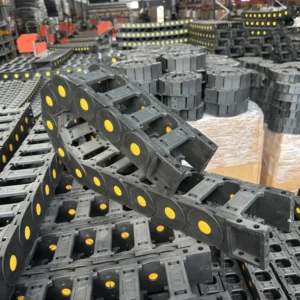
45×100 Drag Chain Cable Carrier
Original price was: 39.60$.26.40$Current price is: 26.40$.
Best Quality, Best Price Guarantee
In stock
🔥 Special for Today Only %33 Discount Opportunity!📦 Category: 45mm Cable Carriers🏷️ Cable Duct Internal Width: 45 mm🏷️ Cable Duct Internal Height: 100 mm
Mermak assuranceFrom factory to end user · importer / main dealer · strong stock
ImporterMain dealer / distributorStrong stockGood priceCorporate invoice
In stock / available to order · 14-day return for standard unused products; conditions may vary for custom size/cut products.
45×100 Drag Chain Cable Carrier
INDUSTRIAL AUTOMATION PARTS | SUPERIOR PERFORMANCE SERIES
Detailed Product Review
In industrial automation systems, the safe, organized, and uninterrupted routing of energy supply, data transmission, and fluid transfer lines, especially on dynamic moving axes, is a critical engineering requirement for the overall performance and lifespan of the system. The 45×100 Drag Chain Cable Carrier is an optimized carrier system designed to protect cables and hoses from mechanical wear, tension, bending fatigue, and external factors under these demanding operational conditions. The primary function of the product is to ensure that cables and hoses move in a controlled manner along a specific motion profile of a moving machine part or robotic arm, without exceeding their minimum bending radius values. This maximizes system reliability and operational continuity by preventing micro-cracks, breaks, and signal distortions that can occur in the internal conductors or external insulation of cables and hoses. The channel’s 45mm internal height and 100mm internal width allow for the transport of medium and large diameter cable bundles and pneumatic/hydraulic hoses at an optimal fill rate, without friction or jamming, which supports thermal management and long-term performance stability.
This cable carrier has been specially developed for applications such as CNC machining centers, multi-axis robotic arms, automatic assembly lines, and material handling systems, where high speed and acceleration are involved. Structurally, it is manufactured from a specially formulated high-performance Polyamide (PA6.6) composite material. This material choice offers superior resistance to oils, cooling fluids, various chemicals, and UV radiation commonly encountered in industrial environments, while maintaining its mechanical properties and providing stable performance across a wide operating temperature range of -30°C to +100°C. Modular connectors and an easy-to-open/close lid mechanism allow for quick installation and removal during system integration. This modular structure enables rapid intervention in case of cable additions, replacements, or system revisions during operation, thereby minimizing unplanned downtime and reducing maintenance costs. The internal divider system allows for the separation of cables and hoses horizontally and vertically, reducing potential friction and electromagnetic interference, thus contributing to the system’s overall efficiency and signal integrity.
Advantages of the 45×100 Drag Chain Cable Carrier
High Dynamic Motion Performance: This cable carrier is capable of maintaining the bending radius of the cables and hoses it carries at stable nominal values, even at linear travel speeds up to 10 m/s and accelerations up to 20 m/s². This feature significantly extends the fatigue life by preventing cables and hoses from being subjected to repetitive bending stresses, especially in high-cycle and fast-moving automation systems. Controlled bending prevents tensile fractures, insulation damage, and signal integrity losses (e.g., impedance changes or data packet loss) in the internal conductors of power and data cables. Thus, energy flow and signal transmission are maintained continuously and reliably even in sensitive automation applications, directly impacting machine performance consistency and production efficiency.
Superior Material Chemical and Thermal Resistance: The specially developed high-performance Polyamide (PA6.6) composite material used in the product exhibits exceptional resistance to aggressive chemicals commonly encountered in industrial environments. This ensures that the material retains its structural integrity and mechanical properties even when in contact with cutting oils, cooling fluids, hydraulic oils, greases, cleaning agents, and general industrial solvents. Furthermore, its UV-resistant structure delays material degradation even in outdoor applications or environments with high UV exposure. The wide operating temperature range of -30°C to +100°C allows the carrier to be used safely in both low-temperature storage and cold processing areas, as well as in high-temperature production environments, without deformation or performance loss. This thermal and chemical stability extends maintenance intervals and reduces the total cost of ownership of the system.
Ease of Maintenance with Modular and Ergonomic Design: The 45×100 Drag Chain Cable Carrier features a modular structure based on engineering principles. Each carrier connection element is equipped with an easy-to-open/close lid mechanism, making the process of inserting, removing, or replacing cables and hoses within the carrier extremely practical. This feature significantly reduces installation time while allowing for rapid intervention during system revisions or troubleshooting. The modular connectors allow the length of the carrier to be easily adjusted on-site and damaged individual connectors to be quickly replaced, eliminating the need to replace the entire carrier system. This ergonomic design reduces the workload for maintenance personnel, minimizes unplanned downtime, and increases operational efficiency. The integration of internal divider systems allows for the organized separation of cables and the elimination of potential friction sources.
Technical Specifications and Capacity
Feature
Value/Description
Internal Height (Hi)
45 mm
Internal Width (Wi)
100 mm
External Height (Ha)
Approx. 58 mm
External Width (Wa)
Approx. 125 mm
Minimum Bending Radius (R)
R100 (Optional R75, R125)
Maximum Travel Speed
10 m/s
Maximum Acceleration
20 m/s²
Material
High-Performance Polyamide (PA6.6) Composite
Operating Temperature Range
-30°C to +100°C
Abrasion Resistance
Very High, compliant with DIN EN ISO 1043-1
Chemical Resistance
Resistant to oils, cooling fluids, and general industrial chemicals
UV Resistance
Yes, suitable for outdoor applications
Flame Retardancy
Compliant with UL94 V-2 standard (V-0 options available upon request)
Internal Divider System
Possibility of cable organization with horizontal and vertical dividers
Technical Frequently Asked Questions (FAQ)
How should the correct bending radius (R) be selected for the 45×100 drag chain cable carrier?
Selecting the correct bending radius is critical for the lifespan and performance of the cable carrier and the cables/hoses within it. The basic principle is that the minimum bending radius of the cable carrier should not be smaller than the minimum bending radius specified by the manufacturer for the largest or most sensitive cable/hose to be carried inside. Generally, a larger value than the static bending radius is preferred for dynamic applications. For example, if the minimum dynamic bending radius specified by the manufacturer for a control cable is 10 x its outer diameter, and the cable’s outer diameter is 10 mm, then a carrier with a minimum bending radius of 100 mm (R100) should be selected for this cable. Additionally, the carrier’s motion profile, speed, and acceleration must be considered; under higher dynamic loads, choosing a larger bending radius can extend fatigue life by reducing internal stresses on the cables. While the Mermak 45×100 cable carrier offers a standard R100 option, optional radii such as R75 and R125 are also available for special applications. When making a selection, the largest of the minimum bending radius values from the technical data sheets of all cables and hoses should be used as a reference.
What engineering principles should be applied for the internal fill rate and cable organization of the cable carrier?
The internal fill rate of the cable carrier must be carefully managed to ensure free movement of cables and hoses and to prevent overheating. As a general engineering rule, a maximum of 60-70% of the carrier’s internal volume should be filled. This prevents cables from rubbing against each other or getting jammed during bending and allows sufficient space for air circulation, aiding thermal management. For cable organization, it is strongly recommended to separate different types of cables (e.g., power, data, pneumatic, hydraulic) using internal dividers. Power cables should be routed in separate compartments from data cables due to the potential for electromagnetic interference (EMI). Similarly, heavy hoses or cables should be separated from lighter ones to balance the weight distribution and reduce adverse effects on the carrier’s motion dynamics. Internal dividers ensure that cables remain organized within the carrier, prevent crossovers, and minimize the risk of abrasion. Furthermore, even cables of the same type but different diameters should be separated with appropriate dividers to prevent smaller cables from being crushed by larger ones. This ensures the system’s overall efficiency and signal integrity.
What are the contributions of the Polyamide (PA6.6) composite material to the longevity and performance of the 45×100 cable carrier?
Polyamide 6.6 (PA6.6) composite is an ideal engineering plastic for industrial applications due to its properties such as high mechanical strength, abrasion resistance, chemical resistance, and thermal stability. Its use in the 45×100 cable carrier directly impacts the product’s longevity and performance under harsh industrial conditions. The high abrasion resistance of PA6.6 minimizes surface wear as the carrier moves continuously or comes into contact with external factors, allowing the material to maintain its structural integrity for a long time. Its chemical resistance eliminates the risk of deformation, cracking, or material degradation when the carrier comes into contact with oils, cooling fluids, and various industrial chemicals. This is a critical advantage, especially in sectors such as metal processing, automotive, and chemical industries. Furthermore, the wide operating temperature range of -30°C to +100°C ensures that the material does not become brittle at low temperatures or soften or deform at high temperatures, guaranteeing reliable operation in different climatic and operational conditions. This thermal stability ensures the carrier operates reliably in diverse climatic and operational conditions. The composite structure enhances the material’s impact resistance, providing protection against sudden mechanical shocks and reducing the likelihood of physical damage to the carrier.
What are the key engineering principles to consider during the installation of the 45×100 cable carrier?
To ensure the optimal performance and long life of the 45×100 cable carrier, adherence to specific engineering principles during installation is essential. Firstly, the fixed and moving end connectors of the carrier must be mounted securely and accurately aligned with the machine axis or mounting surface. Misalignment can cause the carrier to twist or be subjected to unnecessary stresses during movement, leading to premature fatigue and failure. Secondly, it is mandatory to secure the cables and hoses at the fixed connection points at both ends of the carrier using strain relief clamps or similar elements. This securing prevents cables from being pulled or sliding within the moving carrier, helping to maintain the bending radius and reduce stress at cable connection points. Thirdly, sufficient clearance must be left for the carrier to move freely, and it must be ensured that there are no obstructions in the carrier’s path of motion. Fourthly, the length of the carrier must be calculated correctly to accommodate the machine’s maximum travel distance and bending radius; an excessively short carrier can lead to over-stressing of cables, while an excessively long carrier can cause sagging and vibration issues. Finally, the weight distribution of the cables and hoses placed inside the carrier should be balanced, and they should be organized using internal dividers. Adherence to these principles enhances system reliability and minimizes maintenance needs.
| Dimensions | |
|---|---|
| Cable Duct Internal Width | 45 mm |
| Cable Duct Internal Height | 100 mm |
You must be logged in to post a review.
Taksit Tablosu
Related Products
 %33 Discount45x50mm Energy Chain (Cable Carrier)Original price was: 38.14$.25.43$Current price is: 25.43$.View
 %33 Discount45x75mm Articulated Cable CarrierOriginal price was: 39.12$.26.09$Current price is: 26.09$.View
 %33 Discount45x125mm Energy Chain Cable CarrierOriginal price was: 41.10$.27.41$Current price is: 27.41$.View
Reviews
There are no reviews yet.