
No products in the cart.
%35 Discount


40×40 Sigma Profile 8 Channel Heavy Duty
Original price was: 32.80$.21.43$Current price is: 21.43$.
High-strength, modular aluminum extrusion profile for industrial automation and heavy-duty constructions.
In stock
🔥 Special for Today Only %35 Discount Opportunity!📦 Category: 40 mm Aluminum Profiles🏷️ Dimensions: 40x40🏷️ Slot Size: 8 Slots🏷️ Profile Size: 40x40
Mermak assuranceFrom factory to end user · importer / main dealer · strong stock
ImporterMain dealer / distributorStrong stockGood priceCorporate invoice
In stock / available to order · 14-day return for standard unused products; conditions may vary for custom size/cut products.
40×40 Sigma Profile 8 Channel Heavy Duty
INDUSTRIAL AUTOMATION PARTS | SUPERIOR PERFORMANCE SERIES
Detailed Product Review
The 40×40 Sigma Profile 8 Channel Heavy Duty is a modular aluminum extrusion profile designed for constructions requiring high strength and structural rigidity in industrial automation systems. This profile offers increased static and dynamic load-bearing capacity compared to standard profiles, particularly in applications such as machine frames, robotic cells, heavy-duty conveyor systems, and precision test benches. The “heavy-duty” classification ensures higher resistance to bending and torsional moments due to its optimized internal geometry and increased wall thickness, directly impacting the overall stability and vibration damping capabilities of the system. The eight T-slots allow for versatile integration of fasteners and accessories on all four surfaces of the profile, enabling the rapid and flexible design and modification of complex three-dimensional structures, thus optimizing time and cost in engineering projects.
This profile is manufactured using a high-quality EN AW-6063 T6 aluminum alloy through extrusion. EN AW-6063 T6 offers excellent extrudability, good weldability, high corrosion resistance, and enhanced mechanical properties (high yield and tensile strength) due to T6 heat treatment. This material choice ensures the profile performs reliably and durably even in demanding industrial conditions while maintaining its lightweight structure. The anodized (anodization) coating applied to the profile’s surface electrochemically thickens the aluminum’s natural oxide layer, increasing surface hardness, improving resistance to abrasion and scratches, and providing protection against chemical agents, while also offering an aesthetic finish and ease of cleaning. The 8-channel design facilitates easy mounting of sensors, cable conduits, pneumatic lines, and other automation components, ensuring full compatibility with standard sigma profile fasteners (T-nuts, corner brackets, linear connectors), simplifying system integration and enhancing expandability.
Advantages of 40×40 Sigma Profile 8 Channel Heavy Duty
High Structural Rigidity and Load-Bearing Capacity: The heavy-duty design, achieved through optimized cross-sectional area and increased wall thicknesses, provides significantly higher resistance to bending and torsional moments compared to standard profiles. This is critical in applications subjected to high static and dynamic loads, such as machine frames, robotic arm support structures, and heavy conveyor systems. High moments of inertia (Ixx, Iyy) minimize structural deformation, preserving geometric accuracy in systems requiring precise positioning over time. This feature also enhances vibration damping capacity, extending machine performance and component lifespan.
Modular and Versatile System Integration: The total of 8 T-slots on the four surfaces of the profile offer unparalleled flexibility for designers and engineers. These slots allow for the quick and secure mounting of various components (sensors, actuators, panels, cable conduits) using standard T-nuts, hammer nuts, and specialized fasteners, without the need for welding or complex machining. The modular structure allows systems to be easily expanded, reconfigured, or adapted to different applications, accelerating prototyping processes and minimizing operational downtime during production line changes.
Superior Surface Durability and Environmental Resistance: The anodizing process on the profile’s surface electrochemically transforms the aluminum surface, creating a much thicker and harder aluminum oxide layer than the natural oxide layer. This layer significantly increases the profile’s Vickers hardness (typically 300-400 HV), enhancing its resistance to scratches, abrasion, and impacts. Its chemically inert nature provides superior corrosion resistance against mild acids, bases, oils, and solvents commonly found in industrial environments, ensuring long-term performance and aesthetic integrity even in harsh and humid conditions. These properties reduce maintenance costs and extend the profile’s service life.
Technical Specifications and Capacity
Feature
Value/Description
Profile Size
40×40 mm
Number of Channels
8 Channels (T-Slot)
Profile Type
Heavy Duty (High strength and load-bearing capacity)
Material
High-Quality Aluminum Alloy (EN AW-6063 T6)
Weight per Meter (Approx.)
1.832 Kg/Meter
Surface Treatment
Anodized Coating (Anodize) – Provides corrosion and abrasion resistance
Heat Treatment
Applied (Improves mechanical properties)
Technical Frequently Asked Questions (FAQ)
What are the contributions of EN AW-6063 T6 aluminum alloy and the “heavy-duty” design to the profile’s mechanical performance?
EN AW-6063 T6 aluminum alloy exhibits high yield strength (typically 215 MPa) and tensile strength (typically 250 MPa) due to solution heat treatment and artificial aging (T6 temper). This allows the profile to withstand significant loads without permanent deformation. The “heavy-duty” design, by optimizing the profile’s cross-sectional area and wall thicknesses, increases the moments of inertia (Ixx, Iyy) and the torsional constant (J). This increase directly enhances the profile’s bending and torsional rigidity; for example, a higher moment of inertia compared to a standard 40×40 profile means less deflection under the same load. This combination is critical for maintaining structural integrity and geometric accuracy, especially in machine frames and robotic applications requiring high precision.
What is the engineering significance of the 8 T-slots for system integration and structural connections?
The 8 T-slots provide continuous and multiple connection points on all four surfaces of the profile, offering unique flexibility in system integration. Each slot allows for secure mounting of components using T-nuts (in various types such as hammer nuts, drop-in nuts, or spring nuts). From an engineering perspective, these slots enable the axial position of fasteners to be freely adjusted and easily repositioned as needed. In high-load applications, using multiple T-slots can improve load distribution and reduce stress concentration at a single connection point. Furthermore, the slots can be used for organizing cables and pneumatic lines within or on the surface of the profile, enhancing system aesthetics and safety.
What are the technical contributions of anodized (anodization) coating to the durability of the 40×40 Sigma Profile in industrial environments?
Anodizing is a controlled electrochemical process that creates a much thicker (typically 10-25 microns) and denser layer of aluminum oxide (Al2O3) on the aluminum surface than the natural oxide layer. This layer significantly increases the surface hardness of the aluminum (e.g., 300-400 HV), enhancing the profile’s resistance to abrasion, scratches, and impacts. Its chemically inert nature provides superior corrosion resistance against mild acids, bases, oils, and solvents commonly encountered in industrial settings. Additionally, the anodized layer is electrically insulating, which reduces the risk of galvanic corrosion when in contact with dissimilar metals and offers an extra layer of protection during the mounting of electronic components. These properties ensure the profile delivers long-lasting and reliable performance even under harsh operating conditions.
What are the critical engineering considerations when designing and assembling complex structures with the 40×40 Sigma Profile 8 Channel Heavy Duty?
When designing complex structures, a load analysis should be performed first, and the profile’s load-bearing capacity should be verified against the expected static and dynamic loads. The design of connection points is critical; for high-strength requirements, internal fasteners (rather than corner brackets) should be preferred, and it should be ensured that T-nuts have sufficient thread depth. During assembly, cutting tolerances are vital for structural integrity; Mermak CNC’s precision cutting service offers an advantage here. For long structures, the coefficient of thermal expansion (approximately 23 x 10^-6 /°C for aluminum) must be considered, and appropriate expansion gaps should be left. In vibrating systems, additional safety measures like spring washers or lock nuts should be used to prevent fasteners from loosening, and vibration-damping feet or mounting elements should be integrated. The flatness and level of the base connections should be checked with laser alignment equipment to ensure the overall stability of the structure.
Mermak has 16 years of experience in the industrial automation sector. Our products are stocked at our Ankara Uzay Sanayi factory/warehouse, and website stock quantities and prices are up-to-date. Stocked products are dispatched directly from our warehouse without production delays. We ensure careful packaging, meticulous invoice and document handling, and utilize reliable logistics partners. The Mermak team closely monitors the shipment process. Upon request, product videos and factory tours can be arranged via WhatsApp or other contact channels. We proudly supply our products to international markets including the United Kingdom, United States, Canada, Australia, Ireland, New Zealand, and South Africa, as well as similar countries and international markets.
| Dimensions | 40x40 |
|---|---|
| Slot Size | 8 Slots |
| Profile Size | 40x40 |
You must be logged in to post a review.
Taksit Tablosu
Related Products
 %25 Discount40x80 Sigma Profile 8 Channel Heavy DutyOriginal price was: 56.92$.42.92$Current price is: 42.92$.View
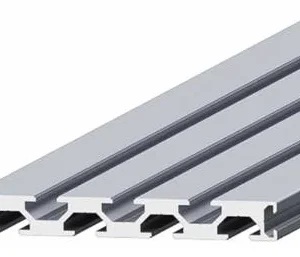 %38 Discount15x120 Surface Coated Sigma Profile 8 ChannelOriginal price was: 40.61$.25.04$Current price is: 25.04$.View
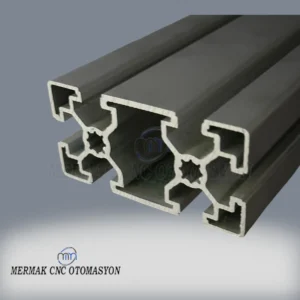 %38 Discount40x80 Sigma Profile | 10 Channel | Lightweight TypeOriginal price was: 37.25$.22.97$Current price is: 22.97$.View
Reviews
There are no reviews yet.