
No products in the cart.
%38 Discount


40×80 Sigma Profile | 10 Channel | Lightweight Type
Original price was: 37.25$.22.97$Current price is: 22.97$.
High-strength aluminum extrusion profile for industrial automation, machine frames, and custom structures.
In stock
🔥 Special for Today Only %38 Discount Opportunity!📦 Category: 10 Channel Sigma Profiles🏷️ Slot Size: 10 Slots🏷️ Profile Size: 40x80
Mermak assuranceFrom factory to end user · importer / main dealer · strong stock
ImporterMain dealer / distributorStrong stockGood priceCorporate invoice
In stock / available to order · 14-day return for standard unused products; conditions may vary for custom size/cut products.
40×80 Sigma Profile 10 Channel Lightweight Type
INDUSTRIAL AUTOMATION PARTS | SUPERIOR PERFORMANCE SERIES
Detailed Product Review
Sigma profiles, one of the fundamental structural elements of industrial automation systems, are designed to provide modularity, adaptability, and structural integrity in modern production and assembly lines. The 40×80 Sigma Profile 10 Channel Lightweight Type is an optimized aluminum extrusion profile developed to meet these engineering requirements. Its 40×80 mm rectangular cross-section, while positioned in the lightweight category, provides sufficient bending stiffness and torsional resistance; this is a critical parameter, especially in systems with dynamic loads or applications requiring precise positioning. The total of 10 T-channels strategically located on the peripheral surfaces of the profile allow for versatile integration of fasteners and accessories, offering unique flexibility in system design and enabling the rapid and precise construction of complex structures.
The high-strength 6063-T5 or similar aluminum alloy used in the production of this profile optimizes its mechanical properties while exhibiting superior corrosion resistance against moisture, chemicals, and other corrosive agents commonly encountered in industrial environments. Its lightweight nature minimizes total inertia in moving systems, reducing energy consumption and allowing for more precise motion control at higher speeds. The anodizing process applied to the profile’s surface thickens the aluminum’s natural oxide layer, increasing surface hardness, significantly enhancing resistance to scratches and abrasion, and providing an aesthetic appearance. Furthermore, the heat treatment applied to the material’s internal structure extends its structural stability and fatigue life, guaranteeing long-term and reliable performance. This combination of technical features makes the 40×80 Sigma Profile 10 Channel Lightweight Type an ideal engineering solution for a wide range of applications, from industrial machine chassis to robotic cells, conveyor systems, and ergonomic workstations.
Advantages of 40×80 Sigma Profile 10 Channel Lightweight Type
Extensive Modular Design and Integration Flexibility: The profile’s 10-channel T-slot structure ensures full compatibility with standard fasteners (T-nuts, corner connectors) and a wide range of accessories, offering versatile mounting and integration possibilities in engineering designs. This structural feature enables rapid prototyping of complex systems, easy modification of existing systems, and quick adaptation to future expansion or modification needs. Sensors, actuators, cable trays, pneumatic lines, and other automation components can be easily mounted into the channels on any surface of the profile; this directly contributes to time and cost optimization in design processes while enhancing the system’s overall flexibility and reconfigurability.
Optimized Strength-to-Weight Ratio: Despite being in the “Lightweight Type” category, the 40×80 mm cross-section optimizes the profile’s moment of inertia and section modulus, offering high load-bearing capacity and structural integrity. This balance allows for a significant reduction in the moving mass, especially in dynamic applications (e.g., robotic arms, linear guides). The reduction in moving mass increases the system’s acceleration and deceleration performance, reduces the load on the drive systems, and consequently enhances energy efficiency. This optimized ratio ensures sufficient rigidity under static load while improving dynamic response time, thereby increasing the overall performance and operational efficiency of the system.
High Surface Durability and Corrosion Resistance: The anodizing process applied to the profile’s surface controllably accelerates aluminum’s natural oxidation process, creating a micron-thick, hard, and porous aluminum oxide layer on the surface. This layer significantly increases the profile’s resistance to corrosive chemicals, moisture, UV radiation, and mechanical abrasion encountered in industrial environments. Anodizing also increases the surface’s scratch resistance, ensuring long-lasting, aesthetic, and maintenance-free use even in harsh working conditions. This feature minimizes maintenance and replacement costs while ensuring the system maintains its visual and structural integrity throughout its operational life, thus reducing the total cost of ownership.
Technical Specifications
Profile Dimensions
40×80 mm (Nominal Cross-section)
Channel Type and Quantity
T-Slot, 10 Channels (on peripheral surfaces)
Profile Series
Lightweight Type (Optimized wall thickness)
Material
High-Strength Aluminum Alloy (6063-T5 or equivalent)
Weight per Meter
Approx. 2.07 Kg/Meter (±5% Tolerance)
Surface Treatment
Anodized Coating (Micron-thick oxide layer, abrasion and corrosion resistance)
Mechanical Treatment
Heat Treated (Structural stability and mechanical strength optimization)
Standard Production Length
6 Meters
Minimum Sales Length
1 Meter
Cutting Service
Free and precise cutting to specified dimensions (±0.2 mm Tolerance)
Technical Frequently Asked Questions (FAQ)
What are the engineering differences in bending stiffness and torsional resistance between the 40×80 lightweight type profile and a standard 40×80 profile?
The 40×80 Lightweight Type profile features optimized wall thickness compared to a standard 40×80 profile. This optimization aims to reduce the profile’s total weight while maintaining the moment of inertia (Ixx, Iyy) and torsional constant (J) of the cross-section geometry as high as possible, without compromising stiffness. Generally, wall thicknesses in lightweight profiles are determined by analyzing critical stress points and load distribution. This increases the profile’s stiffness per unit weight while offering the advantage of raising the system’s natural frequency and reducing the risk of resonance due to the reduced moving mass, especially in dynamic applications. Bending stiffness is directly proportional to the second moment of area, and in lightweight profiles, this value is achieved through optimized material distribution. For torsional resistance, the effectiveness of closed-cell structures and the distribution of wall thickness play a critical role. Lightweight profiles offer values close to standard profiles in these parameters while excelling in weight advantage.
What technical advantages does the 10-channel T-slot structure offer, especially for complex electrical and pneumatic line integration?
The 10-channel T-slot structure, in addition to the four main surfaces of the profile, offers additional channels in areas close to the corners, allowing for the organized and segregated routing of various service lines such as electrical cables, pneumatic hoses, and sensor wires within the system. This multi-channel structure protects the lines from mechanical damage and can also offer benefits in terms of electromagnetic compatibility (EMC); by routing different signal and power lines through separate channels, the risk of signal interference (crosstalk) is minimized. Furthermore, the independent use of each channel facilitates the integration of new components during system modifications or additions without disrupting the existing line layout. This reduces debugging time and simplifies system maintenance, especially in applications requiring extensive cabling, such as robotic cells or modular assembly stations.
How do the anodizing and heat treatment of this aluminum profile affect the material’s fatigue life and structural stability?
Anodizing creates a hard aluminum oxide layer on the profile’s surface, increasing surface hardness and delaying the formation of micro-cracks. This can extend the material’s fatigue life by slowing down the propagation of fatigue cracks that initiate at the surface. However, the anodized layer itself can be brittle and may crack under excessive deformation. Heat treatment (typically T5 temper) alters the internal structure of the aluminum alloy, strengthening grain boundaries and restricting dislocation movement. This process significantly improves the material’s yield strength, tensile strength, and hardness, thereby enhancing the profile’s overall structural stability and resistance under dynamic loads. A heat-treated profile becomes more resistant to repeated stress cycles, contributing to extended fatigue life and preventing unexpected structural failures. The combination of these two treatments enhances both the surface and internal structural strength of the profile, ensuring long-term and reliable performance in demanding industrial conditions.
When selecting fasteners for this profile, what technical criteria should be considered for the system’s performance under dynamic loads and its longevity?
Fastener selection is critical for the 40×80 Sigma Profile 10 Channel Lightweight Type’s performance under dynamic loads and its longevity. Firstly, the material quality (e.g., grade 8.8 or 10.9 steel) and surface treatment (zinc plating, nickel plating) of T-nuts and bolts directly affect the system’s corrosion resistance and strength. For dynamic loads, it is recommended to use additional measures such as self-locking nuts, spring washers, or chemical thread lockers to prevent fasteners from loosening. The number and location of fastening points should be determined based on engineering calculations to optimize load distribution and reduce localized stress concentrations. Furthermore, the fasteners must be fully compatible with the profile’s T-slot geometry to ensure maximum contact area between connecting surfaces, preventing slippage and deformation. For corner connections, high-rigidity cast or machined aluminum connectors designed to maintain the profile’s section modulus and moment of inertia should be preferred. Applying correct torque values and periodic inspection guarantee the system’s long-term structural integrity and reliability.
Mermak has 16 years of experience in the industry. Our products are stocked and prepared from our Ankara Uzay Sanayi factory/warehouse. Website stock quantities and prices are up-to-date. Stocked products are dispatched directly from the warehouse without production delays. We ensure careful packaging and meticulous invoice/document follow-up. We partner with reliable logistics providers, and the Mermak team monitors the shipment process. Upon request, product videos and factory tours can be arranged via WhatsApp or other contact channels. We proudly supply our products to customers in the United Kingdom, United States, Canada, Australia, Ireland, New Zealand, South Africa, and similar countries and international markets.
| Dimensions | |
|---|---|
| Slot Size | 10 Slots |
| Profile Size | 40x80 |
You must be logged in to post a review.
Taksit Tablosu
Related Products
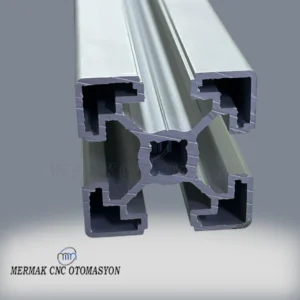 %35 Discount45x45 Sigma Profile 10 Channel Light TypeOriginal price was: 25.32$.16.55$Current price is: 16.55$.View
 %38 Discount90x135 Sigma Profile | 10 ChannelOriginal price was: 172.73$.106.51$Current price is: 106.51$.View
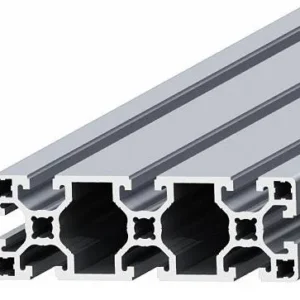 %38 Discount45x135 Sigma Profile 10 ChannelOriginal price was: 86.04$.53.05$Current price is: 53.05$.View

Reviews
There are no reviews yet.