
No products in the cart.
%53 Discount


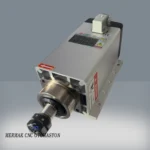
3.5 kW 18000 RPM Spindle Motor ER20
Original price was: 583.75$.271.51$Current price is: 271.51$.
High-performance electro-spindle for industrial automation and CNC machining centers, providing precise and stable rotation for cutting tools.
In stock
🔥 Special for Today Only %53 Discount Opportunity!📦 Category: GDZ Motors
Mermak assuranceFrom factory to end user · importer / main dealer · strong stock
ImporterMain dealer / distributorStrong stockGood priceCorporate invoice
In stock / available to order · 14-day return for standard unused products; conditions may vary for custom size/cut products.
The GDZ105X102-3.5 model 3.5 kW 18000 RPM ER20 Spindle Motor is an electro-spindle designed for industrial automation systems, particularly CNC machining centers, to provide high-precision and stable rotational movement for cutting tools. This motor operates on the principle of a three-phase asynchronous induction motor and can achieve variable speeds from 0 to 18000 RPM by being controlled via a frequency inverter (VFD) within a frequency range of 0 to 400 Hz. The 3.5 kW continuous power output provides the necessary torque for high material removal rates and deep cuts, especially in hard materials, while the high rotational speed offers a critical advantage in fine machining, engraving, and operations requiring high surface quality with small diameter tools. The integrated air-cooling system effectively dissipates heat generated in the motor’s stator windings and bearings, minimizing thermal expansion and ensuring operational stability even during prolonged, high-performance operation.
The mechanical structure of this spindle motor is optimized to withstand high radial and axial loads, built upon specially selected angular contact ball bearings. These bearings provide high rigidity and low runout through preloading, increasing machining accuracy and keeping vibration within operational limits. The motor housing is typically made from high-strength aluminum alloys to optimize heat dissipation and maintain structural integrity. The ER20 collet system offers a wide tool holding range (typically from 1 mm to 13 mm) and ensures the cutting tool is attached with optimal concentricity to the spindle axis through high clamping force. Its compact dimensions (105×102 mm) and relatively low weight of 9 kg allow for easy integration into various CNC machine gantry systems and bridge-type configurations. The standard operating voltage of 220V ensures direct compatibility with industrial electrical infrastructures, simplifying installation processes. This spindle motor can be used in a wide range of industrial applications, including metalworking, woodworking, plastics, and composite material processing, from mold making to prototyping, serial production to precision engraving.
Advantages of the 3.5 kW 18000 RPM Spindle Motor ER20
High Power and Speed Capacity: The 3.5 kW nominal power output allows the spindle motor to stably perform cutting operations requiring high torque across a wide range of materials, especially dense materials like steel, aluminum, and hardwoods. The maximum speed of up to 18000 RPM enables working with small diameter tools at high feed rates, minimizing surface roughness, and enhancing precision detail machining capabilities. This combination offers optimal performance for applications requiring both aggressive material removal and high surface quality, reducing cycle times and increasing production efficiency.
ER20 Collet System: The integrated ER20 collet system, designed according to DIN 6499 standard, allows for high-precision and secure clamping of cutting tools with cylindrical shanks ranging from 1 mm to 13 mm in diameter. This system ensures excellent concentricity and low runout (typically < 0.01 mm) by axially centering and radially clamping the tool shank through the collet’s conical structure and clamping nut. This feature extends tool life, improves machining accuracy, and maximizes operational flexibility by allowing the use of a wide variety of tools for different machining operations.
Air-Cooled Thermal Stability: The GDZ105X102-3.5 spindle motor features an effective air-cooling system through an integrated axial fan and optimized airflow channels. This system continuously dissipates the heat generated during operation in the motor’s stator windings and high-speed bearings. This effective thermal management prevents overheating, thus avoiding degradation of winding insulation, maintaining the viscosity of bearing lubrication, and minimizing dimensional changes due to thermal expansion. Consequently, the spindle motor maintains its nominal performance and accuracy even under prolonged and intensive operating conditions, extending its operational life and reducing maintenance needs.
Technical Specifications and Capacity
Feature
Value/Description
Model Number
GDZ105X102-3.5
Power Output
3.5 kW (3500 Watts) – Provides high torque and cutting force.
Operating Voltage
220V – Compatible with standard industrial single-phase or three-phase (with VFD) electrical infrastructure.
Frequency Range
0-400 Hz – Wide frequency range allows for precise control of rotational speed.
Rotational Speed
0-18000 RPM (Revolutions Per Minute) – Wide speed adjustment capability for different materials and machining types.
Cooling Type
Air-Cooled – Maintenance-free, simple, and effective thermal management.
Bearing Type
Angular Contact Ball Bearings – High-load capacity for radial and axial loads, durable, and precise bearings.
Collet Type
ER20 – Offers wide tool holding capacity (typically 1-13mm) and high clamping force.
Diameter x Length
105 mm x 102 mm – Compact and space-saving design.
Weight
9 kg – Optimized weight for easy mounting and integration.
Technical Frequently Asked Questions (FAQ)
What is the contribution of the angular contact ball bearings used in this spindle motor to machining accuracy and motor life?
The angular contact ball bearings in the GDZ105X102-3.5 spindle motor have a special design capable of carrying both radial and axial loads with high rigidity. These bearings are typically mounted in pairs or triplets with preloading. Preloading eliminates the clearance between the bearings, significantly increasing the static and dynamic rigidity of the spindle shaft, thereby minimizing deflections and vibrations caused by cutting forces. This ensures that runout values, which directly affect tool positioning accuracy and surface quality during machining, are kept low. Furthermore, high-quality bearing steels and precise manufacturing tolerances ensure low friction and heat generation even at high speeds, extending the overall operational life of the bearings and consequently the motor.
What does the 0-400 Hz frequency range mean for the spindle motor’s operational flexibility and material processing capabilities?
The 0-400 Hz frequency range of the spindle motor means that its rotational speed can be precisely adjusted over a wide spectrum via a frequency inverter (VFD). This broad frequency control allows for achieving optimal cutting speeds required for different materials (e.g., softwoods, aluminum, steel, composites) and different machining operations (roughing, finishing, engraving, drilling). At low frequencies (and thus low RPMs), roughing operations requiring high torque can be performed, while at high frequencies (and high RPMs), precision machining can be carried out with small diameter tools at high feed rates and with superior surface quality. This flexibility allows a single spindle motor to handle a wide variety of applications and enables fine-tuning of cutting parameters according to material properties to optimize tool life.
What is the thermal management strategy of the air-cooled system and its advantages over liquid-cooled systems?
The air-cooled thermal management strategy of the GDZ105X102-3.5 spindle motor relies on an integrated fan at the rear of the motor, which directs externally drawn air through channels around the motor housing and stator windings to dissipate heat. This system prevents overheating by transferring the heat generated within the motor’s internal components (windings, bearings) to the atmosphere. The main advantages of air cooling over liquid cooling include lower installation complexity, no need for an external pump, radiator, or coolant tank, thus requiring less maintenance and resulting in lower system weight. Additionally, the absence of coolant leakage risk provides a safer operating environment for electrical components. These features offer a cost-effective and reliable solution, especially for smaller and medium-sized CNC machines or in applications where ease of maintenance is a priority.
What critical parameters should be considered regarding dynamic loads and vibration when integrating this 3.5 kW ER20 spindle into an existing CNC machine frame?
When integrating this spindle motor into an existing CNC machine frame, several critical engineering parameters must be considered regarding dynamic loads and vibration management. Firstly, the spindle’s weight of 9 kg will affect the static and dynamic rigidity of the machine gantry or bridge structure; therefore, the mounting plate and supporting structures must have adequate strength and vibration damping capacity. Secondly, the spindle’s operation at high speeds (18000 RPM) increases the risk of centrifugal forces and resonance caused by tool and tool holder imbalance. Thus, high-precision balanced (G2.5 or better) cutting tools and ER20 collets are crucial for machining quality and bearing life. Thirdly, the spindle motor’s mounting interface must ensure perfect flatness and parallelism with the machine frame to minimize axial and radial runout, which is vital for maintaining machining accuracy. Finally, selecting appropriate vibration isolators or rigid mounting elements to reduce the transmission of cutting forces and vibrations to the machine structure will optimize overall system performance. Mermak, with 16 years of experience, supplies high-quality industrial automation parts from our Ankara Uzay Sanayi factory/warehouse to international markets including the United Kingdom, United States, Canada, Australia, Ireland, and New Zealand, as well as South Africa and similar countries. Our website stock quantities and prices are up-to-date. Stocked products are prepared from the warehouse without production waiting. We ensure careful packaging, invoice/document follow-up, and work with reliable logistics partners. The Mermak team monitors the shipment process, and product videos or factory viewings can be arranged via WhatsApp or other contact channels upon request.
| Collet Standard |
|---|
You must be logged in to post a review.
Taksit Tablosu
Related Products
 %53 Discount6 kW 18000 RPM Spindle Motor ER32Original price was: 835.30$.388.51$Current price is: 388.51$.View
 %39 Discount800W DC Spindle Motor with DriverOriginal price was: 115.80$.70.64$Current price is: 70.64$.View
 %53 Discount2.2 kW 24000 RPM Spindle Motor ER20 220VOriginal price was: 548.26$.255.00$Current price is: 255.00$.View
Reviews
There are no reviews yet.