
No products in the cart.
%38 Discount


22.5×180 Surface Coated Sigma Profile 10 Channels
Original price was: 105.96$.65.34$Current price is: 65.34$.
High-strength, modular aluminum profile for industrial automation and machine construction.
In stock
🔥 Special for Today Only %38 Discount Opportunity!📦 Category: 10 Channel Sigma Profiles🏷️ Dimensions: 22,5x180🏷️ Slot Size: 10 Slots🏷️ Profile Size: 22,5x180, 22.5x180
Mermak assuranceFrom factory to end user · importer / main dealer · strong stock
ImporterMain dealer / distributorStrong stockGood priceCorporate invoice
In stock / available to order · 14-day return for standard unused products; conditions may vary for custom size/cut products.
22.5×180 Surface Coated Sigma Profile 10 Channels
INDUSTRIAL AUTOMATION PARTS | SUPERIOR PERFORMANCE SERIES
Detailed Product Review
This surface-coated sigma profile, with its 22.5x180mm cross-section, functions as a structural element requiring high rigidity and modularity in industrial automation systems and machine construction. Its fundamental operating principle involves an extruded aluminum alloy profile, which, thanks to its T-slot geometry, allows for quick and precise assembly using various fasteners (T-nuts, corner connectors, plates) to create three-dimensional frames, supporting structures, or protective enclosures. The 10 integrated T-slots offer versatile connection points across the entire profile surface, providing flexibility in system design and enabling the easy integration of additional components such as sensors, actuators, cable channels, and panels. This large cross-section maximizes resistance to bending and torsion, especially in applications with long spans or high load-bearing requirements, thereby maintaining structural integrity.
The product’s material composition consists of a high-strength, lightweight aluminum alloy (typically EN AW-6063 T5), offering excellent machinability, corrosion resistance, and a high strength-to-weight ratio. The profile undergoes a post-production heat treatment (e.g., T5 tempering), which optimizes its mechanical properties, particularly yield and tensile strength, enhancing the profile’s structural performance. The surface coating, an anodizing (anodization) process, creates a controlled oxide layer on the aluminum surface, significantly improving its wear resistance, corrosion resistance, and dielectric properties, while also providing an aesthetic finish and reducing dirt adhesion. System integration of this profile is achieved through standard T-slot fasteners and accessories, allowing for rapid assembly and disassembly without the need for welding or specialized machining. Applications include precision machine frames, robotic work cells, test and measurement equipment, conveyor systems, cleanroom structures, safety barriers, and ergonomic workstations within industrial automation and production engineering.
Advantages of 22.5×180 Surface Coated Sigma Profile 10 Channels
High Structural Rigidity and Load-Bearing Capacity: The 22.5x180mm cross-sectional area of this profile contributes to superior resistance against bending and torsion, particularly in systems with long spans or subjected to dynamic loads. The substantial 180mm dimension significantly increases the moment of inertia, enabling the profile to support much higher static and dynamic loads without deformation relative to its own weight. This feature is critical in applications such as precision machine frames, heavy-duty conveyor systems, or automation equipment with high-speed moving parts, as it provides a stable platform with minimal deflection.
Enhanced Corrosion Resistance and Surface Hardness: The anodizing process on the profile creates a micron-level, dense, and homogeneous aluminum oxide (Al2O3) layer on the surface. This layer increases the profile’s resistance to chemical agents, moisture, and atmospheric corrosion, while also significantly enhancing surface hardness. Consequently, the profile’s resistance to scratches, abrasion, and impacts is improved, offering a durable and low-maintenance solution, especially in demanding industrial environments or cleanroom applications. The coating also provides electrical insulation properties, potentially enhancing overall system safety.
Superior Modularity and Reconfigurability: The 10 integrated T-slots provide numerous connection points around the entire profile, allowing engineers to easily design and assemble complex systems. This slot structure, via T-nuts and other standard fasteners, enables components to be added, removed, or repositioned at any point without requiring welding or special machining. This flexibility saves time and costs during prototyping, rapid adaptation of production lines, or upgrading existing systems. Furthermore, it allows for the concealment of cables and pneumatic lines within the profile, creating a neater and safer working environment.
Technical Specifications and Capacity
Feature Value/Description
Product Code 22.5×180 Surface Coated Sigma Profile 10 Channels
Cross-Section Dimensions 22.5 mm x 180 mm
Weight per Meter Average 4.13 Kg/Meter
Number and Type of Channels 10 T-Slot Channels
Material Industrial Aluminum Alloy (e.g., EN AW-6063 T5)
Surface Treatment Anodized Coating (Anodized)
Heat Treatment Applied (Mechanical properties optimized)
Standard Production Length 6 Meters
Minimum Sales Length 1 Meter
Product Barcode No 8692024003710
Technical Frequently Asked Questions (FAQ)
How does the cross-sectional geometry of this sigma profile, specifically the 22.5x180mm dimensions, impact its structural rigidity and load-bearing capacity?
The 22.5x180mm cross-sectional geometry directly influences the profile’s moment of inertia (I) and section modulus (Z), determining its structural rigidity and load-bearing capacity. The large 180mm dimension, in particular, significantly increases the moment of inertia (Ix) around this axis. This allows the profile to minimize deflection in situations with long spans or high bending moments. A high moment of inertia increases the profile’s resistance to bending, while torsional rigidity is optimized through the profile’s closed-cell structure and wall thicknesses. Consequently, this wide cross-section profile can support heavier static and dynamic loads compared to smaller profiles, enhances vibration damping capacity, and provides the high dimensional stability required for precision automation applications.
Through which engineering principles do anodizing and heat treatment improve the mechanical and environmental performance of this sigma profile?
Anodizing (anodization) creates a controlled aluminum oxide (Al2O3) layer on the aluminum surface through an electrochemical process. This layer is much thicker, harder, and less porous than the natural oxide layer, increasing the profile’s wear resistance and making it more durable against scratches. Furthermore, as Al2O3 is chemically inert, it significantly improves the profile’s corrosion resistance, ensuring longevity even in aggressive environments. Heat treatment (typically T5 tempering) enhances the aluminum alloy’s mechanical properties by altering its microstructure through precipitation hardening. This process increases the alloy’s yield and tensile strength, improves hardness, and extends fatigue life. The combination of these two treatments results in a profile optimized for both surface durability and internal structural strength, making it an engineering product with superior performance against demanding industrial conditions.
How does the 10-channel configuration support the integration flexibility and functional expandability of this profile in modular systems?
The 10-channel configuration provides standard T-slot connection points on all external and some internal surfaces, offering unparalleled modularity and integration flexibility. Each channel, using T-nuts and associated fasteners, allows for the independent or coordinated mounting of various components such as linear guides, panels, sensors, actuators, cable management systems, and safety barriers. This multi-channel design gives designers and engineers the ability to add, remove, or reposition components at any point according to the system’s functional requirements. This is a significant advantage, especially for rapid prototyping, frequent reconfiguration of production lines, or system upgrades. Additionally, routing cables and pneumatic lines through the internal channels of the profile ensures an aesthetically pleasing appearance while protecting the lines from external factors and contributing to a more organized system.
What are the primary engineering justifications for choosing this sigma profile in industrial automation applications, and in which types of loading scenarios does it offer advantages?
The primary engineering justifications for selecting the 22.5×180 surface-coated sigma profile in industrial automation include its high strength-to-weight ratio, corrosion resistance, modularity, and precision capabilities. Aluminum’s lightness reduces inertia in moving systems, while its heat-treated structure provides resistance to high static and dynamic loads. The anodized coating ensures long-term, maintenance-free use even in aggressive industrial environments. The modular T-slot system facilitates rapid assembly, disassembly, and reconfiguration of automation equipment, offering flexibility for engineering changes. This profile offers distinct advantages in loading scenarios such as high-precision robotic cells, optical and laser systems where vibration damping is crucial, conveyor and lifting systems carrying heavy workpieces, and test and prototyping platforms requiring frequent configuration changes. It also provides suitable surface properties for cleanroom applications.
| Dimensions | 22,5x180 |
|---|---|
| Slot Size | 10 Slots |
| Profile Size | 22,5x180, 22.5x180 |
You must be logged in to post a review.
Taksit Tablosu
Related Products
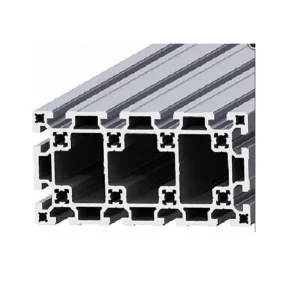 %42 Discount90x180 Sigma Profile 10 ChannelOriginal price was: 235.74$.136.66$Current price is: 136.66$.View
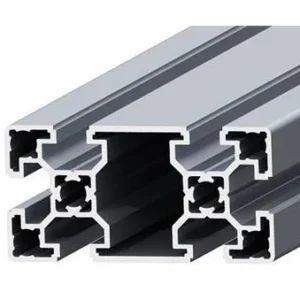 %35 Discount45x90 Sigma Profile 10 Channel Light DutyOriginal price was: 44.40$.29.02$Current price is: 29.02$.View
 %38 Discount40x40 Sigma Profile 10 Channel Heavy DutyOriginal price was: 30.30$.18.68$Current price is: 18.68$.View
Reviews
There are no reviews yet.