
No products in the cart.


19-22 Arel Hertz Spindle Collet Nut Wrench
2.29$
Specifically designed for precise tightening and loosening of collet nuts on CNC machine spindles.
In stock
📦 Category: Uncategorized
Mermak assuranceFrom factory to end user · importer / main dealer · strong stock
ImporterMain dealer / distributorStrong stockGood priceCorporate invoice
In stock / available to order · 14-day return for standard unused products; conditions may vary for custom size/cut products.
19-22 Arel Hertz Spindle Collet Nut Wrench
INDUSTRIAL AUTOMATION PARTS | SUPERIOR PERFORMANCE SERIES
Detailed Product Review
The 19-22 Arel Hertz Spindle Collet Nut Wrench is a specialized hand tool designed for the precise tightening and loosening of collet nuts on spindle motors used in CNC machining centers and automation systems. The primary function of this wrench is to ensure that the collet nuts, which secure the cutting tool to the spindle, are mounted or dismounted at the specified torque values and without compromising axial alignment. The rotational precision of the spindle motor and the runout of the cutting tool are directly dependent on the correct and even tightening of the collet nut. This wrench ensures a perfect fit to the external geometry of the nut, minimizing surface stresses and preserving the integrity of the connection between the nut and the spindle neck, thereby positively contributing to factors that directly impact machining quality and tool life.
The product is constructed from a high-strength industrial steel alloy, chosen to optimize the wrench’s resistance to deformation under high torque applications and its wear resistance during prolonged industrial use. The double-ended design of the wrench offers compatibility with two different collet nut sizes: 19 mm and 22 mm. These dimensions are standard for the ER16 and ER20 collet systems, particularly for Arel and Hertz spindle motors with power ratings ranging from 0.55 kW to 1.4 kW. In terms of system integration, this wrench creates a mechanical interface with the collet nuts of the specified spindle motors, enabling safe and efficient tool change processes. Its application areas span a wide range, from CNC routers and milling machines to engraving and carving machines, woodworking and metalworking workshops, and automation and robotics systems; in each, the correct installation of the spindle motor’s collet nut is critical for operational precision.
19-22 Arel Hertz Spindle Collet Nut Wrench Advantages
Wide-Spectrum Spindle Integration: This wrench is designed for direct compatibility with the 19 mm and 22 mm collet nuts of Arel and Hertz spindle motors in the 0.55 kW, 0.75 kW, 1 kW, and 1.4 kW power range. This broad compatibility simplifies equipment management and enhances operational flexibility by offering a single wrench solution for spindles of different power levels, especially in industrial environments using ER16 and ER20 collet systems. The specific dimensions of the wrench ensure a perfect match with the outer diameter and wrench jaw tolerances of the specified collet nuts, preventing nut deformation or wrench slippage that can occur with non-standard or incorrectly sized wrenches.
Optimized Torque Transfer and Nut Integrity: The precise fit of the wrench onto the collet nuts ensures that force is distributed evenly and controllably across the nut’s surface during tightening or loosening. This minimizes localized stress concentrations and subsequent deformation at the nut’s corners. Proper grip prevents the wrench from slipping off the nut, extending the life of both the nut and the wrench. Furthermore, maintaining the nut’s integrity is a critical factor that directly influences the correct seating of the collet in the spindle neck and the operation of the cutting tool with minimal runout, thereby improving machining accuracy and surface quality.
High-Strength Material Science and Deformation Resistance: The high-strength industrial steel alloy used in the product’s manufacturing ensures high tensile strength and hardness values. These properties allow the wrench to function without plastic deformation under repeated high-torque applications. The material’s wear resistance prevents the wrench jaws from rounding or deforming over time, ensuring a consistently full and secure grip on the nuts. This structural durability ensures that the wrench maintains its performance over a long service life and withstands the demanding conditions of industrial production environments.
Technical Specifications and Capacity
Feature
Value/Description
Wrench Type
Open-end Spanner Wrench
Compatible Jaw Sizes
19 mm / 22 mm (Double-ended)
Compatible Spindle Brands
Arel, Hertz
Compatible Spindle Power Range
0.55 kW, 0.75 kW, 1 kW, 1.4 kW
Compatible Collet Types
ER16, ER20
Material Quality
High Carbon Industrial Steel Alloy
Product Barcode Number
8692024002829
Technical Frequently Asked Questions (FAQ)
Why is using a specialized wrench for spindle collet nuts more critical than using a standard wrench?
Spindle collet nuts are critical components that ensure the high-precision seating of the cutting tool in the spindle. Using a standard wrench may not provide a perfect fit to the external geometry of the nut, which can lead to localized high stresses at the nut’s corners during tightening or loosening. These stresses can cause nut deformation, wrench slippage, and even damage the delicate gear structure in the spindle neck. A specially designed wrench applies even pressure to all contact surfaces of the nut, preventing deformation, ensuring optimal torque transfer, and helping to maintain the balance of axial load on the spindle bearings. This minimizes tool runout, preserves machining accuracy, and extends the life of both the nut and the spindle.
How does the high carbon steel alloy manufacturing of this wrench contribute to its operational life and wear resistance?
High carbon steel alloys are known for their high hardness and strength properties. This material choice allows the wrench to function without plastic deformation or permanent shape change under repeated high-torque applications. The carbon content increases the steel’s hardenability after heat treatment, significantly enhancing the wear resistance of the wrench jaws. Under the mechanical loads and friction conditions common in industrial environments, high wear resistance prevents the wrench jaws from rounding or deforming, ensuring a consistently full and secure grip on the nuts. This extends the wrench’s operational life and reduces maintenance costs in the long run.
What are the technical consequences of incorrect torque application on ER16/ER20 collet nuts, and how does this wrench minimize these risks?
Incorrect torque application on ER16/ER20 collet nuts can lead to serious technical consequences in both under-tightening and over-tightening scenarios. Under-tightening can cause the cutting tool to slip within the collet, increase tool runout, and generate vibrations during machining, leading to reduced surface quality and shorter tool life. Over-tightening can cause permanent deformation of the collet nut’s threads or the spindle neck, seize the collet, or even crack it. It can also impose excessive axial load on the spindle bearings, shortening their lifespan. This 19-22 Arel Hertz Spindle Collet Nut Wrench, with its precise fit to the nut geometry, ensures that the applied torque is uniformly distributed across the nut surface. This helps in more efficient and controlled transfer of the user’s applied force, minimizing the risks of incorrect torquing and preserving equipment integrity.
Is it technically feasible to use this wrench on spindle systems outside the specified Arel/Hertz 0.55 kW – 1.4 kW power range, and what factors should be considered?
The use of this wrench on spindle systems outside the specified Arel/Hertz 0.55 kW – 1.4 kW power range primarily depends on whether the collet nuts’ external dimensions precisely match the 19 mm or 22 mm wrench jaw sizes. The power range is generally related to the physical size of the spindle motor and, consequently, the standard dimensions of the collet nuts used. If collet nuts used in a different spindle brand or power range are of the ER16 or ER20 standard and have 19 mm or 22 mm wrench jaw dimensions, then mechanical compatibility is achieved. However, the torque values required for different spindle systems can vary. Users should refer to the torque specifications in the respective spindle motor’s user manual to ensure they remain within the wrench’s material strength limits and avoid damaging the nut and spindle neck. Even with dimensional compatibility, specific compatibility tests are recommended to guarantee the wrench’s performance in terms of material quality and torque resistance.
Mermak provides industrial automation solutions with 16 years of experience from our Ankara Uzay Sanayi factory/warehouse. Our website displays up-to-date stock quantities and prices. Stocked products are dispatched directly from our warehouse, eliminating production wait times. We ensure careful packaging, meticulous invoice and document handling, and utilize reliable logistics partners. The Mermak team actively monitors the shipment process. Upon request, product videos and factory tours can be arranged via WhatsApp or other contact channels. We proudly supply to the United Kingdom, United States, Canada, Australia, Ireland, New Zealand, South Africa, and similar countries and international markets.
You must be logged in to post a review.
Taksit Tablosu
Related Products
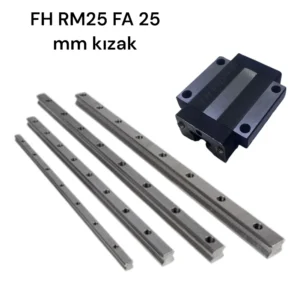 %10 DiscountFH RM20 FA 20 mm Linear Slide GuideOriginal price was: 21.83$.19.64$Current price is: 19.64$.View
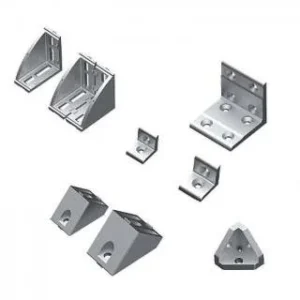 Corner Connector Long 30x60 K 080.86$View
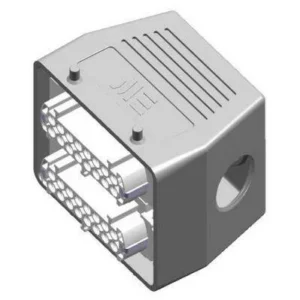 Extension Socket Side Entry SET20.36$View

Reviews
There are no reviews yet.