
No products in the cart.

Hex Head Flanged Nut Small M8 K8
0.11$
Industrial automation parts | Superior Performance Series
Out of stock
📦 Category: Uncategorized
Mermak assuranceFrom factory to end user · importer / main dealer · strong stock
ImporterMain dealer / distributorStrong stockGood priceCorporate invoice
Contact us for stock information · 14-day return for standard unused products; conditions may vary for custom size/cut products.
The Hex Head Flanged Nut Small M8 K8 is designed as a critical fastening element in industrial automation and precision machinery assembly. The integrated flange of this nut optimizes load distribution on the connection surface, ensuring that the tightening force is spread homogeneously over a wider area. This feature is engineered with principles to minimize connection loosening, especially in dynamic and vibrating operating environments. The M8 metric thread size ensures compliance with international standards, offering standard compatibility across a wide range of industrial applications. The K8 strength class provides exceptional resistance to high tensile and shear loads, guaranteeing the structural integrity and long-term reliability of the connection even under demanding operational conditions. The hex head design reduces localized stress concentrations on the connection surface during tightening, lowering the risk of material deformation and also eliminating sharp edge risks for operator safety, in addition to providing an aesthetic finish.
This nut is manufactured from high-strength carbon steel, and its surface is treated with electrolytic zinc plating, offering superior corrosion resistance against environmental factors. The integrated flange and hex head design eliminate the need for manually placing an additional washer during assembly, significantly reducing assembly time and labor costs. This integrated design simplifies part management on the assembly line, lowers error rates caused by incorrect part usage, and enhances the overall quality of the final product. Manufactured to Mermak CNC’s rigorous production standards, this nut offers an ideal solution for industrial automation and general machinery manufacturing applications requiring high performance and reliability, particularly in robotic systems, automated conveyor lines, CNC machining centers, textile machinery, and packaging machinery.
Advantages of the Hex Head Flanged Nut Small M8 K8
Integrated Flange Design: The integrated flange of this nut ensures that the tightening force applied at the connection point is distributed homogeneously over a wider surface area. This minimizes the risk of the fastener embedding itself, especially on soft or sensitive surfaces, while also increasing the coefficient of friction between the fastener and the surface, creating an additional resistance mechanism against vibration-induced loosening. The elimination of the need for a separate washer shortens assembly time, simplifies parts inventory management, and reduces the possibility of human error on the assembly line, thereby increasing overall production efficiency. Furthermore, the flange being integral to the nut eliminates issues such as the washer falling off or being incorrectly positioned during assembly.
Hex Head Structure: The hex head design minimizes stress concentrations and localized deformations that may occur on the connection surface during nut tightening. This structure ensures a more even distribution of tightening torque, reducing the risk of scratches or damage, especially on painted or coated surfaces. In addition to providing an aesthetic finish, this head structure contributes to workplace safety by reducing the risk of entanglement for operators or moving parts due to the absence of protruding edges. Moreover, the aerodynamic profile of the hex head reduces dust and dirt accumulation, offering ease of cleaning and maintenance.
High Strength K8 Quality: The K8 strength class indicates that this nut possesses specific mechanical properties and is typically designed for compatibility with 8.8 strength class bolts. This means the nut has high tensile strength and yield strength values. K8 quality allows the nut to provide a reliable connection without deforming or stripping threads even at high torque values. This high strength is critical for maintaining connection integrity, especially in systems operating under heavy loads or subjected to continuous dynamic stresses. The use of heat-treated carbon steel for the material reinforces these strength properties and supports the product’s long-lasting, reliable operational performance.
Technical Specifications and Capacity
Thread Diameter
M8 (Metric 8 mm)
Thread Pitch
1.25 mm (Standard Coarse Thread)
Material
Carbon Steel (High strength)
Surface Treatment
Zinc Plating (Electrolytic, for corrosion resistance)
Head Type
Hex Head (Integrated Flange, Flanged)
Strength Class
K8 (High performance, compatible with equivalent 8.8 class bolt)
Wrench Size
13 mm (Standard metric wrench compatibility)
Technical Frequently Asked Questions (FAQ)
What mechanical properties and performance limits does the K8 strength class indicate for this nut?
The K8 strength class indicates that the Hex Head Flanged Nut Small M8 meets a specific set of mechanical performance criteria. This classification typically defines critical values such as the nut’s minimum proof load and stripping strength. K8 class nuts are generally designed to be fully compatible with 8.8 strength class bolts. This compatibility ensures that the bolt-nut combination will not strip or deform the nut’s threads before the bolt reaches its yield strength. Technically, a K8 class nut exhibits high resistance against thread stripping or deformation when tightened to a specific torque and operated under nominal load. This signifies the nut’s capacity to maintain connection integrity even in high-stress applications and under dynamic loads.
How does the integrated flange design provide superior resistance to connection loosening compared to a standard nut through specific technical mechanisms?
The integrated flange design offers advantages over a standard nut in preventing connection loosening through several technical mechanisms. Firstly, the enlarged flange surface allows the tightening force to be distributed over a wider area, reducing stresses and embedding on the connected material’s surface. This lowers the contact pressure between the fastener and the surface, thereby minimizing material creep effects that could lead to loosening over time. Secondly, the flange being integral to the nut prevents misalignment or dropping of the washer during assembly, ensuring the connection is always established with optimal surface contact. Thirdly, the increased contact area enhances frictional force, providing additional resistance against self-loosening of the nut, especially in vibrating environments. The combination of these mechanisms increases the long-term stability and reliability of the connection.
How does zinc plating affect the service life and performance of this nut in industrial environments?
Zinc plating significantly enhances the service life and performance of the Hex Head Flanged Nut Small M8 K8 in industrial environments. Zinc acts as a barrier on the carbon steel surface, protecting the nut from direct environmental factors, particularly moisture and oxygen. Furthermore, zinc works on the principle of galvanic corrosion, being more active than steel; even if the coating is damaged, zinc sacrifices itself to protect the steel (cathodic protection). This property prevents the nut from rusting and losing its strength due to corrosion. It also provides resistance against corrosive agents commonly found in industrial environments, such as chemical vapors, acidic, or alkaline substances. Preventing corrosion ensures that the threads do not wear or seize, allowing the nut to be disassembled and reassembled.
You must be logged in to post a review.
Taksit Tablosu
Related Products
 Sigma SCG009230 4kW 9A 230VAC 1NO-1NC Contactor12.64$View
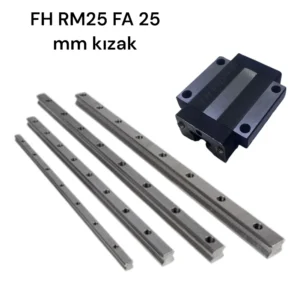 %10 DiscountFH RM20 FA 20 mm Linear Slide GuideOriginal price was: 21.83$.19.64$Current price is: 19.64$.View
 16/25A 380V FLAT STRAIGHT PLUG2.10$View
Reviews
There are no reviews yet.