
No products in the cart.


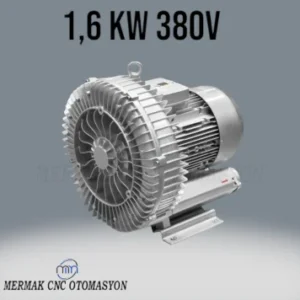
1.3 kW Blower Motor Vacuum Pump 145 m³/h
355.97$
In stock
📦 Category: 145 m³/h Vacuum Pump Varieties🏷️ Operating Voltage: 380V🏷️ Flow Rate: 145 m3/h🏷️ Power: 1.3 kW
Mermak assuranceFrom factory to end user · importer / main dealer · strong stock
ImporterMain dealer / distributorStrong stockGood priceCorporate invoice
In stock / available to order · 14-day return for standard unused products; conditions may vary for custom size/cut products.
1.3 kW Blower Motor Vacuum Pump 145 m³/h
INDUSTRIAL AUTOMATION PARTS | SUPERIOR PERFORMANCE SERIES
Detailed Product Review
This Blower Motor Vacuum Pump is a professional side channel (ring blower) model designed for industrial vacuum and low-pressure air circulation applications, featuring a 1.3 kW motor power. Its primary function is to create a stable vacuum environment for CNC router vacuum tables, industrial clamping systems, and processes requiring continuous negative pressure. The operating principle relies on the rotor’s rotation, which moves air molecules in a spiral path along side channels, compressing them progressively with each rotor blade passage. This dynamic compression process, optimized by the rotor-stator geometry achieved through CNC machining to ensure turbulence-free airflow, results in a stable air flow rate of 145 m³/h. This structural optimization minimizes the impact of chips, surface gaps, and minor leaks in the system on the overall vacuum performance, thereby enhancing workpiece holding precision and process continuity, especially during CNC cutting operations.
The pump’s body is constructed from die-cast aluminum, known for its high thermal conductivity and mechanical durability. This material choice facilitates rapid heat transfer from the motor windings and the air compression process to the environment via large-surface integrated cooling channels. This thermal management capability allows the pump to maintain optimal temperature balance even during prolonged and continuous operation, extending the lifespan of the motor and the overall system. Due to its contactless operating principle and sealed, high-speed resistant bearing design, it requires no lubrication, unlike traditional vane or oil-lubricated vacuum pumps. This significantly reduces maintenance needs and ensures clean, oil-free air discharge into the process environment. Operating on a 380V three-phase power supply, it integrates easily with the power infrastructure typically available in industrial settings, offering high-efficiency energy use and requiring no additional modifications. These features make it a reliable and cost-effective solution for a wide range of industrial applications, including medium to large-sized CNC router machines, laser and plasma cutting fume extraction systems, panel clamping in furniture manufacturing, product handling in packaging machines, and low-to-medium pressure air circulation in pneumatic conveying lines.
Advantages of the 1.3 kW 145 m³/h Blower Motor Vacuum Pump
High Efficiency and Stable Airflow: This side channel blower provides a stable airflow rate of 145 m³/h, exhibiting superior vacuum performance even in demanding CNC cutting operations where chips and system leaks are present. The optimized geometric tolerances between the rotor and stator, along with the multi-stage air compression principle, offer reliable and uniform holding capacity on the vacuum table, minimizing workpiece slippage and increasing machining accuracy. This continuous and strong airflow is a critical technical parameter directly impacting the continuity and efficiency of production processes.
Thermally Managed and Durable Construction: The pump body is manufactured from high-temperature resistant die-cast aluminum. This material choice enhances mechanical strength and offers excellent heat dissipation properties. Integrated large-surface cooling channels effectively distribute thermal energy generated in the motor windings and the air compression chamber, ensuring the motor and bearings operate at optimal temperatures even under prolonged high load. This advanced thermal management system prevents overheating of components, significantly extending the operational life of the motor and the overall pump, and reducing the risk of failure.
Oil-Free, Contactless, and Low Maintenance: The Blower Motor Vacuum Pump operates on a contactless principle, meaning there is no physical contact between the rotor and the stator. This design eliminates wear and heat generation caused by friction. Furthermore, the sealed, high-speed resistant bearings used are lifetime lubricated and do not require an external lubrication system or periodic oil changes. These features significantly reduce operating costs compared to traditional oil-lubricated vacuum pumps, extend maintenance intervals, and guarantee maximum uptime. Contactless operation also ensures that the air discharged from the pump is free of oil particles, providing clean air output for sensitive industrial applications.
Technical Specifications and Capacity
SpecificationValue/Description
Motor Power1.3 kW (1300 Watts)
Maximum Airflow Rate145 m³/h
Operating Voltage380V Three-Phase
Body MaterialHeat-Resistant Die-Cast Aluminum
Operating PrincipleSide Channel (Ring Blower), Contactless
Maintenance RequirementOil-Free, Extremely Low
Technical Frequently Asked Questions (FAQ)
What are the advantages of side channel blowers over other vacuum pump types, especially in demanding industrial environments with chips and surface leaks?
Side channel blowers offer higher tolerance to solid particles compared to rotary vane or piston vacuum pumps due to their contactless operating principle. The absence of physical contact between the rotor and stator minimizes the risk of damage to the internal mechanism from chips, dust, or small particles. Additionally, the side channel design, which compresses air in a spiral path, tends to maintain a stable vacuum level even with minor surface leaks in the system. This prevents localized leaks, caused by surface irregularities or gaps during cutting on CNC vacuum tables or similar industrial clamping applications, from significantly reducing the overall vacuum performance. Consequently, they provide more reliable holding and longer operational capability with less maintenance.
What are the electrical and control infrastructure requirements for integrating this 380V three-phase blower motor into an industrial system?
For integrating this 380V three-phase blower motor into an industrial system, the existing electrical infrastructure must first have adequate current-carrying capacity for the motor’s 1.3 kW power. Wiring should be sized according to the motor’s nominal current, and protection against overcurrent (thermal magnetic breaker or motor protection switch) and phase loss is recommended. The phase sequence must be connected correctly for three-phase motors; otherwise, the motor may rotate in the reverse direction, leading to performance loss or damage. The method of motor startup (direct, star-delta) should be determined considering the system’s overall energy consumption and the impact of sudden load on the grid. Additionally, appropriate contactors and, if necessary, control signal infrastructure for integration with a PLC or automation system should be planned to monitor and control the motor’s operation. Using suitable mounting elements for vibration isolation is also important for the longevity of electrical connections and the mechanical structure.
Is the blower’s maximum airflow rate of 145 m³/h achieved at a specific vacuum level, or is it a free flow rate? How should the relationship between operating vacuum and airflow be interpreted?
The 145 m³/h value typically represents the blower’s free air delivery (FAD) rate, meaning its maximum air-carrying capacity against atmospheric pressure with no resistance or vacuum in the suction line. A blower’s performance characteristic is defined by a curve showing that the airflow rate decreases as the vacuum level in the suction line increases (i.e., as pressure drops). This curve indicates that the airflow approaches zero at the blower’s maximum vacuum (closed line vacuum) and reaches its maximum at the free flow point where the vacuum is zero (atmospheric pressure). Therefore, the 145 m³/h flow rate represents the maximum volumetric flow the blower can provide under the least resistance conditions. In industrial applications, when a specific vacuum level (e.g., -150 mbar) is required, the actual airflow rate provided by the blower is determined from this performance curve. System design must ensure that the required vacuum level and the airflow needed at that level are compatible with the blower’s performance curve.
How do the blower’s contactless operating principle and sealed bearing design technically contribute to its long service life and low maintenance requirements?
The contactless operating principle means the blower’s rotor spins without physical friction against the stator. This eliminates mechanical contact, a primary source of wear and tear, significantly extending the life of moving parts. The absence of friction also minimizes heat generation, reducing thermal stress on the motor and other components. Sealed bearings are filled with specially selected high-performance grease during manufacturing and are completely isolated from the external environment. This isolation prevents dust, moisture, and other contaminants from entering the bearings, thus preventing the internal lubricant from becoming dirty or degrading. This ensures that the bearings operate smoothly even at high speeds without requiring lifetime lubrication. Combined, these two technical features enhance the resistance of the blower’s mechanical components to wear and corrosion, eliminate the need for periodic lubrication or part replacement, and consequently increase the product’s total service life while significantly reducing operating costs and maintenance downtime.
| Operating Voltage | 380V |
|---|---|
| Flow Rate | 145 m3/h |
| Power | 1.3 kW |
You must be logged in to post a review.


Reviews
There are no reviews yet.