
No products in the cart.


Vacuum Pump Filter 2.5 Inch
92.70$
Out of stock
📦 Category: 380V Vacuum Pumps
Mermak assuranceFrom factory to end user · importer / main dealer · strong stock
ImporterMain dealer / distributorStrong stockGood priceCorporate invoice
Contact us for stock information · 14-day return for standard unused products; conditions may vary for custom size/cut products.
Vacuum Pump Filter 2.5 Inch
INDUSTRIAL AUTOMATION PARTS | SUPERIOR PERFORMANCE SERIES
Detailed Product Review
In industrial automation systems, vacuum pumps and blowers function as critical components of production processes. Maintaining the nominal performance of this equipment and maximizing its operational lifespan depends on effectively preventing particle contamination in the suction line. The Vacuum Pump Filter 2.5 Inch is a high-performance inline filter designed to meet this engineering requirement, integrated into the suction line. It prevents shavings, dust, fine particles, fibers, and other solid contaminants generated in production environments from reaching the sensitive internal components of the vacuum pump or blower, such as rotors, stators, valves, bearings, and seals. This filtration mechanism prevents the formation of abrasive deposits on the internal surfaces of the equipment, minimizing mechanical wear, imbalance issues, and valve blockages. Consequently, the system’s nominal vacuum capacity is maintained, energy efficiency is sustained, and unplanned downtime is drastically reduced.
This filter offers broad compatibility with industrial vacuum pumps and side-channel blower systems, featuring a standard 2.5-inch connection diameter. The connection interface is typically designed to comply with NPT (National Pipe Taper) or similar industrial pipe standards, eliminating the need for adapters and ensuring quick and secure integration. The filter housing is constructed from high-strength metal alloys or thick-walled, pressure-resistant engineering thermoplastics to ensure durability under harsh industrial conditions. The replaceable cartridge-type filter element inside is made from synthetic fibers or special paper-based materials with high gravimetric dust-holding capacity. This element is aerodynamically optimized to create minimal pressure loss against airflow, thus acting as an effective barrier against contaminants while preserving the vacuum system’s nominal suction power. It provides a critical layer of protection, especially in areas with high particle density such as CNC router vacuum tables, pneumatic conveying systems, thermoforming machines, and general industrial vacuum applications. Regular maintenance and filter element replacement ensure the device operates at peak efficiency continuously.
Advantages of the Vacuum Pump Filter 2.5 Inch
Broad Industrial Compatibility and Modular Integration: The 2.5-inch nominal connection diameter is designed in accordance with international industrial pipe standards (e.g., NPT or BSPT), offering direct and seamless integration with a wide variety of side-channel blowers, Roots blowers, rotary vane vacuum pumps, and liquid ring vacuum pumps available on the market. This standardized interface simplifies installation processes, eliminates the need for additional adapters or special fittings, and allows for quick and cost-effective adaptation to existing industrial vacuum infrastructures. Its modular design provides flexibility in system configurations, adapting to different application requirements.
Superior Micron-Level Particle Filtration: The specially developed high-efficiency filter element effectively captures micron-level fine shavings, dust, fibers, granules, and other solid particles with high gravimetric efficiency. This filtration capability prevents abrasive and clogging contaminants in the airflow from reaching the sensitive moving and sealing components of the vacuum pump, such as rotors, stators, valve mechanisms, bearings, and seals. Critical failure modes caused by particles, such as surface wear, mechanical jamming, imbalance issues, and degradation of sealing elements, are minimized, thereby preserving the operational reliability and performance of the equipment. This reduces the total cost of ownership (TCO) by minimizing costs associated with expensive repairs, spare parts, and production downtime, and significantly extends the operational life of the equipment, optimizing the return on investment and ensuring production continuity.
Comprehensive Protection Extending Critical Equipment Lifespan: Particles accumulating in the internal workings of expensive industrial automation equipment like vacuum pumps and blowers can lead to significant performance degradation, overheating due to increased friction, and ultimately mechanical failure over time. By protecting critical components from such contamination, this filter prevents premature wear cycles and significantly reduces the likelihood of unplanned equipment failures. This minimizes costs associated with expensive repairs, spare parts procurement, and production downtime, thereby reducing the total cost of ownership (TCO) and significantly extending the operational lifespan of the equipment, optimizing the return on investment and ensuring production continuity.
Technical Specifications and Capacity
Feature Value/Description
Product Code VAK-FLT-2.5IN
Connection Diameter 2.5 Inch (DN65 nominal diameter, NPT or similar industrial standard)
Filtration Principle Mechanical Particle Filtration (Suction Line Protection)
Compatible Fluid Industrial Air and Gases (Dry, containing particles)
Housing Material High-Strength Metal Alloy or Industrial Grade Thermoplastic
Filter Element Type Replaceable Cartridge / Pleated Synthetic Fiber or Special Paper
Protection Level Against Micron-Level Dust, Shavings, Fibers, and Coarse Contaminants
Pressure Drop Optimized Low Level (< 50 mbar @ nominal flow)
Mounting Method Direct Integration into Vacuum Pump / Blower Suction Line
Maintenance Ease Quick Filter Element Replacement with No or Minimal Tools
Technical Frequently Asked Questions (FAQ)
How does the filter’s pressure drop affect the vacuum pump’s nominal performance and energy efficiency?
The Vacuum Pump Filter 2.5 Inch creates a certain resistance to airflow when integrated into the suction line, causing a pressure drop. This pressure drop depends on the filter’s design, the porosity of the filter element, its surface area, and the airflow rate. An optimized filter design aims to provide minimal pressure loss while maintaining particle capture efficiency. A high pressure drop leads to a lower absolute pressure at the vacuum pump’s inlet, which reduces the pump’s nominal suction capacity and causes it to consume more energy to reach the desired vacuum level. This can result in the pump running for longer periods or at higher speeds, increasing energy costs and placing additional stress on the pump’s mechanical components. This filter, thanks to its aerodynamically optimized internal structure and high-permeability filter element, typically offers a pressure drop below 50 mbar under nominal flow conditions, maximizing system efficiency and optimizing energy consumption.
What is the replacement frequency of the filter element, and what technical indicators should be used to determine this?
The replacement frequency of the filter element varies depending on the application’s particle load, operating hours, and environmental conditions. As a general rule, regular visual inspection of the filter element and monitoring the differential pressure in the system are crucial. Visible accumulation of dirt or discoloration on the filter element surface is an indicator that replacement time is approaching. A more technical approach involves using a manometer or pressure sensor to measure the difference between the filter’s inlet and outlet pressures (differential pressure). When the maximum allowable differential pressure value specified by the manufacturer (e.g., 100-150 mbar) is reached, it indicates that the filter element is saturated and needs replacement. Exceeding this value leads to excessive pressure drop in the system, strain on the vacuum pump, a decrease in suction capacity, and increased energy consumption. Periodic maintenance programs may also recommend replacement based on specific operating hours or calendar intervals for applications with low particle loads.
Is this filter designed solely for dry particle filtration, or is it also suitable for humid or chemically aggressive environments?
The Vacuum Pump Filter 2.5 Inch is primarily designed for dry particle filtration, suitable for “Industrial Air and Gases (Containing Particles)”. The filter element material and housing construction are typically selected to efficiently capture dry dust, shavings, fibers, and granules. If used in humid environments or with gas flows having high relative humidity, issues such as filter element wetting, reduced particle capture capacity, filter medium clogging, or microbial growth may occur. For environments containing chemically aggressive gases or vapors, a detailed examination of the chemical compatibility of the filter housing and sealing elements (metal alloy, thermoplastic, O-rings) is necessary. The standard product does not provide special resistance to such aggressive chemicals. For such specialized applications, specific filter solutions with chemically resistant filter elements and housing materials (e.g., stainless steel, PTFE-coated elements) should be considered.
What design principles allow this filter to simultaneously achieve “superior particle filtration” and “minimal pressure loss”?
The ability of this filter to simultaneously achieve superior particle filtration and minimal pressure loss is achieved through the combination of multiple engineering principles. Firstly, the design of the filter element is critical. Typically, pleated synthetic fiber or specially treated paper media with a high surface area are used. This pleated structure maximizes the total surface area of the filter medium, allowing airflow to spread over a larger area, thus reducing the flow rate per unit area. Low flow rate allows particles to be captured more effectively by the filter medium while minimizing flow resistance (pressure loss). Secondly, the aerodynamic design of the filter housing minimizes airflow turbulence and eliminates sharp turns, reducing flow losses. Large internal diameters and smooth surfaces reduce frictional resistance. Thirdly, the pore size distribution of the filter medium is optimized to effectively capture particles within a specific micron range while avoiding unnecessary resistance to airflow. These three fundamental design principles ensure that the filter not only captures particles with high efficiency but also preserves the energy efficiency of the vacuum system.
Mermak has 16 years of experience in industrial automation. Our products are stocked and prepared from our Ankara Uzay Sanayi factory/warehouse. Website stock quantities and prices are up-to-date. Stocked products are dispatched without production waiting. We ensure careful packaging, meticulous invoice and document follow-up, and utilize reliable logistics partners. The Mermak team closely monitors the shipment process. Upon request, product videos and factory tours can be arranged via WhatsApp or other contact channels. We proudly supply to countries including the United Kingdom, United States, Canada, Australia, Ireland, and New Zealand, as well as similar countries and international markets.
| Operating Voltage | |
|---|---|
| Power |
You must be logged in to post a review.
Taksit Tablosu
Related Products
 Blower Motor Vacuum Pump 4 kW 318 m³/h650.14$View
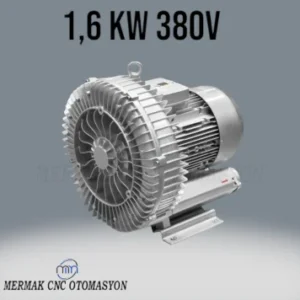 Blower Motor Vacuum Pump 1.6 kW 210 m³/h437.17$View
 %45 Discount2.2 kW 270 m³/h Blower Vacuum Pump MotorOriginal price was: 598.75$.328.70$Current price is: 328.70$.View
Reviews
There are no reviews yet.