No products in the cart.
Why Does the Vacuum on a CNC Router Machine Lose Suction Later On?

Contents
Mermak CNC Technical Guide
Practical notes for CNC router, automation and industrial motion systems.
The main reasons for the vacuum on a CNC router machine losing suction over time include wear on the vacuum pump, clogged filters, leakage in hoses and connections, aging or damaged vacuum table gaskets, and workpiece incompatibility. These issues reduce the system’s overall performance and negatively impact machining quality.
Why Does the Vacuum on a CNC Router Machine Weaken Over Time? What Causes It?
CNC router machines, an indispensable part of industrial automation and precision manufacturing, rely on a powerful vacuum system to hold workpieces securely in place during machining. This vacuum system prevents the material from shifting during cutting, engraving, or drilling operations, thereby increasing machining precision and ensuring operator safety. However, over time or under certain conditions, a decline in this critical vacuum force can lead to a drop in production quality, material waste, and even machine downtime. Weak vacuum suction typically results from a combination of technical malfunctions, lack of maintenance, or operational errors. Understanding the underlying causes of this issue and developing effective solutions is critical to the efficiency and lifespan of CNC router machines. Weak vacuum not only causes the workpiece to shift but can also shorten the life of the cutting tool and place unnecessary strain on the machine.
Operating Principle and Technical Data
CNC router vacuum systems typically consist of a vacuum pump, a vacuum table (machining table), connecting hoses, filters, and control valves. The operating principle is quite simple: The vacuum pump creates negative pressure (vacuum) by drawing air through pores or special channels in the table. This negative pressure firmly presses the workpiece against the vacuum table, securing it in place. Any leak, blockage, or drop in pump performance within the system leads to a decrease in this negative pressure and, consequently, a weakening of the vacuum force.
Vacuum pumps are the heart of the system, and there are various types: Rotary Vane Pumps, which are typically oil-lubricated or dry-running and provide high vacuum levels; Liquid Ring Pumps, which are suitable for dirty and humid environments; Claw Pumps, which are long-lasting due to their dry, contact-free operation; and Regenerative Blowers, which are preferred in applications requiring lower vacuum but high flow rates. Each pump type has its own unique advantages and disadvantages, and the selection is typically based on the vacuum level, flow rate, ease of maintenance, and cost factors required by the application.
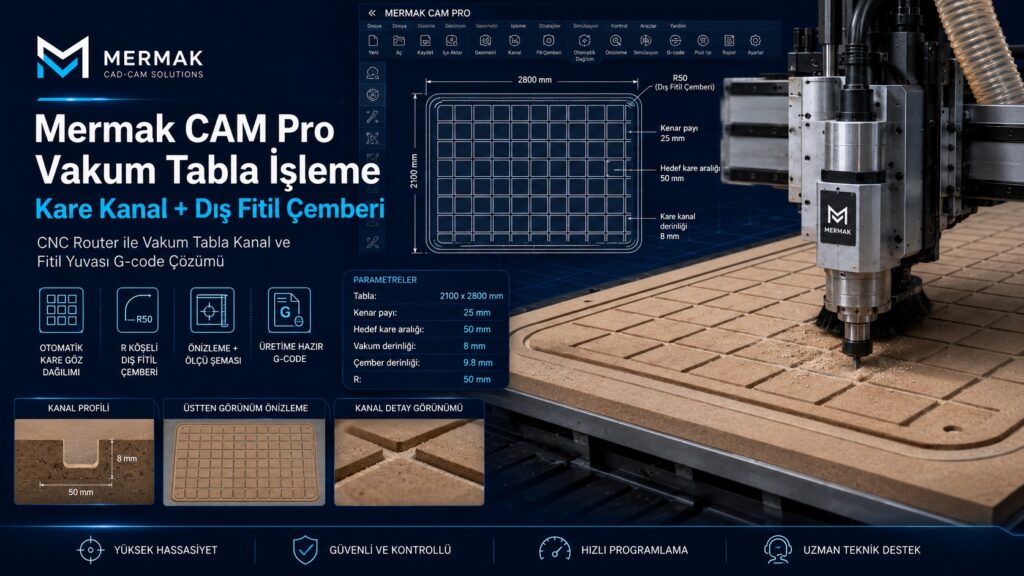
The vacuum table is the surface with which the workpiece comes into direct contact. These tables are typically made of aluminum or phenolic resin and feature special channels or holes that facilitate airflow. The manifold system beneath the table distributes the negative pressure from the vacuum pump to these channels. Securing the workpiece depends on creating an airtight seal between the table’s surface and the workpiece. This seal is typically achieved using rubber or silicone gaskets. Depending on the workpiece’s size and shape, different vacuum zones can be created, ensuring that vacuum is applied only where necessary and thereby increasing the system’s efficiency.
Technically, the performance of a vacuum system is measured by the following parameters:
- Vacuum Pressure (Ultimate Vacuum): The lowest absolute pressure value the pump can achieve, typically expressed in mbar or Torr. In CNC router applications, a vacuum level of around -800 mbar (-0.8 bar) is generally targeted.
- Flow Rate (Pumping Speed): The volume of air the pump extracts per unit of time, expressed in m³/hour or CFM. This value is critical for ensuring sufficient airflow based on the workpiece’s surface area and potential leakage rates.
- Motor Power: The power of the electric motor driving the vacuum pump is typically specified in kW and provides information about the system’s overall energy consumption.
- Filtration Capacity: This indicates how effectively the filters in the system can trap chips, dust, and other particles. Filters are vital for protecting the pump and ensuring the system’s longevity.
A decline or malfunction in any of these parameters can result in weak vacuum suction. In particular, clogged filters cause the pump to consume more power and overheat, while leaks in the sealing elements prevent the system from reaching the desired vacuum level.
| Parameter | Value/Description |
|---|---|
| Target Vacuum Pressure | Typically -800 mbar (-0.8 bar) and above |
| Vacuum Pump Flow Rate Range | 250–500 m³/h (Varies depending on the application and pump type) |
| Motor Power (Typical) | 5.5 kW – 22 kW (Depending on system size and pump type) |
| Filter Type | Paper cartridge, polyester, or cyclonic pre-filters |
| Seal Material | EPDM, silicone, neoprene, or Viton seals |
| Pump Oil Change Interval | 1,000–2,000 operating hours (for oil-lubricated pumps) |
| Filter Cleaning/Replacement Interval | 250–500 operating hours (Varies depending on environmental conditions) |
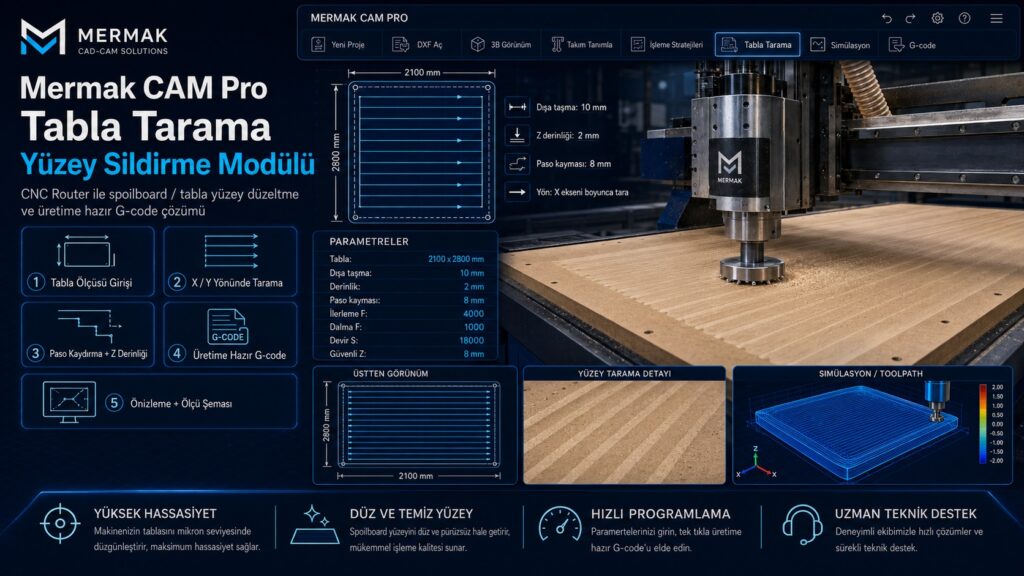
Field Maintenance Considerations
-
Regular and Comprehensive Maintenance Program:
Regular maintenance is critical for the long-term and efficient operation of the vacuum system. This should not be limited to just cleaning or replacing filters. Vacuum pump oil levels and quality
(for oil-lubricated pumps) must be checked periodically and changed as necessary. The pump’s air inlet and outlet vents, as well as cooling channels, must be kept free of dust and dirt. Hoses and fittings should be inspected regularly for cracks, holes, or loose connections. It is important to remember that even a small leak can significantly reduce the system’s overall vacuum performance. -
Proper Selection and Management of Sealing Materials:
Vacuum table gaskets are one of the most critical components ensuring airtightness between the workpiece and the table. The material of these gaskets must be resistant to operating temperatures, chemical exposure, and wear. Materials such as EPDM, silicone, or neoprene
are commonly used. Over time, gaskets can harden, crack, or deform, leading to vacuum leaks. Therefore, it is essential to periodically inspect, clean, and replace the gaskets as needed. Additionally, selecting gaskets of the appropriate thickness and width for the workpiece is important. Gaskets that are too thin or worn out cannot provide adequate sealing. -
Workpiece Preparation and Proper Placement:
The surface quality and smoothness of the material to be processed directly affect the effectiveness of the vacuum. Workpieces with rough, warped
, or porous surfaces
may cause air leaks because they cannot make full contact with the vacuum table. For such materials, additional sealing measures (e.g., special vacuum films or extra gaskets) or different clamping methods should be considered. Additionally, placing the workpiece correctly and evenly on the vacuum table ensures that the entire surface is exposed to equal vacuum pressure. If the workpiece extends beyond the vacuum area or if multiple workpieces are positioned incorrectly, this can also lead to vacuum leaks. -
Vacuum Table Surface Condition:
A smooth and undamaged vacuum table surface is essential for effective sealing. Scratches, dents, or deformations on the table caused by wear over time or improper use can result in air leaks. Such damage may require the table’s surface to be ground down to correct it
or repaired.
Common Problems and Solutions
There are many common issues that cause weak suction in vacuum systems. Correctly diagnosing and quickly resolving these issues is critical for production continuity.
-
Filter Clogging:
This is one of the most common causes. Wood shavings, dust, wood chips, or other machining debris clog the filters at the vacuum pump’s inlet, restricting airflow.
Solution:
Check, clean, or replace the filters regularly. Adjust the filter cleaning/replacement frequency based on the material being processed. In some systems, using a pre-filter or cyclonic separator extends the life of the main filter. -
Vacuum Pump Wear or Failure:
Wear on the vanes inside the pump (for rotary vane pumps), aging seals, or a loss of motor performance can prevent the pump from generating sufficient vacuum. In oil-sealed pumps, dirty or low oil levels also reduce performance.
Solution:
Check and change the pump oil regularly. If there are abnormal noises, excessive heating, or vibration in the pump, contact an authorized service center. If necessary, the pump should be overhauled or replaced. -
Vacuum Leaks:
Loose, cracked, or punctured hose and pipe connections, worn or damaged vacuum table gaskets, or insufficient contact between the workpiece and the table can cause vacuum leaks.
Solution:
Carefully inspect all hoses, fittings, and gaskets. Replace any damaged hoses or gaskets. Tighten any loose connections. When positioning the workpiece, ensure the gaskets are seated properly. Soapy water or vacuum leak detectors can be used to detect leaks. -
Vacuum Table Damage or Contamination:
Scratches, dents, or accumulated dirt and chips on the table’s surface can prevent gaskets from seating properly, causing air leaks.
Solution:
Clean the vacuum table regularly. Inspect the surface for damage; grinding or repair of the table’s surface may be necessary for deep scratches or deformations. -
Workpiece Incompatibility:
Materials that are too small, too large, warped, rough, or excessively porous may not be properly secured using standard vacuum methods.
Solution:
Select a vacuum zone suitable for the workpiece. Use special jigs or higher-vacuum zones for small parts. Consider using additional sealing materials (e.g., vacuum films or special pads) for rough surfaces. Optimize the clamping strategy by taking material properties into account. -
Valve and Manifold Issues:
Malfunctioning control valves in the vacuum system or blockages in the manifold system can prevent vacuum from reaching certain areas.
Solution:
Ensure that the valves are functioning properly and that the manifold channels are clean. Repair or replace the valves if necessary.
Expert Advice
Weakening vacuum suction over time in a CNC router is a critical issue that directly affects production efficiency, machining quality, and operational safety. This situation is typically caused not by a single factor, but by several interrelated factors. From an expert’s perspective, most of these issues can be prevented or easily resolved through proactive maintenance, proper operational practices, and regular inspection of system components.
Our field experience shows that operators’ familiarity with the vacuum system’s operating principles and potential signs of malfunction plays a major role in the early detection of problems. Simple steps—such as a quick visual inspection before starting work each day to check the condition of the filters, hose connections, and the cleanliness of the vacuum table—can prevent major problems. Additionally, reviewing the vacuum settings and sealing strategy for each new material or workpiece being processed ensures that the system always operates at optimal performance.
The vacuum pump is one of the system’s most expensive and sensitive components. Therefore, maintenance in accordance with the manufacturer’s instructions—including oil changes (for oil-sealed pumps) and filter replacements—must never be neglected. Using high-quality replacement parts and seeking support from an authorized technical service when necessary reduces costs in the long run and extends the system’s lifespan. It is important to remember that a weak vacuum system not only reduces processing quality but also places excessive strain on cutting tools, shortening their lifespan and potentially leading to unexpected failures.
Finally, in today’s world of constantly evolving industrial automation, new technologies and automation solutions are also available for vacuum systems. For example, automatic vacuum measurement and control systems, sensors for leak detection, or smart filter management systems can continuously monitor vacuum performance and alert the operator to potential issues. Such investments will increase businesses’ efficiency and competitiveness in the long term. To get the highest performance from your CNC router, giving the vacuum system the attention it deserves is not just a cost item but also a strategic investment in production quality and continuity.
Related product categories: 380V Vakum Pompası · 210 m³/h Vakum Pompası Çeşitleri