



































































How to Operate a Step Motor: A Comprehensive Guide
📑 Table of contents (Click to open)
Practical notes for CNC router, automation and industrial motion systems.
Understanding Step Motors for Industrial Automation
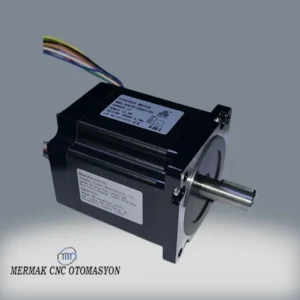
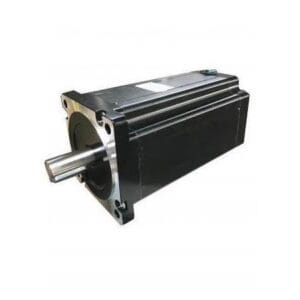
Step motors are fundamental components in industrial automation, converting electrical energy into precise angular movements. Unlike conventional DC motors, step motors move in discrete steps, enabling high positional accuracy even in open-loop control systems. The operation of a step motor relies on applying a sequence of electrical pulses to its windings. These pulses create magnetic fields that interact with the rotor, causing it to rotate by a specific angle, known as the step angle. The number and frequency of these pulses directly dictate the motor’s rotation amount and speed, making them ideal for applications requiring precise positioning, such as CNC machines, robotic arms, 3D printers, and conveyor systems.
To effectively operate a step motor, three core components are essential:
- The Step Motor: The primary device that generates the motion.
- Step Motor Driver: An electronic board that converts low-power control signals into the high-current and voltage signals required to drive the motor windings.
- Controller: A device such as a microcontroller (e.g., Arduino, Raspberry Pi), a PLC, or a dedicated motion control card that generates the pulse signals to define the motor’s movement profile (step count, direction, speed, acceleration/deceleration).
The synergy between these components is crucial for optimal system performance. Selecting the correct motor, driver, and controller combination is vital for meeting application demands and preventing operational issues.
Step Motor Working Principle and Technical Specifications
Step motors operate based on the interaction between electromagnetic fields generated in their windings and the rotor. Most step motors feature multiple phase windings (commonly 2 or 4). The controller sends pulse signals to the driver, which then energizes these windings sequentially. Each energized winding creates a magnetic pole that attracts the opposite pole on the rotor, causing it to rotate by one step angle. As the next winding is energized, the rotor advances another step. This sequential energization allows for continuous rotation.
Stepping Modes Explained:
- Full Step: The motor moves by its full step angle with each pulse. This is the simplest mode but offers lower resolution and can result in noticeable vibration.
- Half Step: The motor moves by half of its full step angle per pulse, effectively doubling the resolution and providing smoother motion. This is achieved by energizing windings sequentially and sometimes energizing two windings simultaneously.
- Microstepping: The most advanced mode, dividing each full step into many smaller microsteps (tens or hundreds). The driver precisely controls the current in the windings, often in a sinusoidal pattern, allowing the rotor to move smoothly between positions. This mode offers very high resolution, reduced vibration and noise, and is ideal for applications demanding extremely smooth motion and precise positioning, especially at low speeds.
Key technical parameters and considerations when selecting and operating a step motor include:
| Parameter | Description |
|---|---|
| Step Angle | The angle the motor rotates per full step (e.g., 1.8°, 0.9°). Smaller angles mean higher resolution. |
| Number of Phases | The number of winding sets in the motor (e.g., 2-phase, 4-phase). 2-phase and 4-phase motors are most common. |
| Holding Torque | The maximum torque the motor can exert to maintain its position when energized and stationary. Measured in Nm or oz-in. |
| Dynamic Torque | The torque the motor can produce while in motion. This typically decreases as speed increases. |
| Rated Voltage | The nominal operating voltage for the motor windings. The driver’s supply voltage should match this. |
Proper selection and configuration of these parameters, along with the correct driver and controller, are essential for achieving reliable and efficient operation in demanding industrial environments. For precise motion control in your CNC machinery, ensuring your step motor system is correctly implemented is key.
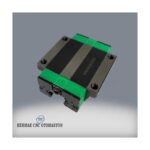
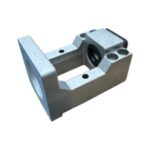
Explore our range of linear guides, mechanical components, and sigma profiles that complement precision motion systems.
Related product categories: Linear Guides, Bearings, and Housings · Mechanical Components · Sigma Profiles