




































































Why Do Spindle Motors Heat Up Even When Idling?

📑 Table of contents (Click to open)
Spindle motors consume energy and generate heat even when not actively cutting, due to inherent electrical and mechanical losses. This article delves into the causes, including core losses (hysteresis and eddy currents), copper losses (I²R), and mechanical friction, and provides practical solutions for managing heat in industrial CNC applications.
Practical notes for CNC router, automation and industrial motion systems.
Understanding Spindle Motor Heat Generation During Idle Operation
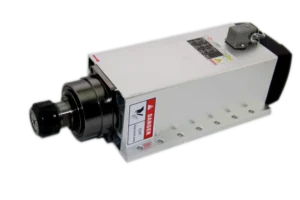
Spindle motors are critical components in modern industrial automation, powering CNC machines, lathes, and robotic systems that demand high precision and speed. While their primary function is to drive cutting tools, these powerful motors continue to consume energy and generate heat even when they are not actively engaged in a machining process – a state referred to as ‘idling.’ This phenomenon is not a sign of malfunction but rather a consequence of fundamental physics governing electrical machines. Even when a spindle motor is not under load, internal energy losses are unavoidable as long as power is supplied. These losses transform electrical energy into thermal energy, leading to a rise in motor temperature. Understanding these causes is crucial for maintaining optimal performance, extending component lifespan, and preventing premature failures in demanding industrial environments.
The concept of ‘idling’ in a spindle motor context means the motor is powered and rotating freely, without any cutting tool engaging with a workpiece. However, the internal processes that create magnetic fields and maintain rotation still require energy. This energy expenditure, though less than under load, results in continuous heat production. For high-speed spindle motors, which are common in advanced CNC router machines and machining centers, the operational demands are even more stringent. Their design often involves complex windings, high-frequency operation, and compact form factors, all of which can exacerbate heat generation. Effective thermal management is therefore not just a matter of efficiency, but a necessity for reliable operation.
This article will provide a comprehensive explanation of the technical reasons behind spindle motor heating during idle periods. We will explore the specific types of energy losses involved, their impact on motor temperature, and practical strategies that industrial users and maintenance professionals can employ to mitigate these effects. By understanding these principles, you can better manage your CNC equipment, ensuring consistent performance and maximizing the return on your investment.
Core Principles of Spindle Motor Operation and Heat Loss
The heat generated by a spindle motor during idle operation stems from several inherent energy loss mechanisms common to all electric motors, but often amplified in high-performance spindle designs:
- Core Losses (Iron Losses): These occur within the magnetic core materials of the motor’s stator and rotor due to the alternating magnetic fields. They are primarily divided into:
- Hysteresis Losses: As the magnetic field within the core material continuously changes direction and strength, the magnetic domains within the material must realign. This process requires energy, which is dissipated as heat. These losses depend on the magnetic properties of the core material and the frequency of the magnetic field.
- Eddy Current Losses: The changing magnetic field also induces circulating electrical currents, known as eddy currents, within the conductive core material. These currents flow against the material’s resistance, generating heat (similar to I²R losses). To minimize eddy currents, motor cores are constructed from thin, insulated laminations. However, they cannot be entirely eliminated, and their magnitude increases significantly with the square of the frequency, making them a major concern for high-speed spindle motors driven by variable frequency drives (VFDs).
- Copper Losses (I²R Losses): These are resistive losses that occur in the motor’s windings (typically copper) as current flows through them. The heat generated is proportional to the square of the current and the winding’s resistance (P = I²R). Even during idle operation, a magnetizing current must flow through the windings to establish the magnetic field necessary for rotation. This ‘no-load current’ is a fraction of the full load current but is constant as long as the motor is powered, contributing to continuous heat buildup.
- Mechanical Losses: These losses are associated with the physical movement of the motor’s components:
- Friction Losses: Primarily occur in the motor’s bearings. The type, quality, lubrication, and speed of the bearings significantly influence these losses. For high-speed spindle motors, precision bearings are essential, and their maintenance is critical.
- Windage Losses: The resistance encountered as the rotor and any integrated cooling fan move through the air. These losses increase dramatically with speed, becoming a substantial heat source in high-RPM spindle motors. While enclosed or liquid-cooled systems can reduce this effect, it is rarely eliminated entirely.
- Stray Load Losses: These are miscellaneous losses that don’t fit neatly into the above categories. They can include losses due to non-uniform magnetic flux distribution, harmonic currents generated by the drive, and eddy currents in winding end-turns. When spindle motors are powered by Pulse Width Modulation (PWM) inverters, the high-frequency harmonics produced by the drive can induce additional core and copper losses, further contributing to motor heating.
The cumulative effect of these losses means that a spindle motor will always generate some heat, even when it’s not performing any external work. The challenge lies in ensuring that this generated heat is effectively dissipated to prevent detrimental temperature increases.
| Parameter | Description/Typical Values |
|---|---|
| Motor Type | High-Frequency AC Induction or Synchronous (e.g., BLDC, PMSM) |
| Power Range | 0.5 kW to 50 kW (Varies by application) |
| Speed Range | 5,000 RPM to 60,000 RPM (Higher for specialized applications) |
| Cooling Method | Air (Fan), Liquid, Hybrid |
| Insulation Class | Class F or H (Standard for high-temperature resistance) |
| Max Operating Temp. | 40°C – 80°C ambient dependent (Winding temps can be higher) |
| Efficiency | 85% – 95% (Under load; lower during idle) |
Practical Considerations for Industrial CNC Operations
Managing spindle motor heat, especially during idle periods, requires attention to several operational and maintenance factors:
- Proper Sizing and Selection: Choosing a spindle motor that is correctly sized for the intended application is paramount. An oversized motor may have higher no-load losses, while an undersized one will be prone to overheating under load. If the CNC machine experiences extended idle times, consider motors designed for higher efficiency or equipped with more robust cooling systems.
- Effective Cooling System Maintenance: The motor’s cooling system is its primary defense against overheating.
- Air-Cooled Motors: Regularly inspect the cooling fan for proper operation. Ensure that air intake and exhaust vents are clear of dust, chips, and debris, which can significantly impede airflow. The ambient temperature of the workshop also plays a role; higher ambient temperatures reduce the cooling system’s effectiveness.
- Liquid-Cooled Motors: Maintain the coolant’s level and quality (ensure proper antifreeze and corrosion inhibitor concentrations). Regularly check the coolant pump’s performance and keep the radiator or heat exchanger clean to ensure efficient heat transfer. Blockages or leaks in the coolant lines can quickly lead to overheating.
- Bearing Maintenance and Lubrication: Bearings are a significant source of mechanical loss and heat. High-speed spindle motors use precision bearings that require specific lubrication. Ensure the correct type and amount of lubricant are used, and follow the manufacturer’s recommended maintenance schedule for lubrication or bearing replacement. Improper bearing pre-load (too tight or too loose) can also increase friction and heat.
- Drive Parameter Optimization: The parameters set on the Variable Frequency Drive (VFD) that controls the spindle motor can influence its operating temperature. Ensure the VFD is correctly configured for the specific motor, including settings for acceleration/deceleration ramps, carrier frequency, and any braking resistor configurations. Incorrect settings can lead to increased harmonic losses and motor stress. For example, excessively high carrier frequencies can increase switching losses in the VFD and eddy current losses in the motor.
- Minimizing Idle Time: Where possible, optimize CNC programs and machine workflows to reduce unnecessary periods of the spindle motor running at full power without performing cutting operations. This might involve adjusting program logic or implementing sleep modes for the spindle during tool changes or pauses.
- Monitoring and Diagnostics: Implement regular monitoring of spindle motor temperature, vibration, and current draw. Many industrial CNC systems offer built-in diagnostics. Early detection of abnormal temperature increases can indicate developing issues with the motor, its cooling system, or its bearings, allowing for proactive maintenance before a failure occurs.
By diligently applying these practices, you can significantly reduce the impact of idle heat generation on your spindle motors, ensuring reliable performance and extending the operational life of your valuable CNC machinery.
For more information on maintaining the mechanical integrity of your CNC systems, explore our range of mechanical components.
Frequently Asked Questions (FAQ)
What are the main types of losses in a spindle motor during idle operation?
The main losses are core losses (hysteresis and eddy currents in the magnetic core), copper losses (I²R losses in the windings), and mechanical losses (friction in bearings and windage from air resistance).
How do eddy currents cause heat in a spindle motor?
Eddy currents are circulating electrical currents induced within the conductive core material by the changing magnetic field. As these currents flow through the resistance of the core material, they generate heat.
Why are high-speed spindle motors more prone to heating?
High-speed operation increases windage losses significantly. Additionally, the higher operating frequencies required for high speeds can amplify eddy current losses in the motor’s core materials.
What is the role of the VFD in spindle motor heating?
The Variable Frequency Drive (VFD) controls the spindle motor’s speed. Its switching action (PWM) can generate high-frequency harmonics that induce additional losses in the motor. Incorrect VFD parameter settings can also lead to inefficient operation and increased heat.
How can I effectively cool a spindle motor during idle periods?
Ensure the motor’s cooling system (air or liquid) is functioning optimally and is free from obstructions. For liquid-cooled systems, maintain coolant levels and quality. For air-cooled systems, keep vents clean and ensure adequate airflow. Minimizing idle time where possible also helps.
If you are experiencing issues with your spindle motor or require expert advice on CNC machine maintenance, request a quote on WhatsApp today!