No products in the cart.
How to Prevent Burning and Tear-Out in Wood CNC Machining: A Field Guide
Contents
Ahşap CNC’de Yanma ve Çapaklanmayı Önleme: Saha Rehberi ve Teknik Makale
Introduction and Technical Analysis
In today’s rapidly evolving industrial automation landscape, wood CNC machining processes hold an indispensable position in furniture manufacturing, decoration, architecture, and custom product fabrication. However, two of the most critical and costly issues encountered in these processes are burning and tear-out (burring). These problems not only degrade product quality but also incur additional labor costs and shorten tool life, negatively impacting production efficiency. Burning typically manifests as carbonization and discoloration on the wood surface due to excessive heat buildup, while tear-out appears as rough, torn fibers on the cut edges. This technical article and field guide will delve into the fundamental causes, mechanisms, and effective prevention strategies for these issues using modern CNC technologies, from an industrial automation perspective. Our objective is to provide practical, actionable, and technically detailed solutions for engineers, operators, and maintenance teams working on production lines. By correctly setting parameters, selecting appropriate tools, and optimizing machine performance, it is possible to largely prevent these problems, ultimately leading to higher quality products and more efficient production processes.
Operating Principles and Technical Data
Wood CNC machining operates on the principle of cutting, shaping, or carving wood material into a specific geometry using computer-controlled machines. In this process, a rotating cutting tool (router bit) removes material by following a programmed path on the wood surface. To understand burning and tear-out issues, it is essential to delve into the details of these fundamental principles. Burning is primarily a result of excessive heat accumulation at the cutting point. This heat occurs due to the cutting tool rubbing against wood fibers instead of cleanly cutting them, inadequate chip evacuation, or incorrect cutting parameters (low feed rate, high RPM). Excessive heat degrades the lignin and cellulose structure of the wood, leading to carbonization. This is not merely an aesthetic flaw but also impairs the finished surface’s ability to accept paint or varnish. Tear-out occurs when the cutting tool fails to cleanly cut wood fibers, instead tearing or lifting them. This is typically associated with dull tools, incorrect tool geometry, insufficient workpiece clamping, cutting against the grain, or improper cutting parameters (high feed rate, low RPM). Both issues shorten tool life, increase energy consumption, and necessitate additional sanding or repair work on the production line.
From an industrial automation perspective, solutions to these problems should not be limited to manual adjustments. Modern CNC machines, with their advanced control systems, sensor technologies, and CAM software, have the potential to minimize these risks. For example, sensors monitoring tool wear, adaptive control systems dynamically adjusting optimal cutting parameters, or intelligent CAM modules optimizing tool paths can help resolve these issues at their root. Material properties such as wood type, density, grain structure, and moisture content also directly affect cutting performance. For instance, hardwoods (oak, beech) tend to generate more heat due to their higher density, while softwoods (pine, spruce) carry a higher risk of tear-out due to their fiber structure. Therefore, selecting the appropriate tool and parameters for each application based on material properties is critically important.
| Parameter | Value/Description |
|---|---|
| Tool Material | Carbide (Solid Carbide), PCD (Polycrystalline Diamond), HSS (High-Speed Steel) – Must be selected according to application. |
| Tool Geometry | Up-cut, Down-cut, Compression – Appropriate geometry selection to prevent tear-out. |
| Spindle Speed (RPM) | 12,000 – 24,000 RPM (Depending on material and tool diameter) – Must be in the correct range to reduce burning risk. |
| Feed Rate (mm/min) | 3,000 – 18,000 mm/min (Depending on tool diameter, chip load, and wood type) – Directly affects tear-out and burning. |
| Chip Load | 0.05 – 0.20 mm/tooth (Depending on tool diameter, number of teeth, material type, and density) – Ideal value prevents burning and tear-out. Must be checked against manufacturer datasheet values. |
| Cutting Depth (DOC) | 50-100% of tool diameter (for single pass), 150-200% (for multiple passes) – Pass depth is important for managing burning risk. |
| Dust Extraction System | Minimum 1,000 CFM (Frequency controlled, automatic on/off) – Critical for chip evacuation and heat dissipation. |
Field Considerations
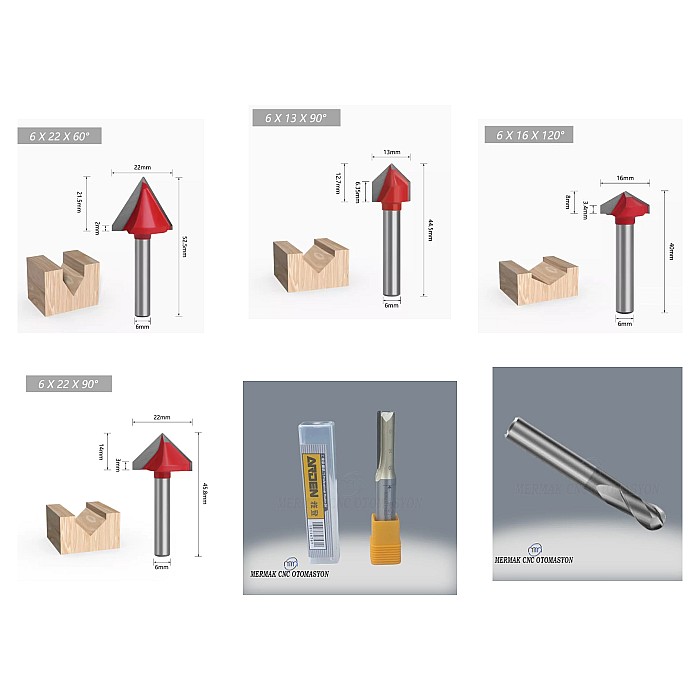
- Correct Tool Selection and Maintenance: Selecting the appropriate router bit for the wood type, cut type (grooving, edge routing, carving), and desired surface quality is vital. For example, compression (up-cut and down-cut) bits minimize tear-out for panels like laminate or MDF, while up-cut or down-cut bits may be preferred for solid wood. Tool sharpness should be regularly checked, and dull tools must be sharpened or replaced immediately. Dull tools rub against the wood instead of cutting, leading to excessive heat and burning, while also tearing fibers and causing tear-out. Ensure tool holders and collets are properly tightened and do not exhibit runout.
- Optimization of Cutting Parameters: The balance between spindle speed (RPM) and feed rate plays a key role in preventing burning and tear-out. Chip load, the amount of material removed per tooth per revolution, is the fundamental indicator for achieving this balance. A high chip load can increase the risk of tear-out, while a very low chip load can cause the tool to rub on the wood and lead to burning. Generally, higher feed rates and optimal spindle speeds ensure faster chip evacuation, reducing heat buildup. Wood type (hardness, density), tool diameter, and number of teeth should be considered when adjusting these parameters. Manufacturer-provided starting values are a good reference point, but fine-tuning through trial and error is necessary for the best results.
- Effective Chip Evacuation and Dust Extraction: Rapid and effective removal of chips and wood dust from the work area during the cutting process is essential for both preventing burning and reducing tear-out. Chip accumulation in the cutting zone causes the tool to re-cut the same material repeatedly, increasing friction and heat. A powerful industrial dust extraction system with sufficient airflow and correctly positioned dust collection hoods can largely mitigate this problem. Automatic dust extraction systems, synchronized with the CNC machine, activate only during machining, ensuring energy efficiency. Additionally, air blast systems can provide extra support in keeping the cutting zone clean.
- Workpiece Clamping and Machine Rigidity: The workpiece must be securely clamped to prevent any vibration or slippage during machining. Vacuum tables, mechanical clamps, or custom jigs prevent workpiece movement, reducing the risk of tear-out and ensuring the tool penetrates the wood evenly. The rigidity of the machine itself is also important. A vibrating or poorly constructed CNC machine can prevent the tool from cutting smoothly, leading to both burning and tear-out issues. Spindle bearings, tool holders, and table flatness should be periodically inspected and maintained.
Common Problems and Solutions
One of the most common problems encountered in the field, especially in deep cuts or hardwoods, is burning marks on the surface after machining. This typically results from a combination of low feed rate and high spindle speed, or inadequate chip evacuation. As a solution, first try increasing the feed rate to increase chip load and/or decreasing the spindle speed. Additionally, dividing the cutting depth into multiple passes to reduce the chip load in each pass and using a more powerful dust extraction system can prevent burning. If burning persists, check if the tool is dull and replace it if necessary. In some cases, wood may have high resin content; for such materials, using specially coated tools (e.g., DLC coating) or setting more conservative cutting parameters can be beneficial.
Another common issue is tear-out and fiber tearing, particularly on panel edges or laminate surfaces. This is usually associated with dull tools, incorrect tool geometry, or insufficient workpiece clamping. As a solution, first check the tool’s sharpness and use a sharp compression bit or down-cut bit suitable for the wood type. Ensure the workpiece is very securely clamped with vacuum or mechanical clamps. Optimizing chip load can also reduce tear-out; a very low chip load causes the tool to rub the wood, while a very high chip load can tear fibers. To prevent tear-out, especially on exit edges, it can be effective to program tool paths with smaller step-overs in final passes or use a sacrificial backing material. In automation systems, tool wear sensors can be used to monitor tool life and prevent the use of dull tools.
Finally, both burning and tear-out issues can occur due to machine vibrations and runout. Such problems also typically shorten tool life. As a solution, regular maintenance of spindle bearings, tool holders, and collets should be performed, and worn parts replaced. Using high-quality, balanced tool holders and collets minimizes runout. Furthermore, ensure the tool is correctly installed and tightened. Taking measures to increase overall machine rigidity (e.g., using vibration-damping feet) or upgrading to a more robust machine platform will resolve these issues in the long term. In automation systems, real-time monitoring with vibration sensors can detect potential problems at an early stage and allow for intervention.
Expert Advice
Burning and tear-out issues in wood CNC machining processes pose significant challenges not only in terms of aesthetics but also operational efficiency and cost. With the modern capabilities offered by industrial automation, overcoming these problems is now possible with a much more scientific and systematic approach. From an expert’s perspective, the path to success lies in addressing the entire system in an integrated manner, rather than focusing on a single parameter. Correct tool selection, material knowledge, meticulous optimization of cutting parameters, effective chip evacuation, and machine maintenance must form a harmonious whole. Specifically, sensor-based monitoring systems for tool life management, CAM software offering adaptive cutting strategies, and predictive maintenance automation continuously checking machine health are indispensable tools for proactively solving these problems. It should be remembered that every wood type and every application has its unique dynamics; therefore, while initial parameters serve as a guide, trial and error combined with field experience and continuous optimization are essential for the best results. Continuous training will enhance operators’ and engineers’ skills in understanding and adjusting these critical parameters, leading to fewer downtimes, less waste, and ultimately higher quality products on the production line. As the industrial automation sector, our goal is to overcome such production challenges with technology and expertise, moving the wood processing industry towards a more efficient and sustainable future.
FAQ
What causes burning during wood CNC machining?
Burning in wood CNC machining is typically caused by excessive heat buildup due to factors like dull tools, insufficient chip evacuation, or incorrect cutting parameters (e.g., low feed rate with high spindle speed). The tool rubs against the wood instead of cutting cleanly, leading to carbonization and discoloration.
What are the main reasons for tear-out in wood CNC operations?
Tear-out occurs when the cutting tool rips or lifts wood fibers instead of cutting them cleanly. Common causes include dull tools, improper tool geometry, inadequate workpiece clamping, cutting against the wood grain, or incorrect cutting parameters (e.g., high feed rate with low spindle speed).
How can I prevent burning on my wood CNC projects?
To prevent burning, optimize your cutting parameters by increasing the feed rate and/or reducing the spindle speed to achieve an optimal chip load. Ensure effective chip evacuation with a powerful dust extraction system. Regularly check and replace dull tools. For specific materials, consider using specialized coated tools or multiple passes with shallower depths of cut.
What are the best practices to avoid tear-out when using a CNC router on wood?
To minimize tear-out, use sharp tools with appropriate geometry (e.g., compression bits for panels). Ensure the workpiece is securely clamped to prevent movement. Optimize chip load and consider using smaller step-overs or a sacrificial backing material for exit cuts. Implement tool wear monitoring in automated systems.
What is the optimal chip load for wood CNC machining to prevent defects?
The ideal chip load depends on the wood type, tool diameter, and number of teeth. Generally, a chip load between 0.05 – 0.20 mm/tooth is recommended. Refer to the tool manufacturer's datasheet for specific recommendations and fine-tune through testing for your particular application.