




































































Power Supply Selection for CNC Systems: How Many Amps Are Needed?
📑 Table of contents (Click to open)
- Power Supply Selection for CNC Systems: How Many Amps Are Needed? Introduction and Technical Analysis
- Power Supply Selection for CNC Systems: How Many Amps Are Needed? Operating Principle and Technical Data
- Voltage and Current Relationship
- Calculating Current Requirement per Component
- Total Current and Safety Factor Calculation
- Power Supply Technical Specifications
- Power Supply Selection for CNC Systems: How Many Amps Are Needed? Field Considerations
- Power Supply Selection for CNC Systems: How Many Amps Are Needed? Common Problems and Solutions
- Power Supply Selection for CNC Systems: How Many Amps Are Needed? Conclusion and Expert Advice
- FAQ
Power Supply Selection for CNC Systems: How Many Amps Are Needed? Introduction and Technical Analysis
At the heart of industrial automation, CNC (Computer Numerical Control) systems are indispensable for manufacturing processes requiring precision, speed, and repeatability. For these systems to operate continuously and flawlessly, the correct selection of each component is vital. Among these components, one of the most critical elements, often overlooked but directly impacting the entire system’s performance, is the power supply selection. Choosing the right power supply guarantees the stable operation of not only the motors but also the control cards, drives, and all other electronic components. An incorrect selection can shorten the system’s lifespan, lead to performance degradation, and even cause serious malfunctions.
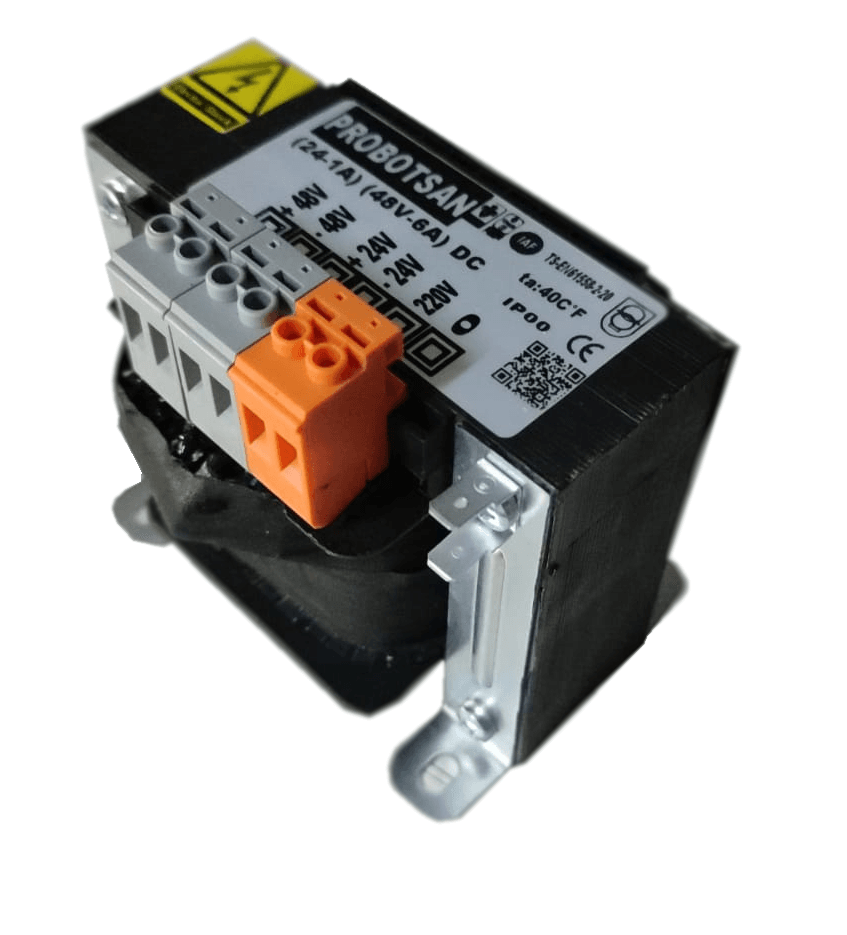
The primary function of a power supply in CNC systems is to convert the alternating current (AC) from the mains into the direct current (DC) required by the system, providing the necessary voltage and current. The question “How many amps are needed?” in this context means determining a power supply with sufficient capacity to meet the system’s dynamic load requirements. This technical article and field guide will delve into the intricacies of power supply selection for CNC systems for industrial automation professionals, explaining how to calculate amperage needs, potential problems encountered, and their solutions. Our goal is to help you find the most suitable power supply solution, balancing reliability, efficiency, and cost-effectiveness.
Power Supply Selection for CNC Systems: How Many Amps Are Needed? Operating Principle and Technical Data
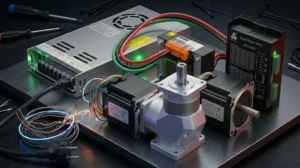
A CNC system’s power supply is the central hub for energy distribution to all electronic components. Its operating principle is to convert mains voltage (typically 220V AC or 380V AC) to low-voltage DC (e.g., 24V DC, 36V DC, 48V DC, or higher). This conversion is usually performed by switched-mode power supplies (SMPS). SMPS are preferred in industrial applications due to their high efficiency, compact size, and wide input voltage range.
Voltage and Current Relationship
Both voltage (Volt) and current (Ampere) values are critically important in power supply selection. Voltage can be thought of as the “pressure” of electrical energy and directly affects the maximum speed, torque of motors, and the operating voltage of drives. Current, on the other hand, represents the amount of electrical charge flowing through a circuit at a given time and is directly related to the motor’s torque production capacity. The question “How many amps are needed?” is essentially a reflection of the system’s instantaneous and continuous power (Watt) requirement, as expressed by the formula Power (P) = Voltage (V) x Current (I).

Calculating Current Requirement per Component
To determine the total current requirement of a CNC system, the maximum current draw of each connected component must be evaluated separately:
- Stepper Motors and Drives: The current requirement of stepper motors varies depending on the motor size, torque, and drive settings. Generally, the motor’s rated current is provided. However, drives can draw more current when operating in micro-stepping mode or at high speeds. The maximum output current (peak output current) specified in the drive’s technical data sheet should be considered. For example, a NEMA 23 stepper motor might require 3A, while its drive might provide an instantaneous peak current of 4A.
- Servo Motors and Drives: Servo systems are much more dynamic than stepper systems. Current requirements vary significantly based on the motor’s instantaneous acceleration, deceleration, and operating conditions under load. Servo drives typically specify continuous and peak current values. Peak current can reach very high values, especially during rapid acceleration and sudden load changes (e.g., a servo continuously drawing 5A might momentarily draw 15-20A peak current). Selecting a power supply that can meet these peak current values is critically important. Additionally, in servo systems, the regeneration of energy produced by the motor during regenerative braking must be considered. This energy is usually fed back to the power supply or dissipated across a regenerative resistor.
- Control Boards: CNC control boards (e.g., GRBL, Mach3/Mach4 boards, industrial PLC-based controllers) generally draw low current (from a few hundred mA to a few Amperes), but they require a stable power supply as they are the brain of the system. They usually have their own regulated 5V or 3.3V lines.
-
Auxiliary Equipment:
- Cooling Fans: Fans used for control panel or motor cooling.
- Limit Switches and Sensors: Typically draw very low current (mA level).
- Emergency Stop Buttons and Relays: Relay coils draw current.
- Spindle Motor Drive (for DC Spindle): If a DC spindle is used, its drive can also be powered by the same power supply and may draw high current.
- Lubrication Pumps, Lighting, etc.: Other automation components that can be integrated into the system.
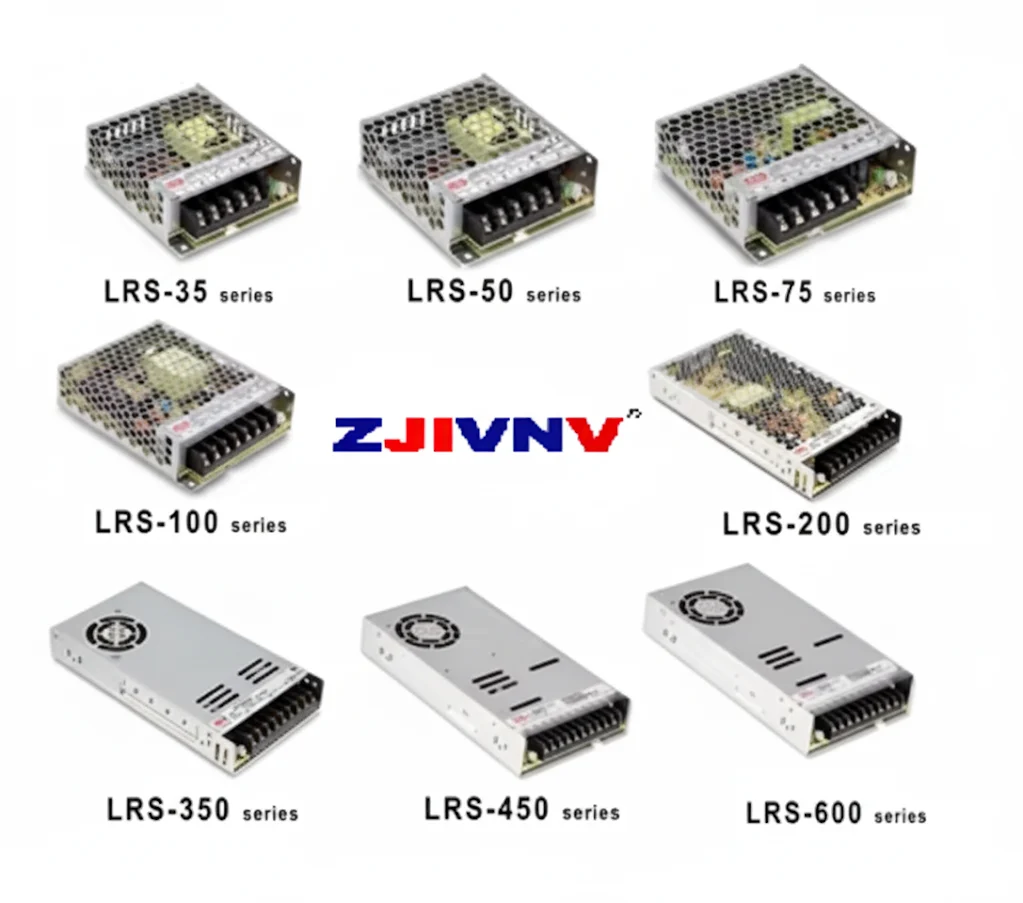
Total Current and Safety Factor Calculation
When calculating the total current requirement, the healthiest approach is to sum the maximum (peak) current draw of all components and add a safety factor. A safety factor of 20% to 30% is generally recommended. This ensures the power supply operates without overload, has a longer lifespan, works more stably, and provides flexibility for future potential expansions.
Example Calculation:
For a CNC system:
– 3 Stepper Motor Drives (each with a maximum peak current of 4A): 3 x 4A = 12A
– 1 Control Board: 0.5A
– 2 Cooling Fans (each 0.2A): 2 x 0.2A = 0.4A
– Other sensors, relays, etc.: 0.5A (estimated)
Total instantaneous maximum current = 12A + 0.5A + 0.4A + 0.5A = 13.4A
With a safety factor (25%): 13.4A x 1.25 = 16.75A
In this case, selecting a power supply with at least 17A or higher capacity would be appropriate. Standard products are usually available in stepped values like 10A, 15A, 20A, 30A; in this situation, a 20A power supply could be preferred.
It should be noted that, especially in servo systems, the probability of all motors drawing maximum peak current simultaneously is low. However, considering the worst-case scenario is always safer. In some cases, a more economical choice can be made by applying a simultaneity factor, but this requires in-depth knowledge of the system’s dynamics and involves risk.
Power Supply Technical Specifications
When selecting a power supply, in addition to the amperage value, the following technical specifications should also be examined:
- Output Voltage: The voltage value required by the CNC system (e.g., 24V, 36V, 48V). This must be compatible with the operating voltage of motor drives and other components.
- Max. Output Current: As calculated above, the capacity to meet the system’s peak current requirement.
- Power (Watt): The total power the power supply can provide (V x I).
- Efficiency: Indicates how efficiently the power supply converts input power to output power. High efficiency means less heat loss and energy savings. (>85% is ideal).
- Ripple & Noise: The amount of unwanted AC components in the DC output. Low ripple ensures more stable operation for sensitive electronics. (
- Protection Features:
- Over Voltage Protection (OVP): Shuts down the power supply when the output voltage exceeds a certain level.
- Over Current Protection (OCP): Shuts down the power supply or limits the current when the output current exceeds a certain level.
- Short Circuit Protection (SCP): Provides protection when a short circuit occurs at the output.
- Over Temperature Protection (OTP): Shuts down when the internal temperature exceeds a certain level.
- Operating Temperature Range: The ambient temperature range within which the power supply can operate with specified performance.
- IP Protection Rating: Level of protection against dust and water, especially important in industrial environments.
| Parameter | Value/Description |
|---|---|
| Output Voltage (VDC) | 24V / 36V / 48V (According to System Needs) |
| Max. Output Current (Amps) | 10A – 40A+ (Calculated Total Current + Safety Factor) |
| Output Power (Watt) | 240W – 1920W+ (VDC x Max. Current) |
| Efficiency | Typically >85% (High efficiency, low heat loss) |
| Ripple & Noise | < 1% RMS or < 150mVp-p (Lower values are preferred) |
| Protection Features | OVP, OCP, SCP, OTP (Over Voltage, Current, Short Circuit, Temperature Protection) |
| Operating Temperature Range | -20°C to +70°C (Wide range for industrial standards) |
| Cooling Type | Convectional (Fanless) or Internal Fan (For high power) |
Power Supply Selection for CNC Systems: How Many Amps Are Needed? Field Considerations
- Environmental Conditions and IP Protection Rating: The operating environment’s conditions such as temperature, humidity, dust, and vibration must be considered. Especially in dusty or humid environments like metal processing, power supplies with a higher IP (Ingress Protection) rating (e.g., IP65) or those used within a completely sealed enclosure should be preferred. Excessive temperature shortens the power supply’s lifespan and degrades its performance. Therefore, airflow and cooling within the control panel are also critically important.
- Cabling and Connections: The cross-section of cables running from the power supply to the CNC system’s components must be appropriate for the current drawn. Thin cables overheat at high currents and cause voltage drop, negatively affecting motor performance. This effect becomes more pronounced over long cabling distances. Ensure that connection terminals are tight and correctly made; loose connections can lead to arcing, overheating, and malfunctions. It is important that all cables comply with industrial standards, are flexible, and resistant to vibration.
- Cooling and Airflow Management: Power supplies generate some heat depending on their efficiency. Adequate cooling must be provided, especially for high-power power supplies. This can be done with the power supply’s own internal fan or with general air circulation and fans within the control panel. Sufficient clearance should be left around the power supply, and air inlet/outlet vents should not be blocked. An overheated power supply can shut down the system due to thermal protection or degrade its performance.
- Grounding and EMC (Electromagnetic Compatibility): Electromagnetic interference (EMI) and radio frequency interference (RFI) are common problems in industrial environments. Proper grounding of the power supply and compliance with EMC standards protect the system’s other sensitive electronic components from these interferences. Methods such as using shielded cables, separating signal and power lines, and using ferrite beads can improve EMC performance. Having relevant certifications like CE for the power supply is an indicator of EMC compliance.
- Redundancy and Safety Factor: It is always important to have a capacity greater than the calculated minimum requirement (applying a safety factor) when selecting a power supply. This both extends the power supply’s lifespan by preventing continuous full-load operation and provides a reserve for new accessories you might add to the system in the future (an additional axis, sensors, lubrication system, etc.). It also allows the power supply to respond better to sudden load changes.
- Brand and Quality: It is crucial not to compromise on quality for a critical component like a power supply. Products from reputable, reliable brands generally offer better performance, longer lifespan, superior protection features, and better technical support. Cheap, low-quality power supplies can incur higher costs to the system through voltage fluctuations, low efficiency, and early failures.
Power Supply Selection for CNC Systems: How Many Amps Are Needed? Common Problems and Solutions
Common problems encountered with power supplies in CNC systems and their solutions are vital for system efficiency and reliability:
-
Insufficient Current Capacity:
Problem: This is one of the most common issues. It occurs when the current provided by the power supply cannot meet the instantaneous peak current requirement of the motors or other components. Symptoms include motors stalling, losing steps, speed reduction, momentary resetting of the control board, or unstable operation. These situations are more frequent during rapid movements or under heavy loads.
Solution: Recalculate the maximum current draw of all system components and replace the power supply with a higher capacity one, adding at least a 20-30% safety factor. Also, check the cross-section of the cables running from the power supply to the motor drives; thin cables can also cause current limitation.
-
Over Voltage/Current Protection Activation:
Problem: The power supply’s internal protection mechanisms (OVP, OCP) suddenly activate and shut down the system. This usually occurs due to a short circuit, incorrect wiring, overload, or a faulty component. In servo systems, overvoltage during regenerative braking can also trigger OVP.
Solution: Check all connections and cables for short circuits or loose connections. Test motor drives or motors that might be faulty. If the problem is due to regenerative braking, it may be necessary to add an appropriately rated regenerative resistor (braking resistor). Ensure the power supply’s capacity is sufficient.
-
High Ripple and Noise:
Problem: The presence of unwanted AC ripples or high-frequency noise in the DC voltage output from the power supply. This can lead to incorrect readings in sensitive sensors, data corruption in the control board, motor jitter, or unstable operation.
Solution: Choose a high-quality power supply with low ripple values. If necessary, add additional filtering circuits (capacitor banks, LC filters) to the power supply’s output. Follow good grounding practices and comply with EMC rules by separating power and signal cables. Using shielded cables can also be beneficial.
-
Overheating:
Problem: Overheating of the power supply or other components within the control panel. This shortens the power supply’s lifespan, reduces its efficiency, and can lead to system shutdown due to thermal protection.
Solution: Ensure adequate airflow around the power supply. If necessary, install additional fans or air circulation systems in the control panel. Make sure the power supply’s load does not exceed its capacity; continuous full-load operation increases heating. Try to keep the ambient temperature as low as possible.
-
Cabling Errors and Loose Connections:
Problem: Incorrect cable cross-section selection, poorly tightened terminal connections, or damaged cables. These situations can lead to voltage drop, current limitation, overheating, arcing, and even fire risk.
Solution: Periodically check all cabling. Ensure cable cross-sections are appropriate for the maximum current to be drawn (refer to cabling tables). Check all terminal connections and tighten them to the appropriate torque. Immediately replace damaged cables. Use industrial connectors and ferrules.
Power Supply Selection for CNC Systems: How Many Amps Are Needed? Conclusion and Expert Advice
The selection of the power supply, the heart of CNC systems, is not merely a component choice but a strategic engineering decision that directly impacts the entire system’s performance, reliability, and lifespan. The answer to “How many amps are needed?” is not just a number; it requires a meticulous analysis of the dynamic current needs of each motor, drive, control board, and auxiliary equipment, summing these values, and adding a reasonable safety factor. An undersized power supply limits the system’s potential, leads to frequent malfunctions, and causes production losses, while an oversized power supply can mean unnecessary cost and space occupation.
As an expert, my advice is to approach the power supply selection process as an investment. A reliable and high-quality power supply, though it may seem like a slightly higher initial cost, ensures stable system operation in the long run, reduces maintenance costs, increases production efficiency, and prevents unexpected downtime. When making your selection, instead of focusing solely on the amperage value, you should comprehensively evaluate technical parameters such as output voltage stability, efficiency, ripple, protection features, operating temperature range, and EMC compliance. Furthermore, remember that field application details like cabling quality, proper grounding, and adequate cooling directly affect the power supply’s performance.
It should be noted that CNC systems are constantly evolving and becoming more complex. Therefore, carefully reviewing the technical data sheets of power supply manufacturers and, if necessary, seeking support from an automation engineer or an experienced integrator, will guide you in making the most accurate decision. When designing your system or upgrading an existing one, keep in mind that the power supply is the backbone of the system; the correct selection of this vital component is key to the smooth and efficient operation of your industrial CNC router machine.
FAQ
How do I calculate the total amperage required for my CNC power supply?
The amperage needed for a CNC system's power supply depends on the total current draw of all components, including stepper or servo motors and their drives, control boards, cooling fans, sensors, and other auxiliary equipment. It's crucial to sum the maximum (peak) current requirements of each component and then add a safety factor, typically 20% to 30%, to ensure stable and long-lasting operation.
What technical specifications are most important when selecting a CNC power supply besides amperage?
Key technical specifications to consider include output voltage (e.g., 24V, 36V, 48V), maximum output current (amps), total power (watts), efficiency (ideally >85%), ripple and noise (<1% RMS or <150mVp-p for sensitive electronics), and protection features like Over Voltage Protection (OVP), Over Current Protection (OCP), Short Circuit Protection (SCP), and Over Temperature Protection (OTP). Also, consider the operating temperature range and IP protection rating for industrial environments.
What are the common problems associated with CNC power supplies and how can they be resolved?
Common issues include insufficient current capacity (leading to motor stalling or system resets), activation of protection mechanisms (due to short circuits or overloads), high ripple and noise (causing sensor errors or unstable operation), overheating (reducing lifespan and performance), and cabling errors (voltage drop, overheating, fire risk). Solutions involve selecting a higher capacity power supply, checking wiring, adding regenerative resistors for servo systems, improving cooling, and ensuring proper grounding and EMC compliance.
Is a safety factor necessary when calculating power supply amperage for a CNC machine?
Yes, a safety factor of 20% to 30% is highly recommended. This buffer ensures the power supply operates below its maximum capacity, extending its lifespan, improving stability, and providing room for future system expansions or unexpected load surges without compromising performance.
How do cabling and grounding affect the performance of a CNC power supply?
Proper cabling with appropriate wire gauges, tight connections, and good grounding practices are essential. Thin cables can cause voltage drop and overheating, affecting motor performance. Good grounding and adherence to EMC standards help mitigate electromagnetic interference (EMI) and radio frequency interference (RFI), which can disrupt sensitive electronic components.