



































































Choosing Between AC and DC Powered Step Motor Drivers

📑 Table of contents (Click to open)
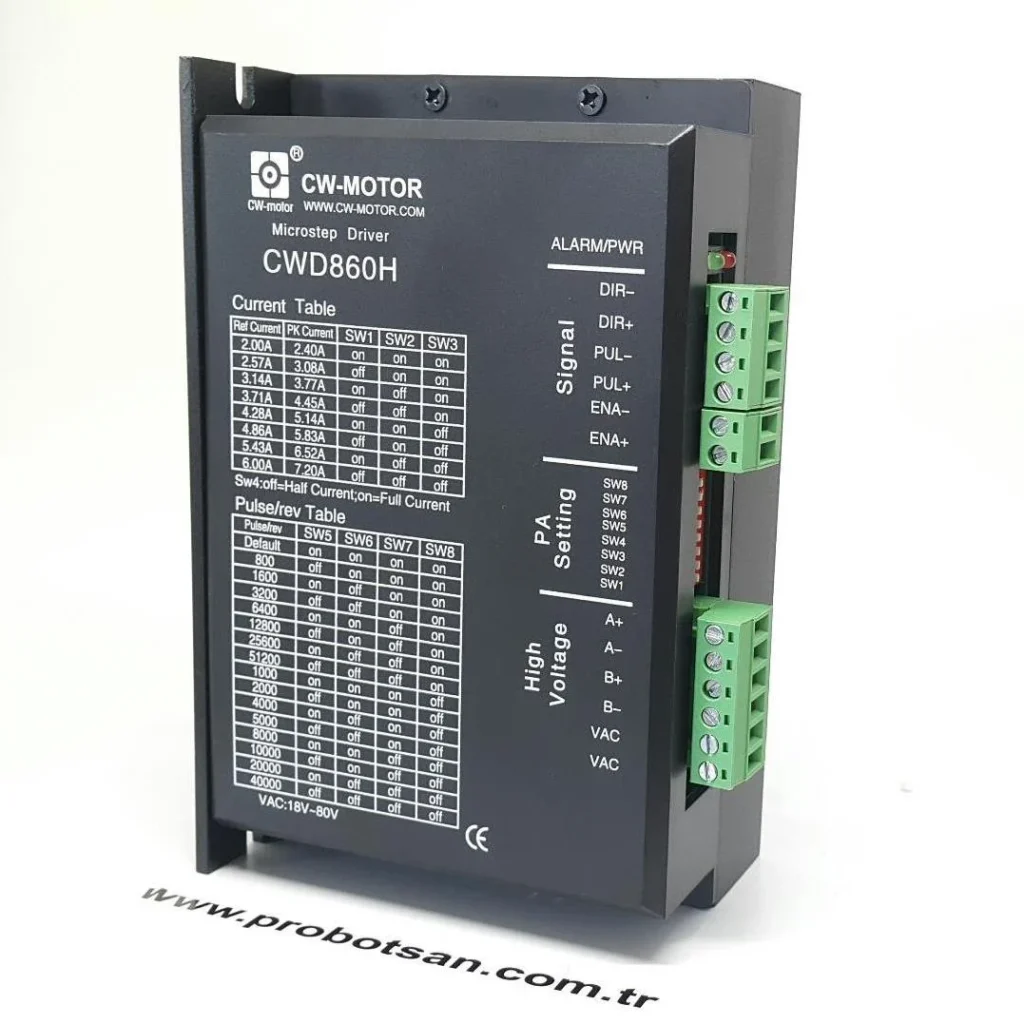
When a step motor driver supports both AC and DC power inputs, the choice depends on your existing power infrastructure, system cost, integration complexity, and performance needs. AC-powered drivers often simplify integration with fewer external components, while DC-powered options offer greater design flexibility.
Practical notes for CNC router, automation and industrial motion systems.
Step Motor Drivers: AC vs. DC Power Input – Making the Right Choice
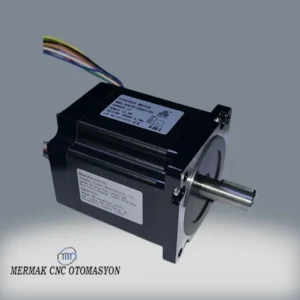
In industrial automation, step motors are crucial for applications demanding precise positioning and speed control, forming the backbone of many systems, including advanced CNC router machines. These motors rely on step motor drivers to deliver precise current pulses to their windings, ensuring accurate rotational steps. A driver capable of operating with both AC and DC power inputs means it can accept direct AC mains voltage (e.g., 110V AC, 220V AC) or a DC power supply (e.g., 24V DC, 48V DC). It’s important to note that the motor itself always operates on pulsed DC current provided by the driver. The driver’s input voltage type (AC or DC) primarily affects its internal design and how it integrates into your overall system architecture.
Understanding the Working Principle and Technical Data
The ability of a step motor driver to function with either AC or DC input voltage is determined by its power input stage design. Most modern drivers utilize Pulse Width Modulation (PWM) technology, operating as a switched-mode power supply (SMPS) to control the current delivered to the motor windings. The input voltage type influences the driver’s internal circuitry, particularly the AC-DC conversion stage.
AC-Powered Step Motor Drivers
These drivers are designed for direct connection to the AC mains. Internally, they incorporate an AC-to-DC converter (rectifier and filter), often a Power Factor Correction (PFC) circuit, and a DC-DC converter to supply the motor.
- Advantages:
- Simplified Integration: Eliminates the need for an external DC power supply, reducing system complexity and wiring.
- Space Efficiency: Occupies less panel space as there’s no separate Power Supply Unit (PSU).
- Higher Voltage Potential: Capable of utilizing mains voltage (e.g., 220V AC), potentially enabling higher motor speeds and torque if the motor’s voltage rating permits.
- Reduced Electrical Noise: Advanced models with PFC can minimize harmonic distortion drawn from the mains.
- Disadvantages:
- Higher Initial Cost: Generally more expensive due to integrated PSU and PFC components.
- Increased Heat Generation: Internal power conversion can generate more heat, possibly requiring additional cooling.
- Repair Complexity: If the internal PSU fails, the entire driver unit may need replacement.
DC-Powered Step Motor Drivers
These drivers are designed to operate within a specific DC voltage range (e.g., 12-80V DC) and require an external DC power supply. This external PSU converts the AC mains voltage to the required DC voltage.
- Advantages:
- Cost-Effectiveness: The driver unit itself is typically less expensive as it lacks an integrated AC-DC converter.
- Design Flexibility: Allows selection of various DC power supplies, offering modularity in system design.
- Lower Heat Output: The driver unit generates less heat as the primary power conversion is external.
- Easier Maintenance: The PSU and driver can be replaced independently, potentially lowering repair costs.
- Shared Power Source: A single high-capacity DC power supply can often power multiple DC drivers and other DC components.
- Disadvantages:
- Additional Component: Requires an external DC power supply, increasing overall system cost and complexity.
- Increased Wiring: Requires both AC mains wiring to the PSU and DC wiring to the driver.
- Greater Space Requirement: The external PSU needs additional space within the control panel.
- Potential Efficiency Losses: Combined efficiency losses from the PSU and the driver can impact overall system efficiency.
The selection process should consider factors such as the required motor torque and speed, environmental conditions, power supply quality, and the overall system budget. For high-speed, high-torque applications, AC-powered drivers or high-voltage DC external supplies might be preferred. Conversely, for cost-sensitive or smaller applications where a 24V DC industrial power supply is readily available, DC-powered drivers offer a simpler integration path.
| Parameter | Details |
|---|---|
| Input Voltage Type | AC (100-240V) or DC (12-80V) |
| Power Supply Integration | Internal for AC drivers, External for DC drivers |
| System Cost | AC driver is individually more expensive; DC driver + external PSU cost varies. |
| Panel Space | AC drivers require less space; DC drivers + PSU require more. |
| Installation Complexity | AC drivers are simpler; DC drivers require additional PSU wiring. |
| Efficiency | AC drivers involve single conversion; DC drivers depend on PSU and driver efficiency. |
| Maintenance | DC systems allow separate PSU and driver replacement. |
Practical Considerations in the Field
- Existing Power Infrastructure and Standardization:
Industrial facilities often have standard DC power supplies (24VDC, 48VDC) common in automation panels, powering controllers, sensors, and actuators. If your project leverages this existing DC infrastructure, selecting a DC-powered step motor driver can be more economical and integrated than investing in additional AC-DC converters or managing disparate voltage levels. This simplifies spare parts management and enhances system-wide standardization. However, if the application is isolated or only AC mains power is available, an AC-powered driver with its internal AC-DC conversion offers a more straightforward installation by eliminating the need for an external power supply.
- Cost and Space Efficiency:
While an AC-powered driver might appear more expensive as a single unit, the total system cost can become competitive when factoring in the expense of an external DC power supply (purchase, wiring, mounting). Panel space is another critical factor. AC-powered drivers are often more compact due to their integrated PSUs, freeing up valuable space in control cabinets. For DC-powered drivers, the size, cooling requirements, and mounting considerations of the external power supply must be accounted for. Careful evaluation of these factors ensures an optimal balance between performance, cost, and physical integration for your industrial CNC router or other automated machinery.
- Performance Requirements and System Scalability:
The choice between AC and DC power can also influence system scalability and performance. Higher voltage DC bus capabilities in AC-powered drivers can support more demanding applications requiring higher speeds and dynamic response. For systems that may need to expand in the future, using a common DC bus powered by a robust external supply for multiple DC-powered drivers can offer a more scalable solution than relying on individual AC-powered units. Consider the total power draw of all components when selecting a power supply, ensuring adequate headroom for peak loads and potential future expansions. This is particularly relevant when integrating multiple servo drives or other motion control components alongside your step motor system.
Ultimately, the decision hinges on a thorough analysis of your specific application’s needs, existing infrastructure, and long-term operational goals. Both AC and DC powered drivers have their place in modern automation, and understanding their respective strengths and weaknesses is key to selecting the most effective solution for your CNC machine.
For expert advice tailored to your application and to explore Mermak CNC’s range of high-performance drivers and components, request a quote on WhatsApp today.
Related product categories: Electronics · Combination Packages · Linear Guides, Bearings, and Housings