

































































Can a Linear Bearing with Dislodged Balls Be Repaired?

📑 Table of contents (Click to open)
When a linear bearing’s balls become dislodged, it may seem repairable, but in industrial automation, it’s generally not recommended due to significant risks. Performance, load capacity, and lifespan are severely compromised. Replacing the component is the safest and most cost-effective long-term solution.
Practical notes for CNC router, automation and industrial motion systems.
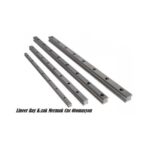
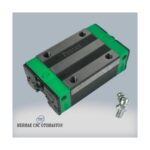
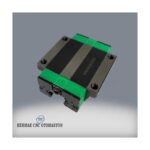
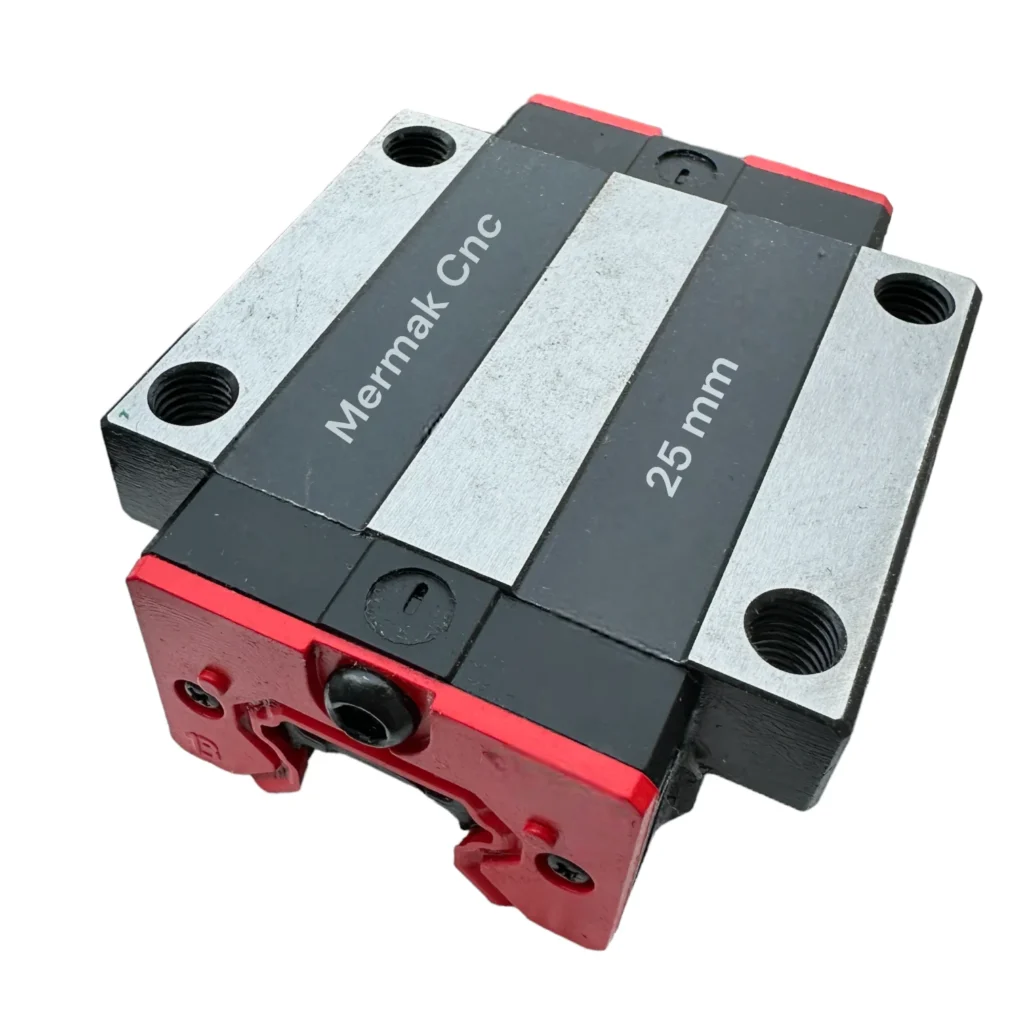
In industrial automation systems, linear bearings (also known as linear guides) are essential for achieving high-precision and repeatable linear motion. They function using recirculating balls housed within the bearing block, which travel along precisely machined raceways on a linear rail. These balls minimize friction and distribute loads. A ball retainer typically keeps the balls in place within their designated path. The term “dislodged balls” refers to a situation where these balls escape their raceways or retainer, become lost, or are improperly positioned. This often occurs due to excessive load, impact, incorrect installation, insufficient lubrication, contamination, or mechanical failure. When balls are dislodged, the linear bearing loses its primary function, its movement can become locked or erratic, friction increases dramatically, and the system can become unusable. Such damage can lead not only to motion failure but also to permanent deformation of the rail and bearing housing.
Operating Principle and Technical Data
Linear bearings typically operate on a recirculating ball or roller principle. In ball-based systems, the balls move within a closed loop inside the bearing block, transferring the load to the contact points on the rail. This design ensures high rigidity, precision, and low friction. The size, number, and arrangement of the balls directly influence critical performance parameters such as load capacity, accuracy class, preload, and rigidity. Each ball evenly distributes the load across the contact surfaces, ensuring smooth motion. When balls are dislodged, this delicate balance is disrupted. The remaining balls become overloaded, damaging the rail and bearing surfaces, and the system’s nominal performance is lost. Repair attempts often fail to restore these precise engineering tolerances and original performance characteristics.
| Parameter | Value/Description |
|---|---|
| Dynamic Load Capacity (C) | Maximum dynamic load the bearing can handle over a specified life (e.g., 50 km) in Newtons (N). Ball dislodgement renders this value invalid. |
| Static Load Capacity (C0) | Maximum static load the bearing can withstand without permanent deformation in Newtons (N). Ball dislodgement reduces this value. |
| Accuracy Class | Linear bearing’s motion accuracy and parallelism deviation (e.g., P0, P1, P2, P3, P4, P5). Ball dislodgement completely eliminates accuracy. |
| Preload | Internal force applied to increase system rigidity and reduce clearance. Loss of balls disrupts preload. |
| Max Speed | Highest linear speed (m/s) at which the bearing can operate smoothly. Ball dislodgement halts motion. |
| Material (Rail/Bearing) | Typically high-carbon steel or stainless steel. Dislodged balls can cause pitting on surfaces. |
| Lubrication Type | Continuous lubrication with grease or oil. Insufficient lubrication can lead to ball dislodgement. |
Field Considerations
- Damage Detection and Safety: The moment balls become dislodged is often signaled by a loud noise, sudden stoppage, or jamming of movement. In such cases, immediately cutting power and ensuring energy isolation is critical for safety. Scattered balls can cause injury. Jammed or crushed balls can also damage other machine components like servo motors, gearboxes, or other linear axes. A visual inspection must confirm if balls are missing or if debris remains within or around the bearing.
- Contamination and Internal Damage: Ball dislodgement often indicates a contamination issue. Metal dust or other foreign particles may have entered the system. Dislodged balls can create deep scratches, dents, or pitting on the bearing’s internal raceways and the linear rail. This damage permanently compromises surface hardness and smoothness. Even if new balls are installed, these damaged surfaces will prevent proper contact, leading to new failures quickly.
- Repair Difficulty and Expert Intervention: The balls inside linear bearings are installed with a specific count, size, and precise arrangement. Each ball’s position affects the system’s preload and rigidity. Reinstalling balls requires specialized assembly jigs, micron-level precision, and ball types conforming to manufacturer specifications. This is not a task easily performed in a field workshop or general maintenance area. Such expert intervention is often recommended by manufacturers’ authorized service centers, who themselves usually advise complete replacement.
- Cost-Benefit Analysis and Performance Risk: The cost of attempting to repair a linear bearing with dislodged balls—considering labor, specialized tools, sourcing correct ball sets, and assembly time—may not be significantly less than purchasing a new bearing. Furthermore, it is nearly impossible for a repaired bearing to achieve its original performance levels (accuracy, load capacity, lifespan). Post-repair issues like increased clearance, higher friction, or premature failure can degrade production quality, cause unexpected downtime, and result in much higher long-term costs. Therefore, for performance-critical applications, direct replacement is the preferred option.
Common Problems and Solutions
The dislodgement of balls in linear bearings is a serious failure encountered in field operations, typically pointing to several underlying issues. The primary problem is the loss of balls itself. This usually results from damage to the bearing’s internal ball retainers, balls being forced out under excessive load, impact, misalignment, or wear due to insufficient lubrication. As a solution, it’s crucial to first identify the root cause of the failure. If only a few balls are lost and the internal raceway surfaces are undamaged (which is rare), theoretically, replacement with new balls might be possible. However, this requires balls of the exact size and quality, in the correct quantity, and precise placement—tasks that are virtually impossible to perform accurately in the field.
A secondary common problem is that ball dislodgement often causes permanent damage to the precise surfaces within the bearing and on the rail. Even if new balls are installed, the dented, scratched, or pitted surfaces will prevent new balls from rolling smoothly. This leads to significant performance issues such as excessive play (clearance), stick-slip motion, vibration, and a general loss of accuracy. As a solution, such surface damage is typically considered irreparable. Resurfacing or grinding the raceways is usually not feasible or cost-effective for these components.
Given these challenges, the most reliable and economically sound approach for industrial CNC router machines and other automated systems is to replace the damaged linear bearing entirely. This ensures the restoration of original performance, accuracy, and reliability, preventing further costly downtime and potential damage to other machine components. For inquiries about replacement linear bearings or other CNC machine parts, contact us.
Don’t risk your production quality. If your linear bearing has suffered ball dislodgement, the best course of action is replacement. Request a quote on WhatsApp for reliable, high-performance linear bearing solutions.
Related product categories: Genel · Kilitler · Dar Lineer Araba