






































































HGR Linear Guides vs. SBR Shafts: Key Differences for Industrial Applications

📑 Table of contents (Click to open)
- Understanding Linear Motion Systems: HGR Guides vs. SBR Shafts
- Operating Principles and Technical Specifications
- HGR Linear Guides: Operation and Features
- SBR Shafts: Operation and Features
- Key Technical Comparison
- Application Suitability
- When to Choose HGR Linear Guides:
- When to Choose SBR Shafts:
- Maintenance and Durability
- Conclusion: Making the Right Choice
Choosing the right linear motion system is crucial for industrial automation. This article details the key differences between HGR linear guides and SBR shafts, focusing on their structure, load capacity, precision, rigidity, and cost. Understand which system best suits your CNC router machine, robotic arm, or other automated equipment.
Practical notes for CNC router, automation and industrial motion systems.
Understanding Linear Motion Systems: HGR Guides vs. SBR Shafts
In industrial automation and machine design, achieving precise and repeatable linear motion is paramount. The selection of linear motion components directly impacts machine performance, accuracy, and longevity. Among the common solutions available, HGR Linear Guides and SBR Shafts are frequently considered. While both systems facilitate linear movement, they differ significantly in their construction, performance capabilities, and ideal applications. Understanding these distinctions is vital for engineers and designers to make informed decisions for their projects.
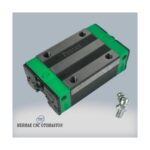
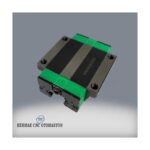
HGR Linear Guides represent a high-performance class of linear motion systems, often found in the product lines of leading manufacturers like THK, Hiwin, and Rexroth. These systems typically consist of a hardened and precisely machined rail with a square or rectangular profile, on which one or more bearing blocks travel. The blocks contain recirculating ball or roller bearings that engage with the rail’s grooves, offering low friction, high load-carrying capacity, and exceptional precision. HGR series guides are engineered for applications demanding high loads, moments, and accuracy, making them a preferred choice for industrial CNC routers, robotic systems, and precision positioning equipment.
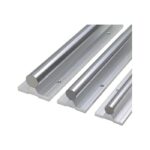
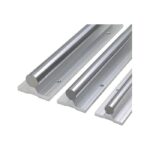
Conversely, SBR Shafts, often referred to as supported shafts, utilize a hardened and ground circular shaft that is typically mounted onto an aluminum support rail. Bearing blocks, containing recirculating ball bearings, move along this shaft. The integrated support rail prevents shaft deflection over longer spans, enabling higher load capacities and improved rigidity compared to unsupported shafts. SBR shafts are well-suited for applications requiring moderate to high loads and precision, but where the extreme capabilities of HGR guides are not necessary. They offer a cost-effective solution for 3D printers, simpler CNC router machines, packaging machinery, and general automation tasks.
This article aims to provide a comprehensive guide by delving into the fundamental differences between HGR Linear Guides and SBR Shafts, examining their operating principles, technical specifications, application suitability, and selection criteria.
Operating Principles and Technical Specifications
While both HGR guides and SBR shafts serve as the foundation for linear motion, their internal mechanisms and operational characteristics present distinct advantages and disadvantages.
HGR Linear Guides: Operation and Features
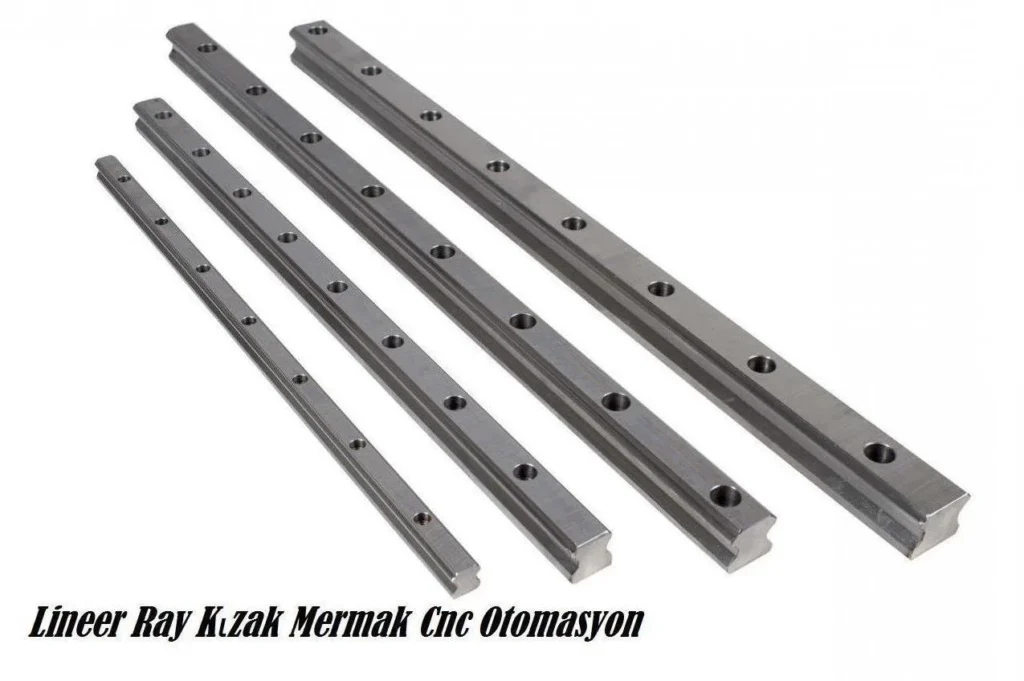
HGR Linear Guides typically employ a four-row recirculating ball or roller bearing system. Balls or rollers circulate within precisely engineered channels in the bearing block, engaging with the hardened raceways on the rail. This design distributes the load over a large contact area, ensuring high load capacities and extended service life. The square or rectangular profile of HGR rails provides exceptional rigidity and resistance to moment loads. A single HGR block can effectively handle radial, lateral, and moment loads, offering superior stability. The precision-ground raceways and pre-loaded bearings minimize backlash, resulting in high positional accuracy and repeatability. These attributes make HGR guides indispensable for high-speed, high-accuracy applications such as CNC machining centers, precision laser cutting machines, robotic arm axes, and metrology equipment.
SBR Shafts: Operation and Features
SBR Shaft systems consist of bearing blocks that slide along a circular shaft, which is typically supported by an integrated aluminum extrusion. This support structure prevents shaft bending (deflection) over longer distances, allowing for higher load capacities than unsupported shafts. The bearing blocks contain recirculating ball bearings that move with low friction along the shaft’s surface. Compared to HGR guides, SBR shafts generally feature simpler ball recirculation mechanisms, making them more economical. However, this simplicity translates to lower load capacities, reduced rigidity, and less precise positioning compared to HGR guides. SBR shafts excel in handling radial loads but are less adept at managing moment loads and lateral forces. Their ease of installation and cost-effectiveness make them a popular choice for 3D printers, light assembly lines, packaging machines, and basic automation projects.
Key Technical Comparison
When comparing HGR guides and SBR shafts, several key technical parameters are crucial:
- Load Capacity: HGR guides significantly outperform SBR shafts in handling higher radial, axial, and moment loads due to their multi-row ball design and wider contact surfaces. SBR shafts are more suited for radial loads, with limitations on moment and lateral forces.
- Accuracy and Repeatability: HGR guides offer superior positional accuracy and repeatability due to precision-ground raceways and the ability for pre-loading, minimizing backlash. SBR shafts typically exhibit lower accuracy due to manufacturing tolerances and inherent ball clearances.
- Rigidity: The square profile and broad mounting surfaces of HGR guides provide much higher rigidity, crucial for applications where vibration and deflection are unacceptable. SBR shafts, despite their support structure, generally cannot match the rigidity of HGR guides.
- Speed and Acceleration: Both systems can achieve high speeds. However, HGR guides often demonstrate more stable performance at higher speeds and accelerations due to lower friction coefficients and better heat dissipation.
- Mounting: HGR guides require precise alignment of the rail and block for optimal performance. SBR shafts are generally easier to install, requiring less stringent alignment tolerances.
- Cost: SBR shafts are typically more cost-effective than HGR linear guides, making them an attractive option for budget-conscious projects or applications where extreme performance is not required.
Application Suitability
The choice between HGR linear guides and SBR shafts hinges on the specific demands of the application.
When to Choose HGR Linear Guides:
- High-precision CNC machines (milling, grinding, laser cutting)
- Robotic systems requiring high accuracy and repeatability
- High-speed automation equipment
- Applications with significant moment loads or vibration
- Heavy-duty industrial machinery
- Servo drive and precision motion control systems
When to Choose SBR Shafts:
- 3D printers and desktop CNC machines
- Light to medium-duty automation lines
- Packaging and material handling equipment
- Simple linear actuators
- Applications where cost-effectiveness is a primary concern and moderate precision is sufficient
- Systems utilizing linear guide rail components for basic movement
For instance, a high-speed CNC router machine demanding tight tolerances for intricate part manufacturing would benefit from the rigidity and precision of HGR linear guides. In contrast, a 3D printer or a simple conveyor system might find SBR shafts to be a more practical and economical choice.

Maintenance and Durability
Both HGR linear guides and SBR shafts require proper maintenance to ensure optimal performance and longevity. Regular cleaning to remove dust and debris, along with periodic lubrication, is essential. HGR guides, with their more complex internal mechanisms and higher precision, may require more specific lubrication types and schedules. Their robust construction, however, often leads to longer service life under demanding conditions. SBR shafts, while simpler, can still be susceptible to wear if not properly maintained or if subjected to loads beyond their capacity. The integrated support rail in SBR systems adds to their durability by preventing premature shaft fatigue.

Conclusion: Making the Right Choice
The selection between HGR linear guides and SBR shafts is a critical decision in the design of any automated system. HGR guides offer superior performance in terms of load capacity, rigidity, accuracy, and speed, making them ideal for high-performance industrial applications like advanced CNC router machines and precision robotics. SBR shafts provide a more economical and simpler solution, suitable for a wide range of applications where extreme precision or load capacity is not the primary requirement. By carefully evaluating the specific needs of your project—considering factors such as required precision, load conditions, operating speed, environmental factors, and budget—you can confidently choose the linear motion system that will best ensure the success and efficiency of your machinery.
For expert advice on selecting the optimal linear motion components for your specific industrial needs, including high-precision linear guide rail systems and robust motion control solutions, consult with our specialists.
Related product categories: Genel · CNC Router · 25 Mm Lineer Kızak, Rulman Ve Yataklar
