
No products in the cart.
How Many Nm Stepper Motor Should Be Used for CNC?

Contents
- The Role of CNC Stepper Motors in Motion Control
- Key Factors Determining Torque Requirements
- Machine Mechanics and Inertia
- Cutting Forces and Material to be Machined
- Speed, Acceleration, and Resolution
- Stepper Motor Torque Selection Criteria and Technical Values
- Technical Selection and Comparison Table
- Motor and Driver Compatibility: The Key to Optimization
- Mermak CNC Experiences from Field Applications
- Optimizing System Performance and Maintenance Tips
- Final Recommendations from an Expert Perspective
- FAQ
CNC Stepper Motor Torque Selection: Comprehensive Technical Guide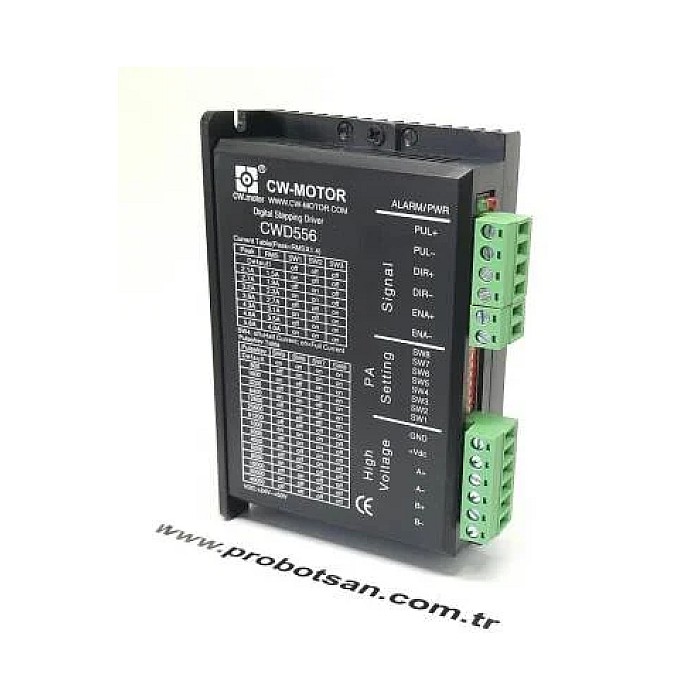


At the heart of industrial automation, particularly in CNC (Computer Numerical Control) machines, stepper motors are critical components that directly impact the efficiency and accuracy of machining processes by providing precise motion control. One of the most fundamental factors determining a CNC machine’s performance, speed, acceleration capability, and most importantly, its resistance to loads during machining, is the torque value of the stepper motor used. This detailed technical article will delve into how to select a stepper motor with the correct torque value for CNC applications, the factors influencing this selection, and considerations for system integration. Our aim is to provide machine designers, manufacturers, and end-users with a comprehensive guide to understanding complex torque calculations and application requirements.
The Role of CNC Stepper Motors in Motion Control
Stepper motors are electromechanical devices that convert digital signals into specific and precise mechanical steps. In CNC machines, these motors are typically used for accurate positioning of the machining head or table movements. In open-loop systems, each pulse from the driver causes the motor to rotate by a specific angle, and this rotation is usually converted into linear motion via a lead screw or a belt-pulley system. This precision is vital for CNC machining processes, especially where complex geometries and tight tolerances are required. The torque produced by the stepper motor directly indicates how powerful, fast, and uninterrupted this movement can be.
Insufficient torque can lead to the motor losing steps under load, which can result in errors in the workpiece, dimensional deviations, and even potential damage to the machine. Conversely, excessive torque can mean unnecessary cost, larger and heavier motors, higher energy consumption, and potentially slower response times. Therefore, selecting the correct torque value is a critical balance for optimized performance, reliability, and cost-effectiveness of a CNC system.
Key Factors Determining Torque Requirements
When determining the stepper motor torque requirement for CNC machines, many engineering parameters must be considered. These factors directly influence motor selection and shape the overall system performance.
Machine Mechanics and Inertia
The mechanical structure of a CNC machine directly affects how much torque the stepper motor needs to produce. Specifically, the pitch of lead screw or ball screw systems, the gear ratio of the gearbox or pulley ratios used in the drive mechanism, the mass of the moving axes, and the inertia of this mass play significant roles. Larger and heavier gantry systems, bigger machining tables, or longer axes require more torque to start, accelerate, and decelerate. Friction forces (in linear guide rails, lead screws) are another factor that increases torque requirements. The inertia and friction of all these mechanical components are critical in determining the motor’s dynamic torque requirements.
Cutting Forces and Material to be Machined
The primary purpose of a CNC machine, material processing, generates specific forces during cutting. These cutting forces vary significantly depending on the type of material to be machined (wood, aluminum, steel, composite, etc.), the geometry of the cutting tool, cutting depth, stepover amount, and feed rate. For example, there will be significant differences in torque requirements between a router machining soft wood and a milling machine machining stainless steel. The motor must be able to dynamically provide sufficient torque to overcome these cutting forces and continue its operation without losing steps. Generally, harder materials and more aggressive cutting strategies necessitate higher torque motors.
Speed, Acceleration, and Resolution
The ability of a CNC machine to operate at high speeds and possess rapid acceleration/deceleration capabilities is important for efficiency. However, when examining the torque-speed curve of stepper motors, it is observed that dynamic torque generally decreases as motor speed increases. Therefore, for high-speed applications, the motor must be capable of providing sufficient torque even at the desired maximum speed. Furthermore, rapid accelerations and decelerations create instantaneous demands for more torque under high inertial loads. High-resolution settings like microstepping provide smoother motion but require the driver and motor to execute these precise steps with adequate torque. The maximum desired speed and acceleration values in the system are decisive parameters in motor torque selection.
Stepper Motor Torque Selection Criteria and Technical Values
When selecting a stepper motor, focusing solely on the torque value is not enough; other technical specifications of the motor and its compatibility with the system must also be considered.
- Holding Torque: Expresses how strongly the motor can maintain its position when energized but not moving. This is usually the highest torque value in the motor’s datasheet. It is crucial for the ability to maintain position under load.
- Dynamic Torque: The torque the motor can produce while in motion at different speeds. This value generally decreases as speed increases. In CNC applications, the dynamic torque the motor can provide at target speeds is what truly matters.
- Rotor Inertia: The inertia of the rotating part of the motor (rotor). High inertia can mean slower acceleration and deceleration, but in some cases, it can reduce resonance by matching system inertia.
- Step Angle: The angle the motor rotates for each pulse (e.g., 1.8° or 0.9°). A smaller step angle provides higher natural resolution. This resolution can be increased with microstepping.
- Rated Current: The amount of current the motor needs to produce its full torque. The driver must be capable of supplying this current.
- Inductance: The inductive resistance of the motor windings. High inductance can lead to torque drop, especially at high speeds. Low inductance motors are more suitable for high-speed applications.
- NEMA Standard (Motor Size): Standards like NEMA 17, NEMA 23, NEMA 34, NEMA 42 specify the motor’s flange size and, consequently, its general physical dimensions and torque capacity. A larger NEMA number generally implies higher torque capacity.
Technical Selection and Comparison Table
The table below summarizes typical stepper motor torque requirements and corresponding NEMA sizes for different CNC applications. This table should be used as a starting point, and detailed calculations should be performed for definitive selection.
| NEMA Size | Typical Holding Torque Range (Nm) | Common Application Areas | Important Notes / Limitations |
|---|---|---|---|
| NEMA 17 | 0.2 – 0.8 Nm | Small desktop CNC routers, 3D printers, laser engraving machines, light-duty applications. | Suitable for very light loads. High risk of losing steps in heavy cutting or high-inertia systems. |
| NEMA 23 | 0.9 – 4.5 Nm | Medium-sized CNC routers (wood, plastic, soft metal), small milling machines, lathe chucks. | Most commonly preferred size. Offers sufficient performance for most hobby and semi-industrial applications. |
| NEMA 34 | 4.0 – 18 Nm | Large CNC routers (heavy wood, aluminum, composites), industrial plasma/laser cutters, medium-sized milling machines. | Ideal for high-torque applications. Typically requires larger and more powerful drivers. |
| NEMA 42 | 15 – 30+ Nm | Very large and heavy-duty CNC routers, industrial milling and turning machines, robotic arms. | Highest torque stepper motors. Compatible with very powerful drivers and robust mechanical structures. Higher costs. |
| Hybrid Stepper Motors (NEMA 23/34) | 2.0 – 12 Nm (with feedback) | All CNC applications requiring high precision and reliability. Critical when preventing step loss is essential. | Detects and corrects step loss thanks to encoder feedback. Offers performance close to servo motors but at a more affordable cost. |
| Servo Motors (Comparison) | 0.5 – 100+ Nm | High-speed, high-torque, and most precise industrial CNC milling, turning, robotic applications. | Closed-loop control, very high speed and torque capacity. More complex and expensive systems compared to stepper motors. |
Motor and Driver Compatibility: The Key to Optimization
Just as important as selecting a stepper motor is choosing the correct motor driver to operate it properly. The compatibility between the motor and driver directly affects the system’s overall performance, reliability, and lifespan. The driver must be capable of supplying the motor’s rated current and operate in harmony with the motor’s inductance.
High-voltage drivers can help the motor produce more torque at high speeds by providing faster current flow. Drivers with microstepping capability allow for smoother and more precise movements by virtually reducing the motor’s step angle. Additionally, some advanced drivers feature capabilities such as anti-resonance and automatic current reduction. Anti-resonance prevents the motor from vibrating at certain speeds, ensuring more stable operation, while automatic current reduction lowers the current when the motor is stopped, reducing heating and energy consumption. Incorrect driver selection can prevent the motor from delivering its full performance, leading to overheating or step loss.
Wiring is also an element that should not be overlooked. The cross-sectional area of cables carrying high current must be sufficient, and they should be properly shielded to prevent electromagnetic interference (EMI). Correct connection of the motor and driver (phase sequence) and ensuring adequate cooling are also essential for long-lasting and stable operation.
Mermak CNC Experiences from Field Applications
As Mermak CNC, with years of field experience, we have closely monitored stepper motor selections and performances in many different CNC applications. Our observations highlight the importance of real-world conditions and dynamic loads, in addition to theoretical torque calculations. Especially in applications involving hard materials or aiming for high speed and acceleration, it is crucial to carefully examine the dynamic torque curve in addition to the static holding torque specified by the motor manufacturer. One of the most common problems we encounter with our customers is step losses due to insufficient torque. This situation usually arises from underestimating factors such as the machine’s mechanical inertia, instantaneous cutting forces applied by the tool to the workpiece, or higher-than-expected friction.
As Mermak CNC engineers, we observe that leaving a 20-30% torque safety margin, especially for our customers machining aluminum and similar metals, significantly reduces step losses and machine downtime in the long run. Furthermore, correct driver adjustment and sufficient power supply voltage are critical for the motor to produce its maximum torque. Generally, a combination of a high-voltage driver and a low-inductance stepper motor provides satisfactory torque performance even at high speeds. During field tests, monitoring the thermal behavior of the motor and driver to detect potential overheating issues in advance and taking necessary cooling measures are also among Mermak CNC’s core principles.
Optimizing System Performance and Maintenance Tips
For a stepper motor-driven CNC system to operate reliably and with high performance for a long time, not only correct motor selection but also regular maintenance and system optimization are required.
- Mechanical System Inspection: Lead screws, nuts, couplers, linear guide rails, and bearings should be regularly inspected, cleaned, and lubricated. Worn or seized mechanical components can cause the motor to expend unnecessary torque, leading to step loss. A faulty coupler may not transmit motor torque fully to the screw.
- Electrical Connection Review: All cable connections, especially between the motor and driver, should be regularly checked for looseness or corrosion. Poor connections can lead to voltage drops, current fluctuations, and erratic motor operation. Maintaining shielding integrity prevents electromagnetic noise.
- Driver Settings Optimization: The current limits, microstepping settings, and anti-resonance parameters (if any) of the motor driver should be optimized according to the motor’s datasheet values and the machine’s dynamic needs. Incorrectly set current can cause the motor to overheat or produce insufficient torque.
- Thermal Management: Operating temperatures of both the stepper motor and the driver should be monitored. Overheating can cause permanent damage to motor windings or driver electronics. If necessary, additional cooling solutions (fan, heatsink) should be implemented. Ensure the motor does not exceed its normal operating temperature.
- Step Loss Diagnosis: The machine’s precision and repeatability should be tested periodically. When symptoms of step loss (dimensional errors, degraded surface quality) are observed, mechanical friction, then electrical connections, driver settings, and finally motor torque capacity should be examined.
- Software and Control System Integration: CNC control software (CAM/Mach3/GRBL etc.) settings (speed limits, acceleration ramps) should be configured not to exceed the capacity of the motor and mechanical system. Overly aggressive acceleration profiles can cause step loss.
Final Recommendations from an Expert Perspective
Selecting the stepper motor torque for your CNC machine is a complex engineering decision that requires careful evaluation of a range of factors. The steps to find the optimal solution are as follows: First, perform a detailed mechanical analysis that includes the inertia and friction of all moving components of your machine. Then, calculate the maximum cutting forces required for the toughest material to be machined and the most aggressive cutting strategy. Select a motor with a safety margin, considering its dynamic torque curve, which can overcome these forces and mechanical resistances. Obtain a motor driver suitable for the selected motor’s rated current and an adequate power supply. Remember that calculations on paper are a starting point; real-world performance must be validated with data obtained during prototyping and testing phases. If you are in doubt or have a specific application, do not hesitate to seek engineering support from an expert company or supplier in industrial automation. Correct stepper motor selection is one of the most important steps you will take for the success of your CNC investment.
FAQ
How do I determine the right Nm (Newton-meter) for my CNC stepper motor?
The required torque for a CNC stepper motor depends on several factors, including the size and weight of the machine's moving parts, the type of material being machined, cutting forces, desired speed, and acceleration. For light-duty desktop CNC routers, NEMA 17 motors (0.2-0.8 Nm) might suffice. Medium-sized industrial CNC router machines often use NEMA 23 motors (0.9-4.5 Nm). Heavy-duty applications or large industrial CNC routers may require NEMA 34 (4.0-18 Nm) or NEMA 42 (15-30+ Nm) stepper motors. It's crucial to calculate the dynamic torque needed for your specific application.
What is the difference between holding torque and dynamic torque in stepper motors?
Holding torque is the maximum torque a stepper motor can exert without rotating when it is energized and stationary. Dynamic torque, on the other hand, is the torque the motor can produce while it is in motion at various speeds. For CNC applications, dynamic torque is more critical as it dictates the motor's ability to maintain position and overcome cutting forces during machining, especially at higher speeds where torque tends to decrease.
Does the motor driver affect the performance and torque delivery of a stepper motor in a CNC system?
Yes, the motor driver plays a crucial role. The driver must be able to supply the motor's rated current and be compatible with its inductance. A high-voltage driver can help the motor produce more torque at higher speeds. Features like microstepping, anti-resonance, and automatic current reduction in advanced drivers can significantly optimize performance, providing smoother motion, reducing vibrations, and improving energy efficiency. Incorrect driver selection can lead to underperformance or damage.
What are common reasons for step loss in CNC stepper motors, and how can I prevent it?
To prevent step loss, ensure your stepper motor has sufficient dynamic torque for your application, considering a safety margin (e.g., 20-30% more than calculated). Optimize your motor driver settings, including current limits and microstepping. Regularly inspect and lubricate mechanical components like lead screws and linear guide rails to minimize friction. Ensure all electrical connections are secure and properly shielded. Finally, configure your CNC control software with appropriate speed and acceleration ramps that do not exceed the motor's capabilities.
When should I consider a servo motor instead of a stepper motor for my CNC machine?
While stepper motors are cost-effective and offer good precision for many CNC applications, servo motors provide closed-loop control, higher speeds, and significantly greater torque capacity, making them ideal for the most demanding industrial CNC milling, turning, and robotic applications. Hybrid stepper motors, which incorporate encoder feedback, bridge the gap by offering improved reliability and step-loss prevention at a more affordable price point than full servo systems.