




































































CNC Spindle Motor Selection: Air-Cooled vs. Water-Cooled – A Field Guide

📑 Table of contents (Click to open)
- Introduction and Technical Analysis
- Operating Principle and Technical Data
- Air-Cooled Spindle Motors
- Water-Cooled Spindle Motors
- Comparative Analysis: Air-Cooled vs. Water-Cooled Spindles
- Performance and Precision
- Noise Levels
- Maintenance and Durability
- Cost Implications
- Environmental Factors and Installation
- Practical Industrial Applications and Case Studies
- Air-Cooled Spindles in Practice
- Water-Cooled Spindles in Practice
- Installation, Maintenance, and Operational Considerations
- Installation Guidelines
- Maintenance Regimen
- Operational Considerations
- Conclusion and Recommendation for B2B Buyers
- FAQ
Introduction and Technical Analysis
At the heart of industrial automation, CNC machines are indispensable for modern manufacturing processes. The performance of these machines directly depends on the correct selection of their components. Specifically, the spindle motor, one of the most critical components of a CNC machine, determines the precision, speed, and surface quality of operations such as cutting, drilling, milling, and grinding. The choice of spindle motor significantly impacts the machine’s overall efficiency and operating costs. In this context, the cooling method of the spindle motor – whether air-cooled or water-cooled – is a crucial decision point for engineers and automation professionals. This technical article and field guide aim to provide a deep analysis of air-cooled and water-cooled CNC spindle motors for industrial applications, offering guidance for making the right selection.
Spindle motors are electromechanical systems that operate at high RPMs and are continuously subjected to mechanical loads. These intense operating conditions lead to significant heat generation in the motor windings and bearings. Excessive heat shortens motor life, degrades performance, and can even cause permanent damage. Therefore, an effective cooling system is vital for the reliable and long-lasting operation of a spindle motor. When making a decision, it is essential to consider not only the initial investment cost but also operating costs, maintenance requirements, environmental factors, material properties to be processed, and desired machining precision. Both cooling methods have their unique advantages and disadvantages, and the optimal choice varies according to the specific requirements of the application. In the industrial automation sector, making the correct selection is fundamental to gaining a competitive advantage and improving production quality. This guide will address the topic from a broad perspective, ranging from engineering principles to field experiences.
Operating Principle and Technical Data
The cooling principles of CNC spindle motors are critically important for ensuring the efficient and safe operation of the motor. Fundamentally, they aim to dissipate the heat generated due to friction and electrical losses within the motor. In this section, the operating principles of air-cooled and water-cooled spindle motors will be examined in detail, and their technical data will be compared to evaluate their application areas.
Air-Cooled Spindle Motors
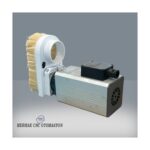
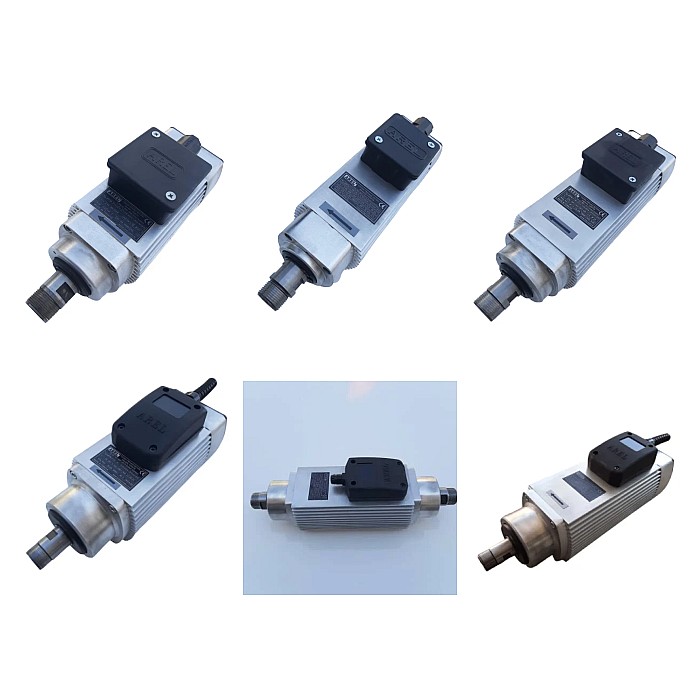
Air-cooled spindle motors, as the name suggests, dissipate heat from the motor’s surface or with the help of an integrated fan, using ambient air. These systems typically feature a fan mounted at the rear of the motor. This fan facilitates heat transfer by drawing air over the cooling fins on the motor’s outer surface or through the motor’s interior. Their simple structure makes installation easy and generally offers a lower initial investment cost. Air-cooled motors reduce system complexity as they do not require an external cooling unit (chiller). They are widely preferred in small and medium-sized CNC machines, especially for processing wood, plastics, and some light metals. However, the efficiency of air-cooled systems depends on ambient temperature and the quality of airflow. Dust and particles in the environment can accumulate on the cooling fins, reducing cooling performance. Furthermore, there is a risk of insufficient heat dissipation during high-speed and prolonged operations, which can lead to motor overheating and performance degradation. They generally have higher noise levels because the fan operates continuously, and airflow friction generates sound. These types of motors typically operate more efficiently at power levels ranging from 2.2 kW to 7.5 kW, but their efficiency significantly decreases at higher powers, potentially shortening motor life.
Water-Cooled Spindle Motors
Water-cooled spindle motors dissipate heat by circulating a cooling fluid (typically a mixture of distilled water and antifreeze) through special channels within the motor. This fluid circulates around the motor via a pump, absorbs heat, and is then sent to an external chiller (cooling unit) or radiator to be cooled. The cooled fluid then returns to the motor, and this closed loop continues continuously. Since water has a much higher heat capacity and thermal conductivity coefficient than air, water-cooled systems offer much more effective and stable cooling performance. This allows the motor to operate at high RPMs and under heavy loads for longer periods. Water-cooled spindle motors are ideal for metal processing, mold making, high-precision applications, and long-term continuous production lines. Thanks to lower operating temperatures, the lifespan of motor bearings is extended, and machining precision increases as thermal expansion is minimized. Additionally, they operate much more quietly as there is no fan noise. However, these systems are more complex; they require a pump, a chiller, hoses, and cooling fluid. This increases both the initial investment cost and maintenance requirements. Regular inspection and replacement of the cooling fluid, leakage risks, and the chiller’s energy consumption add to the operating costs.
Comparative Analysis: Air-Cooled vs. Water-Cooled Spindles
Choosing between air-cooled and water-cooled spindle motors requires a thorough understanding of their respective advantages and disadvantages in various industrial contexts. This section provides a detailed comparative analysis, focusing on key performance indicators, operational considerations, and cost implications.
Performance and Precision
- Air-Cooled Spindles: Generally suitable for applications where high precision is not the absolute top priority and where intermittent operation or lighter loads are common. Their cooling efficiency can fluctuate with ambient temperature, leading to thermal expansion variations in the spindle and potentially affecting machining accuracy, especially during long runs. They are often found in entry-level or hobbyist CNC routers, as well as some industrial machines for wood, plastic, and composite materials where tolerances are more forgiving.
- Water-Cooled Spindles: Offer superior temperature stability due to the high thermal conductivity of water and the controlled environment provided by a chiller. This stability minimizes thermal expansion, leading to significantly higher and more consistent machining precision. They are indispensable for applications requiring tight tolerances, such as metal machining, mold and die making, aerospace components, and intricate engraving. The ability to maintain a stable operating temperature ensures consistent performance even during extended, heavy-duty operations.
Noise Levels
- Air-Cooled Spindles: The integrated fan, especially at high RPMs, generates considerable noise. This can be a significant concern in workshops where noise reduction is critical for operator comfort and compliance with industrial health and safety regulations.
- Water-Cooled Spindles: Operate much more quietly as they do not rely on an internal fan for cooling. The primary noise source comes from the external chiller unit, which can often be placed away from the immediate work area, contributing to a quieter and more comfortable working environment.
Maintenance and Durability
- Air-Cooled Spindles: Require less maintenance in terms of cooling system components. However, the cooling fins can accumulate dust and debris, necessitating regular cleaning to maintain efficiency. Overheating due to poor cooling can shorten the lifespan of bearings and windings.
- Water-Cooled Spindles: While offering better thermal management, they require more comprehensive maintenance. This includes regular checks of the cooling fluid level and quality, replacement of fluid, inspection for leaks in hoses and connections, and maintenance of the chiller unit. Proper maintenance is crucial to prevent corrosion, algae growth, and pump failures, all of which can lead to costly downtime. Despite the higher maintenance demands, their superior cooling often translates to a longer overall lifespan for the spindle motor itself, especially under demanding conditions.
Cost Implications
- Air-Cooled Spindles: Typically have a lower initial purchase cost due to their simpler design and lack of external cooling components. Their installation is also less complex and therefore less expensive. However, potential long-term costs might arise from reduced tool life due to thermal fluctuations, lower precision leading to rework, and a shorter motor lifespan if not properly managed.
- Water-Cooled Spindles: Involve a higher initial investment due to the cost of the spindle motor itself, the chiller unit, pump, hoses, and cooling fluid. Installation can also be more complex and costly. Operating costs include electricity for the chiller and pump, and regular fluid replacement. Despite these higher upfront and operational costs, the benefits of increased precision, extended tool life, reduced downtime, and longer spindle lifespan often justify the investment for high-production industrial environments.
Environmental Factors and Installation
- Air-Cooled Spindles: Are sensitive to ambient temperature and air quality. In dusty or hot environments, their cooling efficiency can be severely compromised. They are easier to install as they are self-contained.
- Water-Cooled Spindles: Are less affected by ambient conditions, making them suitable for a wider range of industrial environments. However, their installation requires careful planning for the placement of the chiller, routing of hoses, and ensuring a leak-free system.
The choice between air-cooled and water-cooled spindle motors ultimately depends on the specific application’s requirements, budget, and operational priorities. For high-precision, heavy-duty, and continuous operations, water-cooled systems offer unmatched performance and longevity. For lighter tasks, intermittent use, or budget-constrained projects, air-cooled spindles can be a viable and cost-effective solution.
Practical Industrial Applications and Case Studies
Understanding the theoretical differences between air-cooled and water-cooled spindle motors is crucial, but their practical application in various industrial settings truly highlights their strengths and limitations. This section explores typical industrial scenarios where each type of spindle motor excels, providing insights for B2B buyers.
Air-Cooled Spindles in Practice
Air-cooled spindle motors are a popular choice for applications where the primary materials are softer and the machining operations are less intensive. Their simplicity and lower initial cost make them attractive for certain segments of the manufacturing industry.
- Woodworking and Furniture Manufacturing: In CNC router machines used for cutting, carving, and engraving wood, MDF, and particleboard, air-cooled spindles are very common. For example, a furniture factory producing cabinet doors or decorative panels might use a 3 kW to 6 kW air-cooled spindle. The heat generated during these operations is generally manageable by air cooling, and the required precision is typically within the capabilities of these systems. The ability to operate without an external water supply simplifies machine setup and reduces maintenance.
- Plastic and Acrylic Fabrication: For cutting and shaping various plastics, acrylics, and composites, air-cooled spindles offer sufficient performance. A sign-making company using a CNC router to cut acrylic letters or shapes would find an air-cooled spindle effective. The material properties and cutting speeds usually do not generate excessive heat that would necessitate water cooling.
- Light-Duty Engraving and Prototyping: For rapid prototyping or light engraving tasks on materials like foam, soft metals (e.g., aluminum sheets with shallow cuts), or PCBs, air-cooled spindles are often adequate. Their quick setup and lower cost are beneficial for businesses with diverse, less demanding projects.
Case Study Example (Air-Cooled): A small custom cabinet shop invested in a Mermak CNC router with a 4.5 kW air-cooled spindle. They primarily process MDF and solid wood for custom kitchen cabinets. The air-cooled spindle proved to be cost-effective, easy to maintain, and provided sufficient precision for their joinery and decorative cuts. While noise was a factor, it was mitigated by proper workshop layout and hearing protection for operators. The shop appreciated the minimal setup and operational simplicity.
Water-Cooled Spindles in Practice
Water-cooled spindle motors are the preferred choice for demanding industrial applications that require high precision, continuous operation, and the ability to process hard materials effectively.
- Metal Machining and Mold Making: In industries like automotive, aerospace, and mold manufacturing, where materials such as steel, aluminum, titanium, and other alloys are machined, water-cooled spindles are essential. A machine shop producing intricate molds for plastic injection or metal stamping would rely on a 9 kW to 24 kW water-cooled spindle. The high cutting forces and prolonged machining times generate significant heat, which only a water-cooled system can effectively dissipate, ensuring tool longevity and dimensional accuracy.
- High-Precision Engraving and Jewelry Making: For delicate and highly detailed engraving on metals, precious stones, or even glass, water-cooled spindles provide the necessary thermal stability to achieve micron-level precision. The consistent temperature prevents material distortion and ensures clean, sharp edges.
- Stone and Glass Processing: Cutting and polishing granite, marble, or glass with a CNC machine generates substantial heat and abrasive dust. Water-cooled spindles are ideal here, not only for heat management but also because the cooling fluid can help flush away debris, protecting the spindle bearings and improving surface finish.
- Continuous Production Lines: In large-scale manufacturing facilities where CNC machines operate 24/7, water-cooled spindles are critical for maintaining consistent performance and preventing unscheduled downtime due to overheating. Their robust cooling capabilities ensure reliability under constant load.
Case Study Example (Water-Cooled): A precision engineering firm specializing in aerospace components upgraded their CNC milling machine with a Mermak 12 kW water-cooled spindle. They frequently machine high-strength aluminum alloys and titanium for aircraft parts, requiring extremely tight tolerances. The water-cooled system maintained the spindle’s temperature within a narrow range, significantly reducing thermal drift and improving part accuracy. Despite the higher initial investment and the need for chiller maintenance, the firm reported a substantial increase in production quality, reduced scrap rates, and extended tool life, leading to a positive return on investment.
These examples illustrate that the selection of a spindle motor’s cooling method is not a one-size-fits-all decision. It must be carefully aligned with the specific materials, operational demands, precision requirements, and overall production goals of the industrial application. Mermak CNC offers a range of both air-cooled and water-cooled spindle motors, ensuring that B2B buyers can find the optimal solution for their unique manufacturing challenges.
Installation, Maintenance, and Operational Considerations
Beyond the initial selection, the long-term performance and cost-effectiveness of a CNC spindle motor are heavily influenced by proper installation, diligent maintenance, and careful operational practices. This section delves into these critical aspects for both air-cooled and water-cooled systems.
Installation Guidelines
- Air-Cooled Spindles: Installation is generally straightforward. Ensure adequate clearance around the motor for proper airflow. Avoid enclosing the spindle in a tight space that could restrict air circulation. The ambient temperature of the workshop should be within the manufacturer’s recommended operating range. No external plumbing or chiller unit is required, simplifying the setup.
- Water-Cooled Spindles: Installation is more complex. It involves connecting the spindle to a chiller unit via hoses. Ensure that the hoses are correctly routed, secured, and free from kinks or sharp bends that could impede fluid flow. The chiller unit must be placed in a location with good ventilation and away from excessive heat sources. Use only the recommended cooling fluid (typically distilled water with antifreeze/anti-corrosion additives) to prevent internal damage and ensure optimal heat transfer. Proper electrical connections for both the spindle and the chiller are paramount.
Maintenance Regimen
- Air-Cooled Spindles: The primary maintenance task is keeping the cooling fins and fan clean. Dust, chips, and debris can accumulate, reducing cooling efficiency. Regular compressed air cleaning or brushing is recommended. Inspect the fan for any damage or obstruction. Listen for unusual noises that might indicate bearing wear.
- Water-Cooled Spindles: Require a more rigorous maintenance schedule:
- Cooling Fluid Check: Regularly inspect the cooling fluid level in the chiller reservoir and top up as needed.
- Fluid Quality: Periodically check the quality of the cooling fluid. Over time, it can degrade, become contaminated, or lose its anti-corrosion properties. Follow the manufacturer’s recommendations for fluid replacement intervals (e.g., every 6-12 months).
- Leak Detection: Regularly inspect all hoses, connections, and the chiller unit for any signs of leaks. Even small leaks can lead to significant issues if not addressed promptly.
- Chiller Maintenance: Clean the chiller’s condenser coils and air filters to ensure efficient heat exchange. Check the pump for proper operation and listen for abnormal noises.
- Spindle Bearings: While cooling helps extend bearing life, regular monitoring for unusual vibrations or noise is crucial for both types of spindles.
Operational Considerations
- Temperature Monitoring: For both types, if your CNC machine has temperature sensors for the spindle, monitor them regularly. For water-cooled systems, ensure the chiller maintains the fluid within the specified temperature range.
- Load Management: Avoid consistently overloading the spindle beyond its rated capacity, regardless of the cooling method. While water-cooled spindles handle heavy loads better, prolonged extreme stress can still lead to premature wear.
- Warm-up Procedures: Implement proper warm-up routines for the spindle, especially for high-precision applications. This allows the spindle to reach a stable operating temperature gradually, reducing thermal shock and improving accuracy.
- Environmental Control: For air-cooled spindles, try to maintain a stable and clean workshop environment. For water-cooled systems, ensure the chiller is not exposed to extreme temperatures that could affect its efficiency.
- Tooling and Feeds/Speeds: Proper selection of cutting tools and optimization of feed rates and spindle speeds are crucial. Incorrect parameters can generate excessive heat, putting undue stress on the spindle and its cooling system.
By adhering to these installation, maintenance, and operational best practices, industrial B2B buyers can maximize the lifespan, performance, and return on investment for their CNC spindle motors, regardless of whether they choose an air-cooled or water-cooled system. Mermak CNC provides comprehensive support and documentation to assist customers in these critical areas.
Conclusion and Recommendation for B2B Buyers
The decision between an air-cooled and a water-cooled CNC spindle motor is a pivotal one for any industrial B2B buyer, directly impacting machine performance, operational costs, and the quality of manufactured products. As this guide has detailed, both cooling methods offer distinct advantages and disadvantages, making the optimal choice highly dependent on the specific application requirements.
For applications prioritizing simplicity, lower initial investment, and processing softer materials like wood, plastics, or composites, an air-cooled spindle motor is often the most suitable and cost-effective solution. These systems are easier to install and maintain, making them ideal for workshops with less demanding production schedules or those operating in environments where a complex water-cooling setup is impractical. However, buyers must be mindful of their limitations regarding noise, sensitivity to ambient temperature, and potential for reduced precision during prolonged, heavy-duty operations.
Conversely, for industrial applications demanding high precision, continuous heavy-duty operation, and machining of hard materials such as metals, stone, or glass, a water-cooled spindle motor is the unequivocally superior choice. While requiring a higher initial investment and more diligent maintenance, the benefits of superior thermal stability, extended tool life, reduced thermal expansion, and significantly quieter operation translate into higher quality output, increased productivity, and a longer overall lifespan for the spindle motor. These advantages often lead to a greater return on investment in the long run for high-volume or high-value production environments.
Key Considerations for B2B Buyers:
- Material Type: What materials will be primarily processed? Softer materials often tolerate air cooling, while harder materials demand the efficiency of water cooling.
- Precision Requirements: What level of dimensional accuracy and surface finish is critical for your products? High-precision applications strongly favor water-cooled systems.
- Operating Hours and Load: Will the machine run continuously for long periods or intermittently? Heavy, continuous loads are best handled by water-cooled spindles.
- Workshop Environment: Is your workshop prone to high ambient temperatures or excessive dust? These factors can severely impact air-cooled spindle performance.
- Budget: Consider both initial purchase costs and long-term operating and maintenance expenses.
- Noise Sensitivity: If noise reduction is a priority for your operators or facility, water-cooled spindles offer a quieter solution.
Ultimately, the best CNC spindle motor for your industrial operation is one that aligns perfectly with your production needs, technical specifications, and budgetary constraints. Mermak CNC is committed to providing high-quality spindle motors and expert guidance to help you make this critical decision. Our team of specialists can assist you in evaluating your specific application and recommending the most appropriate cooling solution to ensure optimal performance and longevity for your CNC router machine.
For further consultation or to explore our range of industrial CNC spindle motors, please do not hesitate to request a quote on WhatsApp. We are here to power your precision manufacturing needs.
FAQ
What is the fundamental difference between air-cooled and water-cooled CNC spindle motors?
Air-cooled spindle motors dissipate heat using an integrated fan that blows ambient air over cooling fins. Water-cooled spindle motors circulate a cooling fluid (typically water with additives) through internal channels, which then passes through an external chiller unit to dissipate heat.
Which type of spindle motor is better for my specific industrial application?
Air-cooled spindles are generally more suitable for lighter applications involving materials like wood, plastics, and composites, where high precision is not the absolute top priority. Water-cooled spindles are ideal for heavy-duty, high-precision applications such as metal machining, mold making, and continuous production, where thermal stability is crucial.
What are the main advantages of water-cooled spindle motors over air-cooled ones?
Water-cooled spindles offer superior thermal stability, leading to higher and more consistent machining precision, especially during long operations. They also operate much more quietly. However, they have a higher initial cost and require more complex maintenance, including regular fluid checks and chiller maintenance.
What are the benefits of choosing an air-cooled spindle motor?
Air-cooled spindles are simpler to install and have a lower initial cost. They require less maintenance in terms of cooling system components, primarily needing regular cleaning of cooling fins. However, they can be noisier and their efficiency can be affected by ambient temperature and dust.
What maintenance is required for each type of spindle motor?
For air-cooled spindles, regularly clean the cooling fins and fan to prevent dust buildup. For water-cooled spindles, regularly check the cooling fluid level and quality, replace the fluid as recommended, inspect for leaks, and maintain the chiller unit's condenser coils and filters.