No products in the cart.
Why Do Taps Break During Threading? Causes and Solutions
Contents
Tap breakage during threading is a common yet costly issue in industrial manufacturing. This article delves into the primary reasons behind tap failure, including incorrect cutting parameters, improper tap selection, insufficient lubrication, chip congestion, workpiece material hardness, and worn-out taps. Discover practical solutions and best practices to ensure efficient and reliable threading operations, minimizing downtime and production costs.
Mermak CNC Technical Guide
Practical notes for CNC router, automation and industrial motion systems.
Understanding Tap Breakage in Industrial Threading
In the realm of industrial automation and machining, threading (tapping) operations are fundamental. However, tap breakage during this process is a frequent and problematic issue, leading to significant disruptions, increased costs, and production delays. Tap breakage is rarely due to a single cause; it typically results from a combination of factors. Fundamentally, a tap is a cutting tool designed to create internal threads within a workpiece. When a tap breaks, it signifies that the applied forces have exceeded the tool’s structural limits. These excessive forces can originate from incorrect process parameters, inherent tool defects, workpiece material characteristics, or issues with the machine and fixturing. In high-volume, automated production environments, rapid diagnosis and prevention of such failures are crucial for maintaining efficiency and quality. Tap breakage incurs not only the cost of the tool itself but also indirect costs associated with scrapped workpieces, machine downtime, and disrupted production schedules. Therefore, meticulous control and optimization at every stage of the tapping process are essential.
Operating Principles and Technical Data
The tapping process involves creating threads of a specific profile and pitch within a cylindrical hole. During this operation, the tap cuts or forms the material, removing chips and forming the thread profile. Friction and cutting forces are generated between the tap’s cutting edges and the workpiece material, requiring a specific torque to drive the tap. Key technical reasons leading to tap breakage include:
- Incorrect Cutting Parameters: Spindle speed (RPM) and feed rate (mm/rev) must be precisely matched to the tap and workpiece material. Excessive speed or improper feed can lead to overheating and excessive torque, causing the tap to break.
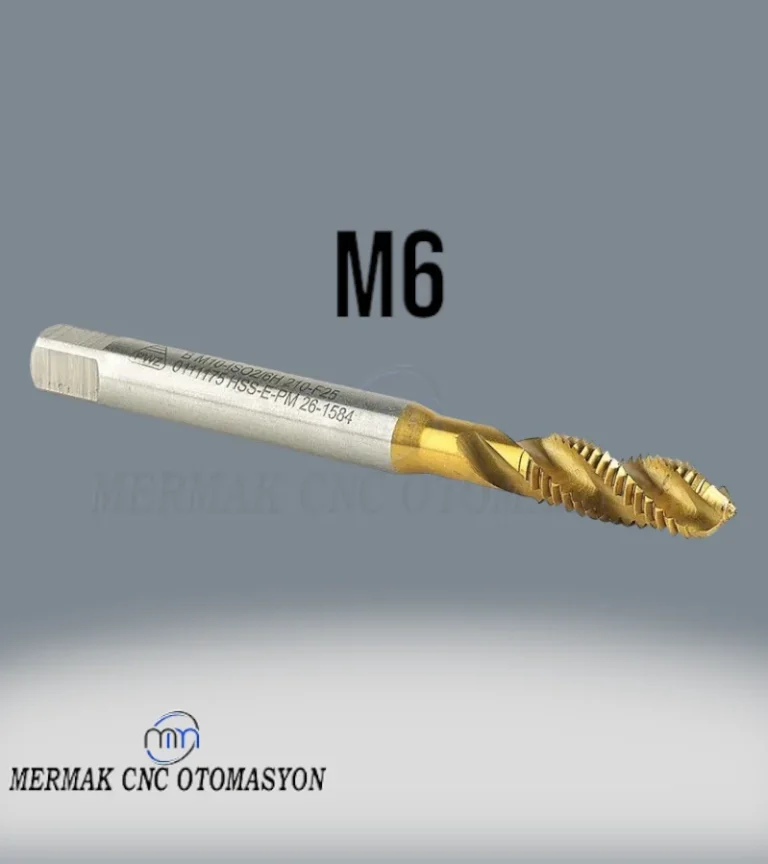
- Improper Tap Selection: The correct tap type (e.g., straight flute, spiral flute, spiral point, forming tap) and material (e.g., HSS, HSS-E, Carbide) must be chosen based on the workpiece material (steel, aluminum, stainless steel, cast iron), hole type (blind or through), and required thread tolerance. For instance, spiral flute taps are ideal for materials that produce long chips, facilitating chip evacuation, while straight flute taps are suitable for short-chipping materials.
- Insufficient Cooling and Lubrication: The heat generated during cutting significantly impacts tap hardness and lifespan. Inadequate or incorrect coolant application can lead to overheating and loss of tap strength, accelerating breakage. Lack of lubrication increases friction and the required torque.
- Chip Congestion: Especially in blind holes or deep threading, the inability to evacuate chips properly can cause them to accumulate and jam in the tap flutes. This congestion results in sudden, excessive torque on the tap, leading to breakage.
- Incorrect Pre-hole Diameter: The diameter of the pilot hole drilled before tapping is critical. A hole that is too small requires the tap to remove excessive material, leading to high torque and stress. A hole that is too large results in weak or incomplete threads. The target thread percentage (typically 60-75%) must be maintained.
- Workpiece Material Properties: The hardness, tensile strength, and machinability of the material directly influence tap life and breakage risk. For high-hardness or abrasive materials, coated or carbide taps are recommended.
- Tap Wear: A worn-out, dull, or damaged tap increases cutting resistance and the likelihood of breakage. Regular inspection and timely replacement of taps are essential.
- Machine and Fixturing Issues: Spindle runout, misalignment, non-rigid tool holders, or insecure workpiece clamping can impose unbalanced loads on the tap, leading to breakage. In machines without rigid tapping capabilities, a mismatch between feed and spindle speed synchronization is a significant cause of tap failure.
| Parameter | Value/Description |
|---|---|
| Tap Material | HSS (General), HSS-E (Stainless), Carbide (Hard/Abrasive Materials) |
| Tap Coating | TiN, TiCN, AlCrN, AlTiN (Enhances life and performance) |
| Pre-hole Diameter Tolerance | ISO 2768-m or finer (Determined by thread percentage) |
| Cutting Speed (Vc) | 5-50 m/min (Varies by material and tap type) |
| Feed (f) | Equal to pitch (rigid tapping), Variable (floating holder) |
| Coolant Type | Emulsion, Synthetic, Neat Oil (Selected based on material) |
| Chip Evacuation | Spiral flute (up), Spiral point (forward), Straight flute (short chips) |
| Thread Percentage | 60% – 75% (For optimal strength and torque) |

Field Considerations for Preventing Tap Breakage
- Correct Tap Selection and Parameter Optimization: Choose the most suitable tap type, material, and coating based on the workpiece material properties (hardness, tensile strength, chip characteristics) and thread depth. For materials like stainless steel that produce long chips, high-performance spiral flute (up-cutting) or spiral point (down-cutting) HSS-E or carbide taps with appropriate coatings are recommended. Adjust cutting speed and feed rates according to the tap manufacturer’s recommendations and material supplier data. Generally, harder materials require lower cutting speeds and optimized feed rates.
- Pre-hole Preparation and Quality: The diameter of the pilot hole is a critical factor directly impacting tap breakage. The pre-hole diameter must achieve the target thread percentage, typically between 60-75% for optimal strength and torque. A hole that is too small leads to excessive torque, while one that is too large results in weak threads. Hole perpendicularity, roundness, and surface finish are also important. Burrs in the hole can cause extra stress during tap entry. Ensure holes are precisely drilled, reamed, and deburred.
- Effective Cooling and Lubrication: The heat and friction generated during tapping are primary causes of reduced tap life and breakage. Use sufficient quantities of the correct type of coolant (emulsion, synthetic oil, or neat oil). Coolant not only dissipates heat but also aids in chip evacuation and reduces friction. For deep holes and gummy materials, using through-spindle coolant or high-pressure coolant systems significantly improves chip evacuation and cooling.
- Chip Management and Evacuation: Chip congestion is a leading cause of tap breakage. In blind holes, selecting the appropriate tap geometry is crucial to prevent chips from accumulating in the flutes. Spiral flute taps evacuate chips upwards, while spiral point taps push them forward. Employing back- और forth tapping cycles (peck tapping) or specialized chip-breaking strategies can help break chips into smaller pieces for easier evacuation.
- Machine Rigidity and Tool Holder Selection: The rigidity of the machining center, spindle runout, and the quality of the tool holder are vital for successful tapping. A rigid setup minimizes vibrations and ensures consistent force application. Using a floating or rigid tap holder that compensates for minor misalignments is essential, especially in machines without synchronized tapping capabilities. Ensure the workpiece is securely fixtured to prevent movement during the operation.
By carefully considering these factors and implementing best practices, manufacturers can significantly reduce the incidence of tap breakage, leading to improved productivity, reduced costs, and enhanced product quality. For advanced machining solutions and expert advice on optimizing your CNC operations, including threading processes, contact Mermak CNC.
Ready to optimize your CNC machining processes? Request a quote on WhatsApp today and let us help you achieve greater efficiency and precision.
Related product categories: Genel · Taşlanmış Sert Miller · Uzun Köşe Bağlantı Parçası