









































































Does a Machine Not Sitting Properly on the Floor Affect Cutting Quality?

📑 Table of contents (Click to open)
Practical notes for CNC router, automation and industrial motion systems.
The Critical Link: Machine Installation and Cutting Quality
Yes, absolutely! It is scientifically proven and supported by field experience that a machine not sitting properly and firmly on the floor directly and negatively impacts cutting quality, especially in industrial automation processes. This situation leads to vibrations, loss of precision, and ultimately, product defects.
Understanding the Impact of Improper Installation
In industrial manufacturing, particularly for CNC router machines, laser cutters, plasma cutters, milling machines, and other high-precision processing equipment, the machine’s proper and correct seating on the floor is fundamental to operational performance. An improperly seated machine refers to situations where the floor is uneven, the machine is not adequately leveled, proper anchoring is not done, or there are gaps between the floor and the machine. Such installation errors prevent the machine from absorbing the vibrations generated during operation or external vibrations, cause the machine structure to lose stability, and consequently reduce processing precision. The degradation in cutting quality manifests as increased surface roughness, deviations from geometric tolerances, burr formation, shortened tool life, and even gradual damage to the machine’s structural integrity. In the long run, this situation increases production costs, lowers product quality, and negatively affects the company’s competitiveness.
Operational Principles and Technical Data
A machine’s proper seating on the floor directly influences its behavior under static and dynamic loads. Static loads are the continuous pressures resulting from the machine’s own weight. Dynamic loads are the movements, cutting forces, motor vibrations, and other operational forces that arise during work. When a machine is not seated properly, these loads are not distributed evenly. This leads to excessive stress at some points of the machine while others lack adequate support. Especially in machines operating at high speeds or applying large cutting forces, these imbalances can trigger resonance frequencies. Resonance means a dramatic increase in the amplitude of machine vibrations, which uncontrollably affects the cutting tool’s movement on the workpiece, severely degrading surface quality, compromising dimensional accuracy, and shortening tool life. Furthermore, an unbalanced machine causes abnormal wear on bearings, ball screws, and other precision moving components, shortening the machine’s overall lifespan and increasing maintenance costs.
Modern industrial machines are designed to operate with micron-level precision. To maintain this precision, the machine frame and moving axes must possess excellent rigidity and stability. The connection to the floor is a key component of this rigidity and stability. Proper leveling during installation ensures that all machine feet make full and equal contact with the floor. This minimizes stresses within the machine frame and allows cutting forces to distribute evenly throughout the machine structure. Anchor bolts securely fasten the machine to the floor, preventing horizontal and vertical movements during operation. Additionally, specialized vibration damping pads or isolators used in some cases reduce vibration transfer between the machine and the floor, preventing external or internal vibrations from affecting cutting quality. These technical details are critical not only for achieving high-quality products but also for extending the life of the machine investment and ensuring operational safety.
| Parameter | Value/Description |
|---|---|
| Floor Flatness Tolerance | Typically 0.02 – 0.05 mm/meter (According to DIN 874 standard) |
| Machine Leveling Precision | 0.01 – 0.02 mm/meter (Using a precision spirit level or laser alignment) |
| Anchor Bolt Torque | According to machine manufacturer’s specifications (e.g., 200-300 Nm for M20 bolt) |
| Vibration Amplitude Limit | Generally 0.005 – 0.01 mm (Depending on cutting precision requirements) |
| Surface Roughness Impact | Risk of degradation in Ra value by 10-50% |
| Tool Life Reduction | Risk of premature wear and breakage by 15-40% |
| Machine Lifespan Impact | Premature wear on bearings and moving parts, shortening overall lifespan |
On-Site Considerations
- Floor Preparation and Foundation Stability: Before machine installation, ensure the floor has sufficient strength to support the machine’s weight and operational loads. Typically, specially reinforced concrete floors with vibration-damping properties are preferred. The floor should not collapse or crack under static and dynamic loads. A stable foundation is the first and most crucial step for long-term, precise machine operation. Floor flatness should be checked with a precise laser level or a high-quality spirit level, and corrected with epoxy or special screed applications if necessary.
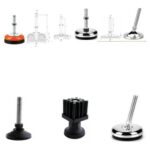
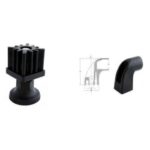
- Precise Leveling and Alignment: Ensure each support point of the machine sits perfectly on the floor using leveling feet or special shims. This process guarantees that the machine’s weight is distributed equally across all feet and prevents internal stresses in the machine frame. Leveling should be performed with micron precision, generally within the tolerances specified by the machine manufacturer. Improper leveling can lead to bending in the machine structure, causing deviations in axial movements and thus cutting errors.
- Correct Anchoring and Tightening Torques: The machine must be secured to the floor with anchor bolts of appropriate diameter and type. Anchor points should be determined according to the machine manufacturer’s instructions, and bolts should be tightened to the specified torque values. Overtightening or undertightening can reduce the effectiveness of the anchor. Insufficient tightening allows the machine to move during operation, while overtightening can cause cracks in the machine frame or the floor. The primary purpose of anchoring is to keep the machine stable and prevent dynamic forces generated during operation from displacing or vibrating the machine.
- Vibration Isolation and Damping: Especially for machines requiring high precision or generating significant vibrations, vibration damping pads or isolators should be placed between the machine and the floor. These elements prevent the transfer of vibrations generated by the machine to the floor and vice versa. This protects the machine from environmental influences and prevents it from affecting other sensitive equipment in the vicinity. Vibration isolation has a direct improving effect on surface quality and tool life.
- Regular Checks and Maintenance: After the initial installation and during periodic maintenance, the condition of leveling and anchor bolts should be checked regularly. Over time, due to operational loads, temperature changes, or floor movements, leveling can be disturbed, or anchor bolts may loosen. These checks help detect potential issues early, preventing a decline in cutting quality.

Common Issues and Solutions
Issues arising from a machine not being properly seated on the floor typically manifest through a series of symptoms, negatively impacting production efficiency, product quality, and machine lifespan. Here are common issues and suggested solutions:
- Issue: Surface Roughness and Burr Formation on Machined Parts
Explanation: The cut surfaces exhibit unexpected roughness, and burrs are formed along the edges, indicating that the cutting tool is not engaging the material cleanly and consistently. This is often a direct result of excessive vibration or slight movements of the workpiece or the machine during the cutting process due to improper installation. The servo drive and linear guide rail systems may not be able to maintain their precise path when subjected to uncontrolled vibrations.
- Issue: Dimensional Inaccuracies and Geometric Deviations
Explanation: Parts are not meeting the specified tolerances. For example, holes may not be perfectly round, or straight cuts may have slight curves. This occurs because the machine’s frame flexes or shifts under cutting forces, causing the spindle motor and cutting tool to deviate from their programmed path. An unstable base means the motion control system cannot guarantee the intended precision.
- Issue: Accelerated Tool Wear and Breakage
Explanation: Cutting tools wear out much faster than expected or break prematurely. This is a consequence of the tool experiencing inconsistent cutting forces, chatter, or impacts caused by machine instability. The vibrations can cause the tool to chatter against the material, leading to premature wear on the cutting edges and potential catastrophic failure.
- Issue: Excessive Noise and Vibration During Operation
Explanation: The machine operates with unusually loud noises and noticeable vibrations that are transmitted through the floor. This is a clear indicator of resonance or imbalance, often stemming from poor leveling or inadequate foundation support. The vacuum table might also be affected, leading to poor workpiece holding.
- Issue: Premature Wear of Machine Components
Explanation: Bearings, ball screws, linear guides, and other moving parts show signs of premature wear. This is due to the increased stress placed on these components by an unstable machine frame, which forces them to work harder to compensate for the lack of rigidity. The motion control system’s accuracy is compromised by worn components.
Solutions:
- Re-level the Machine: Use precision leveling equipment to ensure all machine feet are perfectly supporting the machine. Adjust leveling feet or use shims as necessary.
- Check and Tighten Anchor Bolts: Verify that all anchor bolts are present, correctly installed, and tightened to the manufacturer’s specified torque.
- Inspect and Reinforce the Foundation: If the floor is suspected to be the issue, consult with a structural engineer. It may require reinforcement, a new concrete pour, or the installation of anti-vibration pads.
- Install Vibration Dampers: If the machine is on a less-than-ideal floor, consider installing high-quality vibration damping pads or isolators under the machine feet.
- Regular Inspections: Implement a schedule for checking leveling and anchor points as part of routine maintenance.
Ensuring your industrial CNC router machine is perfectly installed is not just a procedural step; it’s a critical investment in the quality, efficiency, and longevity of your manufacturing operations. Don’t let installation oversights compromise your production standards.
Ready to ensure your CNC machinery operates at peak performance? Request a quote on WhatsApp for expert installation and support services.
Related product categories: General · Electronics · Combination Packages
