




































































How Filter Clogging Affects Dust Extraction Performance
📑 Table of contents (Click to open)
Filter clogging significantly degrades industrial dust extraction systems. It restricts airflow, overloads fan motors, and increases energy use, ultimately reducing dust collection efficiency and system lifespan. This article details the technical reasons behind this performance drop and offers practical solutions.
Practical notes for CNC router, automation and industrial motion systems.
Understanding Dust Extraction Performance Degradation from Filter Clogging
Industrial dust extraction systems are vital for maintaining a safe working environment, extending equipment life, and ensuring product quality. The core components responsible for air purification are the filters. Over time, collected dust and particles accumulate on the filter surface, clogging the pores. This blockage directly impairs the system’s primary function: air suction performance. When a filter becomes clogged, the vacuum generated by the fan struggles to draw air through it. This resistance increases the system’s pressure differential (delta P), forcing the fan motor to work harder, consume more energy, and consequently, reduce suction power. This leads to higher operational costs, significantly lower dust collection efficiency, and increased health and safety risks.
Operating Principles and Technical Data
Industrial dust collection systems typically comprise a fan, a filter unit, a dust collector, and ductwork. The fan draws contaminated air from the production area into the filter unit, where particles are trapped. Clean air is then released. The dust layer that builds up on the filter, known as the dust cake, can initially enhance filtration efficiency. However, beyond a certain thickness, it creates substantial resistance to airflow, referred to as pressure drop or pressure loss.
Key technical parameters affected by filter clogging include:
- Airflow (m³/h or CFM): The volume of air the system can move per unit of time. Clogged filters directly reduce airflow.
- Static Pressure (Pa or in WG): The pressure the fan generates to overcome resistance. A clogged filter demands higher static pressure, but this comes at the cost of reduced airflow.
- Differential Pressure (ΔP): The pressure difference between the filter’s inlet and outlet. This is the primary indicator of filter blockage. A low ΔP signifies a clean filter, while a high ΔP indicates clogging. Reaching a specific ΔP threshold typically signals the need for filter cleaning or replacement.
- Filtration Efficiency (%): The percentage of particles of a specific size captured by the filter. While clogged filters might appear to capture more, the reduced airflow compromises overall dust collection capacity.
- Energy Consumption (kW): The fan motor expends more power to overcome the resistance of a clogged filter, increasing energy costs.
- Air-to-Cloth Ratio (ACR): The amount of air passing through a unit of filter surface area (m³/min/m²). A high ACR can lead to faster filter clogging.
When filters clog, the fan’s performance shifts along its performance curve to a point of higher static pressure and lower airflow. The fan motor operates outside its optimal range, leading to overheating, bearing wear, and potential failure. Insufficient airflow at the pickup points reduces air velocity, preventing heavier particles from being conveyed and causing them to settle in the ductwork, diminishing the system’s overall cleaning capability. As clogging worsens, filter cleaning systems (like jet-pulse) become less effective, unable to dislodge the dense dust cake. Consequently, continuous operation under high differential pressure shortens filter life and necessitates frequent replacements.
| Parameter | Value/Description |
|---|---|
| Differential Pressure (ΔP) Threshold | New Filter: 100-250 Pa; Clogging Threshold: 1000-1500 Pa (Varies by application) |
| Nominal Airflow Loss | 20-50% (Depending on clogging level) |
| Energy Consumption Increase | 10-30% (Higher in severely clogged systems) |
| Fan Motor Load | 15-40% increase (Can cause overheating and reduced lifespan) |
| Average Filter Lifespan Reduction | 25-50% (Due to inadequate cleaning and overload) |
| Particulate Emissions Increase | 5-15% (In case of low suction and bypass) |
| Air-to-Cloth Ratio (ACR) | Optimal: 1-3 m³/min/m² (Varies by application; high ACR clogs filters quickly) |

Field Considerations
- Differential Pressure Monitoring: Install manometers or differential pressure sensors across the filters to continuously monitor ΔP. Transmit this data to an automation panel for real-time status tracking. Automated alerts or cleaning cycles should trigger when critical ΔP thresholds are reached. This is crucial for early detection and intervention.
- Periodic Filter Cleaning and Replacement: Most dust collection systems use jet-pulse or mechanical shaker systems for automatic filter cleaning. Optimize the frequency and duration of these cycles based on the type and volume of dust collected. Over-cleaning can shorten filter life, while insufficient cleaning leads to clogging. Replace filters promptly when they reach their physical end-of-life or when ΔP remains high despite cleaning.
- Correct Filter Selection: Industrial applications generate diverse dust types and particle sizes. Choosing the appropriate filter media (e.g., polyester, PTFE membrane, antistatic) and filter type (cartridge, bag, HEPA) maximizes filtration efficiency and filter lifespan. Incorrect selection leads to rapid clogging and performance degradation. Consult filter manufacturer specifications and application guidelines.
- Air Duct and Pickup Point Inspection: Clogging can occur not only in filters but also in ductwork and at pickup points. Dust accumulation in ducts, wear at bends, or improperly positioned hoods can impede airflow. Periodically inspect duct interiors, clean them, and ensure pickup points are correctly positioned and undamaged. An anemometer can verify adequate air velocity.
- Fan Motor and System Component Maintenance: Regularly inspect fan motor bearings, belts, and electrical connections. Overheating or abnormal noises from the motor may indicate excessive load due to clogged filters. Ensure automatic cleaning systems (solenoid valves, compressed air tanks, timers) function correctly. Sensor calibration is also critical.
Common Issues and Solutions Related to Filter Clogging
Filter clogging in industrial dust extraction systems can lead to various problems. Early diagnosis and correct solutions ensure the system operates efficiently.
- Issue: Early and Rapid Filter Clogging
Explanation: New filters clogging quickly or existing filters requiring frequent cleaning often points to issues beyond normal operation. This can stem from incorrect filter selection for the specific dust type (e.g., using a standard filter for fine, sticky dust that requires a specialized media like PTFE or a higher filtration efficiency rating). Another cause is an excessively high Air-to-Cloth Ratio (ACR), meaning too much air is being forced through too little filter surface area, overwhelming the filter’s capacity. Incorrect installation, such as damaged seals or improper seating of filter elements, can also lead to premature clogging by allowing dust bypass and cake formation on unintended surfaces. Furthermore, inadequate or improperly timed cleaning cycles, especially in automated jet-pulse systems, fail to dislodge the dust cake effectively, leading to progressive clogging.
Solution: Review and confirm the filter media and type match the application’s dust characteristics. Calculate and adjust the ACR if necessary by increasing filter surface area or reducing airflow. Ensure filters are installed correctly according to manufacturer guidelines. Verify and optimize the cleaning system’s parameters (pulse duration, frequency, pressure) or consider upgrading to a more effective cleaning mechanism if the current one is insufficient for the dust load.
- Issue: Reduced Suction Power at CNC Router Tool Head
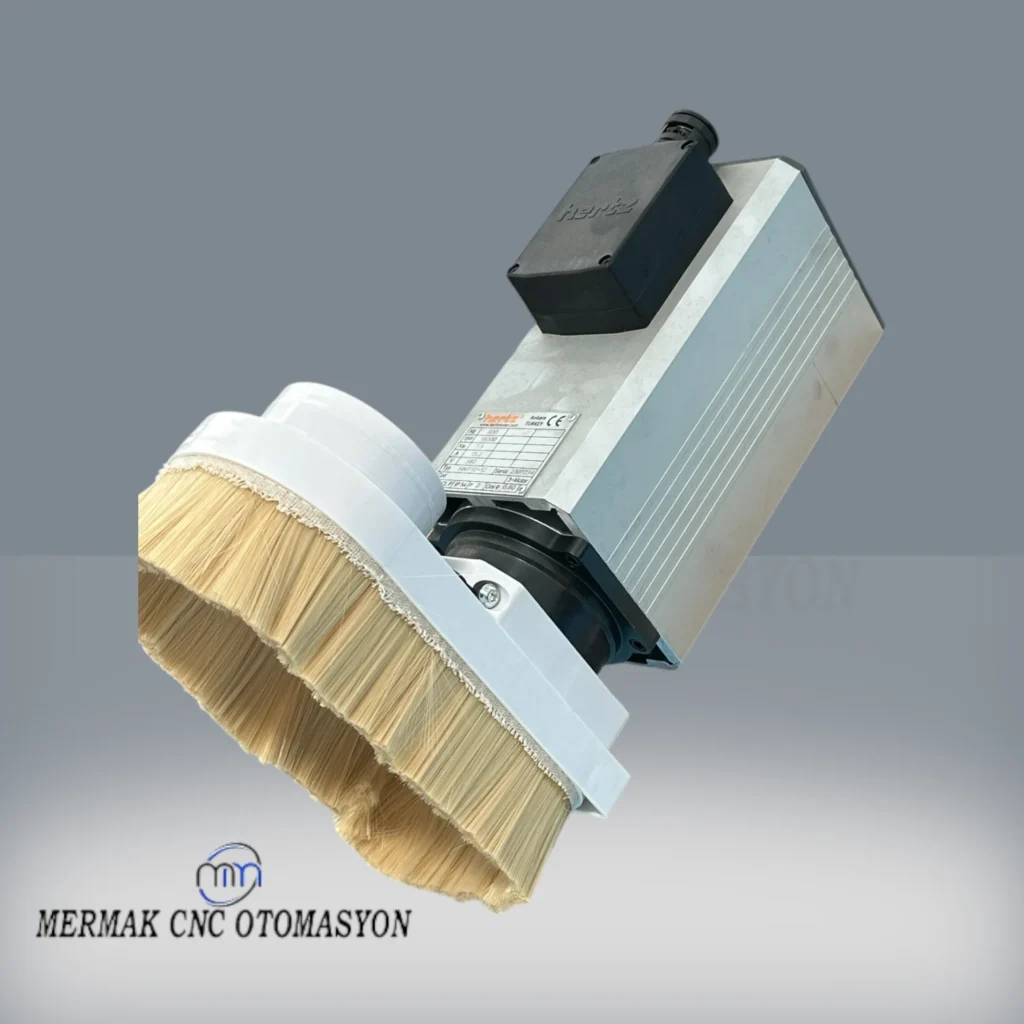
Explanation: This is a direct consequence of reduced airflow caused by filter clogging. The fan struggles to maintain the necessary vacuum pressure at the point of dust generation, typically around the spindle motor and cutting tool on a CNC router machine. This leads to increased dust and chips escaping into the workshop environment, affecting visibility, operator health, and potentially damaging sensitive machine components like servo drives and linear guide rails. The effectiveness of dust extraction is paramount for maintaining a clean cutting zone, which is crucial for achieving precise cuts and extending tool life.
Solution: Regularly monitor the differential pressure (ΔP) across the filters. When ΔP approaches the upper limit, initiate filter cleaning or schedule replacement. Ensure the ductwork leading to the CNC router is adequately sized and free of obstructions. Verify that the dust collection hood at the tool head is properly designed, sealed, and positioned correctly relative to the cutting tool. Check for leaks in the ductwork and connections. If the problem persists despite clean filters and clear ducts, the fan may be undersized for the system’s requirements or experiencing wear, necessitating an inspection or potential upgrade.
- Issue: Increased Energy Consumption and Fan Motor Overload
Explanation: As filters become clogged, the fan motor must work harder to pull air through the increased resistance. This results in higher static pressure generation but lower airflow, pushing the motor’s operating point away from its peak efficiency. The motor draws more electrical current, leading to increased energy consumption and potentially overheating. Prolonged operation under such overload conditions can significantly shorten the motor’s lifespan and increase the risk of premature failure. This is particularly critical in facilities running multiple industrial CNC router machines simultaneously.
Solution: Implement a proactive maintenance schedule based on ΔP monitoring to ensure filters are cleaned or replaced before significant motor strain occurs. Ensure the fan motor is correctly sized for the system’s design airflow and static pressure requirements. Regularly inspect the fan motor for signs of overheating, listen for unusual noises (indicating bearing wear), and check electrical connections. Consider variable frequency drives (VFDs) to optimize fan speed and energy usage based on real-time system demand, rather than running at full speed constantly.
- Issue: Ineffective Automatic Cleaning System
Explanation: Automated cleaning systems, such as jet-pulse, may become ineffective if the dust cake is too dense, sticky, or compacted. This can happen if the cleaning cycles are not frequent enough, the pulse pressure is too low, or the dust properties are not suitable for the system’s design. The cleaning mechanism fails to dislodge the majority of the dust, leading to a gradual buildup and persistent high ΔP. This can also be caused by worn-out pulse valves or insufficient compressed air supply.
Solution: Adjust the frequency, duration, and pressure of the cleaning cycles. Experiment with different settings to find the optimal balance for your specific dust type. If the dust is particularly challenging (e.g., fine, cohesive), consider upgrading the filter media to one with better release properties or a surface coating. Inspect and maintain the compressed air supply system, including filters, dryers, and solenoid valves, ensuring they deliver adequate clean, dry air at the correct pressure. In some cases, a mechanical cleaning assist might be beneficial.
Conclusion
Maintaining optimal dust extraction performance is crucial for operational efficiency, safety, and equipment longevity in any industrial setting, especially when operating CNC router machines. Filter clogging is a primary culprit behind performance degradation, leading to reduced suction, increased energy costs, and potential equipment damage. By diligently monitoring differential pressure, performing regular maintenance, selecting the correct filters, and ensuring all system components are functioning optimally, you can prevent these issues. Proactive management of your dust extraction system ensures a cleaner, safer, and more productive workshop environment.
For solutions tailored to your specific dust extraction needs, including high-performance filters and system components, request a quote on WhatsApp.
Related product categories: General · Electronics · Combination Packages
