






































































Impact of Inadequate CNC Dust Extraction Systems on Cutting Quality
📑 Table of contents (Click to open)
An insufficient CNC dust extraction system directly compromises cutting quality. Learn how dust and chips impact tool performance, surface finish, and machine longevity. Essential for industrial CNC operations.
Practical notes for CNC router, automation and industrial motion systems.
Does Inadequate CNC Dust Extraction Affect Cutting Quality?
Yes, absolutely. An inadequate CNC dust extraction system directly and negatively impacts cutting quality. When dust and chips generated during machining are not effectively removed from the work area, the cutting tool’s performance is degraded, surface roughness increases, dimensional accuracy is compromised, and machine components experience accelerated wear. This significantly reduces production efficiency and product quality.
In industrial automation and manufacturing, CNC machines are fundamental for high-precision and efficient production. However, to utilize these machines to their full potential, environmental factors must also be optimized. This is where CNC dust extraction systems play a critical role. During operation, CNC machines produce various particles—chips, dust, fumes, and vapors—depending on the material being processed. A dust extraction system lacking sufficient capacity or proper design will cause these byproducts to accumulate on the work area and the workpiece.
This accumulation has numerous direct and indirect negative effects on cutting quality:
- Cutting Tool Performance and Lifespan: Dust and chips accumulating on the cutting tool (e.g., end mill, drill bit) increase friction, accelerate heat buildup, and reduce the tool’s cutting efficiency. This leads to premature tool wear, dulling, or even breakage, significantly shortening tool life. Increased tool changes drive up production costs and downtime.
- Surface Roughness and Aesthetic Quality: Dust particles accumulating on the machined surface prevent the tool from achieving a smooth cut. This results in scratches, roughness, burns, or undesirable textures on the final product. For products where aesthetics are crucial, this can lead to customer dissatisfaction and product rejection.
- Dimensional Accuracy and Tolerances: Dust accumulation can alter the tool’s contact point with the workpiece or impede tool movement, leading to dimensional deviations. This can cause parts to fall outside specified tolerances, rendering them non-functional. Such deviations are unacceptable in high-precision applications.
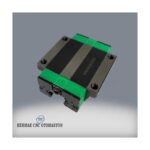
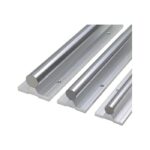
- Wear on Machine Components: Fine dust particles can infiltrate the CNC machine’s moving parts, including linear guide rails, ball screws, bearings, and servo drives, accelerating wear. This reduces the machine’s overall precision, increases maintenance costs, and can lead to unexpected failures.
- Heat Buildup and Material Deformation: Inadequate chip and dust removal can cause heat to build up in the cutting zone. In high-heat applications like metalworking, this can lead to thermal deformation or burning of the workpiece, resulting in material waste.
- Operator Health and Safety: Airborne dust and particles can cause respiratory issues, eye irritation, and allergic reactions for operators. Dust from certain materials (e.g., wood dust, composite dust) can be explosive or carcinogenic, making inadequate extraction systems a serious safety hazard.
Therefore, a CNC dust extraction system is not merely an accessory but a critical component directly influencing cutting quality, production efficiency, and workplace safety.
Operating Principle and Technical Data
The fundamental principle of a CNC dust extraction system is to capture particles generated at the machining point using a high-speed airflow, filter them, and safely store them. These systems typically consist of an extraction hood, hoses or ducting, a fan (blower), a filter unit, and a collection bin. The fan creates negative pressure within the system, drawing air and particles from the machining area into the hood and through the ducting. The air then passes through the filter unit, where solid particles are removed, and the cleaned air is exhausted or recirculated. Collected particles accumulate in the bin.
The system’s effectiveness depends on several key technical parameters:
- Airflow Rate (CFM/m³/h): The volume of air the system can move per unit of time. This is determined by the material being processed, the size of the CNC machine, and the amount of dust generated. Adequate airflow ensures efficient removal of particles from the cutting zone.
- Static Pressure (Pa/in.H₂O): The system’s capacity to overcome resistance to airflow. Hoses, filters, and hoods create resistance. High static pressure capability ensures sufficient suction power even with long duct runs or dense filters.
- Filtration Efficiency (MERV/HEPA): The filter’s ability to capture particles. Expressed by MERV (Minimum Efficiency Reporting Value) or HEPA (High-Efficiency Particulate Air) classification. High-efficiency filters (e.g., MERV 13+ or HEPA) are necessary for fine dust, crucial for protecting both the machine and the operator.
- Motor Power (kW/HP): The power of the fan motor. Higher motor power provides greater airflow and static pressure capacity.
- Noise Level (dB): The sound level produced during operation. It should be within occupational health and safety standards.
- Collection Capacity (Liters): The volume of the dust and chip collection bin. This affects the frequency of emptying.
Different materials may require different extraction systems. For instance, bag filters with cyclone separators are often sufficient for wood dust, while cartridge filter systems with higher filtration efficiency or wet scrubbers are preferred for metal or composite machining. For potentially explosive dusts (e.g., aluminum, titanium, certain wood dusts), ATEX-certified systems and specific safety measures (spark arrestors, explosion panels) are mandatory. Selecting and designing the correct system guarantees cutting quality, operational safety, and cost-effectiveness.
| Parameter | Value/Description |
|---|---|
| Airflow Rate | Typically ranges from 800 to 5000 m³/h (also expressed in CFM). Determined by CNC machine size and material type. |
| Static Pressure | 1500 – 3500 Pa (Pascals) or 6 – 14 in.H₂O. Depends on duct length, filter density, and hood design. |
| Filtration Efficiency | MERV 10-16 (for general dust) or HEPA H13/H14 (for very fine particles and allergens). Special filters for explosive dusts. |
| Filter Type | Bag Filter (wood, light dust), Cartridge Filter (metal, composite, fine dust), Cyclone Pre-separator (large chips), Wet Type (flammable metal dusts). |
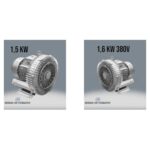
| Motor Power | 1.5 kW (2 HP) to 15 kW (20 HP) or higher, selected based on system capacity and airflow requirements. |
| Noise Level | Typically between 70 dB(A) and 85 dB(A). Lower levels are preferred for operator health; acoustic insulation may be needed. |
| Collection Capacity | 50 liters to 500 liters or more, designed based on production volume and emptying frequency. |
Field Considerations
- Correct Extraction Hood and Ducting Design: The extraction hood must be positioned as close as possible to the cutting point for effective dust capture. An incorrectly positioned or undersized hood will cause dust to disperse. Ducting diameter, length, and bends directly impact airflow and static pressure. Minimizing bends, selecting appropriate diameters, and ensuring sealed connections maximize system efficiency.
- Regular Maintenance: Filters must be cleaned or replaced regularly to maintain optimal airflow and filtration efficiency. Blocked filters drastically reduce suction power. Collection bins need to be emptied promptly to prevent overflow and backflow of dust.
- System Sizing: The dust extraction system must be appropriately sized for the specific CNC machine and the materials being processed. An undersized system will be ineffective, while an oversized one may be unnecessarily costly. Consulting with specialists is recommended.
- Material Properties: The type of material being machined dictates the required extraction system. For example, fine, abrasive dusts (like fiberglass or certain metals) require more robust filtration and wear-resistant components than softer materials like wood.
- Safety Standards: Especially when dealing with flammable or explosive dusts, ensuring the system meets relevant safety standards (e.g., ATEX directives in Europe) is paramount. This includes proper grounding, explosion relief, and spark detection/prevention mechanisms.
Investing in a properly designed and adequately sized industrial CNC router dust extraction system is crucial for maintaining high cutting quality, ensuring the longevity of your machinery, protecting your operators, and achieving consistent production results. Don’t let inadequate dust collection compromise your manufacturing output.
Ready to optimize your CNC operations?
Contact us on WhatsApp to discuss your dust extraction needs and get a personalized quote for a high-performance system.
Related product categories: General · Electronics · Combination Package
