





































































What is a Control Board? How Does it Manage Motors and Drivers in CNC Machines?
📑 Table of contents (Click to open)
Practical notes for CNC router, automation and industrial motion systems.
The Brain of CNC Machines: Understanding the Control Board
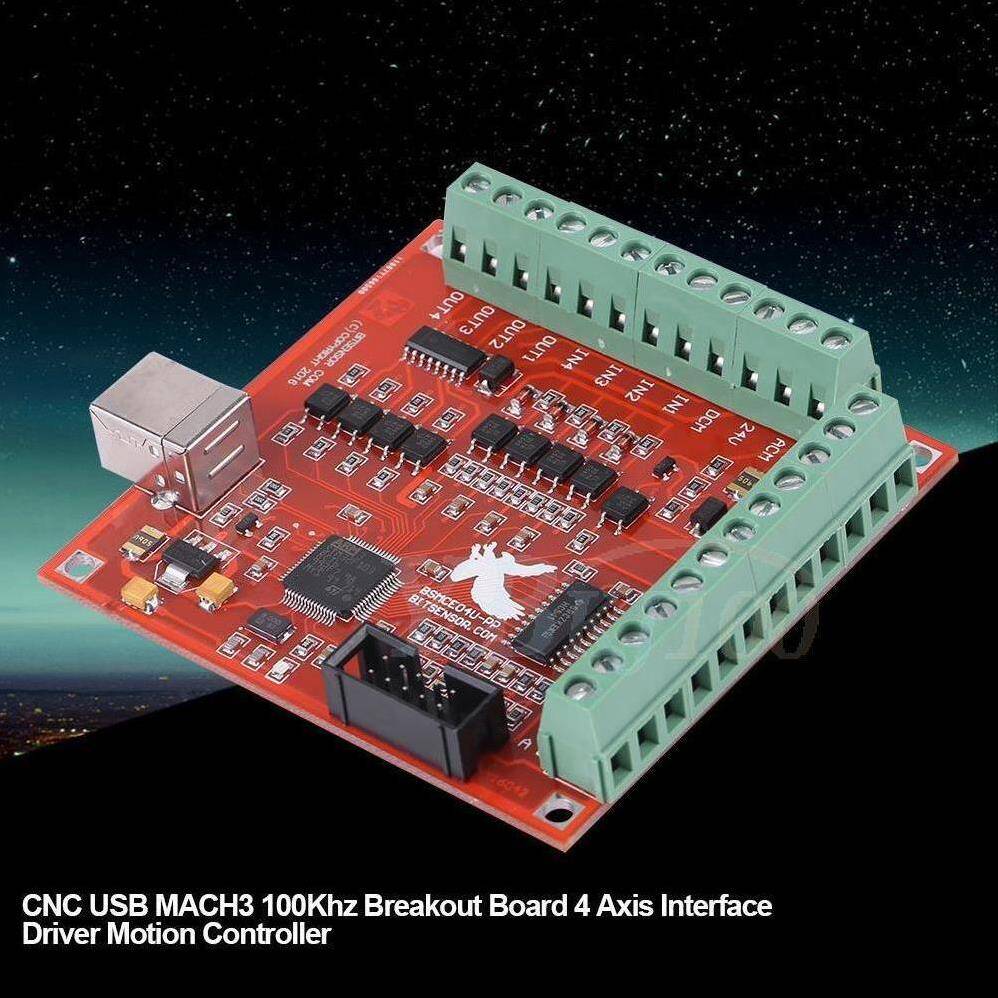
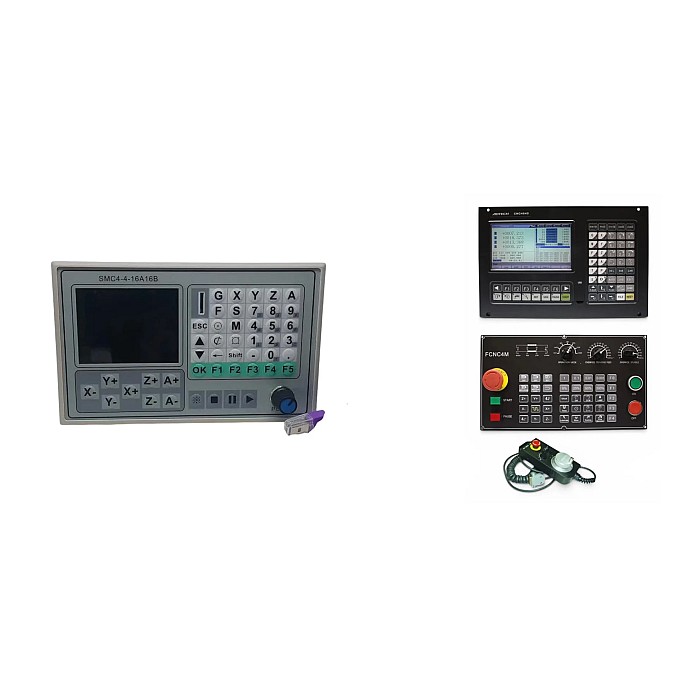
The control board is the central nervous system of any CNC machine. It acts as the conductor of an orchestra, meticulously managing all moving parts. Essentially, it translates digital design data, generated by CAD/CAM software into G-codes and M-codes, into precise physical movements for the machine’s axes, spindle motor, and other peripheral units. This electronic hardware ensures that the machine’s motors operate at the correct speed, position, and direction, transforming a digital design into a tangible product with the required precision.
At its core, a control board typically houses a microcontroller or an FPGA (Field-Programmable Gate Array). Its primary function is to receive high-level commands (e.g., “move 10mm along the X-axis”) and convert them into low-level electrical signals that motor drivers can understand (e.g., step/direction signals or analog voltage references). This process goes beyond simple start/stop commands; it encompasses critical functions like acceleration and deceleration ramps, simultaneous multi-axis movements (interpolation), and the integration of feedback mechanisms. The ultimate goal of the control board is to accurately transfer the precision of the digital design into the physical world while ensuring the machine’s safety and operational efficiency.
Working Principles and Technical Specifications
The operation of a control board is based on a series of sequential and simultaneous processes. First, the G-codes (geometric commands) and M-codes (miscellaneous function commands, like spindle on/off) generated by the CAM software are loaded into the control board. These codes are typically transmitted via USB, Ethernet, or a parallel port to the board’s processor. An internal interpreter within the board translates these codes into machine-readable commands. Following this, the interpolator unit takes over. For coordinated axis movements (e.g., the simultaneous motion of X and Y axes to create a circular arc), the interpolator calculates the necessary intermediate points and determines the number of steps or analog voltage values required for each motor to reach these points.
Based on these calculations, the control board sends specific signals to the motor drivers. For stepper motors, this usually involves “step” and “direction” signals. Each step signal causes the motor to rotate by a specific angle, and the frequency of these steps dictates the motor’s speed. For servo motors, analog voltage references (e.g., -10V to +10V) or digital communication protocols (like EtherCAT or CANopen) are commonly used. In servo systems, an encoder on the motor provides real-time position and speed information back to the control board. This feedback mechanism enables closed-loop control, allowing the control board to verify if the motor has reached the intended position. If any deviation occurs, the control board sends corrective commands to maintain accuracy and precision.
Control boards manage more than just motor functions; they also handle various Input/Output (I/O) units on the machine, such as limit switches, emergency stop buttons, tool changers, coolant systems, and other auxiliary equipment. Through these I/Os, the board interacts with the machine, enforces safety protocols, and optimizes automation processes. Modern control boards, equipped with high-speed processors, ample memory, and advanced communication interfaces, can process complex multi-axis (3, 4, 5-axis, and beyond) movements within milliseconds. This capability is crucial for applications requiring high-precision machining, intricate surface finishing, and high-speed production.
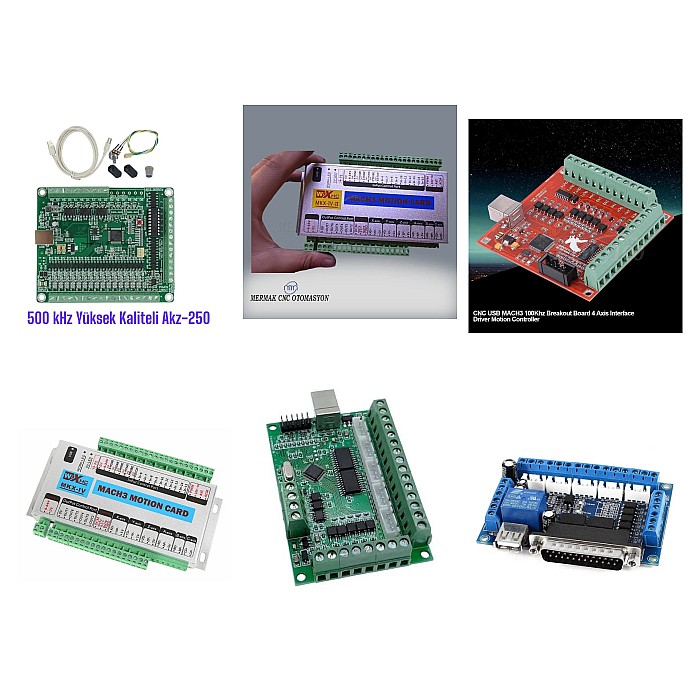
Different control boards vary in terms of supported axes, motor types, communication protocols, maximum pulse frequency, and processing power. For instance, hobbyist or small-scale CNC machines often utilize simpler, USB-based boards, while industrial production lines demand robust, modular boards supporting high-speed industrial Ethernet protocols like EtherCAT and featuring multi-core processors. The technical specifications of these boards directly influence the machine’s performance, accuracy, and overall capabilities.
| Parameter | Value/Description |
|---|---|
| Processor Type | Microcontroller (ARM Cortex-M series), FPGA, or DSP |
| Number of Axes | 3-6 axes standard; 32+ axes in industrial models |
| Control Type | Open-loop (stepper), Closed-loop (servo with encoder feedback) |
| Communication Ports | USB, Ethernet (TCP/IP, EtherCAT), CANopen, RS232/485, LPT |
| I/O Count | 8-64 digital I/O, 2-8 analog I/O (varies by model) |
| Supported Motor Types | Stepper motors, DC brushed/brushless motors, AC servo motors |
| Max. Pulse Frequency | 100 kHz – 5 MHz (per axis, affects precision and speed) |
| Supply Voltage | Typically 5V or 24V DC |
Key Considerations in Practice
- Correct Board Selection and Compatibility: Choosing the right control board is critical and depends on factors like the machine’s axis count, motor type (stepper/servo), required precision, speed expectations, and budget. Ensuring compatibility with motor drivers and other peripherals (limit switches, E-stop, spindle control) simplifies system integration and prevents performance issues. For high-speed, precision servo motors, a board supporting closed-loop control and protocols like EtherCAT is essential.
- Cabling and EMI Protection: Proper cabling between the control board, motor drivers, power supplies, and sensors is vital for signal integrity and system stability. All cables should be properly shielded and kept away from sources of electromagnetic interference (EMI). Separating power and signal cables in different conduits minimizes crosstalk. Incorrect or low-quality cabling can lead to signal loss, erratic movements, or system failures. Proper grounding of the entire system is also crucial for safety and noise reduction.
- Software and Firmware Updates: Regularly monitoring and applying firmware and driver updates provided by the manufacturer is important for maintaining performance and reliability. Updates can introduce new features, fix bugs, and patch security vulnerabilities. Always back up existing configurations before updating and strictly follow the manufacturer’s instructions to prevent data loss or system conflicts. Improper updates can impair the board’s functionality.
- Thermal Management and Environmental Conditions: Control boards generate heat, especially during continuous, intensive use. The operating environment’s temperature, humidity, and dust levels significantly impact the board’s lifespan and performance. Inadequate cooling or excessive heat can lead to component failure. Therefore, the control cabinet must have sufficient ventilation, and fans or climate control systems should be used if necessary. Appropriate protection (e.g., IP rating) should be in place to prevent dust and moisture from damaging the electronic circuits.
- Calibration and Settings: During initial setup and periodic maintenance, accurately configuring parameters such as axis calibration, motor settings (PID values, steps/mm), limit switch definitions, and acceleration/deceleration ramps is essential. These settings determine the machine’s precision, speed, and overall motion quality. Incorrect calibration can result in positioning errors, vibrations, or premature mechanical wear. These tasks should be performed by qualified personnel following manufacturer guidelines.
Common Issues and Solutions
Control boards can encounter various issues within the complex framework of CNC machines. A common problem is motors not moving or moving incorrectly. This is often due to faulty wiring (incorrect signal or power connections), misconfigured driver parameters, motor or driver failure, or insufficient signals from the control board. Troubleshooting involves checking wiring, reviewing driver settings (current limits, micro-stepping), and testing the motor and driver independently. The control board’s signal outputs can be verified with an oscilloscope to confirm signal integrity.
Positioning errors or repeatability issues are another frequent concern, particularly in closed-loop servo systems. These can stem from incorrect encoder feedback readings, mechanical backlash, inadequate motor tuning, or interpolation errors within the control board. Solutions include verifying the integrity and connection of encoder cables, addressing mechanical play (e.g., in nuts, shafts, or couplings), re-tuning servo drivers by adjusting PID parameters for optimal performance, and reviewing the control board’s calibration settings. Sometimes, precision errors in the G-code itself can contribute to such problems.
Communication problems also arise frequently. The connection between the control board and the computer (USB, Ethernet, LPT) may become intermittent, or data transfer errors can occur. This is typically caused by damaged cables, incorrect driver software, computer port issues, or internal communication unit failures on the board. Solutions include checking cable integrity, updating or reinstalling relevant driver software, verifying computer port settings, and testing with a different port or computer. In industrial Ethernet systems, IP address conflicts or network configuration errors can cause similar issues.
Finally, more serious hardware failures, such as the control board overheating or failing completely, can occur. Overheating may result from insufficient cooling, high ambient temperatures, or a short circuit on the board. Complete failure often stems from power supply issues, voltage fluctuations, blown fuses on the board, or permanent component damage. In such cases, verify the power supply’s stable voltage output, inspect fuses, and improve the board’s cooling system. If the problem is due to hardware failure, the board may require repair or replacement. Regular maintenance, maintaining suitable environmental conditions, and using quality power supplies are crucial for preventing these issues.
Expert Advice
In summary, the control board is an indispensable component of modern CNC machines, acting as the central orchestrator that transforms digital designs into physical reality. By interpreting G-codes, sending precise commands to motor drivers, processing feedback signals, and synchronizing all machine axes, it forms the foundation of industrial automation and high-precision manufacturing. Control boards enable movements with accuracies of fractions of a millimeter, facilitate the machining of complex geometries, and significantly automate production processes.
As an expert in industrial automation, my advice is to always consider the long term when selecting and integrating control boards. With the rise of IoT (Internet of Things) and Industry 4.0, control boards are evolving beyond mere motion control to include data acquisition, remote monitoring, predictive maintenance, and AI-driven optimization capabilities. Therefore, opting for future-proof, modular boards with strong communication capabilities will enhance your investment’s value. Adhering to fundamental engineering principles for cabling, grounding, and environmental conditions will ensure system stability and longevity. Furthermore, ensuring operators and maintenance personnel are well-trained on the control board’s operating principles, settings, and basic troubleshooting methods is key to minimizing production downtime. Remember, a CNC machine is only as smart as its control board, as powerful as its motors and drivers, and as reliable as its well-adjusted cabling. The synchronized and correct operation of these components is essential for efficient and high-quality production.
Ready to optimize your CNC operations? Request a quote on WhatsApp for advanced control solutions!
08B-2 Roller Chain Sprocket
1 Inch Chain Sprocket
06B-1 Sprocket
Related product categories: 08B-2 Roller Chain Sprocket · جنزير بقطر 1 بوصة · 06B-1 Sprocket
