





































































Sigma Profile Connection Elements: What They Are and How to Choose Them

📑 Table of contents (Click to open)
Sigma profile connection elements are critical for assembling modular structures in industrial automation and machine manufacturing. This guide explains what they are and how to select the appropriate ones based on load capacity, environmental conditions, and assembly needs.
Practical notes for CNC router, automation and industrial motion systems.
Understanding Sigma Profile Connection Elements
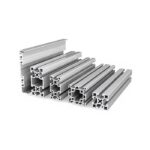
In industrial automation, machine manufacturing, and general engineering, aluminum sigma profiles are indispensable building blocks, offering rapid, flexible, and reconfigurable solutions. These profiles feature T-slots or V-slots, which serve as mounting points for various connection elements. These elements are designed to securely join profiles, connect them at different angles, reinforce structures, and attach accessories like panels, doors, or casters. Their primary function is to ensure the mechanical integrity of profile-based structures, safely transfer loads, and maintain system modularity. Using these components, complex machine frames, conveyor systems, workstations, safety enclosures, and cleanroom structures can be efficiently constructed.
Functionality and Technical Specifications
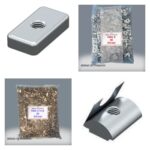
Sigma profile connection elements typically work by using specialized nuts (T-nuts) that fit into the profile’s T-slots, secured by bolts. This system allows for quick assembly and disassembly, facilitating easy design modifications or expansions. Made from durable materials like zinc-plated steel, stainless steel, or aluminum, these elements offer high strength and corrosion resistance. They come in various types to meet diverse structural requirements:
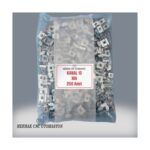
- T-Nuts: The fundamental connectors. They fit into T-slots and are secured by tightening bolts. Available in side-mount (for retrofitting open slots), pre-insert (slid into the slot during assembly), and spring-loaded (for enhanced vibration resistance) variants. Typically made of steel or stainless steel.
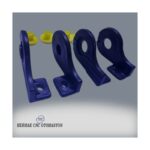
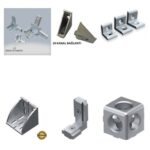
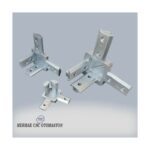
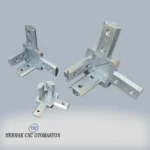
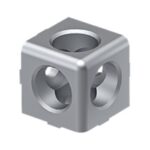
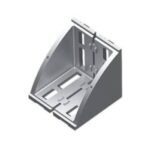
- Corner Brackets: Used to join two profiles, usually at a 90-degree angle. They include internal corner connectors (concealed within the profile for a clean look) and external corner connectors (mounted externally for higher load capacity). Often made from cast aluminum or steel.
- Internal Connectors: Fit inside profiles for a flush, aesthetically pleasing connection, ideal for cleanrooms or visually sensitive applications. Usually made of high-strength steel and used with specially machined profiles.
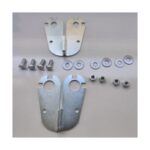
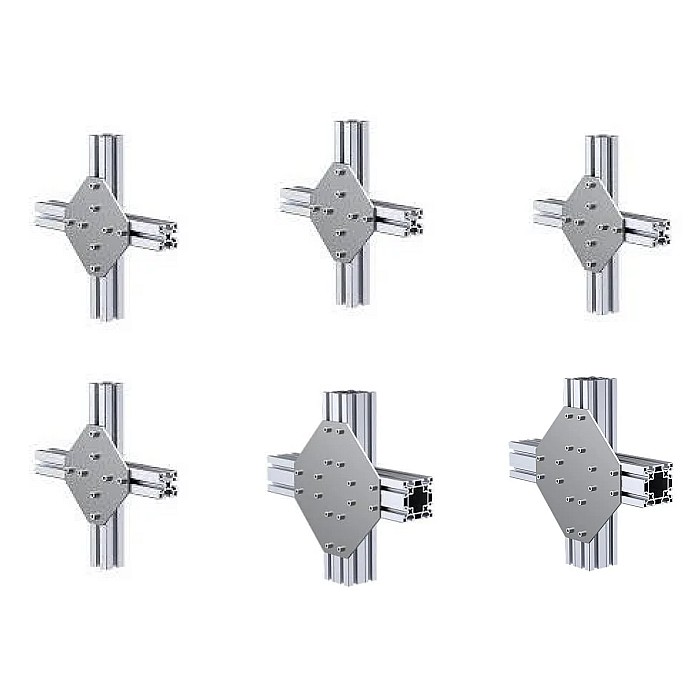
- External Plates: Used to join profiles linearly or for reinforcement. Often feature multiple holes for securing with T-nuts, offering high load-bearing capacity.
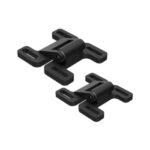
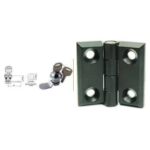
- Hinge Connectors: Allow for adjustable angular connections between profiles, suitable for doors, covers, or adjustable panels. Typically made of aluminum or steel.
- Linear Connectors: Used to extend profiles along the same axis, useful for increasing structure length or replacing damaged sections.
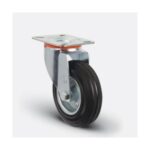
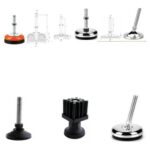
- Feet and Castors: For stabilizing structures on the floor, absorbing vibration, or enabling mobility. Options include adjustable feet and anti-static castors.
- Panel Holders and End Caps: For mounting panels onto structures and for aesthetic or safety closure of open profile ends.
Selecting the right element depends on project specifics. High-load or vibrating applications require high-strength steel corner brackets and robust T-nuts. Lighter frames or aesthetic-focused designs might benefit from cast aluminum connectors or internal connectors. The load capacity is directly related to the profile size (e.g., 20×20, 30×30, 40×40, 45×45, 60×60, 80×80 mm profiles require specific elements). Assembly torque values, critical for connection reliability, must adhere to manufacturer specifications.
| Parameter | Value/Description |
|---|---|
| Material Types | Zinc-Plated Steel, Stainless Steel, Cast Aluminum, Plastic (PA) |
| Compatible Profile Sizes | 20×20, 30×30, 40×40, 45×45, 60×60, 80×80, 90×90 mm and custom sizes |
| Max Load Capacity | 100 N to 10,000 N (10 kg to 1000 kg), depending on type and profile size |
| Mounting Method | Bolt and T-nut tightening, direct screwing, slot insertion |
| Surface Treatment | Galvanized, Anodized, Powder Coated, Natural Aluminum |
| Vibration Resistance | Can be enhanced with spring T-nuts, locking washers, or thread lockers |
| Operating Temperature Range | -30°C to +80°C (may vary for plastic components) |
Key Considerations for Application
- Load Capacity and Mechanical Strength: The static and dynamic loads a structure will endure are paramount. For heavy-duty or vibrating applications, opt for steel connectors with larger dimensions and reinforcement. Always verify the maximum load capacity per connection point from manufacturer data and apply safety factors. Incorrect selection can lead to deformation, loosening, or structural failure.
- Environmental Conditions: Temperature, humidity, chemical exposure, and indoor/outdoor use dictate material choice. In food, pharmaceutical, or chemical industries, stainless steel connectors are essential for corrosion resistance. For humid or outdoor environments, choose galvanized or anodized finishes. Avoid plastic or low-melting-point materials in high-temperature settings.
- Ease and Speed of Assembly: Project timelines and labor costs are influenced by assembly efficiency. Some connectors, like side-mount T-nuts, can be added later, while others require insertion during initial assembly. Quick-assembly connectors that don’t need special tools improve field efficiency. Internal connectors offer aesthetics but may require more complex installation than external ones.
- Flexibility and Reusability: Industrial automation systems often require adaptation and modification. The modular nature of sigma profiles and their connection elements allows for easy reconfiguration, expansion, or relocation of structures. This reusability minimizes waste and supports agile manufacturing environments.
Choosing the correct connection elements ensures the longevity, safety, and performance of your industrial structures. For expert advice and a wide range of high-quality components, consult with Mermak CNC.
Ready to build or upgrade your industrial structure? Request a quote on WhatsApp for tailored solutions and expert guidance on sigma profile connection elements.
Related product categories: Genel · Tekerlek · Sigma Profil Toptan
