











































































What Are Consumables?
📑 Table of contents (Click to open)
Practical notes for CNC router, automation and industrial motion systems.
Consumables are critical products used in industrial automation systems for regular maintenance, repairs, and operational continuity; they have a limited lifespan and must be replaced periodically. These components, which directly affect production efficiency, system reliability, and product quality, are vital for the uninterrupted operation of automation processes.
What Are Consumables?
In the industrial automation sector, consumables refer to all components that wear out, become depleted, or need to be replaced at the end of their specified service life to ensure the uninterrupted, efficient, and safe operation of production lines and automation systems. These materials are not considered integral, fixed parts of a machine or system; rather, they must be regularly replaced to ensure operational continuity. Proper management and timely replacement of consumables minimize unplanned downtime, maintain production quality, and optimize operating costs.
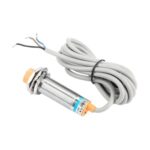
Consumables in automation systems cover a wide range. Examples include filters (air, oil, hydraulic), lubricants (grease, industrial oils), sensors (certain types with a limited lifespan, such as photoelectric, inductive, and ultrasonic), cables and connectors (especially those subject to wear in moving parts), fuses, relays, calibration gases, printer cartridges and ribbons (for labeling systems), labels, pneumatic and hydraulic seals, valve diaphragms, conveyor belts, robot end-effectors (such as welding, gripping, and painting), lighting components, and even occupational safety equipment (gloves, masks, etc.) can be included.
The primary purpose of these materials is to maintain the optimal performance of automation equipment, provide protection against adverse factors such as overheating, contamination, and friction, and ensure the continued accuracy of measurement and control. For example, an oil filter in a hydraulic system prevents wear on valves and pumps by trapping particles in the system. If not replaced regularly, the filter becomes clogged, system efficiency decreases, and costly malfunctions can occur. Similarly, a robot’s welding tip wears out after a certain number of operations and loses its precision; if not replaced in a timely manner, welding quality declines and the scrap rate increases.
The management of consumables is also of great importance in terms of total cost of ownership (TCO). Although initial purchase costs are generally low, the wrong product selection, insufficient stocking, or neglected replacements can lead to much higher costs, such as unexpected breakdowns, production losses, and a shortened equipment lifespan. For this reason, consumable management in the field of industrial automation is much more than a simple supply chain operation; it is a strategic issue of maintenance and operational efficiency.
Operating Principle and Technical Data
The operating principle of consumables is based on directly supporting the functionality of the system to which they belong. Each consumable contributes to the system’s overall performance by playing a role in a specific physical or chemical process. For example:
- Filters: They mechanically trap particles in a fluid (air, oil, water) to provide a clean environment. This prevents wear and clogging of precision mechanical parts. The operating principle relies on allowing the fluid to pass through a porous structure with a specific micron rating.
- Lubricants: Reduce friction between moving parts, prevent wear, dissipate heat, and provide protection against corrosion. Their chemical compositions and viscosities are specifically selected based on the application’s temperature, pressure, and load conditions.
- Sensors (certain types): Convert a physical parameter (temperature, pressure, distance, etc.) into an electrical signal. Sensors operating in particularly harsh environments or with a limited service life (e.g., pH electrodes, certain gas sensors) may lose their sensitivity or become damaged over time.
- Robot Tips/Nozzles: They have specific geometries and material properties for processes such as welding, painting, and gripping. They become deformed over time due to exposure to high temperatures, wear, or impact, which reduces process quality.
- Labels and Ribbons: Used for product tracking, barcoding, and identification. Thermal transfer ribbons transfer ink to the label surface using a specialized heating principle. The adhesive strength and durability of labels are selected based on the product’s storage and transportation conditions.
The technical data to be considered in the selection and management of consumables provides critical information about their performance, lifespan, and compatibility with the system:
| Parameter | Value/Description |
|---|---|
| Compatible Systems/Equipment | Which brand, model, or type of machine/system it is compatible with. OEM specifications. |
| Expected Service Life/Replacement Interval | The average service life or replacement interval specified by the manufacturer (based on hours, cycles, or quantity). |
| Operating Temperature Range | The minimum and maximum ambient/process temperatures at which the material can maintain its performance. |
| Pressure Resistance/Flow Rate (For Filters) | Maximum operating pressure and the fluid volume it can handle at a specific pressure drop. |
| Material Composition/Chemical Resistance | The material from which the product is made (plastic, metal, composite) and its resistance to chemicals to which it may be exposed. |
| Calibration/Accuracy (For Sensors) | Measurement accuracy, repeatability, and the intervals at which recalibration is required. |
| Certifications/Standards | Compliance with national or international quality and safety standards such as CE, ATEX, ISO, and RoHS. |
These technical specifications serve as key reference points for automation engineers and maintenance teams when selecting, stocking, and establishing replacement schedules for the correct consumables. Especially in critical applications, the use of consumables recommended or approved by the original equipment manufacturer (OEM) is of great importance for maintaining the system warranty and achieving the expected performance.
Points to Consider in the Field
- Proper Product Selection and Compatibility Check: Every automation system or piece of equipment is designed to work with consumables that have specific characteristics. In the field, consumables from different brands or models that perform the same function may be available, but they may not always be fully compatible. An incorrect filter size, an incompatible lubricant, a fuse with the wrong voltage, or a robot end-effector that does not physically fit not only reduces system performance but can also lead to costly malfunctions, safety risks, and a shorter equipment lifespan. Therefore, it is essential to carefully review the technical specifications and OEM guidelines for each consumable before installation to ensure it is the correct product.
- Effective Inventory Management and Supply Chain Optimization: Having consumables available at the right time, in the right place, and in sufficient quantities is vital for production continuity. Excess inventory can tie up capital and cause products to expire, while insufficient inventory leads to unexpected downtime and production losses. On the shop floor, minimum and maximum inventory levels should be established for each consumable, lead times should be taken into account, and long-term relationships should be built with reliable suppliers. Digital inventory tracking systems (MRP/ERP integration), automated reorder triggers, and barcoding systems significantly contribute to the efficient management of this process.
- Periodic Inspection, Scheduled Maintenance, and Replacement Schedule: Consumables generally have a specific service life and must be replaced before this life expires or signs of wear begin to appear. In the field, the replacement interval for each consumable (based on hours, cycles, or production volume) should be determined using manufacturer data and field experience and incorporated into a preventive maintenance program. Signs of wear, contamination, or deterioration should be detected early through regular visual inspections, performance monitoring, and testing, and scheduled replacements should not be delayed. This proactive approach prevents unexpected breakdowns and ensures operational continuity through planned downtime.
- Quality Control and Use of Genuine Products: There are many consumables of varying quality available on the market. Although low-quality or counterfeit products are often more affordable, they can lead to much higher costs in the long run. Such products may have a shorter lifespan than expected, negatively impact system performance, damage equipment, and even pose safety risks. In the field, it is essential to ensure that the supplied consumables meet quality standards (ISO, CE, etc.), and, whenever possible, original equipment manufacturer (OEM) products or OEM-approved equivalents should be preferred.
- Proper Storage Conditions and Traceability: Appropriate storage conditions are critical for preserving the shelf life and performance of consumables. Factors such as temperature, humidity, light, dust, and chemical exposure can cause consumables—particularly gaskets, lubricants, chemicals, and sensitive electronic components—to deteriorate. Storage areas must be clean, organized, and controlled. Additionally, a tracking system that includes information such as the serial number, production date, and lot number for each consumable makes it easier to identify the source in the event of a recall or quality issue.
Common Problems and Solutions
Many issues related to consumables can arise in industrial automation environments. Most of these issues can be prevented or resolved with proper management strategies and a proactive approach:
- Premature Wear or Shorter-than-Expected Lifespan:
- Problem: Filters clogging faster than expected, gaskets leaking prematurely, sensors losing sensitivity.
- Possible Causes: Harsh operating conditions (high temperature, pressure, contamination), incorrect product selection (inappropriate specifications), low-quality consumables, improper installation or calibration.
- Solutions: Conduct a detailed analysis of operating environment conditions; test more durable products or those with different specifications; optimize system parameters; review installation and calibration procedures; discuss product quality with the supplier.
- Incorrect Product Use or Installation Error:
- Issue: Installing a consumable that looks similar but has different specifications, or causing damage during installation.
- Possible Causes: Lack of staff training, poor labeling or storage, mixing up similar parts, rushed installation.
- Solutions: Implement detailed product labeling and barcode systems; organize regular and comprehensive training for staff; establish double-check mechanisms before installation (e.g., a checklist for part numbers and specifications); make assembly manuals easily accessible.
- Stockouts or Excess Inventory:
- Problem: Production stoppages due to the absence of a critical consumable in the warehouse, or large quantities of materials sitting in inventory unnecessarily.
- Possible Causes: Inadequate inventory tracking systems, inaccurate forecasts, irregular ordering processes, supply chain disruptions.
- Solutions: Automated inventory tracking and management systems (MRP/ERP integration), periodically updating safety stock levels, establishing strong relationships with suppliers to create fast-response procurement options, and making more accurate forecasts by analyzing consumption data.
- Performance Decline or Quality Issues:
- Issue: The system not operating at full capacity despite the installation of new consumables, resulting in a decline in product quality.
- Possible Causes: Poor quality of the consumable, improper installation, issues with other system components, or a need for calibration.
- Solutions: Verify the quality certificates of the consumables; purchase from reliable suppliers; ensure proper installation and calibration; conduct a comprehensive evaluation of all system components and perform a failure analysis.
- Compatibility Issues (Due to Technological Advancements):
- Problem: Existing consumables becoming incompatible due to system updates or the purchase of new equipment.
- Possible Causes: Difficulties integrating new technologies with older systems; the manufacturer discontinuing production of older model consumables.
- Solutions: Conduct a detailed review of technical documentation prior to purchase; contact the manufacturer to confirm compatibility; perform sample testing; and anticipate potential incompatibilities through long-term strategic planning.
Expert Advice
In the complex and dynamic world of industrial automation, the answer to the question “What Are Consumables?” goes beyond a simple definition—it is the key to operational excellence and sustainability. Consumables are like the heart and lifeblood of production lines; if not managed properly, they can compromise the health of the entire system, lead to billions of dollars in losses due to unplanned downtime, and damage brand reputation. As an expert drawing on my field experience, I can state unequivocally that viewing consumables merely as an expense line item is a major misconception; on the contrary, they are strategic investments in production efficiency, product quality, workplace safety, and equipment lifespan.
Adopting a proactive approach to consumables management is essential. This does not simply mean filling a warehouse or purchasing the cheapest product. True expertise lies in understanding the impact of each consumable on the system, accurately predicting its lifecycle, determining critical stock levels, establishing reliable supply chains, and—most importantly—continuously training maintenance teams in this area. In our digital world, Industry 4.0 and Internet of Things (IoT) technologies are taking consumables management to the next level. Real-time consumption tracking via sensors, AI-powered demand forecasting, and automated ordering mechanisms integrated into automation systems are revolutionizing efficiency and accuracy in this field.
Finally, I would like to emphasize the importance of always considering the total cost of ownership (TCO) perspective. While the initial purchase price of a consumable may seem attractive, indirect costs—such as breakdowns, production losses, increased energy consumption, and equipment damage caused by low-quality products—can prove much more expensive in the long run. Therefore, quality, compatibility, reliability, and supplier support must always take precedence over price. This strategic investment in consumables management will ensure the health of the core of your automation systems, thereby guaranteeing your business’s competitiveness and sustainable success.
Related product categories: Zincir · Diğer Kategoriler